How many times have you reached the end of a page and realised you haven’t taken in a single word?
It happens to everyone. But what matters is the moment you notice.
That awareness, recognising your mind has drifted and bringing it back into focus, is part of understanding what helps you succeed and knowing how to adjust when something isn’t working.
Nord Anglia’s educators believe this may be one of the most important skills children can develop.
Understanding how you learn and adjusting your own approach is how children become great learners.
This means reflecting on your own thinking and learning. And it’s a skill that Nord Anglia’s schools help their students develop.
Instead of giving up when they get stuck, children learn how to pause, rethink, and try a different approach. They become better at recognising what helps them focus, collaborate, solve problems, and improve.
According to the Education Endowment Foundation in England, thinking strategies that teach children to recognise what works best for them can help them make the equivalent of eight additional months of academic progress over the course of a year.
But many educators believe the benefits go beyond grades.
Dr James Mannion, former teacher and co-author of Fear is the Mind Killer, describes this teaching and learning approach as “the most important idea in education by miles”.
“I think of it as the escape hatch,” he says. “It’s the way you escape from your current programming and habits, notice the patterns you are in, and take a different course of action.”
At Nord Anglia Education schools around the world, students are developing the confidence and strategies to overcome challenges, adapt their approach, and become more independent.
Working with researchers from Boston College, Nord Anglia has developed a teaching and learning approach centred around six key life skills: helping children become more curious, creative, critical, collaborative, compassionate and committed.
These skills are increasingly valued in a world shaped by artificial intelligence. And the results are promising.
In a two-year global study across 29 Nord Anglia schools, 76% of students report greater independence in their learning, 70% report stronger social skills, and 67% say they feel more motivated to learn.
The challenge, of course, is helping children actually develop these skills.
Can a child who struggles to work with others become more collaborative? Can a logical thinker learn to approach problems more creatively?
Yes, according to Nord Anglia’s educators.
At Nord Anglia International School Hong Kong, these skills are built into everyday classroom conversations. Students are encouraged to slow down, question their assumptions, and work through ideas more thoughtfully, whether they are solving a maths problem, discussing a novel, or reflecting on a disagreement with a friend.
To support this, teachers use structured “thinking routines” developed by researchers at Harvard’s Project Zero. Simple prompts help students pause and reflect before rushing to an answer.
What do I notice? What makes me say that? What am I missing?
Over time, students begin to ask these questions instinctively. The goal is not simply to help children reach the right answer, but to help them become more thoughtful, independent and self-aware learners along the way.
When Year 6 students study The Boy at the Back of the Class by Onjali Q Raúf, they are encouraged to step into the perspective of Ahmet, the Syrian refugee at the centre of the story. They explore his experiences, challenge assumptions, and consider how they might respond in similar situations.
“It’s about asking the right questions, those really big questions that lead to even more questions,” says Raquel Thomson, Deputy Head of Primary at the school.
“Approaches like this stay with students and help them in all areas of life.”
These approaches are not limited to academic work. Students also use them to navigate friendships, resolve disagreements, and build confidence in group settings.
One of the most powerful skills children can develop is knowing what to do when something feels difficult.
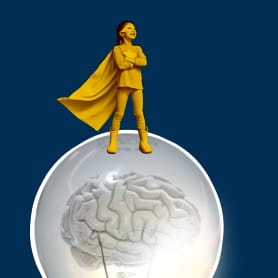
For 11-year-old Mateo at Colegio Menor Quito in Ecuador, it feels “like a superpower for the brain”.
“If you are stuck in a multiplication problem in maths, you don’t give up,” he says. “You think about doing something else, like using addition instead.”
Another student, also named Mateo, says understanding different ways to approach challenges has helped him stay focused and improve his work.
“It’s good to have words to describe what we’re doing,” he explains, “so I can think, ‘oh, I am being collaborative’ and there are things I can do to get better.”
Students also reflect regularly on their progress, setting goals, and identifying areas they want to improve.
At Colegio Menor Quito, students even help lead parent-teacher conferences, talking openly about their strengths and challenges.
“Children were able to say, ‘mum, dad, I’m very good at this, but I’m working on this other area, and these are the plans I have to improve’,” says head of school Monica Chiriboga.
“Teachers were amazed by the power of students being involved in their own progress.”
As AI continues to reshape how children learn and work, Nord Anglia’s educators are focusing on nurturing the skills to help young people adapt and thrive.
And in a fast-changing world, the ability to adapt, solve problems, and keep improving may become one of the most valuable skills of all.
“We’re not just preparing young people to pass exams; we’re preparing them for life,” says Raquel Thomson.
Find the perfect Nord Anglia school for your child here.
Stay up to date on future articles by joining our mailing list
Please enter a real email address
We use cookies to improve your online experiences. To learn more and choose your cookies options, please refer to our cookie policy.



.jpg?rev=4edb59ee838940b9ab3922602e44494e&hash=6798B1B0D8F5CB355746F3A4D0786EAC)