30 March 2026
6 MINS

Teaching the skills AI can’t replace: Can your child tell when AI is wrong?

Teaching the skills AI can’t replace: Can your child tell when AI is wrong?  | INSIGHTS - Can your child tell when AI is wrong Teaching the skills AI can’t replace: Can your child tell when AI is wrong?  | INSIGHTS - Can your child tell when AI is wrong

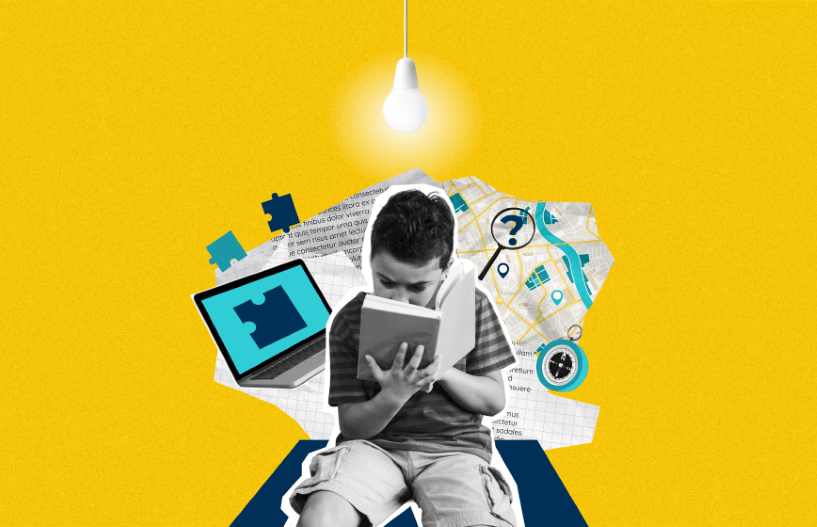
Your child asks ChatGPT to help with their homework.

Seconds later, the answer appears. It’s confident, detailed, and very convincing.

But will your child know whether it’s actually true?
 
Artificial intelligence is rapidly changing how children learn, research, and complete schoolwork. They’re growing up in a world where information appears instantly, often generated by AI tools that sound 100% convincing, even when they’re wrong.
 
For parents, this raises an important question:
 
How do you prepare your child for a world where answers are everywhere, but judgement matters more than ever?
 
The answer can’t simply be teaching children how to use AI.  
 
The real advantage lies in developing skills that AI can never replace, especially critical thinking.
 
Critical thinking helps children pause before accepting information, question where it came from, and decide whether or not it should be trusted.
 
At Nord Anglia Education, we think that ability may become one of the most valuable skills your child can possibly develop in the age of AI.


Why critical thinking matters more than ever

Critical thinking “is the means by which we make sense of the world”, says Dr Kate Erricker, Group Head of Education Research and Global Partnerships at Nord Anglia
Education.
 
“With the rise of AI, it’s more important than ever,” she explains. 
 
“We can't take the information we read or images we see at face value. We need to understand how they were created, and for what purpose.”
 
Children today are surrounded by information. Social media posts, online articles, videos, and AI-generated answers and images.
 
Critical thinking gives them the tools to pause and ask the right questions:
 
Is this information reliable? Who created it? What evidence supports it?
 
These questions don't just matter in school, but throughout your child’s life.
 
Employers are already recognising this shift.
 
When the CEO of JPMorgan Chase was asked what skills might best protect workers from being replaced by AI, his answer was clear.
 
“My advice to people would be critical thinking,” said Jamie Dimon.
 
Global research supports this view too.
 
The World Economic Forum’s Future of Jobs Report 2025 identifies analytical thinking as the most important core skill employers want from young people.
 
In other words, the future workplace will reward people who know how to question the information they receive.


The good news? Critical thinking can be taught.

Many parents assume critical thinking develops naturally as children grow older.
 
But ground-breaking new research suggests something even more encouraging. Critical thinking can be actively taught and strengthened.
 
Detailed global studies conducted by Nord Anglia Education and Boston College show that when students are encouraged to reflect on their thinking, their ability to analyse information, challenge assumptions, and make thoughtful decisions improves significantly. 
 
When these approaches were embedded in classroom practice across Nord Anglia’s schools, students’ critical thinking skills increased by more than 21%.
 
Like reading or mathematics, critical thinking is a skill that develops through practice.
 
And Nord Anglia’s schools are playing an important role in shaping those habits.


What critical thinking looks like in the classroom

For many parents, the phrase “critical thinking” can sound rather abstract.
 
In classrooms, however, it often begins with curiosity.
 
At International College Spain in Madrid, a Nord Anglia school, literature lessons sometimes invite students to step into the perspective of characters from a novel.
 
They explore what the character might have been thinking, what influenced their actions, and what other choices could have been possible. 
 
“That leads to discussions of what a character was thinking or feeling and why,” says Assistant Head of Secondary Jennifer Barnett.
 
“Why did they act one way rather than another? You really start to dig down into it.”
 
Science lessons encourage similar habits.
 
Students conduct experiments and then write a press release explaining their findings.
 
“It’s a different classroom practice and it’s really dynamic,” says Barnett.
 
“They need to consider who their audience is, how they are going to present the findings, and justify what information is released and what isn’t. They also need to predict how
society is going to react.”
 
These experiences encourage students to look beyond simply finding the right answer.
 
They learn how knowledge is interpreted, questioned, and communicated.


Slowing down in a fast-moving world

One of the biggest challenges children face today is the speed of information.
 
Online content appears instantly; AI tools generate answers in seconds, and opinions spread rapidly.
 
But critical thinking requires the opposite.
 
It requires slowing down.
 
Flossie Chua, Principal Investigator at Project Zero within Harvard University’s Graduate School of Education, has worked with Nord Anglia schools to introduce simple ‘thinking routines’ that help students do exactly that – slow down and think.
 
One example is called See, Think, Wonder.
 
Students might use this routine when looking at a painting.
 
Instead of immediately deciding what it means, they are encouraged to look carefully and observe what they notice.
 
“‘See’ means slowing down your thinking,” Chua explains. 
 
“Spend time looking carefully and investigating what you notice.”
 
Even young children can practice these habits.
 
Chua describes a teacher pointing to a tree in the playground and asking a group of young children a simple question.
 
“Where did all the leaves go?”
 
The children began offering ideas. One child thought someone had taken them. Another wondered whether the tree itself had changed.
 
“Their brains were working,” she says. 
 
“They were trying to solve a puzzle and come up with an explanation.”
 
Moments like this may seem small, but they build the habits that shape how children think for life.


As a parent, what can you do at home?

One of the simplest ways is to encourage your child to explain their thinking rather than just giving an answer.
 
Dr Erricker suggests asking a simple follow-up question.
 
“What makes you say that?”
 
When children explain their reasoning, they learn to organise their thoughts, evaluate information, and reflect on their ideas.
 
Over time, conversations like this help your child develop confidence in their own judgement.


Learning how to disagree well

As your child grows, critical thinking also means learning how to discuss ideas respectfully with others.
 
At International College Spain, students responding to a classmate’s comment are encouraged to begin with the phrase:
 
“It’s a good point, but I respectfully disagree.”
 
This structure helps students express a different perspective while still recognising someone else’s view.
 
In a world where debates online can quickly become polarised, the ability to explore ideas thoughtfully is increasingly important.
 
The Disagreeing Well project at University College London explores how these habits help young people engage constructively with people who hold different views.
 
Dr Michael Spence, UCL president and provost, explains:
 
“This skill is essential for thriving in today’s diverse and interconnected world.” 


The skill your child will rely on for life

AI will continue to transform how children learn and work.
 
In a world increasingly shaped by AI, the ability to think critically may become one of the most valuable advantages your child can have.
 
At Nord Anglia schools, students are encouraged to question ideas, analyse information, and develop the confidence to form their own informed perspectives.
 
Because in the age of AI, success won’t just belong to those who know the answers, but to those whose instinct is how to think.  And these are the skills that AI can never replace. 


Discover how Nord Anglia Education prepares students for the future.
Explore Nord Anglia schools here and learn how your child can develop the skills they’ll need in order to thrive in an AI-driven world.

WANT MORE INSIGHTS?

Stay up to date on future articles by joining our mailing list

Welcome to INSIGHTS | Nord Anglia Education - Home