


We use cookies to improve your online experiences. To learn more and choose your cookies options, please refer to our cookie policy.

10 August, 2026
5 Things Children Should Know Before Starting Year 1
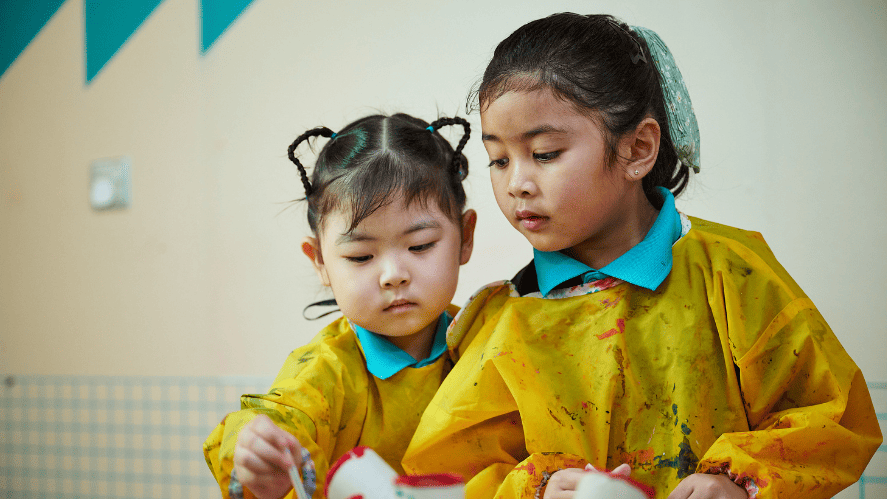
Starting Year 1 is an exciting milestone. For many children, it marks a new chapter in their learning journey; With new routines, greater independence and more opportunities to apply the skills they have developed during their Early Years education.
But what does it really mean for a child to be “ready” for Year 1?
At Nord Anglia International School Al Khor (NAISAK), we believe school readiness is about much more than being able to read, write or count. Academic skills are important, but children also need the confidence, communication skills and independence to use those skills in meaningful ways.
As Ms. Kathleen Lyons, Head of EYFS and Assistant Head of Primary at NAISAK, explains, one of the biggest transitions children experience when moving from Foundation to Year 1 is learning to become more independent.
“The biggest challenge we face with children moving from Foundation to Year 1 is their ability to be independent.”
So, what are the key foundations children can begin developing before they start Year 1?
1. A strong foundation in language and communication
Before children can confidently read, write or share their ideas, they need the words to express themselves.
Being able to talk about what they have experienced, explain an idea, describe how they feel or ask for help is an essential part of learning. Strong communication skills help children participate in classroom discussions, understand instructions, work with others and begin to turn their thoughts into written language.
For Kathleen, language and communication are among the most important foundations children can develop.
“My biggest push would be language and communication, because academically, until you can express yourself, until you can sort of say, ‘I’m having a bad day,’ or ‘I’m happy, I’m sad,’ or even share an idea like, ‘I see a dog’… they can’t write that down if they don’t have the words for it.”
For families preparing a child for Year 1, everyday conversations can be incredibly valuable. Talking about a story after reading it together, asking children questions about their day, encouraging them to explain their thinking or simply giving them time to talk can all help develop the language they need for learning.
At NAISAK, we see communication as something that supports every area of the curriculum, not simply literacy.
2. An understanding of early phonics
Children entering Year 1 don't need to have mastered reading. However, having a developing understanding of phonics provides an important foundation for learning to read and write.
This means beginning to understand the sounds that letters represent rather than simply memorising the alphabet.
As Kathleen explains: “It isn’t going A, B, C, D, E, F, G. It’s knowing the sound that that letter makes. That is a really core skill.”
Another important step is oral blending: hearing individual sounds and combining them to make a word.
For example, when a child hears the sounds c-a-t, they begin to understand that these sounds come together to make cat. This ability helps children make the connection between the sounds they hear and the words they eventually read and write.
Parents can support this naturally through games, stories, songs and conversations about sounds. The goal isn't to turn home into another classroom, but to make language and sounds something children enjoy exploring.
3. Developing early number sense
Counting is something many young children enjoy, and it can be exciting to hear a child confidently recite numbers from one to ten, twenty or even higher.
But knowing the number sequence is only one part of developing mathematical understanding.
Children also need to begin developing number sense; understanding that numbers represent quantities and that each number corresponds to a particular amount.
Kathleen highlights this distinction:
“It’s one-to-one correspondence, being able to say, ‘I have three items’ and know that three is three.”
In other words, a child who can say “one, two, three, four, five” isn't necessarily demonstrating the same understanding as a child who can look at five objects and recognise that there are five.
Everyday activities provide plenty of opportunities to develop this understanding. Children can count toys, set the table, compare groups of objects, share snacks equally or look for numbers while out and about.
These experiences help children understand that mathematics isn't just something they do on a worksheet, it is part of the world around them.
4. Beginning to use writing skills to communicate ideas
Before Year 1, children can benefit from developing the physical and creative foundations for writing: holding and controlling a pencil, making marks, forming letters and beginning to understand that written words can communicate meaning.
But there is an important distinction between being able to write and being able to use writing independently.
A child might be able to form letters or copy a word but still find it difficult to take an idea from their imagination and put it onto paper.
Kathleen describes this as one of the challenges teachers sometimes see during the transition into Year 1:
“Even though they can write, we’ve seen them write, it’s like they can’t put their ideas into action.”
This is why writing at this stage is about more than handwriting. Children are learning how to think of something they want to communicate, organise that thought and use the skills they have developed to express it.
Drawing, painting, making marks, writing shopping lists, labelling pictures or attempting to write a birthday card can all help children develop this connection between ideas and written communication.
And importantly, there is no single standard that every child needs to reach before starting Year 1.
“We always work to where the children are at. I wouldn’t say it’s necessary that they have to be able to write a sentence…” The emphasis is on building strong foundations and helping each child progress from their individual starting point.
5. The confidence to learn independently
Perhaps the most important foundation for Year 1 is not an academic skill at all.
It is independence.
As children move from Foundation into Year 1, they are increasingly expected to take responsibility for their learning and belongings. They may be asked to work independently after receiving instructions, organise resources, complete activities and look after their own equipment.
These can seem like small things, but they make a significant difference to a child's confidence.
Kathleen explains that independence includes everyday routines such as:
“Being able to look after their belongings, knowing where they put their lunchbox, their water bottle, all the rest of it, unpacking their own bags, being able to bring and take back their own homework and library books.”
It also means developing the confidence to have a go.
In Year 1, children will often work in small groups or independently after their teacher has introduced a new concept. They need to begin learning how to take what they have been taught and apply it without an adult guiding every step.
This is where academic and personal development come together. A child who has learned a new phonics sound needs to be able to use it. A child who has learned about numbers needs opportunities to apply that understanding. A child who has an idea needs the confidence to share it.
Knowing something is one thing. Knowing how to use it is another.
Preparing for Year 1 is about more than academics
When parents think about preparing their child for Year 1, it can be tempting to focus on a checklist: Can they read? Can they write? Can they count?
While these skills are certainly valuable, readiness is much broader.
Children also need to know how to communicate, express their feelings, ask questions, listen to others, manage their belongings, follow routines and attempt something independently.
At Nord Anglia International School Al Khor, our approach to the transition from EYFS to Year 1 recognises that every child develops at their own pace. The goal isn't for every child to arrive with exactly the same set of skills. Instead, it is about giving children the foundations, experiences and confidence they need to continue learning.
As Kathleen puts it, the focus is on children being able to “use the resources in an independent way.”
That might mean picking up a pencil and turning an idea into a picture. It might mean recognising the sounds in a new word. It might mean understanding that three objects really do represent the number three. Or it might simply mean knowing where their water bottle belongs and feeling confident enough to ask for help when they need it.
These small moments of independence are important steps towards becoming confident, capable learners.
Helping your child prepare for Year 1
The good news for families is that preparing for Year 1 doesn't need to involve hours of formal learning at home.
Read together. Talk about stories. Ask questions. Count everyday objects. Play with sounds. Encourage drawing and mark-making. Give your child small responsibilities. Let them try things for themselves, even when it might be quicker to do it for them.
Most importantly, give them opportunities to talk, explore, make mistakes and try again.
Because being ready for Year 1 isn't about knowing everything before you walk through the classroom door.
It's about having the foundations and confidence to keep learning once you do.
Related news
News image ![Check out the learning curve podcast hosted by nord anglia education communication manager]() Podcasts
Podcasts
 Podcasts
 The Learning Curve: What is education really for?
What is education ultimately for? Explore curiosity, empathy, storytelling and lifelong learning in The Learning Curve podcast with Lord David Puttnam.
News image ![Discover how NAISAK students from EYFS to Secondary came together for Global Campus Day, exploring creativity, filmmaking, collaboration and global learning.]() News
News
 News
News Global Campus Day at NAISAK | Creativity, Collaboration and Global Learning
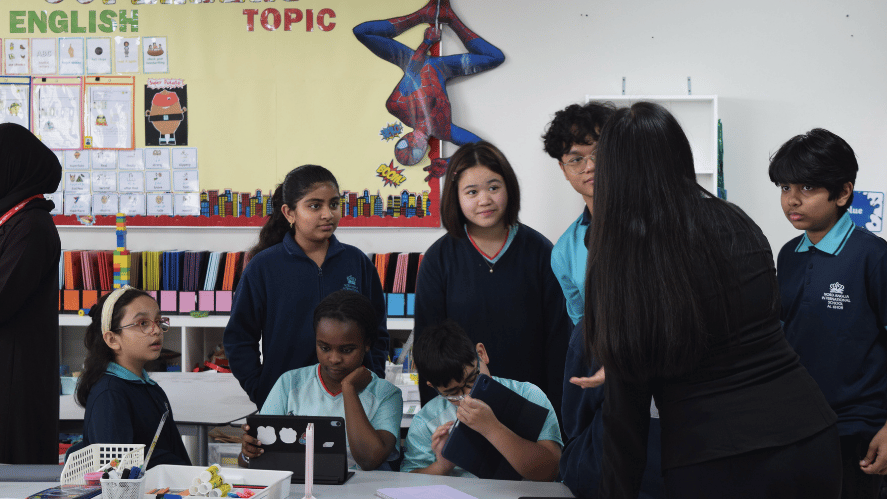
Discover how NAISAK students from EYFS to Secondary came together for Global Campus Day, exploring creativity, filmmaking, collaboration and global learning.
News image ![NAISAK Year 12 students begin their AS journey with an engaging induction focused on study skills, university preparation, reflection and teamwork.]() News
News
 News
News From Hopes and Fears to Higher Expectations: Year 12 Begins at NAISAK
NAISAK Year 12 students begin their AS journey with an engaging induction focused on study skills, university preparation, reflection and teamwork.
News image ![Preparing your child for primary school? Hear real experiences from parents, teachers and pupils, plus expert advice on making the transition to primary school a happy, confident start at NAISAK.]() Blog
Blog
 Blog
Blog Preparing Your Child for Primary School: What Parents, Teachers & Children Wish They'd Known
Preparing your child for primary school? Hear real experiences from parents, teachers and pupils, plus expert advice on making the transition to primary school a happy, confident start at NAISAK.


