


We use cookies to improve your online experiences. To learn more and choose your cookies options, please refer to our cookie policy.

30 July, 2026
Preparing Your Child for Primary School: What Parents, Teachers & Children Wish They'd Known
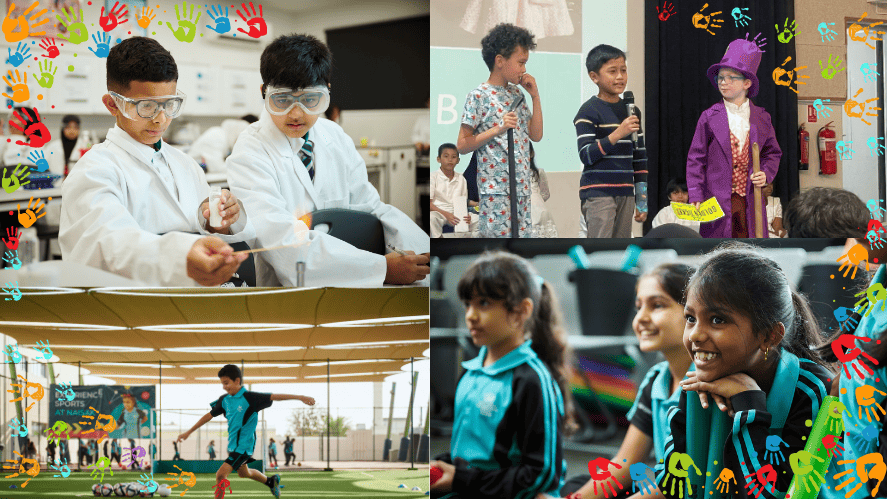
From sleepless parents to excited children and experienced teachers, everyone has a story about that first step into primary school. We spoke to members of our school community and education experts to discover what families really wish they'd known before the big day.
There's a moment every parent remembers.
The tiny backpack that suddenly looks enormous.
The polished shoes.
The nervous smile.
The last hug before watching your child walk through the classroom door for the very first time.
For many parents, starting primary school feels like a bigger milestone than their child's first words or first steps. It's the beginning of a completely new chapter, not just for children, but for the whole family.
Yet after speaking with parents, teachers and students at NAISAK (Nord Anglia International School Al Khor), one message came through louder than any other.
"Children are often far more ready than we give them credit for."
"I Cried in the Car. My Son Didn't."
One mother laughed as she recalled her son's first day.
"I was absolutely convinced he would cry. I'd prepared myself for the worst. Instead, he hugged me, walked straight inside and barely looked back. I cried all the way home instead."
It's a story teachers hear every year.
Parents spend weeks imagining every possible scenario, while many children simply embrace the excitement of something new.
Another parent admitted:
"I kept asking him if he was nervous. Eventually he told me, 'Mom...I'm actually excited.' That's when I realised the anxiety was mostly mine."
Education specialists say children naturally mirror the emotions around them.
When adults treat starting school as an exciting adventure instead of something frightening, children usually follow their lead.
Teachers See the Same Myth Every Year
Every August, teachers meet families convinced their child isn't "ready."
One experienced primary teacher smiled when asked what school readiness really means.
"Parents often apologise because their child can't already read fluently or write perfectly. Honestly, that's rarely our biggest concern."
Instead, teachers consistently look for something else.
"Can they try? Can they listen? Can they ask for help? Can they recover if something doesn't go exactly as planned? Those skills matter enormously."
Another teacher explained that confidence grows through experience, not before it.
"Primary school isn't where children arrive already knowing everything. It's where they begin discovering what they're capable of."
"I Thought Everyone Would Already Have Friends"
Ask children what worries them most, and the answer usually isn't maths.
It's friendships.
One Year 3 student remembered:
"I thought everyone already knew each other except me."
That feeling lasted less than an hour.
"Someone asked if I wanted to play football at break. Then I wasn't worried anymore."
Another student laughed remembering their first week.
"I forgot where the toilets were and got lost. My teacher helped me and then it wasn't scary anymore."
Teachers say these moments are completely normal.
Every September is carefully planned to help children settle, build relationships and feel like they belong.
The Little Skills That Make a Big Difference
Interestingly, parents and teachers agreed on one thing.
The biggest confidence boosters often have nothing to do with academics.
Simple everyday independence makes an enormous difference.
One teacher explained:
"Children feel incredibly proud when they can hang up their own bag, open their lunchbox or organise their own belongings."
Another added:
"Every small success builds confidence for the next challenge."
At home, parents can encourage independence by allowing children to:
- Choose tomorrow's clothes
- Pack their own school bag with support
- Practise opening lunch containers
- Put on shoes independently
- Ask adults for help confidently
- Follow simple routines
None of these seem particularly important.
Together, they build resilience.
Why Reading Together Still Matters
Ask any primary teacher for one habit they'd encourage every family to develop before school starts and the answer comes quickly.
Read together.
Not because children need to memorise words.
Because stories teach curiosity.
One teacher explained:
"Reading introduces new vocabulary, helps children concentrate for longer and sparks conversations about the world around them."
Parents often underestimate how powerful ten minutes each evening can become.
One father shared:
"Our bedtime stories became our favourite part of the day. I think they prepared both of us for school."
The First Few Weeks Matter Most
Transition isn't just about the first morning.
It's about the first month.
Teachers say children settle fastest when routines remain consistent.
Regular bedtimes.
Predictable mornings.
Plenty of sleep.
Healthy breakfasts.
Most importantly...
Patience.
One parent reflected:
"There were a few emotional afternoons at first. We learned not to ask twenty questions the moment school finished. We'd simply say, 'Tell us about your favourite part of today whenever you're ready.' Eventually the stories came."
Confidence Doesn't Happen Overnight
Perhaps the most touching stories came from teachers describing children's transformation over a single year.
One teacher recalled:
"One little boy barely spoke during his first week. By the end of the year he was confidently presenting projects in front of the whole class."
Another smiled.
"Sometimes the biggest achievement isn't reading another book level. It's watching a child realise, 'I can actually do hard things.'"
Those moments rarely appear on assessment reports.
But they're the ones families remember forever.
Why Partnership Between Parents and School Makes Such a Difference
Parents repeatedly mentioned one thing they valued above everything else.
Communication.
One mother explained:
"Knowing that someone really knew my daughter, not just academically but personally, gave us enormous reassurance."
Another agreed.
"Whenever we had a question, we felt listened to. That made the whole transition easier."
At NAISAK, building relationships with families is considered just as important as developing academic success.
Because when children see parents and teachers working together, they feel secure enough to take risks, ask questions and embrace learning.
Every Child's Journey Looks Different
There is no perfect first day.
Some children skip into school without hesitation.
Others cling tightly to Mom or Dad before eventually smiling by lunchtime.
Both experiences are completely normal.
Every child arrives with their own personality, strengths, interests and pace.
The role of a great primary school isn't to expect children to fit into one mould.
It's to help every child discover the very best version of themselves.
That belief sits at the heart of everything we do at NAISAK, where nurturing curiosity, creativity, wellbeing and academic excellence go hand in hand. Our internationally minded community, experienced educators and personalised approach help children develop not only strong academic foundations but also the confidence, resilience and character they'll carry throughout life.
Thinking About Your Child's First Step Into Primary School?
Choosing the right school is one of the biggest decisions any family makes.
If you're exploring international primary schools in Qatar or looking for a nurturing environment where children are encouraged to thrive academically, socially and emotionally, we'd love to show you what makes NAISAK special.
Book a personalised tour, meet our teachers and discover how we help every child start their primary journey with confidence.
Related news
News image ![Check out the learning curve podcast hosted by nord anglia education communication manager]() Podcasts
Podcasts
 Podcasts
 The Learning Curve: What is education really for?
What is education ultimately for? Explore curiosity, empathy, storytelling and lifelong learning in The Learning Curve podcast with Lord David Puttnam.
News image ![Discover how NAISAK students from EYFS to Secondary came together for Global Campus Day, exploring creativity, filmmaking, collaboration and global learning.]() News
News
 News
News Global Campus Day at NAISAK | Creativity, Collaboration and Global Learning
Discover how NAISAK students from EYFS to Secondary came together for Global Campus Day, exploring creativity, filmmaking, collaboration and global learning.


