


We use cookies to improve your online experiences. To learn more and choose your cookies options, please refer to our cookie policy.

02 June, 2026
Siam Cement Group Partnership with St Andrews: Year 9 Artificial Reef designs brought to life with 3D Concrete printing
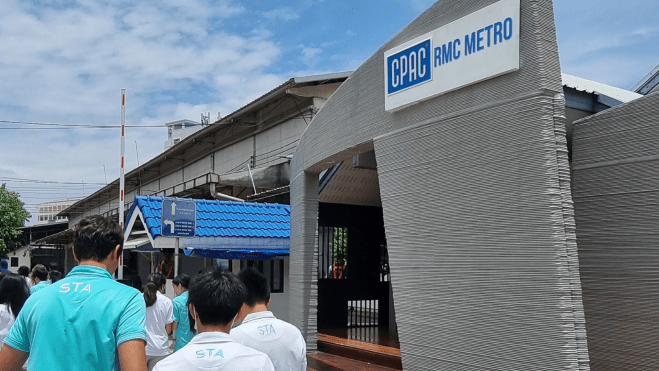
Building on the success of our partnership with SCG (Siam Cement Group) Thailand and their Love the Sea Project, the Year 9 Artificial Reef Project at St Andrews has reached an exciting new milestone: student designs are now being produced at full scale using advanced 3D concrete printing technology.
This collaboration highlights St Andrews Bangkok commitment to future-focused STEM education in Thailand, where students participate in real-world engineering challenges connected to marine conservation and sustainability. By working with industry partners like SCG, students experience meaningful learning that goes far beyond the classroom.
Real-world STEM learning in Design Technology lessons at St Andrews
Selected Year 9 students recently visited CPAC Headquarters and SCG’s state-of-the-art 3D printing facility to witness their artificial reef designs being manufactured.
This experience brought classroom learning to life, demonstrating how student-led projects can contribute to real environmental solutions.
As Aysha in Year 9 reflected:“At first, it just felt like another school project, but seeing our design actually being manufactured made it feel real. It was inspiring to know something we designed could actually help marine life.”
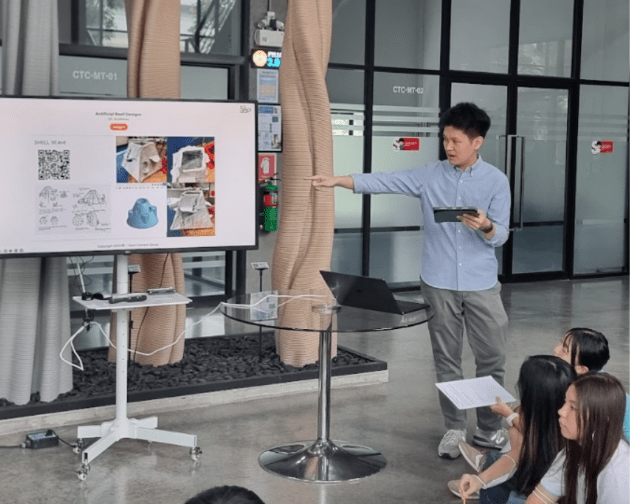
From CAD models to 3D printed reef structures
During the visit, students followed the full production journey, from digital CAD modelling to large-scale 3D concrete printing of artificial reefs. They engaged with engineers and design experts, gaining insight into sustainable construction techniques and marine ecosystem design.
This experience reinforced key concepts such as structural integrity, biomimicry, and environmental design constraints.
Amber explained, “Seeing the factory helped me understand why the design constraints were so important. Before, things like weight, measurements, and biomimicry just felt like requirements on paper, but then I saw how much they actually matter in real manufacturing.”
Developing engineering skills and design thinking
Seeing the level of testing, refinement, and precision required in production deepened students’ understanding of the engineering design process.
Lita commented, “This project taught me that design is not about getting it perfect the first time. It’s about improving, refining, and solving problems along the way.”
The experience also introduced students to potential careers in engineering and sustainable design.
As Aysha shared, “It was really cool seeing people actually working as engineers because it helped me understand what engineering could look like as a real career, which is something we normally don’t get to experience at school.”
Students are developing critical skills in problem-solving, collaboration, and innovation, key outcomes of a high-quality STEAM curriculum.
Chanya commented on the value of being involved in a project linked to a real-world challenge, “I learned that this wasn’t just a project for grades. It was connected to a real environmental issue and could actually make a difference.”
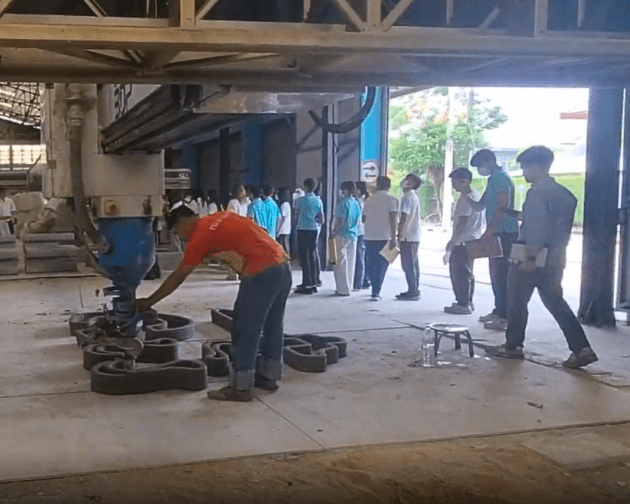
Showcasing student innovation in technology education
The next phase of the project will focus on deploying the artificial reefs in the ocean near Koh Larn. This initiative supports coral reef restoration in Thailand and builds on previous successful deployments near Pattaya.
The project demonstrates how school partnerships with industry leaders can drive real environmental impact by combining education with sustainability.
A leading example of future-focused education
Over the past four years, the Year 9 Artificial Reef Project has grown into a powerful example of project-based learning in international schools. Students collaborate with engineers, marine specialists, and manufacturing experts to create solutions with real-world applications.
This ongoing partnership reflects the dedication of St Andrews teachers in delivering innovative, industry-connected learning experiences.
By participating in projects like this, students are not only learning about global challenges, they are actively contributing to solutions that support a more sustainable future.
“I think one of the most powerful things we can do as educators is connect students with people actually working in the industries and fields we teach about. Seeing our students walk through a real manufacturing facility, speak with engineers, and watch their own reef designs being printed at full scale completely changed the way they viewed the project. Experiences like this build confidence, purpose, and a much deeper understanding of why learning matters.”
— Ashley Boivin, Head of KS3 Technology
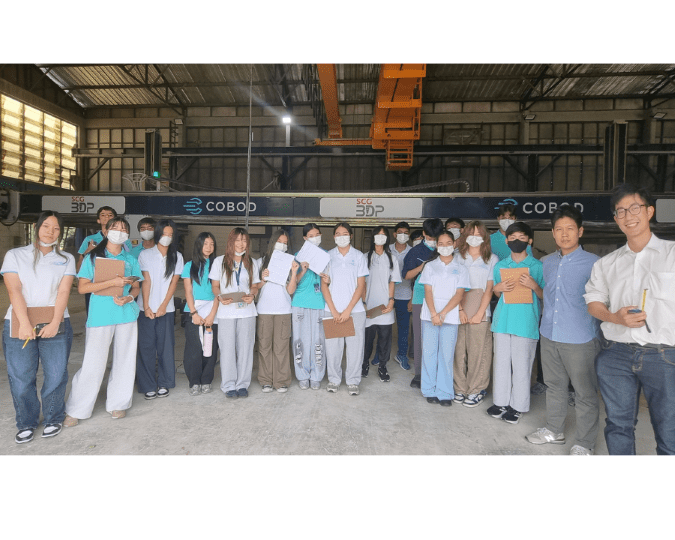
Related news
News image ![Year 9 Students Build an Artificial Reef in Rayong - Year 9 Artificial Reef in Rayong]() News | Homepage Featured Article | Global Education | High School | School News | Student Work and Success
News | Homepage Featured Article | Global Education | High School | School News | Student Work and Success
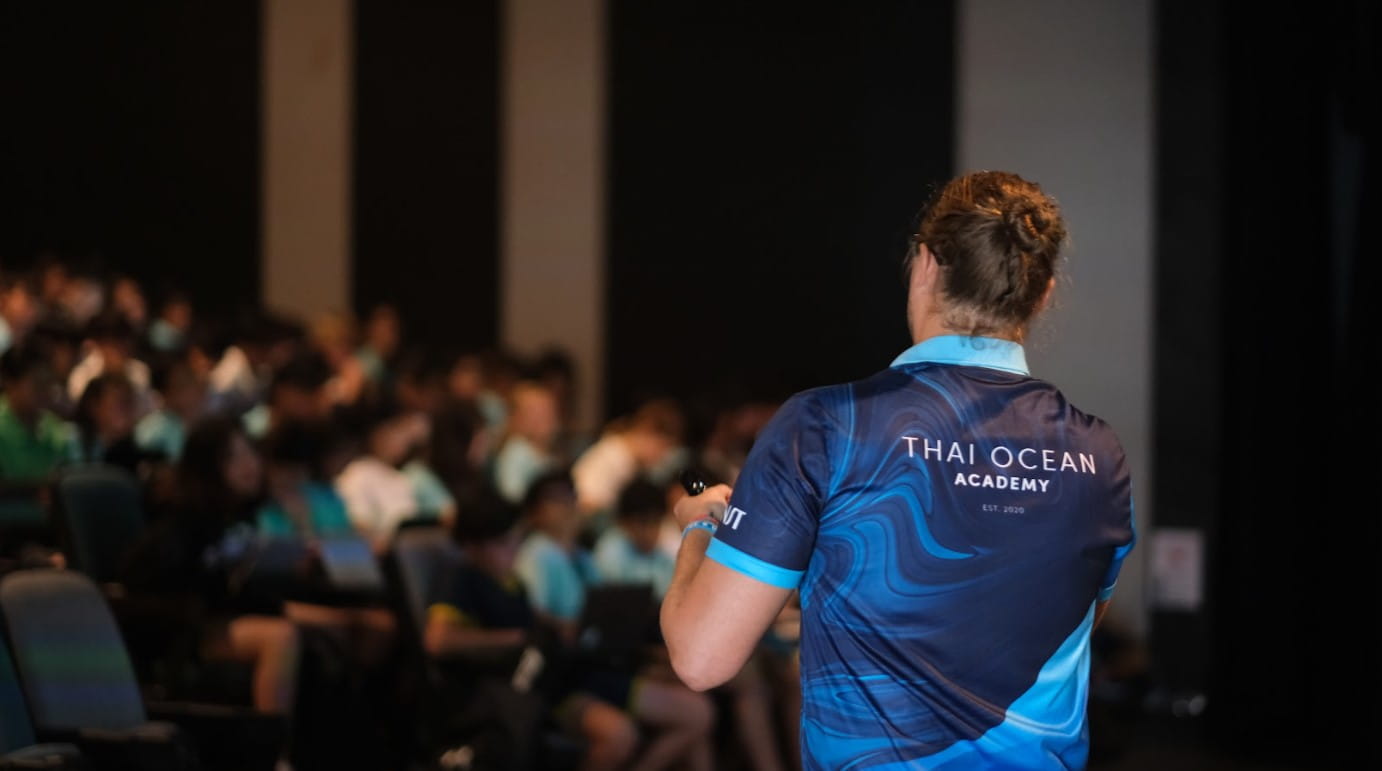 News | Homepage Featured Article | Global Education | High School | School News | Student Work and Success
 Year 9 Students Build an Artificial Reef in Rayong
At St Andrews International School Bangkok, we always seek opportunities to inspire and engage our students with real global challenges. And when such an opportunity comes, our students love to dive in. One of the most exciting initiatives for our Year 9 students is the Artificial Reef Project. A fantastic blend of education, innovation, and environmental stewardship, this extraordinary project not only addresses coral-related issues in Thailand but also truly embodies all the components of STEAM education – Science, Technology, Engineering, Arts, and Mathematics.
News image ![Year 9 STEAM Artificial Reef Project - Part 1 - year-9s-reef-project]() News | High School | School News | Student Work and Success
News | High School | School News | Student Work and Success
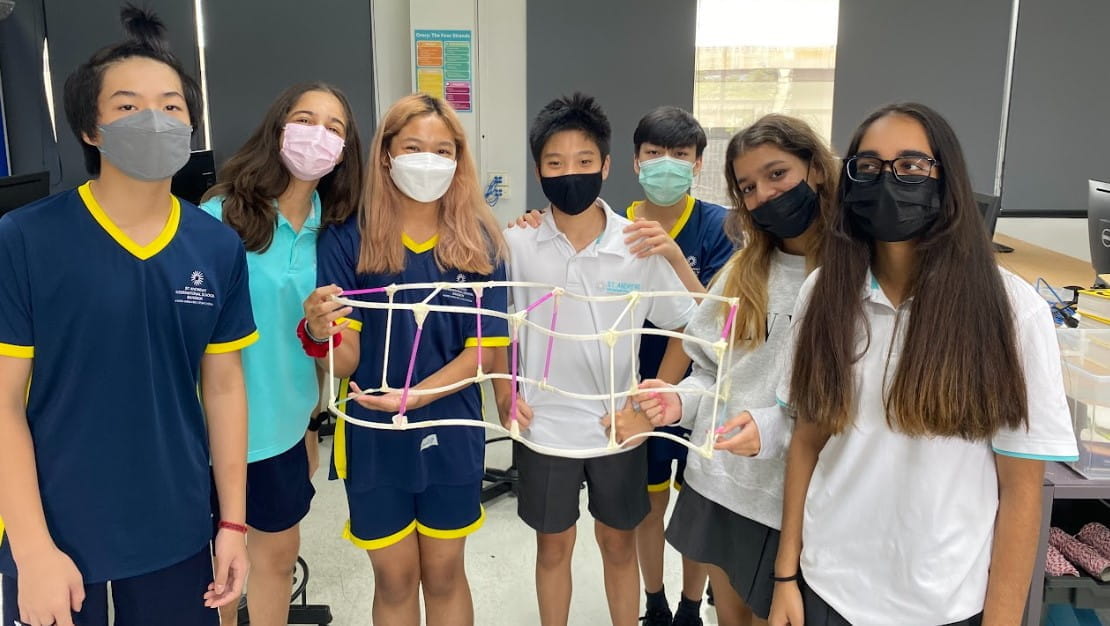 News | High School | School News | Student Work and Success
 Year 9 STEAM Artificial Reef Project - Part 1
Year 9s have been working on a project that goes beyond skill development as it will have a real impact on the world when complete.
News image ![STA Explores the future of biomedical innovation at Mahidol - STA visit to Biomedical Engineering at Mahidol University]() Blog | High School
Blog | High School
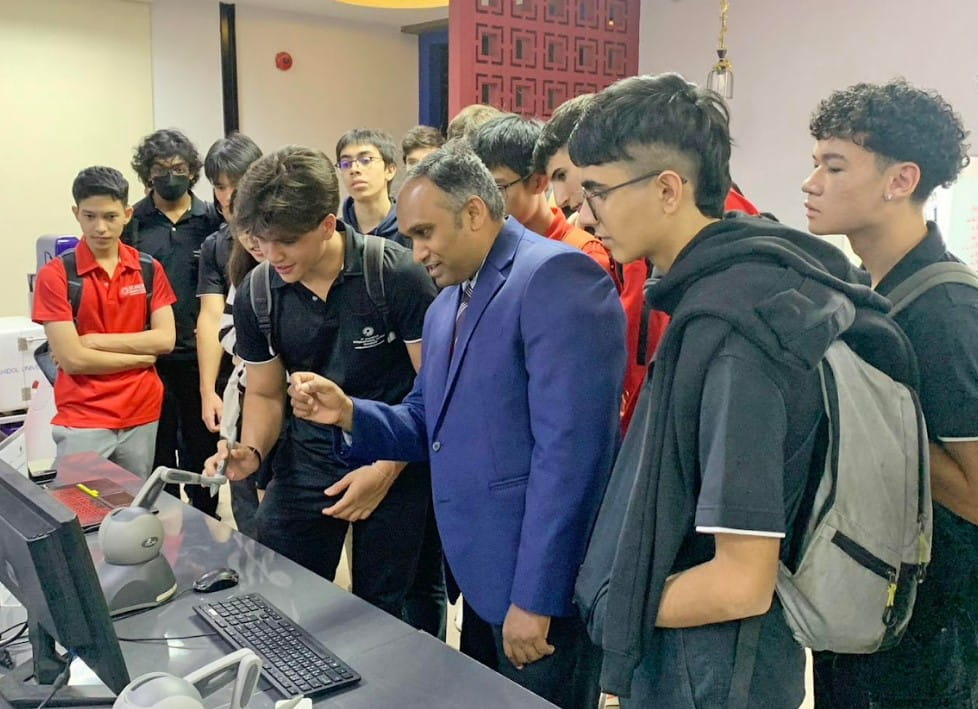 Blog | High School
 STA Explores the future of biomedical innovation at Mahidol University: A fascinating journey into robotics, rehabilitation tech, and cutting-edge 3D printing!
St Andrews Bangkok students explored cutting-edge advancements at the Biomedical Engineering Department at Mahidol University. Guided by Assoc. Prof. Dr. Jackrit Suthakorn, our students delved into the intersection of research, innovation, and creativity, laying the foundation for potential future collaborations in this transformative field.
News image ![Service-learning in Design and Technology: Creating impact - Mae Sot Service Learning Trip]() News
News
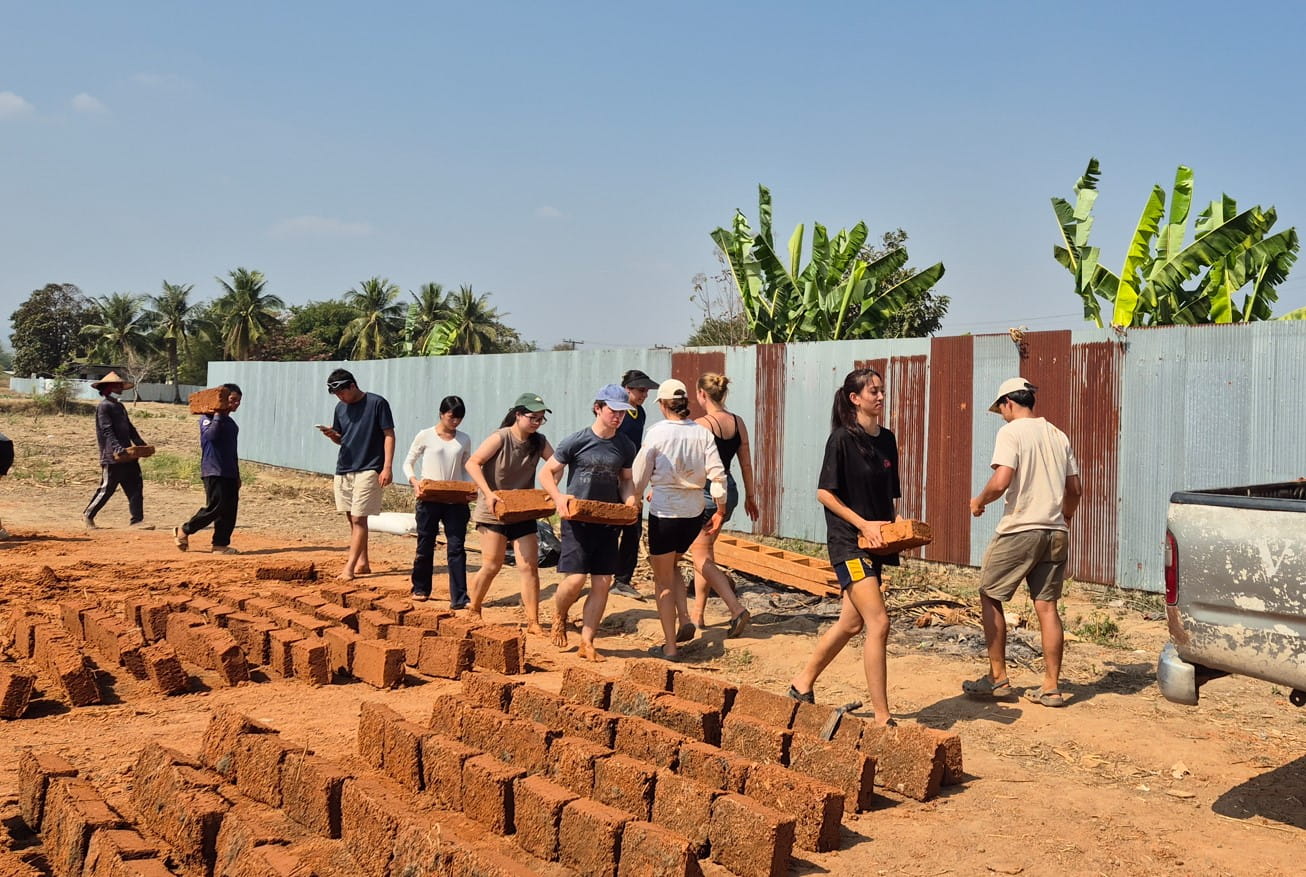 News
News Service-learning in Design and Technology: Creating impact through real-world projects
The integration of Service-Learning into the Key Stage 3 Design and Technology curriculum aimed to deepen students' understanding of real-world challenges through project-based learning. By engaging with the needs of a Burmese migrant/refugee community in Thailand, students developed empathy, problem-solving skills, and a sense of social responsibility. Their term project focused on recognizing key challenges, proposing design solutions and fund raising, which was further expanded through an extracurricular activity where IB Diploma students refined these ideas for a migrant children's school. The initiative culminated in a trip to Mae Sot, where 17 students across different age groups collaborated with NGOs and architects on-site to engage in building parts of the school. This experience fostered peer mentorship, hands-on learning, and personal reflection on the impact of design and community engagement.