
14 October, 2026
Why study Art at GCSE and A Level? The value of creative education
Art and Design is far more than a creative subject. Discover how studying Art at GCSE and A Level develops academic discipline, critical thinking and independent learning, while preparing students for a wide range of university and career pathways. Explore the value of Art education at The British School of Tashkent.
.jpg?h=249&iar=0&w=374&rev=5c3dacca1895403ea4fbab0c28e6fe0d&hash=E43DDE2E55CCD139473D7779AE3ADAD8)
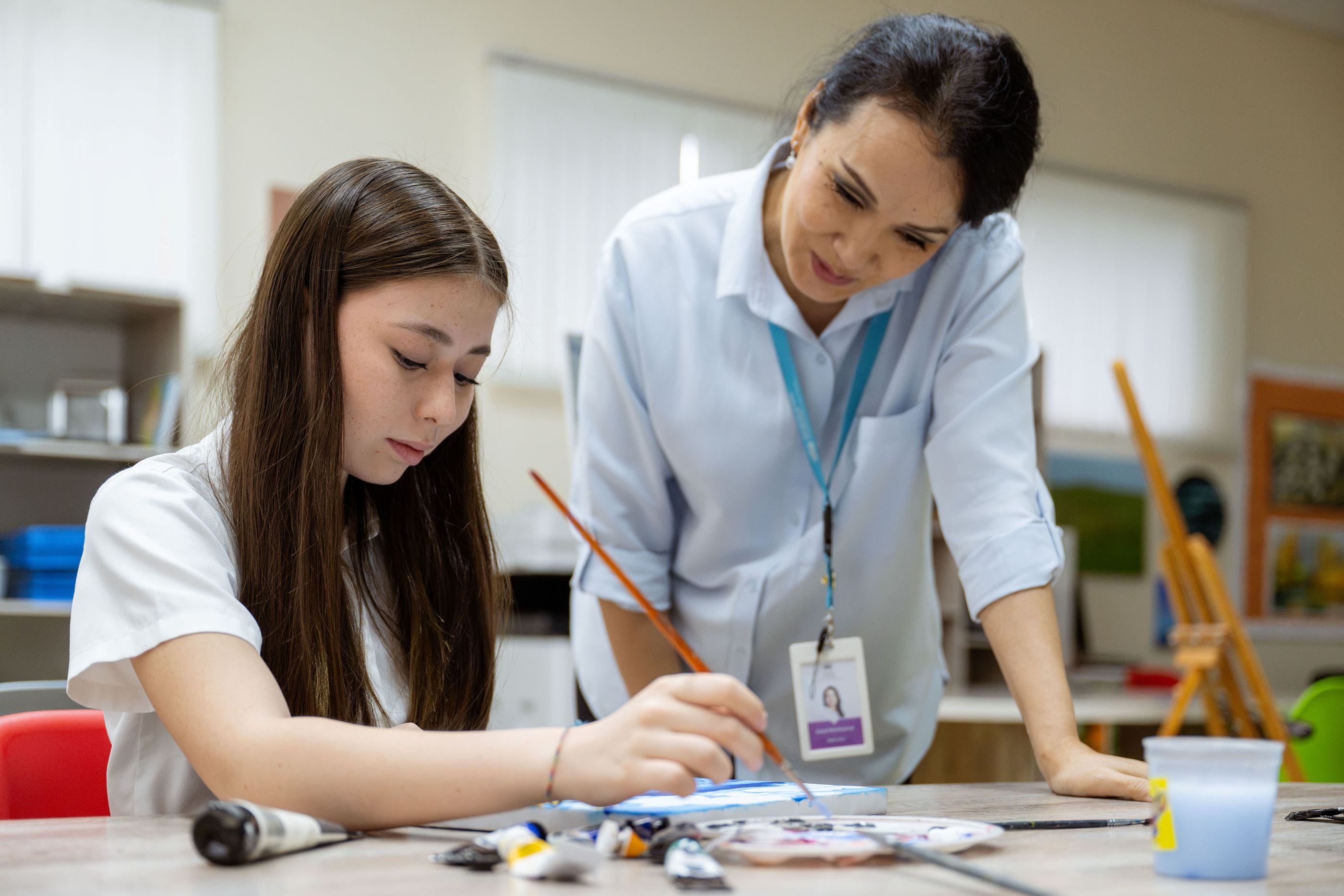
Art is sometimes seen as a subject for students who enjoy drawing or hope to pursue a creative career. Yet at IGCSE and A Level, it demands far more than artistic talent. Students investigate ideas, make informed decisions, experiment with materials and explain the thinking behind their work.
For families weighing up subject choices, understanding this academic depth can change how they view Art and Design.
At The British School of Tashkent (BST), IGCSE Art and Design includes painting, drawing, printmaking, sculpture and photography. Students develop a portfolio showing how their ideas progress, rather than simply submitting finished pieces. The portfolio accounts for 60% of the qualification, with the remaining 40% assessed through an externally set assignment.
Students are assessed not only on what they create, but on how they investigate, develop and communicate their ideas.
A student exploring identity, for example, might investigate portraiture from different cultures, photograph meaningful objects, experiment with mixed media and revise their composition as their thinking evolves. The final artwork is important, but so is the intellectual journey behind it.
Managing such projects requires organisation, resilience and thoughtful responses to feedback, all valuable preparation for independent university study.
For Ms Rebecca Wolfe, Head of Secondary at BST, this reflects the importance of recognising academic achievement across the curriculum. "When we talk about academic excellence, we must recognise that it extends beyond traditionally academic subjects," she explains. "Art and Design challenges students to think critically, work independently, make informed decisions and persevere through complex projects."
The World Economic Forum's Future of Jobs Report 2025 identifies creative thinking among employers' five most valued core skills. Art offers students a practical setting to apply this thinking, including learning that an unsuccessful experiment may lead to a better solution.
Art is not the only subject that develops creativity, but its combination of analytical, practical and imaginative work deserves recognition.
The University of the Arts London's portfolio guidance, for example, places importance on research, experimentation and creative development, not simply polished finished pieces.
Its relevance extends further. Digital product design, for example, combines visual communication with technical understanding. A student interested in architecture might study Art alongside Mathematics and Physics, while another may value the perspective Art brings to an entirely different academic pathway.
Choosing Art need not mean choosing a single career. It can broaden the skills students bring to future opportunities.
Ms Guzal Narbaeva, Head of Creative and Performing Arts at BST, believes that learning to embrace the creative process is essential to students' development. "One of the most valuable things students learn through Art is that their first idea doesn't have to be their final one," she explains. "By experimenting with materials, exploring different perspectives and learning from mistakes, they develop the confidence to take creative risks and think independently. These experiences help students become more resourceful, resilient and confident in approaching challenges both inside and outside the classroom."
This approach reflects our belief that academic ambition and creativity belong together. Whether students pursue a creative discipline or a different pathway, Art can help them discover new strengths and approach challenges with confidence.
Discover how our Secondary School helps students develop their interests and prepare for the future.
For families weighing up subject choices, understanding this academic depth can change how they view Art and Design.
Art is a rigorous academic subject
Creating a successful piece of art involves research, analysis, experimentation and reflection. Students study artists and visual cultures, develop ideas in sketchbooks and test different techniques before refining their final outcomes.At The British School of Tashkent (BST), IGCSE Art and Design includes painting, drawing, printmaking, sculpture and photography. Students develop a portfolio showing how their ideas progress, rather than simply submitting finished pieces. The portfolio accounts for 60% of the qualification, with the remaining 40% assessed through an externally set assignment.
Students are assessed not only on what they create, but on how they investigate, develop and communicate their ideas.
At A Level, independence becomes essential
A Level Fine Art takes this approach further. BST's course includes a personal investigation combining practical work, supporting research and a written study of at least 1,000 words. Students must sustain an enquiry, evaluate influences and justify their decisions.A student exploring identity, for example, might investigate portraiture from different cultures, photograph meaningful objects, experiment with mixed media and revise their composition as their thinking evolves. The final artwork is important, but so is the intellectual journey behind it.
Managing such projects requires organisation, resilience and thoughtful responses to feedback, all valuable preparation for independent university study.
For Ms Rebecca Wolfe, Head of Secondary at BST, this reflects the importance of recognising academic achievement across the curriculum. "When we talk about academic excellence, we must recognise that it extends beyond traditionally academic subjects," she explains. "Art and Design challenges students to think critically, work independently, make informed decisions and persevere through complex projects."
Creative thinking has value beyond Art
Creativity is not the opposite of academic thinking. It often depends on it. Original ideas become stronger when students research, test, question and improve them.The World Economic Forum's Future of Jobs Report 2025 identifies creative thinking among employers' five most valued core skills. Art offers students a practical setting to apply this thinking, including learning that an unsuccessful experiment may lead to a better solution.
Art is not the only subject that develops creativity, but its combination of analytical, practical and imaginative work deserves recognition.
Where can studying Art lead?
Art can provide a foundation for degrees and careers in fine art, architecture, graphic design, animation, fashion and photography. For many creative university courses, portfolios demonstrate not only technical skill but curiosity, experimentation and the development of original ideas.The University of the Arts London's portfolio guidance, for example, places importance on research, experimentation and creative development, not simply polished finished pieces.
Its relevance extends further. Digital product design, for example, combines visual communication with technical understanding. A student interested in architecture might study Art alongside Mathematics and Physics, while another may value the perspective Art brings to an entirely different academic pathway.
Choosing Art need not mean choosing a single career. It can broaden the skills students bring to future opportunities.
Exploring Art at BST
At BST, specialist teachers encourage students to investigate ideas, develop technical skills and take ownership of their creative work. Our purpose-built campus provides dedicated spaces for practical learning, supporting students as they move from initial concepts to considered outcomes.Ms Guzal Narbaeva, Head of Creative and Performing Arts at BST, believes that learning to embrace the creative process is essential to students' development. "One of the most valuable things students learn through Art is that their first idea doesn't have to be their final one," she explains. "By experimenting with materials, exploring different perspectives and learning from mistakes, they develop the confidence to take creative risks and think independently. These experiences help students become more resourceful, resilient and confident in approaching challenges both inside and outside the classroom."
This approach reflects our belief that academic ambition and creativity belong together. Whether students pursue a creative discipline or a different pathway, Art can help them discover new strengths and approach challenges with confidence.
Discover how our Secondary School helps students develop their interests and prepare for the future.
Related news
News image ![News Default Image]() Blog
Blog
 Blog
Blog Why student wellbeing is one of the strongest predictors of success
Student wellbeing plays a vital role in academic success. Discover why wellbeing matters and how strong schools create environments where students feel supported, connected and ready to thrive.
News image ![How schools support real academic progress over time - academic progress over time BST]() Blog
Blog
 Blog
Blog How teachers support real academic progress over time
Discover how The British School of Tashkent tracks progress and supports real learning over time.