




We use cookies to improve your online experiences. To learn more and choose your cookies options, please refer to our cookie policy.
17 March, 2026
Choosing international schools in Cambodia with long term stability

Parents considering international schools in Cambodia often focus first on curriculum, facilities, or examination pathways. These are important factors. But another question matters just as much: how consistently a school can guide a child’s education over many years.
A child’s education unfolds over a long period. During that time, teaching approaches evolve, new research shapes classroom practice, and schools refine their programmes. For families, the key question is not whether schools change, but how those changes are managed while keeping students’ learning on track.
At Northbridge International School Cambodia, leaders focus on maintaining clear direction for students even as education continues to develop.
“Schools should never remain static,” explains Jason Berkeley, Assistant Head of Secondary at Northbridge International School Cambodia. “Education is always evolving, and schools need to stay aware of new research and new approaches. But any change has to be carefully considered. Our starting point is always the same question: what is in the best interests of the student?”
This balance between improvement and stability is often what gives families confidence in a school’s long-term direction.
Leadership that plans beyond the current school year
One factor that helps provide stability in international schools in Cambodia is strong academic leadership.
While teachers work closely with students each day, school leaders must also think further ahead. They consider how programmes will develop over the next stages of a student’s education and ensure that decisions today continue to support long term progress.
“The leadership team has to look at the bigger picture of a young person’s development,” says Mr Berkeley. “Teachers are focused on the day to day learning in their classrooms, but school leaders are also thinking about the next stage of the journey and what students will need in the future.”
This long view helps schools maintain a clear direction even as new ideas and developments emerge in education.
Introducing change carefully and thoughtfully
Education does not stand still. New research, evolving university expectations, and developments in teaching practice all influence how schools design their programmes.
The important question is how these changes are introduced.
“When we consider new academic models or approaches, we take a balanced approach,” Mr Berkeley explains. “We stay aware of what is happening in education, but we also look carefully at whether a change will genuinely improve outcomes for students.”
This careful evaluation helps ensure that improvements strengthen the school’s programme without disrupting the continuity students need.
Clear expectations give students stability
For many students, stability at school comes from knowing exactly what is expected of them.Clear routines, consistent teaching practices, and well defined learning goals help students focus on their progress, even when the wider world around them may be changing.
“Many students find comfort in clear expectations and routines,” says Mr Berkeley. “When students understand what they are working towards and how to get there, it becomes easier for them to focus on their goals.”
Teachers support this clarity through structured lessons, regular feedback, and consistent monitoring of student progress.
These systems help maintain a strong learning environment where students can move steadily forward in their studies.
Designing learning with the end goal in mind
Another way schools create continuity is by planning learning with long term outcomes clearly in view.
At Northbridge, curriculum planning often follows a principle known as backwards design. Teachers begin by identifying the knowledge and skills students should develop by the end of a programme, then plan learning experiences that guide students towards those outcomes.
“IB principles such as backwards design help us think about a student’s development over time,” Mr Berkeley explains. “We start by considering the end goal and then plan the learning steps that will move students steadily towards that goal.”
This structured approach allows teachers to track progress carefully and ensure that learning builds logically from one stage to the next.
Open communication with families
For families choosing between international schools in Cambodia, communication between school and home is another important sign of stability.
Schools inevitably adjust programmes as education evolves. When that happens, parents should understand what is changing and why.
“Parents are important partners in their child’s education,” Mr Berkeley explains. “When developments take place, we believe it is important to communicate clearly and invite questions and feedback from families.”
This open dialogue helps build trust and ensures that families understand how the school supports their child’s long-term development.
Looking at the full journey of a child’s education
Choosing a school is ultimately a long-term decision. Families are not simply selecting a programme for the next academic year. They are choosing an environment that will guide their child through many stages of learning and development.In strong international schools in Cambodia, stability comes from thoughtful leadership, clear expectations, and careful planning for students’ long term progress.
At Northbridge International School Cambodia, these principles guide how programmes are designed and how changes are introduced, ensuring that students continue moving steadily towards their academic and personal goals.
Families who would like to understand more about how schools maintain continuity over time are always welcome to speak with academic leaders to explore how these systems support students throughout their education.
Related news
News image ![IBDP Results 2026]() News | Whole School
News | Whole School
 News | Whole School
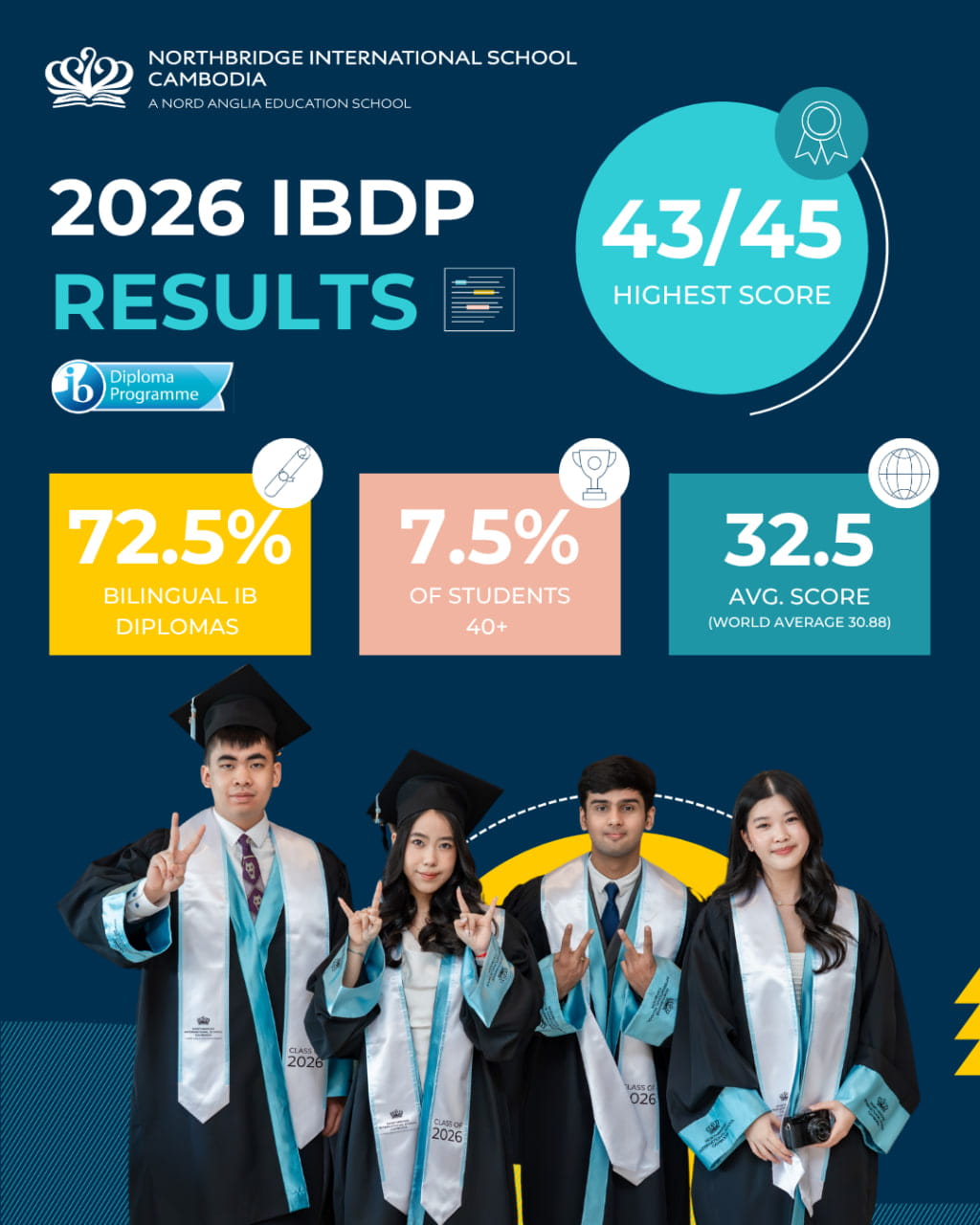
 NISC Celebrates Outstanding 2026 IBDP Results
Celebrating exceptional 2026 IBDP results, Northbridge students surpassed the global average, achieved a top score of 43/45, and received nearly 300 university offers.
News image ![football2]() Blog | Whole School | Sport
Blog | Whole School | Sport
 Blog | Whole School | Sport
 Sport at Northbridge Shaping Confident Competitors
Discover how sport at Northbridge International School inspires participation, growth and excellence, empowering students to thrive as confident athletes and global citizens.


