




We use cookies to improve your online experiences. To learn more and choose your cookies options, please refer to our cookie policy.
20 March, 2026
What international schools choose to prioritise in learning, and why it matters for families

Parents exploring international schools in Cambodia often begin by looking at visible features such as facilities, subject choice, or extracurricular opportunities. These elements matter, but they are only part of the picture. The deeper question many families eventually ask is what a school truly prioritises in learning, and how those priorities shape a child’s experience every day.
What does the school focus on most consistently, and how does that influence the way children learn, develop, and prepare for the future?
At Northbridge International School Cambodia (NISC), school leaders believe that the most meaningful priorities are often reflected in daily routines and teaching approaches.
Frances Morton, Principal of Northbridge International School Cambodia, explains that a school’s educational priorities should be visible in how learning unfolds each day.
“From my perspective, the school places the strongest emphasis on a few core areas that shape a child’s experience over time,” she says. “Strong literacy and numeracy form the foundation of learning across all subjects, and alongside that we focus on developing character, emotional security, and meaningful engagement with learning.”
Understanding these priorities can help families interpret what they see when they research or visit an international school.
The foundations that support long-term learning
One of the most consistent priorities within international education is building strong foundational skills.
Literacy and numeracy are often the starting point for this work. These skills do more than support early academic progress. They enable students to access more complex learning as they move through different stages of their education.
“Literacy and numeracy are at the core of daily instruction,” Ms Morton explains. “When students develop strong foundations in these areas, they gain the tools they need to succeed across subjects, whether they are analysing texts, interpreting data, or solving complex problems.”
At NISC, these foundations are built through structured learning blocks in the early years and primary school, where reading, writing, and mathematical thinking are taught systematically and reinforced across the curriculum.
This approach ensures that as students progress through the school, they can engage confidently with increasingly demanding academic work.
How daily routines reinforce learning priorities
A school’s priorities are also reflected in how the school day is organised.
Consistent routines allow teachers to protect time for focused learning while also creating space for reflection and personal development. For example, dedicated literacy and numeracy sessions in primary years ensure that students receive sustained attention in core areas.
At the same time, routines across the school help students develop independence and responsibility.
“Daily routines play a significant role in building confidence,” says Ms Morton. “Students gradually take greater responsibility for their learning, their organisation, and their decision making. Over time, parents often notice that their children become more confident and independent both at school and at home.”
These routines also help teachers monitor progress closely. Structured schedules allow them to observe how students’ skills are developing, identify areas where additional support is needed, and adjust instruction accordingly.
Building character alongside academic progress
Academic development is closely connected to a student’s wellbeing and sense of belonging. For many international schools, supporting character development is therefore a key priority alongside academic achievement.
At Northbridge International School Cambodia, this emphasis is visible in classroom expectations and the way relationships are built across the school community.
“A safe, nurturing environment is essential for learning,” Ms Morton explains. “Students are encouraged to develop qualities such as resilience, respect, responsibility, and empathy. When children feel emotionally secure, they are more willing to participate actively in their learning.”
These values are reinforced through daily classroom interactions, collaborative projects, and clear behavioural expectations that are consistently applied across the school.
Over time, students learn how to navigate challenges, work effectively with others, and manage their own learning.
Engaged learning that builds curiosity
Another important priority within holistic education is ensuring that learning remains purposeful and engaging.
Rather than focusing only on memorising information, many international schools aim to help students explore ideas, ask questions, and apply their knowledge in different contexts.
“The learning we prioritise is purposeful and often collaborative,” Ms Morton says. “Students work together, investigate questions, and develop curiosity about the world around them. The goal is to help them become lifelong learners, not simply successful test takers.”
This approach supports the development of skills such as communication, critical thinking, and collaboration, which are increasingly important in global citizenship education and modern international learning environments.
Supporting individual progress over time
While shared priorities shape the school’s approach, teachers also focus on supporting the progress of each individual student.
Within international school education, monitoring learning over time is a key part of ensuring that every student receives the right level of challenge and support.
“Teachers pay close attention to each child’s progress,” Ms Morton explains. “The priority is helping students develop at their own pace while ensuring they continue to grow academically and personally.”
Regular assessment, teacher observation, and communication with families help ensure that progress remains visible and well supported throughout a student’s time at school.
Understanding what truly matters in international education
For families considering international school education, looking beyond visible features to the deeper priorities of learning can provide valuable insight.When schools consistently emphasise strong foundations, purposeful engagement, character development, and individual growth, these priorities shape a learning environment that supports students over many years.
At Northbridge International School Cambodia, these principles guide daily classroom practice and the broader educational philosophy of the school.
Parents who are exploring international education are always welcome to continue the conversation with academic leaders to better understand how these priorities translate into everyday learning for students.
Related news
News image ![IBDP Results 2026]() News | Whole School
News | Whole School
 News | Whole School
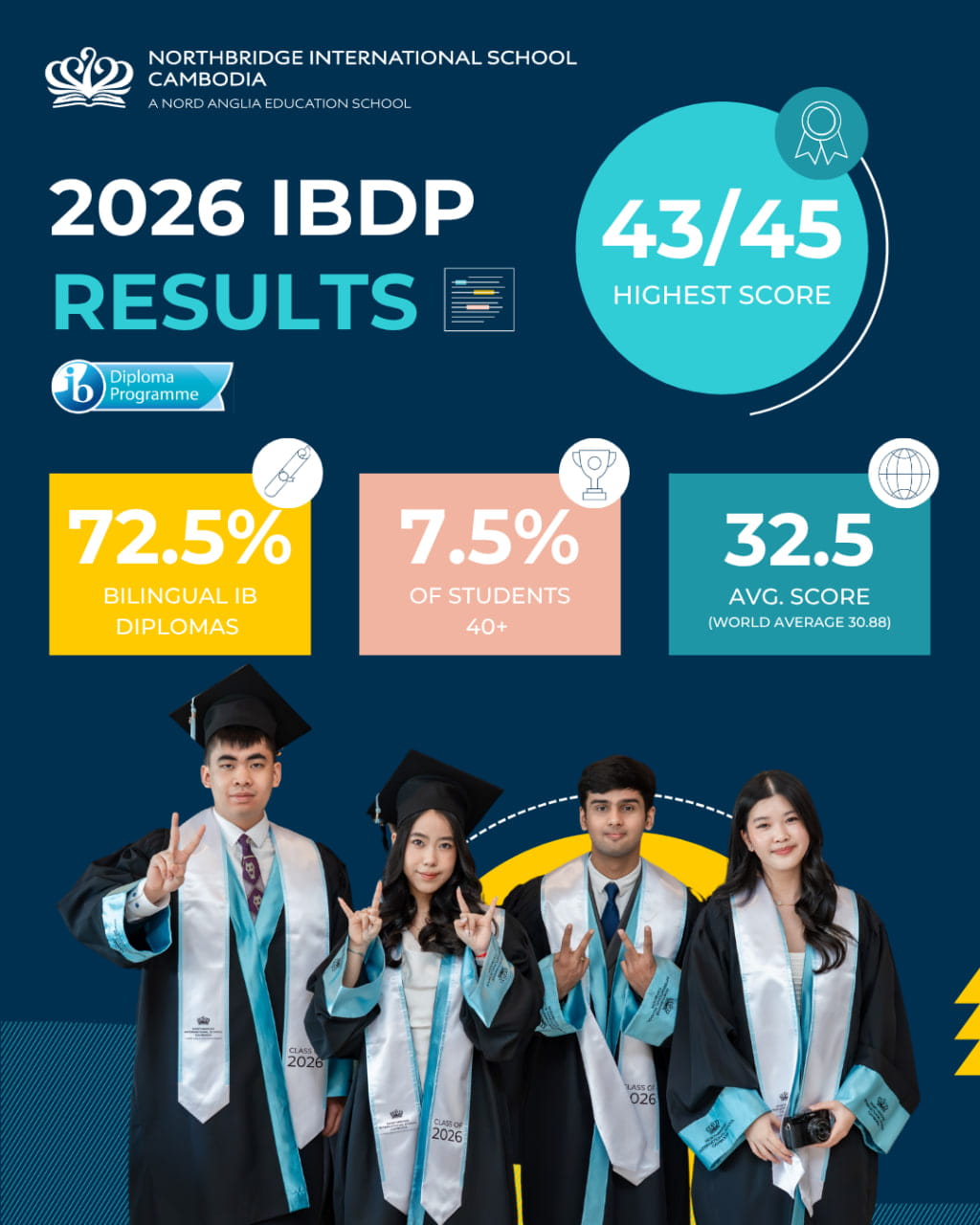
 NISC Celebrates Outstanding 2026 IBDP Results
Celebrating exceptional 2026 IBDP results, Northbridge students surpassed the global average, achieved a top score of 43/45, and received nearly 300 university offers.
News image ![football2]() Blog | Whole School | Sport
Blog | Whole School | Sport
 Blog | Whole School | Sport
 Sport at Northbridge Shaping Confident Competitors
Discover how sport at Northbridge International School inspires participation, growth and excellence, empowering students to thrive as confident athletes and global citizens.


