

We use cookies to improve your online experiences. To learn more and choose your cookies options, please refer to our cookie policy.

17 July, 2026
What is metacognition and why does it matter in teaching?

Choosing the right international school in Bangkok is about more than academics. Parents want to know: How will this school help my child grow into a confident, independent learner? At St Andrews International School Bangkok, the answer lies in metacognition, often described as “learning how to learn.”
You’ve probably had that familiar conversation after school: “What did you learn today?” And your child replies, “I don’t know. Nothing really.”
It’s not that they didn’t learn anything; it’s that they may not yet know how to think about their learning. Metacognition changes that. By helping students reflect on how they learn, recognise the strategies that work best for them, and apply knowledge in new situations, St Andrews equips children with the skills to succeed not just in the classroom, but in life.
What is metacognition?
Metacognition means “thinking about your thinking.” It’s the ability to understand how you learn, recognise what strategies work best for you, and take control of your own learning process. When students develop metacognitive skills, they become more confident and independent learners who can plan, monitor, and evaluate their progress effectively.
Ms Meg King, Year 2 Leader, explains: “Metacognition helps children pause and reflect. It’s not just about what they’ve learned, but how they’ve learned it, and that awareness is what builds independence.”
The three key elements of metacognition
Self-awareness
Self-awareness helps students understand their goals, strengths, and areas for growth. It allows them to reflect on what motivates them and identify how prepared they are to tackle new challenges.
Self-regulation
Self-regulation is the ability to take charge of one’s learning. If a strategy isn’t working, metacognitive learners can adapt and try a different approach. This flexibility builds resilience and helps them view mistakes as opportunities to improve rather than setbacks.
Knowledge transfer
True learning happens when students can apply what they know in new and unfamiliar situations. By connecting ideas across subjects and solving real-world problems, students deepen their understanding and strengthen their ability to use knowledge creatively and meaningfully.

Why metacognition matters for families
In 2024, Nord Anglia Education partnered with Boston College and Project Zero at the Harvard Graduate School of Education to launch the Metacognition Research Project, inviting many schools, including St Andrews, to participate. This ongoing initiative features multiple research projects exploring different ways in which metacognitive skills can help students become confident, creative thinkers and problem-solvers in an ever-changing world.
A baseline study on metacognition conducted by Boston College across 17 Nord Anglia schools between February and April 2024 surveyed 2,429 students from Years 3 to 9 and 389 teachers from early years through Year 13.
The results showed strong support for metacognitive learning from the students:
Over 50% of the students agreed that it improves their thinking and helps them succeed both in and beyond school, reporting noticeable gains in creativity, collaboration, curiosity, and self-awareness.
84% said they had become better at recognising their strengths
75% felt more independent.
The teachers' responses were equally positive, with over 80% agreeing that metacognition enhances learning and prepares students for life beyond the classroom.
Integrating metacognition into the curriculum
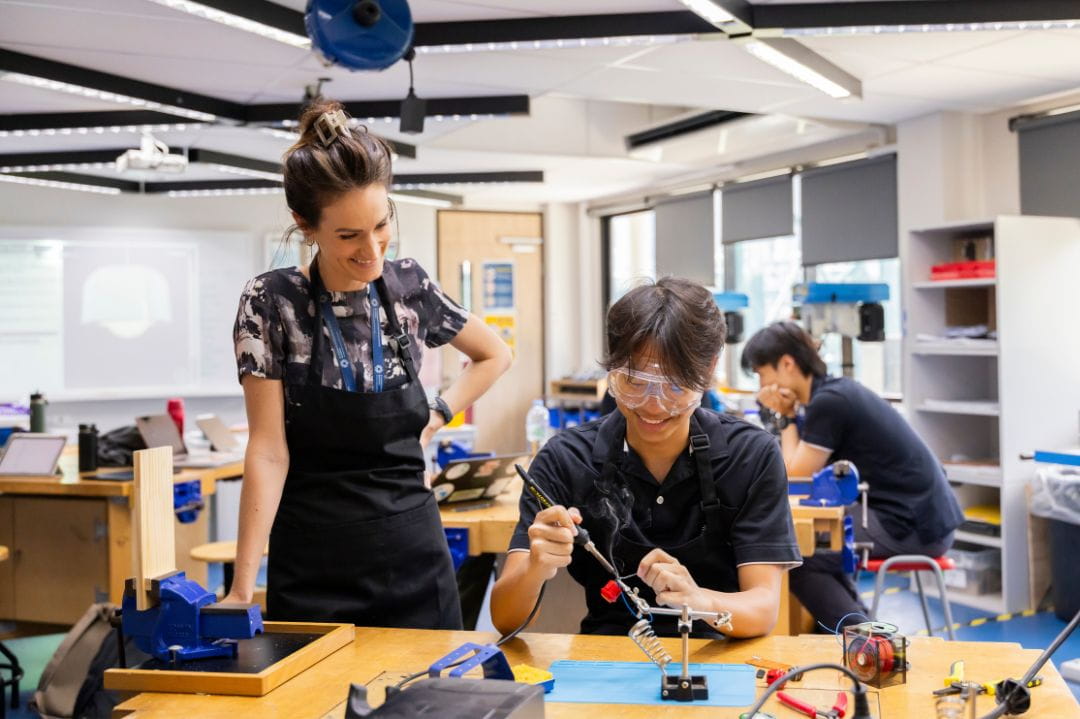
At St Andrews Bangkok, metacognition is embedded into daily learning through our Learner Ambitions, known as the 6Cs: compassion, creativity, commitment, critical thinking, curiosity, and collaboration.To help students actively develop and reflect on these skills, teachers use Thinking Routines, simple, age-appropriate strategies that make thinking visible. These routines are implemented in six-week blocks, focusing on each of the 6Cs, based on research conducted by Project Zero, a research centre at the Harvard Graduate School of Education.
For example, during a six-week focus on curiosity, students use the “See, Think, Wonder” routine. This encourages them to observe closely, interpret what they notice, and ask thoughtful questions to deepen curiosity and understanding across all subjects.
Ms Meg explains: “When we used the ‘See, Think, Me, We’ routine, I saw children move from simple acts of kindness, like sharing, to deeper empathy and inclusion. That shift showed me how metacognition doesn’t just improve academic outcomes — it shapes the way students understand themselves and others.”
Importantly, this process is not graded. Instead, it gives students the space to understand themselves as learners, practise essential metacognitive skills, and develop the habits of mind that underpin lifelong learning and personal development.
Preparing students for the future
At St Andrews, we are committed to helping our students take ownership of their learning, think deeply, and use their skills in every challenge they face—both in school and beyond. By nurturing metacognitive thinking, we prepare our students for a future where they can confidently shape their own paths and succeed in whatever they aspire to do or be.
Related news
News image ![How metacognition builds independent minds - metacognition independent minds st andrews bangkok]() Blog | Academic
Blog | Academic
 Blog | Academic
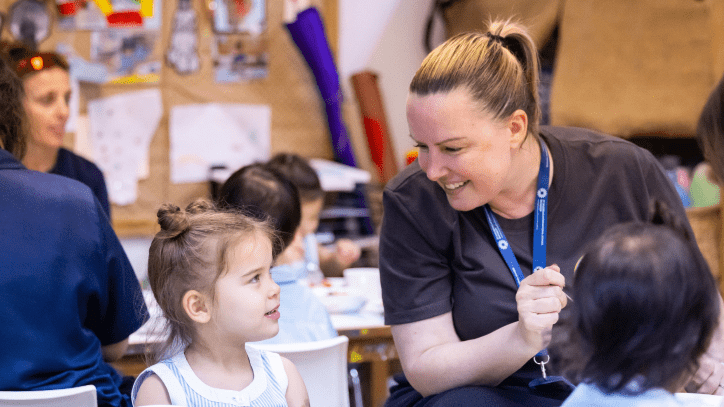
 Metacognition in classrooms: how St Andrews builds independent minds
For families considering international schools in Bangkok, one of the most important questions is: How does this school help my child grow, not just academically, but as a confident, independent learner? At St Andrews International School Bangkok, the answer lies in metacognition, a teaching approach that helps children understand how they learn, reflect on their progress, and build the independence to succeed in school and beyond.
News image ![metacognition whole school - metacognition whole school st andrews bangkok]() Blog | Academic | Collaborations
Blog | Academic | Collaborations
 Blog | Academic | Collaborations
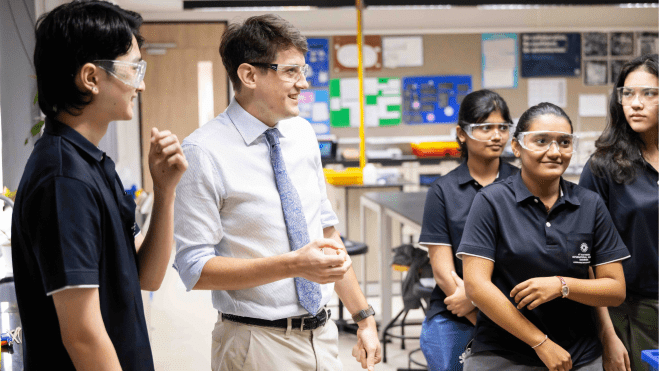
 How teachers implement metacognition across the school
Metacognition, often described as “thinking about thinking”, is one of the most powerful skills a child can develop. At St Andrews Bangkok, it is not taught as a separate subject but embedded into everyday teaching strategies, helping students reflect on how they learn rather than just what they learn. By asking themselves questions such as What do I already know? Or is this strategy working? Students build resilience, adaptability, and independence
News image ![Teaching kindness with data - Teaching kindness with data st andrews bangkok]() Blog | Academic | Collaborations | Staff
Blog | Academic | Collaborations | Staff
 Blog | Academic | Collaborations | Staff
 How data is used to embed values of compassion and empathy in the curriculum
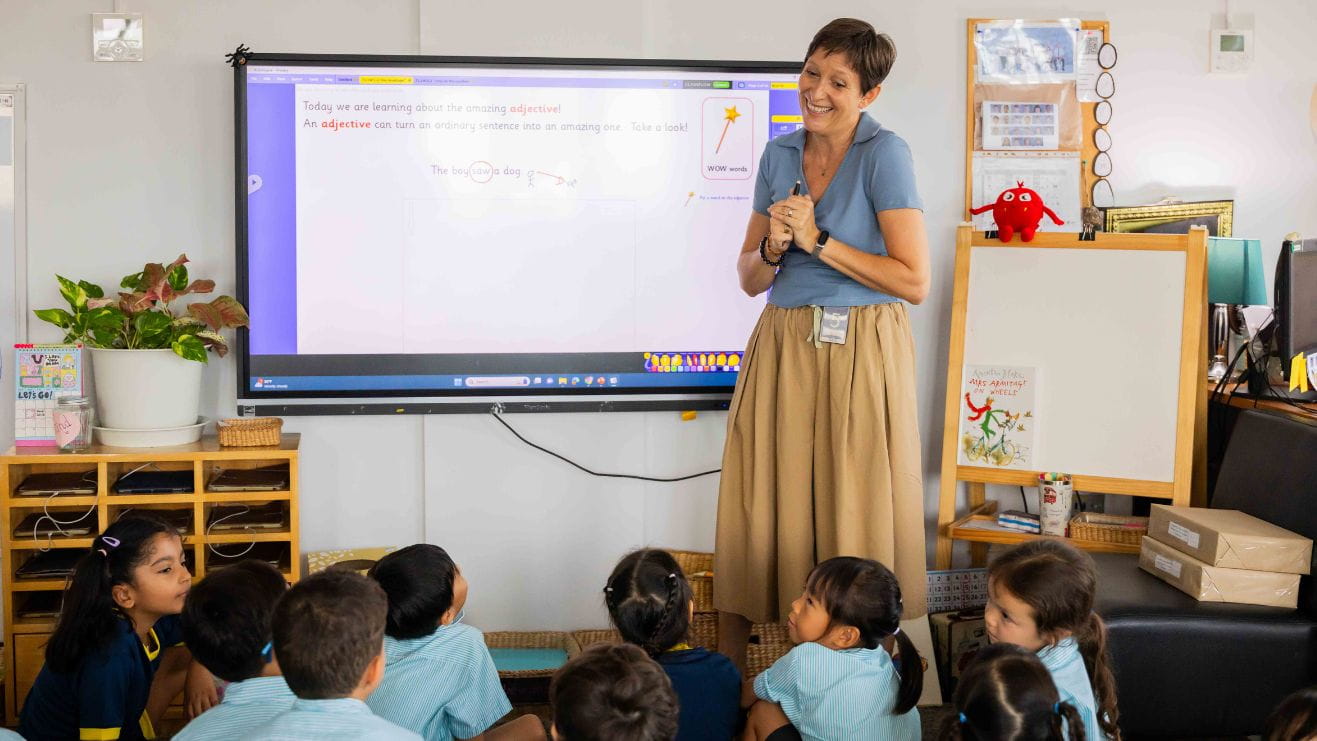
St Andrews Bangkok's research-led approach to early years education focuses on fostering compassion and empathy. Through the Nord Anglia Metacognition Project, a study using the Harvard "See, Think, Me, We" routine demonstrated a significant increase in students' understanding of kindness, shifting their perspective from self-serving actions to genuine empathy for others.
News image ![SLRI IGCSE IB Physics Student Internship - SLRI IGCSE IB Physics Student Internship]() Blog | Academic | High School | Senior Studies
Blog | Academic | High School | Senior Studies
 Blog | Academic | High School | Senior Studies
 St Andrews Bangkok IGCSE and IB Physics students gain real-world experience through summer internship
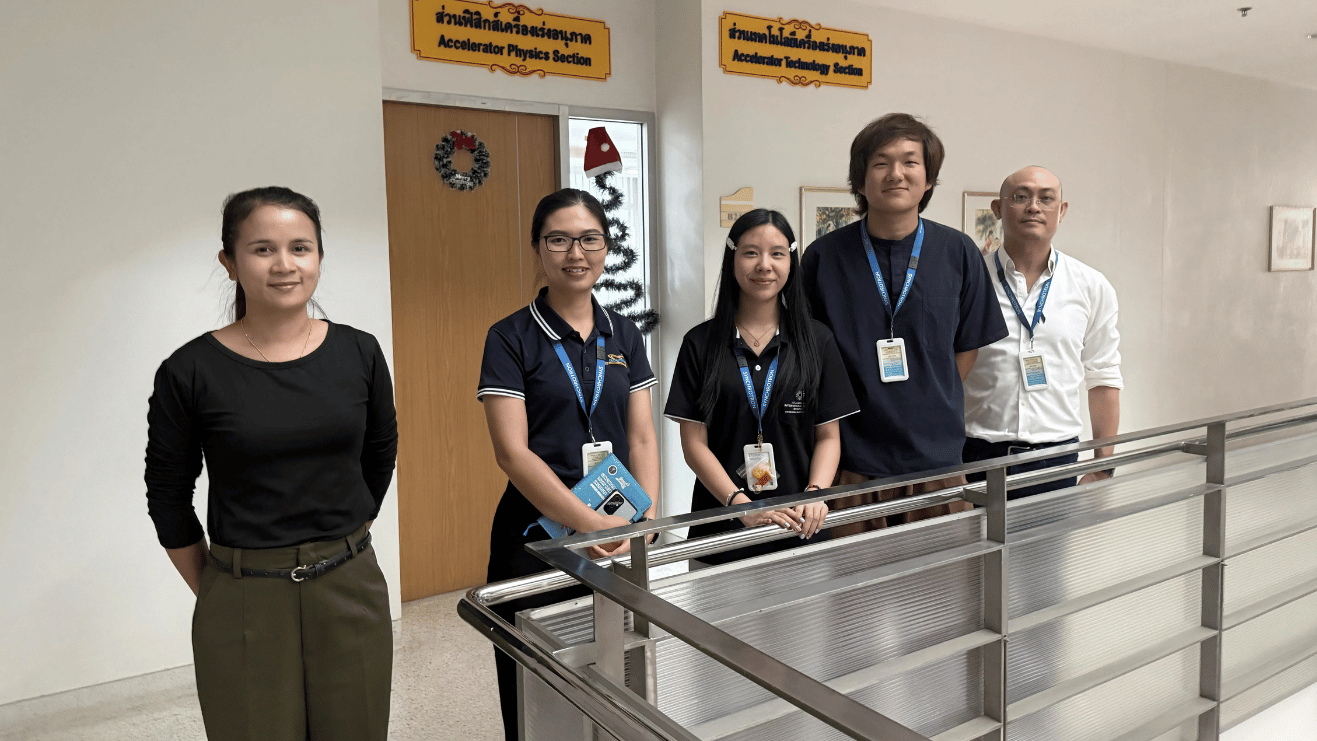
Select St Andrews Bangkok’s IGCSE and IB Physics students gained hands-on experience in advanced scientific research through a visit and summer internships at the Synchrotron Light Research Institute (SLRI). Working alongside scientists and engineers, students contributed to real-world projects involving particle accelerators and synchrotron technology, helping them connect classroom learning with practical applications in physics and engineering. The experience also provided valuable insight into future study and career pathways in science, research, and innovation.