

At St Andrews Bangkok, nurturing compassionate and globally minded children isn’t just an aspiration; it’s an intentional part of the learning journey, beginning in the earliest years of education. Parents often prioritise both academic and personal development, and our approach, incorporating data-backed teaching strategies, ensures that both are closely supported.
This commitment to social-emotional development is reflected in the school’s participation in The Nord Anglia Metacognition Project, a two-year research initiative exploring the impact of metacognitive strategies (the ability to reflect on how one thinks) in the classroom.
Using observations to support emotional and social development
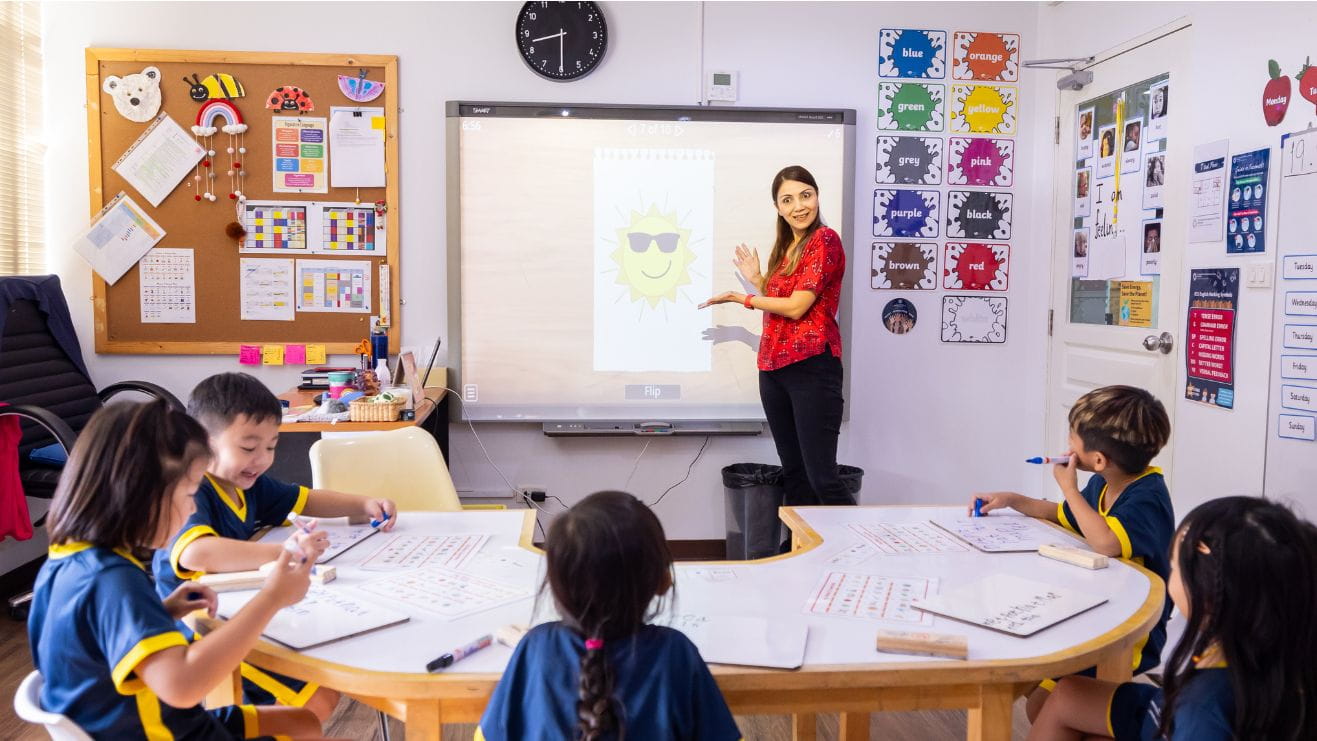
Teachers and support staff observe students throughout the day, week, month, and term to monitor well-being and social-emotional development. Rather than relying on one-off assessments, these ongoing observations provide a rich picture of each child's emotional needs, relationships, and interactions.
As Mr Michael Arikyu, Assistant Head of Learning, explains, "The small moments we observe every day often are the most valuable data points on how a child is developing socially and emotionally. Those insights help us create the right opportunities for every child to flourish."
Conversations between class teachers and the adults who work alongside them occur continuously, enabling staff to respond quickly when additional support or guidance is needed. Positive partnerships with families are established from the very beginning, ensuring parents are regularly informed about their child's emotional and social development. Observations and feedback from home are also welcomed, creating a shared understanding of each child and enabling school and family to work together to support their growth.
This continuous cycle of observation, reflection, and collaboration allows data to be used not simply to measure development, but to shape meaningful learning experiences that build empathy, resilience, and confidence.
See, Think, Me, We Thinking Routine
Ms Meg, Year 2 Leader at St Andrews, conducted a research study titled “To what extent does the See, Think, Me, We Thinking Routine develop young children’s understanding of compassion and empathy?”, investigating the power of cognitive-driven learning in shaping students’ social-emotional awareness and adaptability.
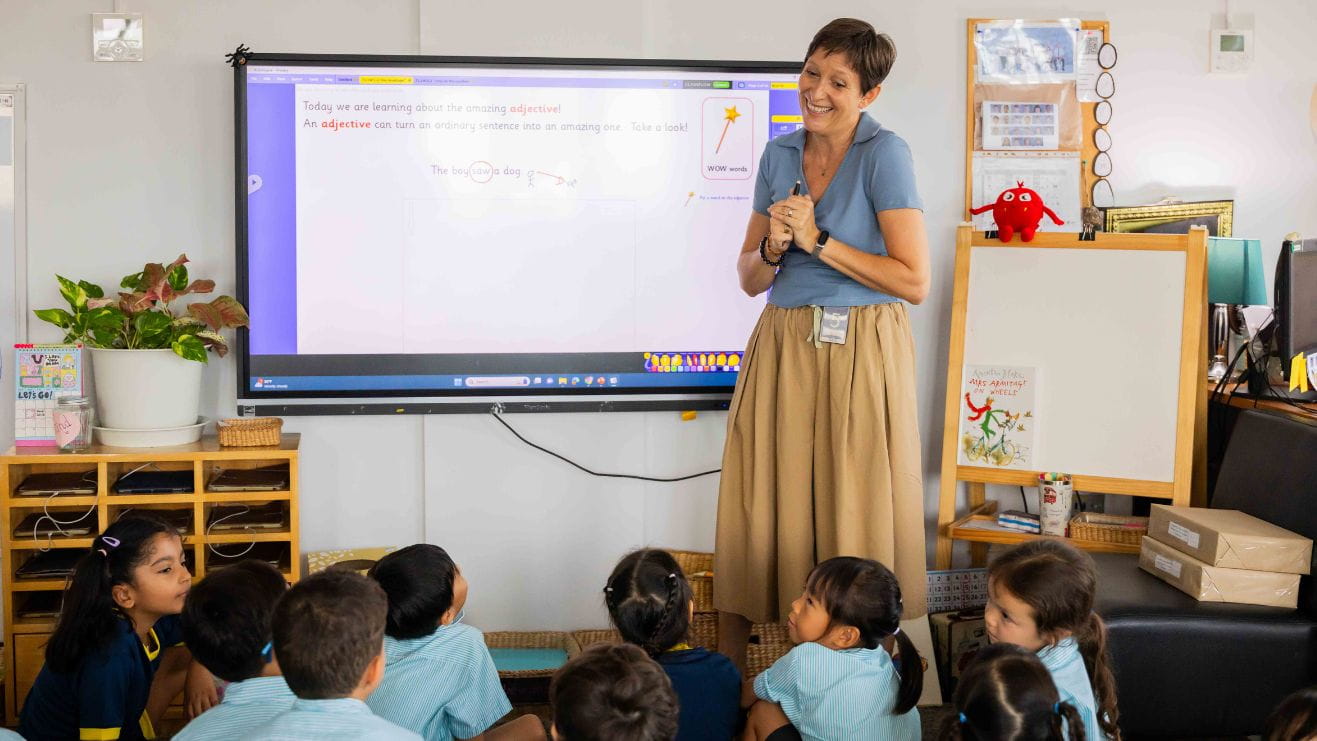
Over a six-week programme, 23 Year 2 students engaged in a structured sequence of learning activities using visual stimuli, such as videos, stories, and pictures, designed to encourage reflection and discussion on compassion and empathy. Each session utilised the “See, Think, Me We” Thinking Routine, a metacognitive strategy developed by Harvard to help students make their thinking visible, deepen their understanding, and foster critical and creative thinking. In particularly, the "See, Think, Me, We" thinking routine fosters deeper engagement with a topic, idea, or text by encouraging students first to observe ("See"), then interpret their observations ("Think"), connect the stimulus to their own experiences and feelings ("Me"), and finally consider its broader implications and other perspectives ("We").
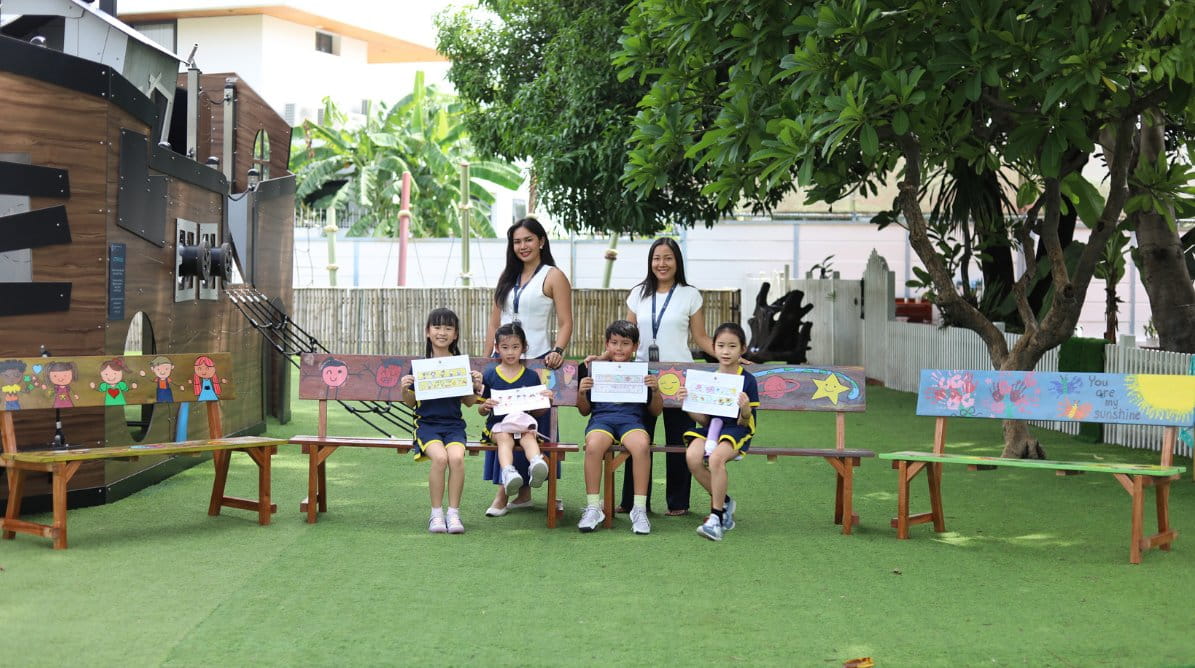
To evaluate the project's impact, children first drew pictures illustrating their understanding of compassion and empathy. This method bypassed language barriers, allowing children to describe their drawings. Initially, their examples of kindness focused on actions like helping a friend who had fallen or finding a lost water bottle.
The results
The results were remarkable. After six weeks, the children drew new pictures to show their improved understanding. While sharing remained a primary example of kindness, their new drawings also highlighted other compassionate acts, such as listening to others, including friends in play, and caring for the environment.
A small focus group was also held at the start and end of the project to further explore children’s understanding through targeted questions. This revealed a notable shift in their understanding of compassion. Initially, they saw caring as self-serving ("taking care of things saves money"), but after the six-week program, their views broadened to include empathy for others' feelings ("talking is kind because you are not just ignoring someone").
Colleagues validated these findings by using a comparative tool to assess children's drawings. The results showed a significant increase in the number of compassionate acts depicted, nearly doubling from 10 to 18.
This research was featured in Tes magazine, a leading publication dedicated to school news, pedagogy, and education policy, and was presented at the Boston College Metacognitive Action Research Project Conference in 2025, highlighting St Andrews' contribution to global educational innovation.
Embedding compassion into the curriculum
The scheme of work has now been formally adopted into the permanent Year 2 curriculum as part of the Superheroes topic. This ensures the project’s sustainability, creating a lasting resource that will benefit every future student in the year group.
Sharing the research also sparked wider pedagogical change. When the findings were presented to primary colleagues, interest surged in exploring metacognition and its impact on social‑emotional development.
Two key outcomes followed:
Peer‑Led Professional Development: Inspired colleagues enrolled in further online training, while school leadership requested the creation of a Professional Learning Community (PLC) to support teachers in developing and implementing thinking routines in their own classrooms.
External Validation: Presenting the work at Boston College and engaging with educational consultants raised the profile of evidence‑based practice within the school, encouraging staff to adopt these strategies more widely.
What began as a single‑classroom initiative has now evolved into a school‑wide model for embedding social‑emotional learning into everyday teaching practice.
Facilitating kind behaviour requires a holistic view
Data-driven education is immensely valuable and underscores the teaching outcomes we aim to achieve. What pushes it further is adopting a holistic approach and developing empathy and social-emotional awareness through other avenues, such as creative projects. One example is the Friendship Benches project, in which students worked with teachers to design benches to be placed around the school as a simple yet powerful way to support students who feel lonely or unsure of who to play with. If a child is seen sitting on a Friendship Bench, it signals to other children to approach and include the child in play, promoting empathy, inclusion, and kindness.
St Andrews Bangkok remains at the forefront of forward-thinking education, integrating innovative pedagogy with a values-driven mission. Embracing metacognition – the ability to reflect on one's own thinking – in early education is an effective method for helping young learners understand how to be kind, compassionate, and aware of those around them. Being able to reflect on one's thinking and actions with others is a foundational step in becoming a thoughtful, open-minded citizen of the world.