


We use cookies to improve your online experiences. To learn more and choose your cookies options, please refer to our cookie policy.
08 April, 2026
What strong academic standards look like in a high-performing school
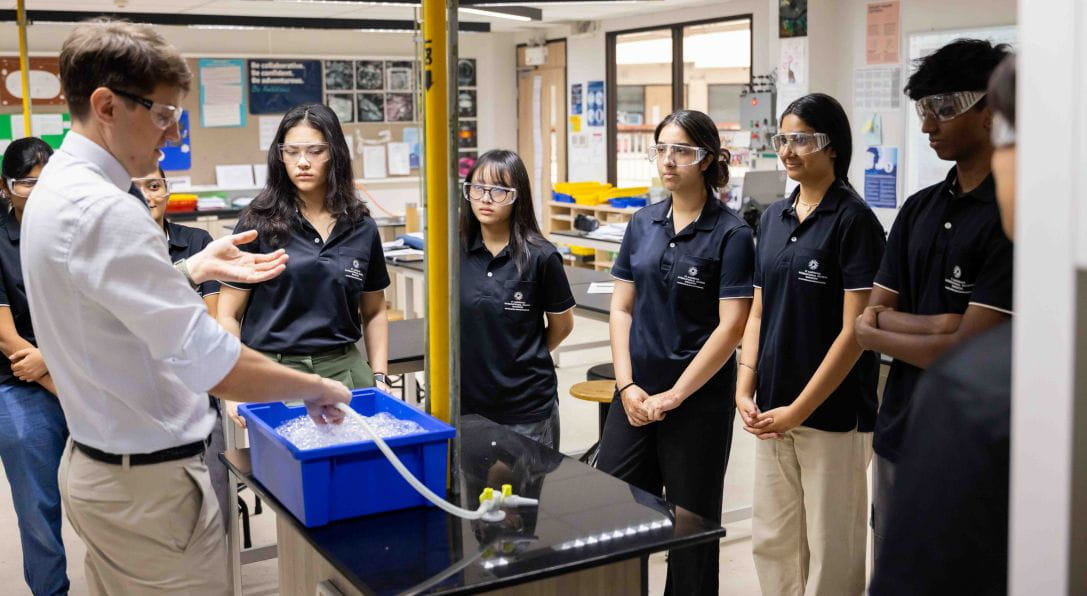
Students may complete tasks, answer questions, and move through lessons efficiently, but real academic quality is defined by something deeper: the expectations that shape how students think, work, and improve over time.
At St Andrews International School Bangkok, strong academic standards are clear, reinforced daily, and embedded into how teaching and learning take place.
Making success clear from the start
Strong standards begin with clarity.
Students need to understand exactly what strong work looks like and what is expected of them. At St Andrews, this is addressed directly through clear learning goals and concrete examples of high-quality outcomes.
Mr Will Taylor, Deputy Head of Teaching and Learning, explains how this is approached.
“We ensure students know exactly what success looks like by sharing clear learning goals and showing examples of high-quality work.”
This clarity removes uncertainty. Students are not guessing what is required. Instead, they are working towards clearly defined standards.
Regular feedback reinforces these expectations, helping students understand where they are in their learning and what they need to do next.

What high standards look like in the classroom
High standards may also be visible through student behaviour. Students are engaged, not because they are told to be, but because they understand the importance of their learning.
Mr Will highlights the behaviours that indicate strong learning.
“You can see it in the way students stay engaged, contribute thoughtfully to discussions, and take pride in the quality of their work.”
One of the clearest signs of high expectations is how students respond to feedback. Rather than completing a task once and moving on, they refine their ideas, improve their work, and aim for greater depth.
This willingness to revisit and improve work reflects a commitment to genuine learning.
Challenging students to think deeply
High expectations are not only about effort. They are also about the level of thinking required.
At St Andrews, students are expected to be active participants in their learning, not simply memorise content.
“We challenge students with tasks that go beyond memorisation, asking them to analyse, create, and problem-solve,” explains Mr Will.
This type of challenge encourages students to think critically and engage more deeply with their learning.
Teachers also connect learning to real-world contexts. This helps students understand why their learning matters and how it applies beyond the classroom.
As a result, students are more motivated to engage and more confident in tackling complex ideas.

Building confidence through challenge and support
High expectations are most effective when they are paired with strong support.
Students are encouraged to take intellectual risks, knowing that they are working in an environment where effort and improvement are valued.
“By encouraging curiosity and linking learning to real-world issues, students feel confident taking risks and stretching their thinking.”
This balance between challenge and support helps students build confidence over time. They learn that difficulty is part of the process and that progress comes through effort and reflection.
Creating a culture of academic ambition
When expectations are clear, consistent, and reinforced over time, they become part of the school culture.
At St Andrews Bangkok, students understand that growth comes from consistently stretching themselves. They expect to be challenged, and they are both self-motivated and supported by their teachers to reach those standards.
This creates a culture of academic ambition, where students take pride in their learning and are motivated to improve.
For parents, this provides reassurance that academic excellence is not dependent on individual lessons or teachers but is built into the culture and reflected in students’ attitudes to learning.
Expectations that lead to real learning
Strong academic outcomes are not driven by pressure or workload, but by clear expectations and a growth mindset. Students are supported to take academic risks, learn from mistakes, and challenge themselves to reach their potential. At St Andrews, these expectations shape how students learn, respond to feedback, and develop as thinkers. For parents, this offers a clear answer to an important question. Strong learning is not about how a classroom looks, but about the standards that guide it and the thinking it develops over time. Parents who would like to explore how these expectations are applied in practice are always welcome to speak with the academic team and see how learning is supported across the school.
Related news
News image ![SLRI IGCSE IB Physics Student Internship - SLRI IGCSE IB Physics Student Internship]() Blog | Academic | High School | Senior Studies
Blog | Academic | High School | Senior Studies
 Blog | Academic | High School | Senior Studies
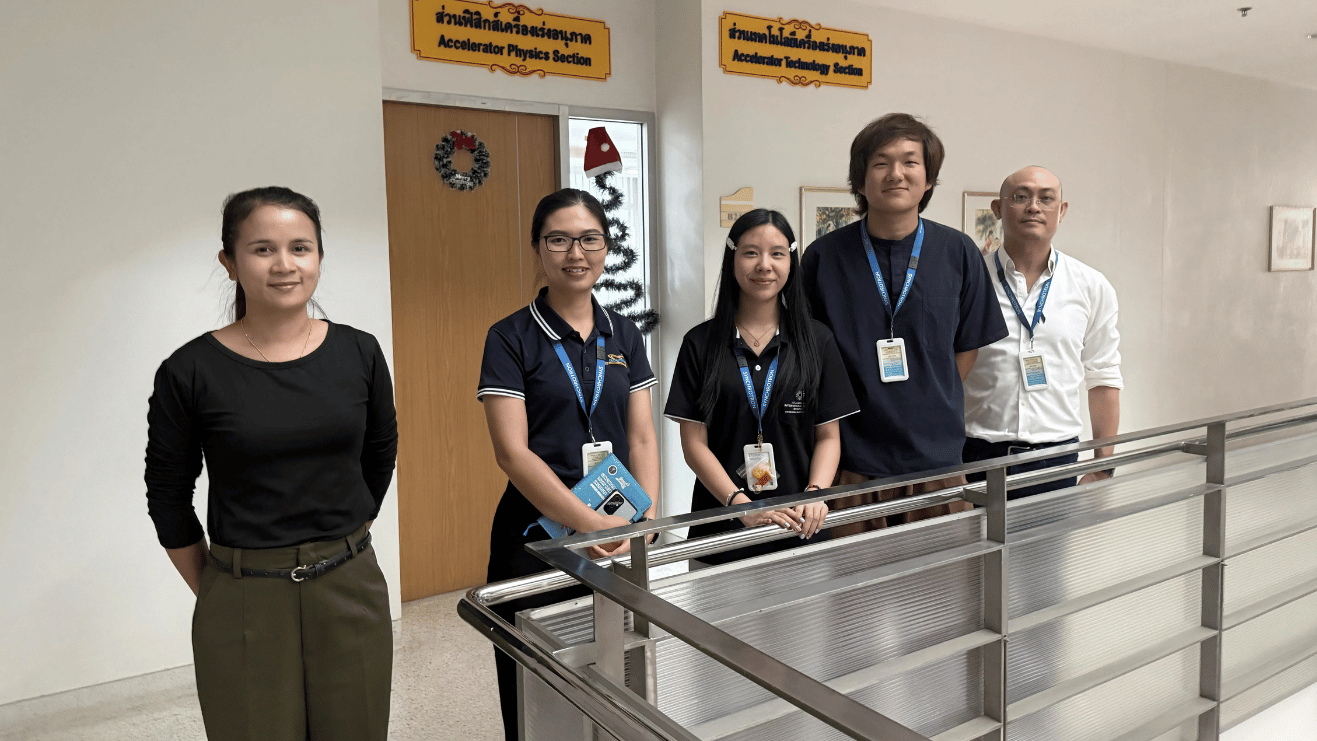
 St Andrews Bangkok IGCSE and IB Physics students gain real-world experience through summer internship
Select St Andrews Bangkok’s IGCSE and IB Physics students gained hands-on experience in advanced scientific research through a visit and summer internships at the Synchrotron Light Research Institute (SLRI). Working alongside scientists and engineers, students contributed to real-world projects involving particle accelerators and synchrotron technology, helping them connect classroom learning with practical applications in physics and engineering. The experience also provided valuable insight into future study and career pathways in science, research, and innovation.
News image ![oct camp]() News | Extracurricular Activities (ECAs) | High School | Primary School | Sport and PE
News | Extracurricular Activities (ECAs) | High School | Primary School | Sport and PE
 News | Extracurricular Activities (ECAs) | High School | Primary School | Sport and PE
 Stay active this break with our popular Activity Camps
Stay active and join our popular Activity Camps. Offering a wide variety of activities at both the Primary and High School for children aged 4 years old and up to keep active during the half-term break.
News image ![Teachers at St Andrews - Teachers at St Andrews Bangkok]() Blog | Staff | Primary School | STA Community
Blog | Staff | Primary School | STA Community
 Blog | Staff | Primary School | STA Community
 The dedication and care of teachers at St Andrews Bangkok
St Andrews Bangkok is portrayed as a school where teaching is defined by care, compassion, and a commitment to student wellbeing alongside academic excellence. The article highlights Year 2 teacher Mr Sam, whose warmth, positivity, and dedication exemplify the school’s ethos and show how educators nurture confidence, individuality, and resilience in every child. Through professional development and evidence‑based practices, the school ensures that its teachers continue to inspire growth and create environments where children thrive academically, socially, and emotionally.
News image ![STA Music Programme Young Producers - STA Music Programme Young Producers]() Blog | Performing Arts | Primary School
Blog | Performing Arts | Primary School
 Blog | Performing Arts | Primary School
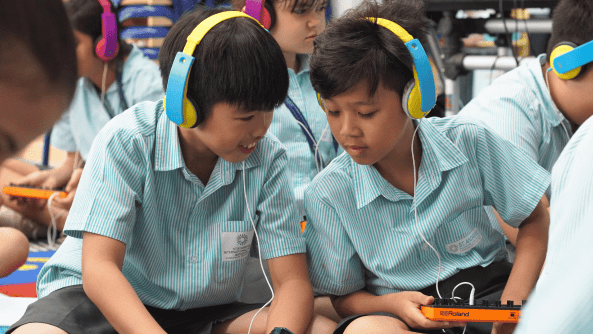
 St Andrews Music Programme empowers students to compose original soundtracks
Year 6 students at St Andrews took part in an inspiring international collaboration. Working with peers in Australia and Scotland as part of our Young Producers pathway within the St Andrews Music Programme, they first created films that captured each country's landscapes. They then composed original soundtracks to accompany the footage, blending creativity with technical skill.