

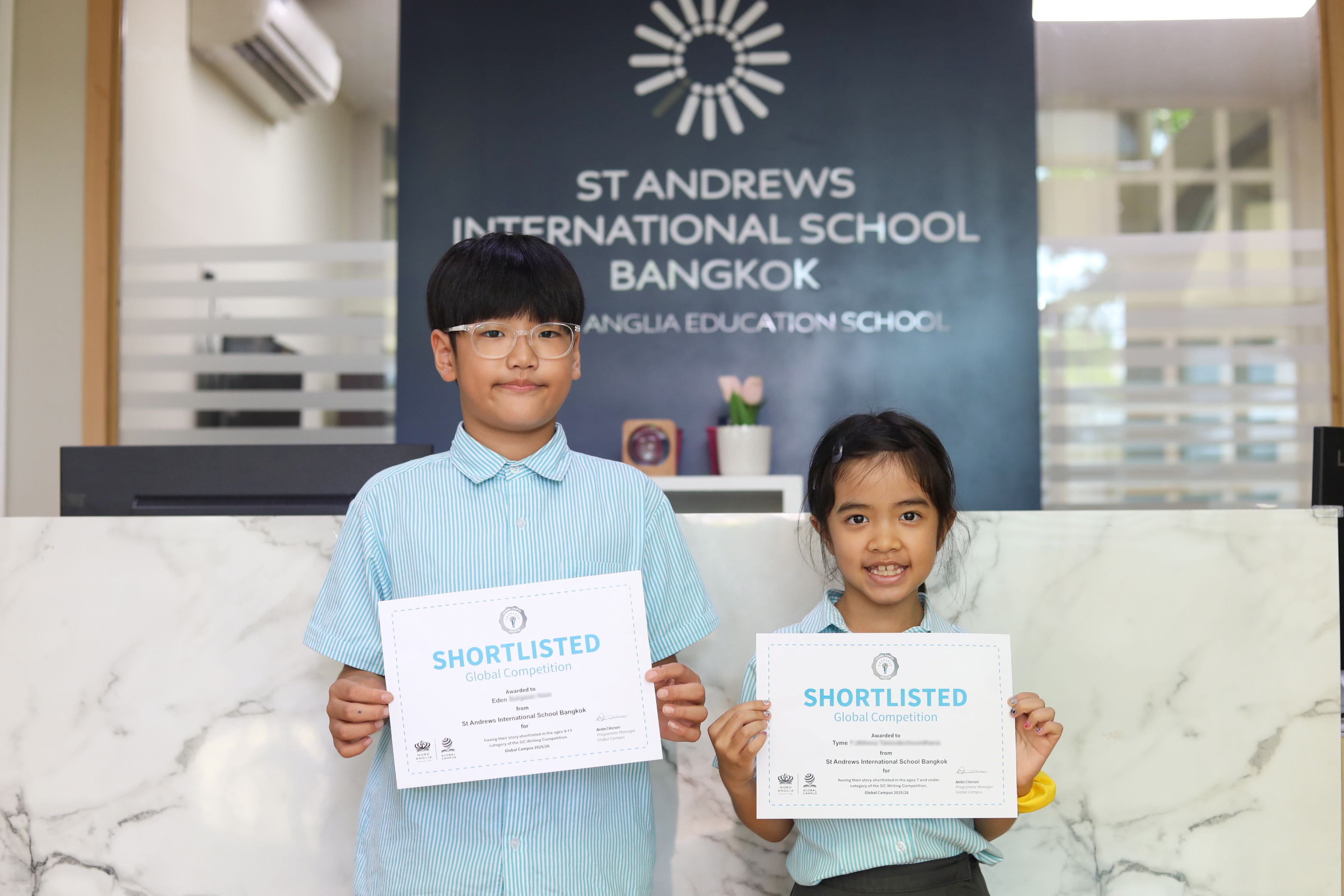
This year, 4,282 students from 53 Nord Anglia schools took part in the Global Campus Writing Competition. Students were challenged to write a 500‑word story inspired by a character or setting created by another child.
We are delighted to share that two students from St Andrews Primary School were shortlisted by Nord Anglia teacher judges: Pancake and the Mysterious Disappearance of the Strawberries by Tyme in Year 2 and Niko the Lifesaver by Eden in Year 5.
Both stories are now among the final 20 entries and will be judged by award‑winning author Sam Sedgman, with winners announced on 6th May. Reaching this stage is an outstanding achievement, and we are incredibly proud of both students.
A Year 2 story that reflects empathy and kindness
One of the shortlisted stories beautifully reflects the value of our research‑informed Early Years curriculum. Pancake and the Mysterious Disappearance of the Strawberries is a thoughtful and heart‑warming tale. When strawberries go missing from the classroom, the children work together with their teacher to solve the mystery. They discover that a lonely classmate took them. Rather than responding with anger or punishment, the class chooses understanding, forgiveness, helping the child make friends, and turning the situation into a happy ending.
While Tyme in Year 2 shared that she enjoys writing stories, the narrative reveals something even more powerful: empathy and kindness expressed as natural, thoughtful responses to others.
This story reflects the purposeful learning taking place within the Year 2 Superheroes topic, which was embedded into the curriculum following the success and validation of a research study led by Ms Meg, Year 2 Leader, as part of the Nord Anglia Metacognition Action Research Project. The study, titled “To what extent does the See, Think, Me, We Thinking Routine develop young children’s understanding of compassion and empathy?”, explored the impact of cognitive‑driven learning on students’ social‑emotional awareness and adaptability.
Through the Superheroes topic, children explore the idea that it’s not only superpowers that make superheroes. They explored ‘everyday heroes’, such as the staff on the school campus, and observed their actions to see how they demonstrated kindness, care, and understanding towards others.
Harvard metacognitive strategy embedded in Early Years curriculum
Central to this learning is the See, Think, Me, We thinking routine, a metacognitive strategy developed by Harvard to help students make their thinking visible, deepen their understanding, and foster critical and creative thinking.
Using this routine, children are guided to:
See what is happening in a story, image or situation
Think about why it might be happening
Me – connect the situation to their own feelings and experiences
We – consider other people’s perspectives and how thoughtful actions could help
These structured discussions encourage children to slow down, reflect, and think more deeply about emotions, relationships, and choices, skills that are clearly evident in their writing and everyday interactions.
Teaching with purpose
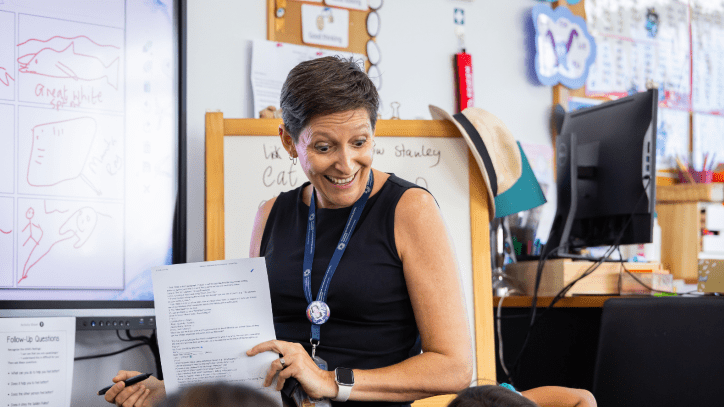
Over the six-week research study, 23 Year 2 students participated in structured learning experiences using videos, stories, and images to prompt discussion and reflection. Each session used the See, Think, Me, We routine to help children make their thinking visible and engage more deeply with ideas and emotions.
The impact was clear. At the start of the programme, children described kindness mainly as simple acts of helping. By the end, their understanding had broadened to include listening to others, including friends in play, understanding feelings and recognising loneliness, the very themes reflected in Tyme's story.