

We use cookies to improve your online experiences. To learn more and choose your cookies options, please refer to our cookie policy.

28 April, 2026
IB vs A-levels: choosing the right path to university

For many families, the choice for the final years of school narrows to the International Baccalaureate Diploma Programme (IBDP) or A‑levels. Both are recognised by many universities, but they differ in structure, philosophy, and the kind of preparation they offer for life beyond school.
At St Andrews Bangkok, we believe this choice is not simply about academics; it’s about preparing students to thrive at university and in the world. That’s why we proudly offer the IB Diploma Programme in Year 12, alongside other pathways, and why we encourage families to look closely at what makes the IB distinctive.
Specialisation vs breadth: offering more flexibility and opportunity
A‑levels are built on specialisation, with students typically choosing three subjects to study in depth, while the IB Diploma is modern in its approach and deliberately broader. Students study six subjects across a range of disciplines: Language and Literature, Language Acquisition, Individuals and Societies, Sciences, Mathematics, and the Arts (or an additional subject from another group). Three subjects are taken at Higher Level (HL) and three at Standard Level (SL). This balance ensures both depth and breadth. Parents often ask, “What will prepare my child for university?” and the IB is designed to do exactly that.
Josh Mycroft, IBDP Coordinator at St Andrews, explains: “The IB develops students who can think critically, manage independence, and balance a wide range of demands, exactly the skills universities tell us they value most.”

Beyond exams: developing skills for life
What sets the IB apart are its core components: Theory of Knowledge (TOK), Creativity, Activity, Service (CAS), and the Extended Essay. TOK challenges students to think critically about how knowledge is constructed and used. CAS ensures they balance academics with creativity, physical activity, and service, building resilience and empathy. The Extended Essay, a 4,000‑word independent research project, develops university‑level writing, research and inquiry skills.
These elements are not add‑ons; they are integral to the programme. They cultivate independence, adaptability, and a sense of responsibility, qualities universities consistently highlight when they say IB students arrive better prepared.
The IB curriculum is ready for a future with AI
A study conducted by Nord Anglia Education’s Digital Lab between February and March 2026 explored how teachers are responding to the growing use of artificial intelligence (AI) in schools. Through 21 focus group sessions with 92 teachers from all Nord Anglia regions, representing different subjects, age groups and levels of experience with AI, the study gathered a wide range of perspectives. Teachers discussed how they are using AI, what excites or concerns them, and what support they need.
One key finding was that schools offering the International Baccalaureate (IB) are generally further along in developing clear, confident approaches to AI. This is because the IB has already provided guidance on AI use in assessment, particularly through requirements such as the Extended Essay, prompting IB schools to address AI earlier and develop policies more thoughtfully. In contrast, many teachers in other curriculum systems, including A‑levels, reported that they are still at an early stage and often feel they are starting from scratch.

Assessment styles: exams vs continuous progress
A‑levels are exam‑heavy, with most evaluation based on final exams in Year 13. The IB blends exams with Internal Assessments, spreading the workload across two years. This continuous assessment teaches time management and reflection, easing the “all or nothing” pressure of final exams.
Global university recognition and further reach
Both qualifications are respected, but their reach differs. The IB is recognised by over 5,000 universities worldwide and is often preferred for its rigour and holistic approach. For families considering international options, the IB is a key that opens doors globally.
Alternative IB pathways: IBCP and BTECs
While the IB Diploma Programme is popular for breadth, balance, and university preparation, St Andrews also offers alternative pathways designed to meet different student needs. The IB Career‑related Programme (IBCP) combines two or three IB subjects with vocational elements, including Personal and Professional Skills, Community Engagement, and the Reflective Project, alongside BTEC Level 3 qualifications. This option provides a reduced exam load while still developing critical thinking, independence, and global recognition, with space in the timetable for real‑world work experience.
Similarly, BTECs are career‑focused, practical qualifications assessed through coursework rather than exams, offered in areas such as Business, Sport, Creative Media, Applied Science, and Hospitality. Recognised in over 60 countries, BTECs open doors to universities and higher education worldwide. Together, these pathways ensure that every student at St Andrews can find the right fit, whether they thrive in the academic rigour of the IB Diploma or prefer a more applied, vocational route that builds skills for both further study and future employment.
Faye Wheeler, IBCP Coordinator, notes: “The IBCP and BTECs give students practical, career‑focused learning alongside academic study. They’re ideal for those who want to build skills for employment while keeping university pathways open.”
Support systems: guiding students every step
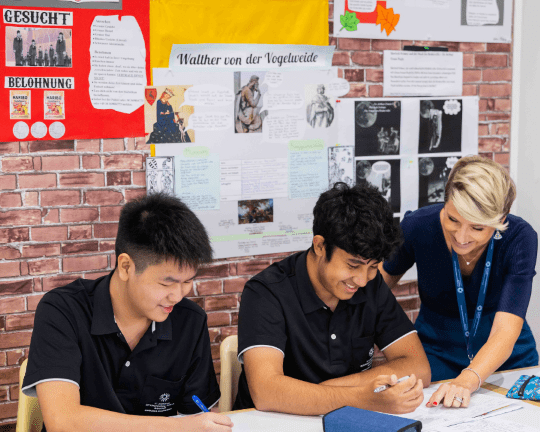
Choosing the IB at St Andrews means more than academics. To support students and prepare them for higher studies, students are assigned a dedicated Careers and Higher Education counsellor from Year 9 onwards, who provides personalised support throughout High School and the IB, and through the university application process.
Independence is encouraged in Years 12 and 13, helping students learn to manage their schedules, balance priorities, and take responsibility for their learning, skills that mirror university life and set them up for success. At the same time, they remain fully supported by tutors, Heads of Year, and counselling staff, who deliver holistic pastoral care to ensure students stay on track with classwork, assignments, activities, exams, and applications.
Our students’ IB scores reflect the consistent and remarkable success of the IB Programme at St Andrews, with alumni who have studied at prestigious universities and are pursuing illustrious careers.
To make the transition even smoother, the Enrolment Fee is waived for all new Year 12 enrolments at St Andrews Bangkok. For more information, contact our Admissions team.
Related news
News image ![amee]() Blog | Academic | Senior Studies
Blog | Academic | Senior Studies
 Blog | Academic | Senior Studies
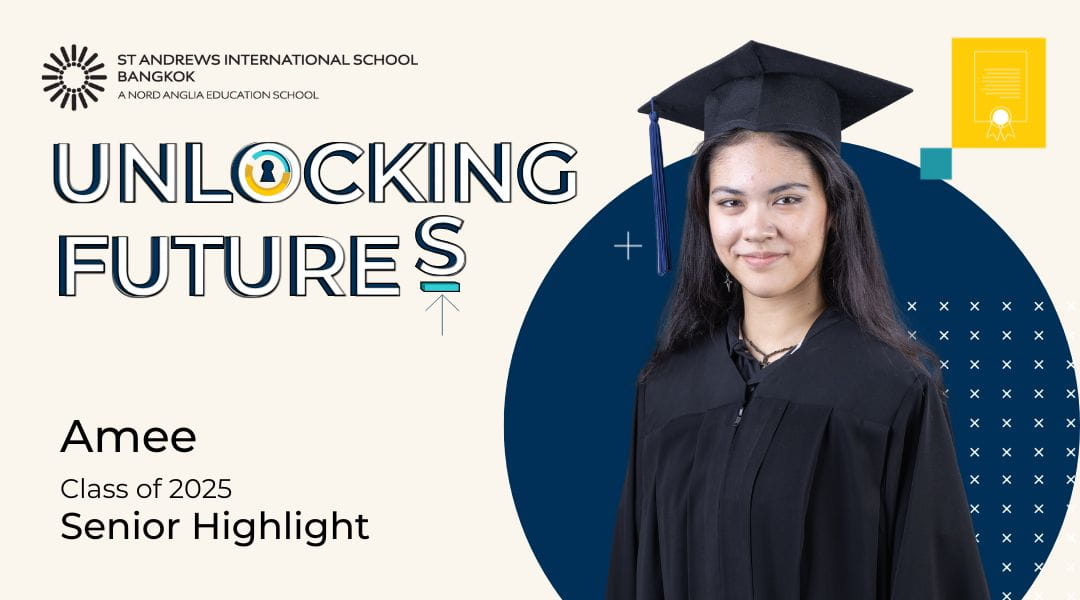
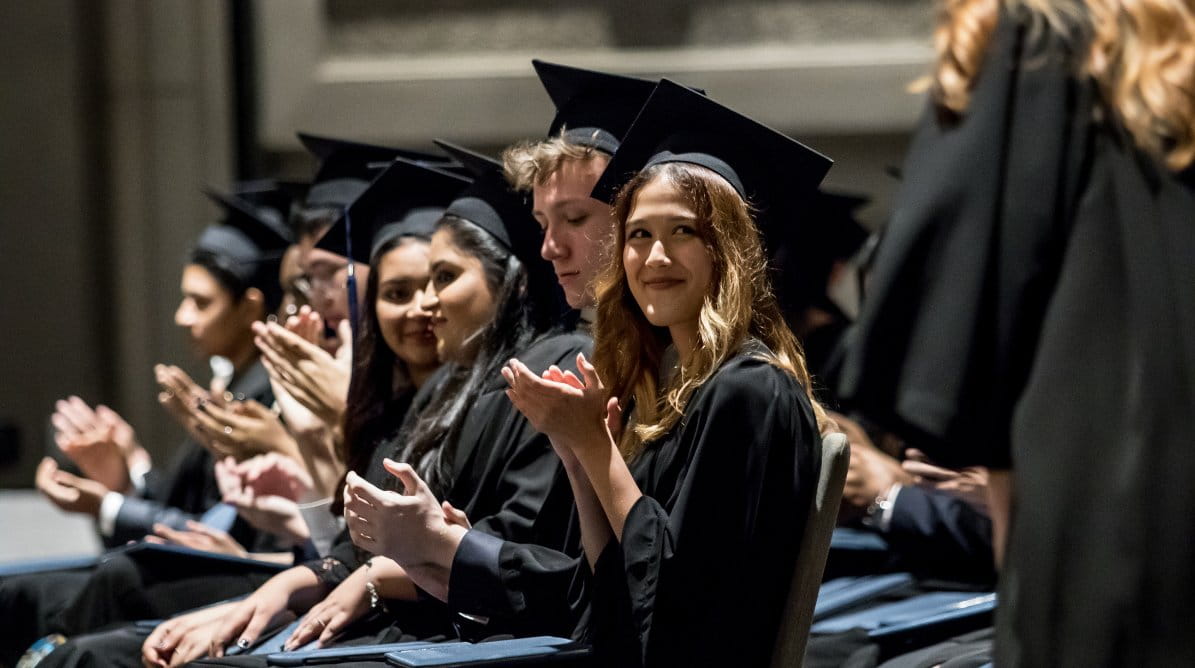
 Celebrating St Andrews Class of 2025 Valedictorian Amee’s perfect IB score of 45
Amee, Valedictorian of the Class of 2025, graduated with a perfect IB score of 45/45, an achievement reached by fewer than 1% of candidates worldwide, while delivering a powerful message that success is not about perfection. With interests intersecting at cognitive science and the fine arts, she is pursuing the combined Bachelor of Arts / Doctor of Medicine (BA/MD) degree at the University of Sydney, reflecting on growth, community, and the courage to learn through trial and error as she prepares for the next chapter of her journey.
News image ![From IGCSE to IBDP - From IGCSE to IBDP]() News | Homepage Featured Article | School News | Academic | High School | Global Education | Insight & Advice | Senior Studies | University Updates, Offers and Acceptances
News | Homepage Featured Article | School News | Academic | High School | Global Education | Insight & Advice | Senior Studies | University Updates, Offers and Acceptances
 News | Homepage Featured Article | School News | Academic | High School | Global Education | Insight & Advice | Senior Studies | University Updates, Offers and Acceptances
 From IGCSE to IBDP: understanding the curriculum connection
At St Andrews Bangkok, the transition from IGCSE to the IB Diploma Programme is carefully designed to ensure academic continuity and student success. This overview highlights how IGCSE subjects align with the IB’s six subject groups, enabling students to make informed choices as they transition into Senior Studies. With personalised guidance and a balanced curriculum, students are well-prepared for the challenges and opportunities of the IB.
News image ![Understanding the IBCP and BTEC Pathways: Career-Focused - Understanding the IBCP and BTEC Pathways]() Blog
Blog
 Blog
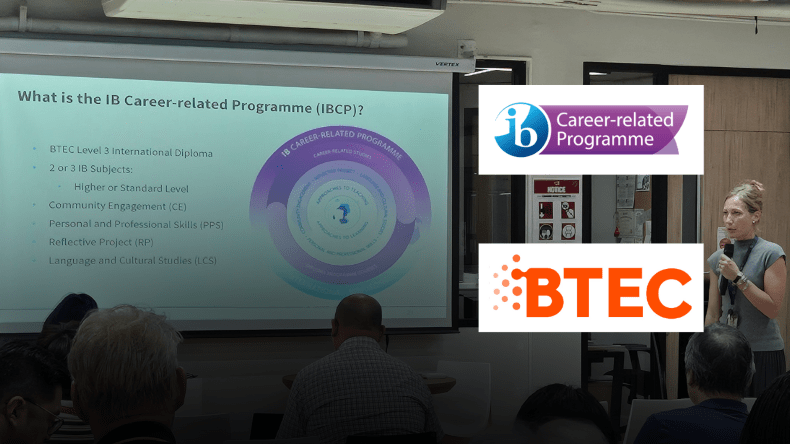
Blog Understanding the IBCP and BTEC pathways: career-focused learning at St Andrews
St Andrews’ IBCP pathway blends the academic strength of IB courses with the practical, career-focused experience of BTEC, giving students a personalised route that prepares them for both university and the workplace. Through hands-on vocational study, real-world work placements, and a holistic skills-based core, students gain the confidence and expertise needed to thrive in their chosen career paths.
News image ![STA Class of 2020 alumni Aashish and Taiyo connect with Year - Class of 2020 alumni]() Blog
Blog
 Blog
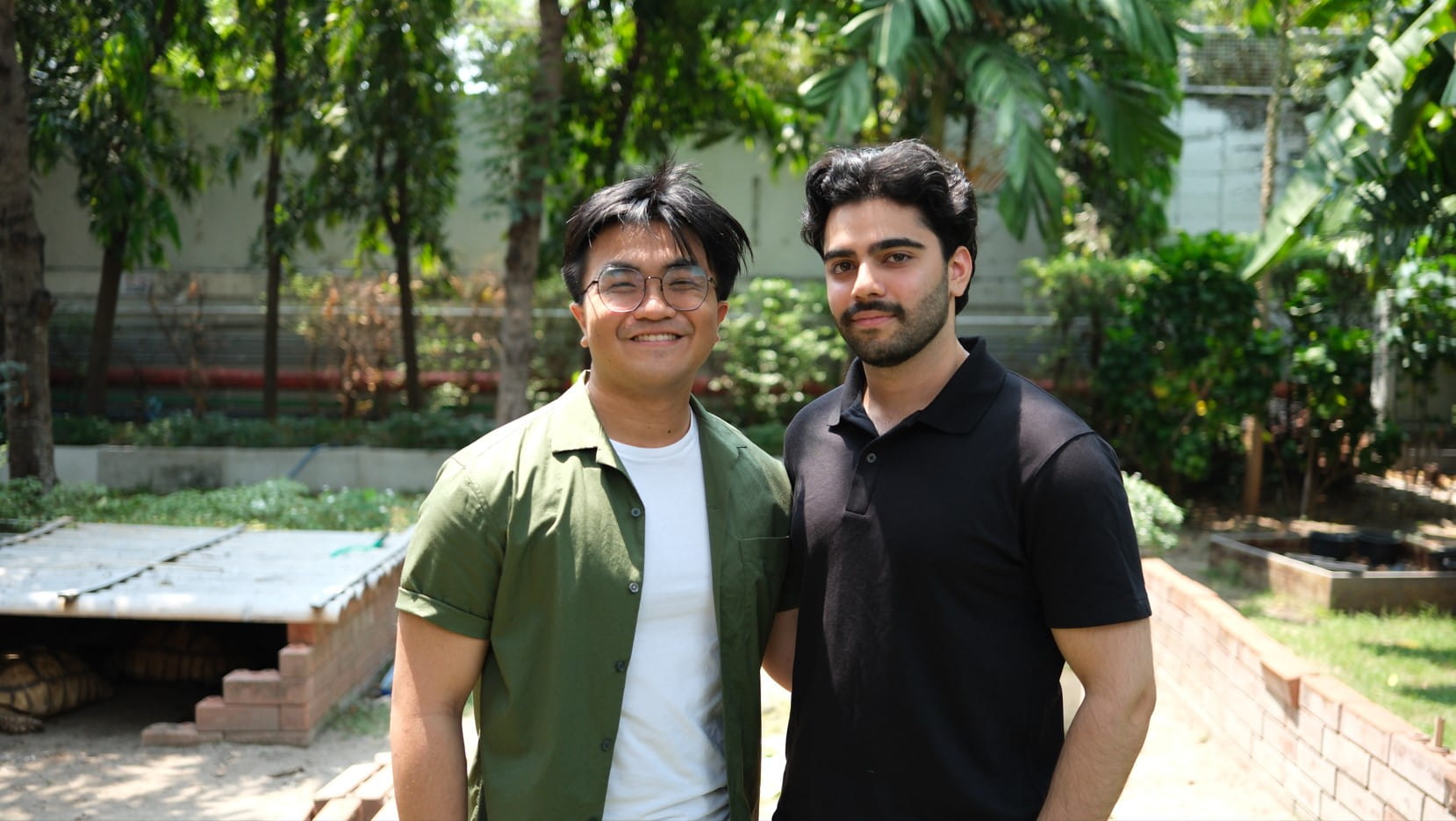
Blog STA Class of 2020 alumni Aashish and Taiyo connect with Year 13 students on how diverse school experiences prepared them for life after graduation
We’re happy to welcome STA Class of 2020 alumni Aashish and Taiyo back to campus for a casual meet and greet with current Year 13 students to discuss how their diverse experiences inside and outside the classroom prepared them for life beyond school.