

We use cookies to improve your online experiences. To learn more and choose your cookies options, please refer to our cookie policy.

25 November, 2026
What is a British international school? A guide for parents

Choosing a school is one of the biggest decisions a family makes. If you're exploring international schools in Bangkok, you've probably come across the term British international school. But what does it actually mean, and what can you expect for your child's education?
A British international school follows the English National Curriculum, adapted for an international community. At St Andrews International School Bangkok, part of Nord Anglia Education, students aged 2–18 follow a learning journey from the Early Years Foundation Stage (EYFS) through IGCSEs in Years 10 and 11, before moving on to the IB Diploma Programme or IB Career-related Programme (IBCP) in Years 12 and 13.
What should parents know about British international schools?
- A structured curriculum: Learning follows the English National Curriculum, organised into Key Stages, with each stage building on the knowledge and skills children develop in earlier stages.
- Internationally recognised qualifications: Students work towards qualifications such as IGCSEs and, depending on the school, A-Levels or the IB.
- A range of pathways: At St Andrews, students can choose between the IB Diploma Programme (IBDP) and the IB Career-related Programme (IBCP) in Years 12 and 13.
- Preparation for university: These qualifications open opportunities for university study worldwide, although entry requirements vary.
- Independent quality standards: Accreditations such as British Schools Overseas (BSO) can help parents understand how a school measures up against recognised standards.
Most importantly, every school has its own community, culture and approach to learning. At St Andrews, we believe children thrive when they feel happy, supported, confident and part of a community where they belong.
What makes a school a British international school?
A British international school combines the structure and academic standards of the English education system with the experiences and perspectives of an international community.
Children follow a curriculum designed to build their knowledge, confidence and skills over time, with clear learning milestones as they progress through school.
Parents can typically expect:
- A clear learning journey: The curriculum is organised into Key Stages, with learning developing progressively from one year to the next.
- Recognised qualifications: Students can work towards internationally recognised qualifications such as IGCSEs and the IB.
- Curiosity and critical thinking: Children are encouraged to ask questions, explore ideas, solve problems and develop independent thinking.
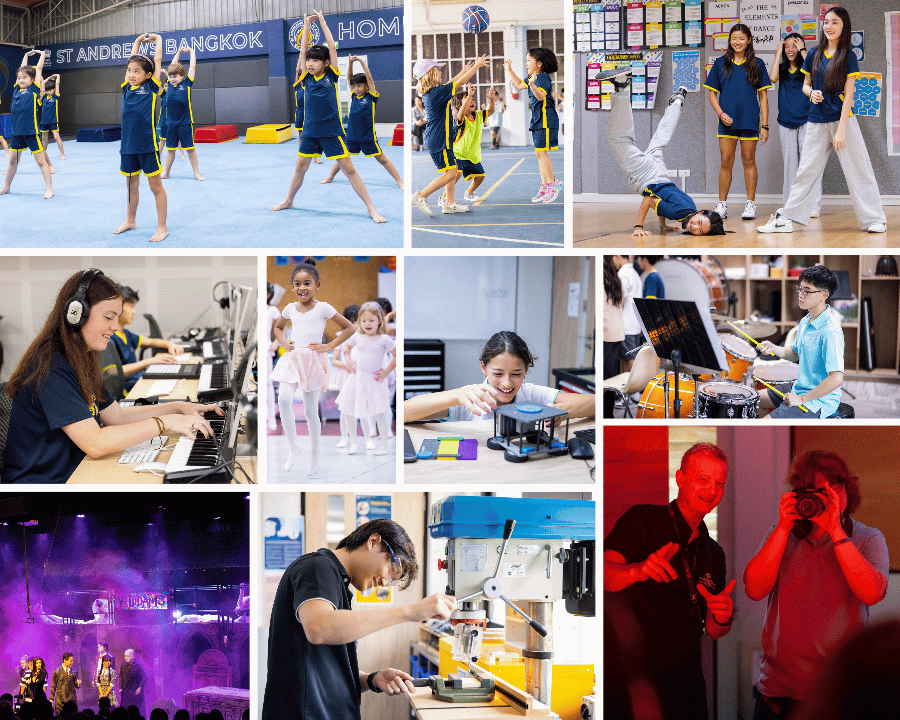
- Education beyond academics: Sport, music, drama, art, leadership and pastoral care all play an important role in school life.
While schools share a curriculum framework, the experience can look quite different from one school to another. At St Andrews, we place equal importance on academic learning, wellbeing, personal development and helping every child find their place within our community.
How does the British curriculum work from age 2 to 18?
The English National Curriculum is organised into stages, helping children build on what they've learnt as they grow. At St Andrews, the learning journey takes students from their early years through to university preparation.
| Stage | Year groups | Ages |
|---|---|---|
| Early Years Foundation Stage (EYFS) | FS1, FS2, FS3 | 2–5 |
| Key Stage 1 | Years 1–2 | 5–7 |
| Key Stage 2 | Years 3–6 | 7–11 |
| Key Stage 3 | Years 7–9 | 11–14 |
| Key Stage 4 (IGCSE) | Years 10–11 | 14–16 |
| Senior Studies (IB Diploma or IBCP) | Years 12–13 | 16–18 |
This structure can make transitions between schools more familiar for families moving internationally. Children joining from the UK, or moving between British international schools, will generally recognise the year groups and curriculum stages.
What qualifications will my child take at a British international school?
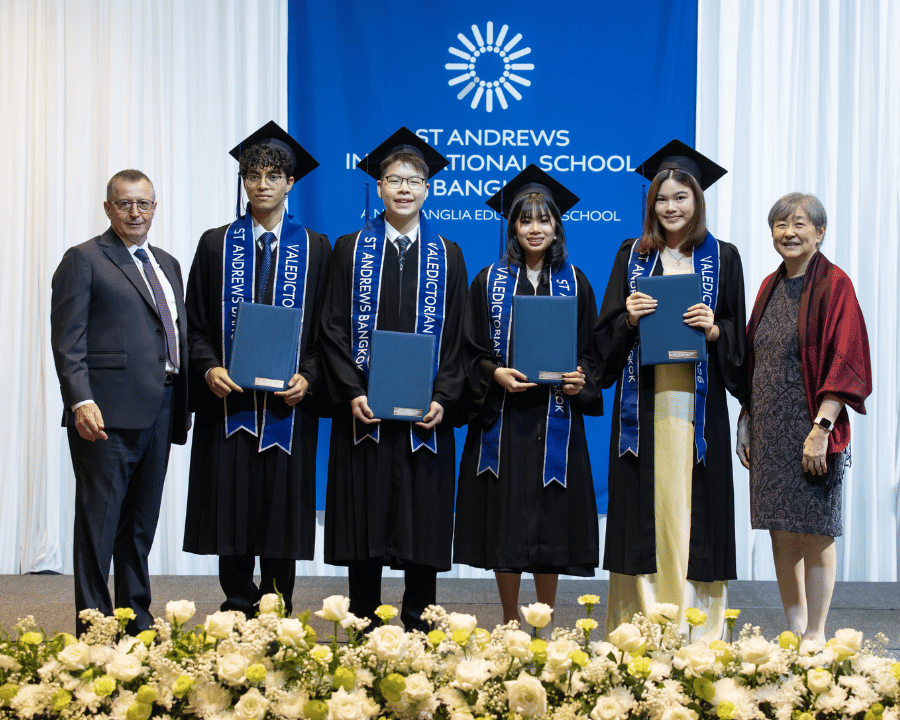
At St Andrews, students work towards IGCSEs in Years 10 and 11, before choosing between two pathways in Senior Studies: the IB Diploma Programme or the IB Career-related Programme (IBCP).
IGCSEs in Years 10 and 11
IGCSEs (International General Certificate of Secondary Education) are internationally recognised qualifications typically taken by students aged 14–16.
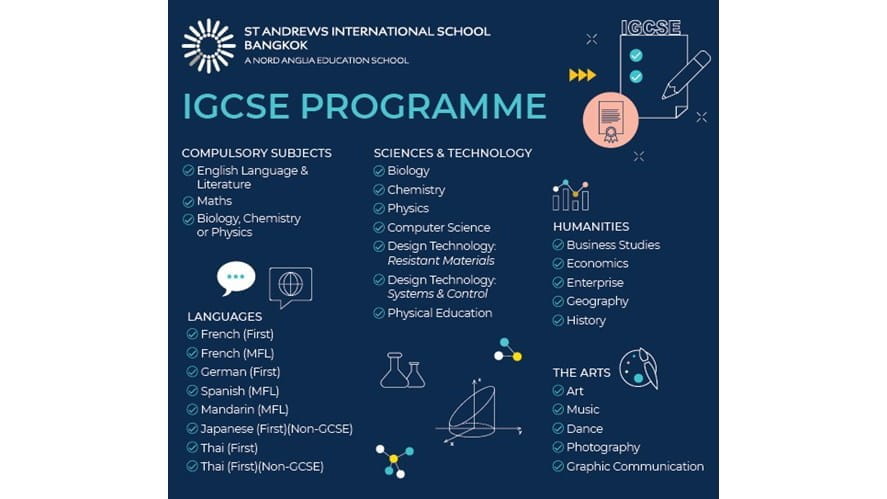
Students study a range of subjects, including English, Mathematics and Science, alongside options from areas such as humanities, languages, creative arts and technology.
St Andrews offers 34 IGCSE subject options, which is the widest range in Thailand.
Each student typically takes 9-10 subjects.
IB Diploma Programme (IBDP) in Years 12 and 13
The IB Diploma Programme is a two-year programme that encourages students to explore a range of academic subjects while developing independent research, critical thinking and time-management skills.
Students study six subjects, typically taking three at Higher Level and three at Standard Level. Alongside their subjects, the programme includes core components that encourage reflection, research and engagement beyond the classroom.
IB Career-related Programme (IBCP) in Years 12 and 13
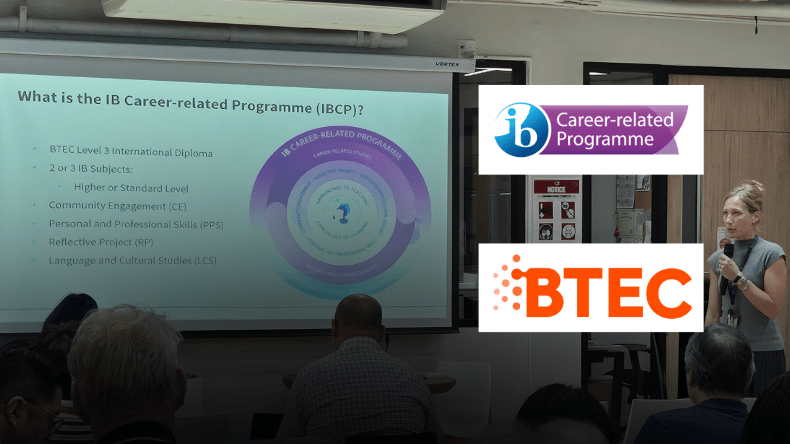
The IB Career-related Programme combines IB academic courses with career-focused learning, including BTEC study.
It offers students the opportunity to explore an area of particular interest while continuing to develop academic skills, practical knowledge and an understanding of their future career pathways.
Some British schools offer A-Levels, which allow students to focus on a smaller number of subjects over two years. At St Andrews, we offer the IB Diploma Programme and IBCP, giving students different pathways to explore their interests and prepare for the next stage of their education.
Do universities around the world recognise British international school qualifications?
Yes. Universities in the UK, the US, Europe, Asia, Australia, and many other destinations widely recognise IGCSEs and the IB.
However, university entry requirements vary by country, institution, and course. Some degrees, particularly in areas such as medicine, engineering and other specialised subjects, may require specific subject choices or grades.
That's why university planning is an important part of the Senior Studies journey. At St Andrews, teachers and counsellors work with students and families to help them make informed choices, explore their options and select subjects that support their future ambitions.
Do British international schools teach the same curriculum everywhere?
Not exactly. While British international schools generally follow the English National Curriculum, they adapt learning to reflect their international setting, local culture and the community they serve.
At St Andrews Bangkok, students learn about Thailand, its culture, language and history. This integration is achieved through:
- Formal Thai language instruction: These lessons not only teach the language but also intricately weave in Thai cultural and historical elements. This combination helps children understand the world around them while appreciating the cultures, perspectives, and experiences of the people they learn alongside.
- Integration across subjects: Thai language and culture are seamlessly integrated into relevant subjects, enriching students' learning experiences.
- Cultural engagement through school activities: The school organises Thai cultural activities and events, giving students opportunities to participate and immerse themselves in Thai traditions and festivals such as Songkran and Loy Krathong. In addition, Thai culture is integrated into various school activities, such as International Day, Languages Day, and other events throughout the school year.
- Extracurricular Activities (ECAs): Students can further engage with Thai language and culture through extracurricular clubs such as Thai dance, Thai music, and children's stories clubs.
How can parents check the quality of a British international school?
When exploring schools, look beyond the curriculum to understand how a school supports learning, wellbeing, and personal development.
One useful indicator is independent accreditation. British Schools Overseas (BSO) is an inspection framework backed by the UK Department for Education. It evaluates overseas schools against standards used for independent schools in England.
Parents can also look at a school's accreditation, inspection reports, teaching approach, pastoral care, facilities and the opportunities available to students both inside and outside the classroom.
We hold International Accreditation with the Education Development Trust (EDT), which is a UK-based provider of accreditation services, INSET, and educational programmes.
We also hold the prestigious British School Overseas (BSO) Award, which means the standards you'll find at our school are equivalent to those found in a UK independent school. The most recent BSO Inspection Report judged St Andrews International School Bangkok's quality of education 'outstanding' in all areas. The EDT International Schools Quality Mark (ISQM) accreditation validates the quality of our education provision against global standards.
We are the first school outside of the UK to be awarded the Inclusive School Award with “Centre of Excellence” status by the Inclusion Quality Mark (IQM). It is a tremendous honour to receive this accolade, as it reflects both our inclusive ethos and determination to meet the diverse needs of all our students.
The international accreditation process is linked to the Thai Ministry of Education Public Office, which is responsible for the assessment of education in public and private schools in Thailand. We were the first school in Thailand to receive this joint accreditation award. This means that a St Andrews Bangkok diploma is equivalent to the Thai school Mathayom 6 qualification, which is essential for Thai students to enter universities in Thailand.
We're also an examination centre for the Edexcel IGCSE, University of Cambridge IGCSE, and the College Board SAT. Furthermore, we're accredited to offer the International Baccalaureate Diploma Programme to our Year 12 and 13 students.
List of accreditations:
- Association of British Schools Overseas Member (AoBSO).
- Assessment & Qualifications Alliance (AQA).
- Accredited BSO Overseas School (BSO).
- Business and Technology Education Council (BTEC).
- Center for British Teaching Education Trust (CfBT).
- Cambridge Assessment International Education (CIE)
- Council of International Schools (CIS).
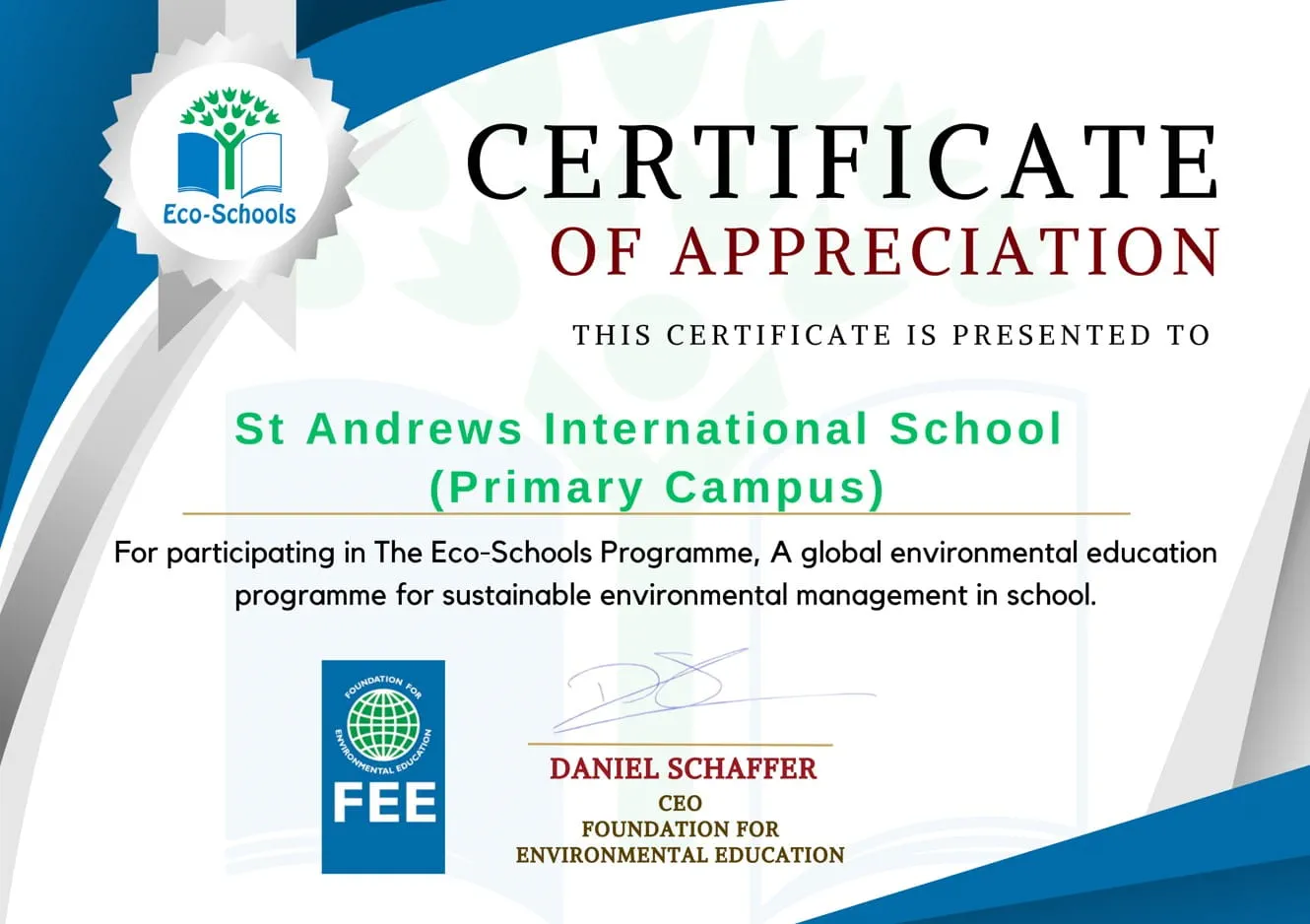
- Eco-Schools Silver Award.
- Education Development Trust (EDT).
- Educational Success Partners Ltd Partner School (ESP).
- International Association for College Admission Counseling (ACAC).
- International Baccalaureate Organisation (IBO).
- International Schools Association of Thailand (ISAT).
- ISQM Gold Accreditation.
- Inclusive School Award - Inclusion Quality Mark (IQM).
- Office for National Education Standards and Quality Assessment (ONESQA).
- Pearson Edexcel (EDEXCEL).
- SENIA International School Membership.
- The Duke of Edinburgh's International Award (DofE)
- The Federation of British International Schools in Asia (FOBISIA).
- The National Association for Special Educational Needs (NASEN).
Visiting a school is also one of the best ways to get a feel for its community. Seeing classrooms, meeting teachers and observing how children interact can help you decide whether a school feels right for your family.
What does a British international school education look like day to day?
A British international school education is about much more than the curriculum or the qualifications children achieve.
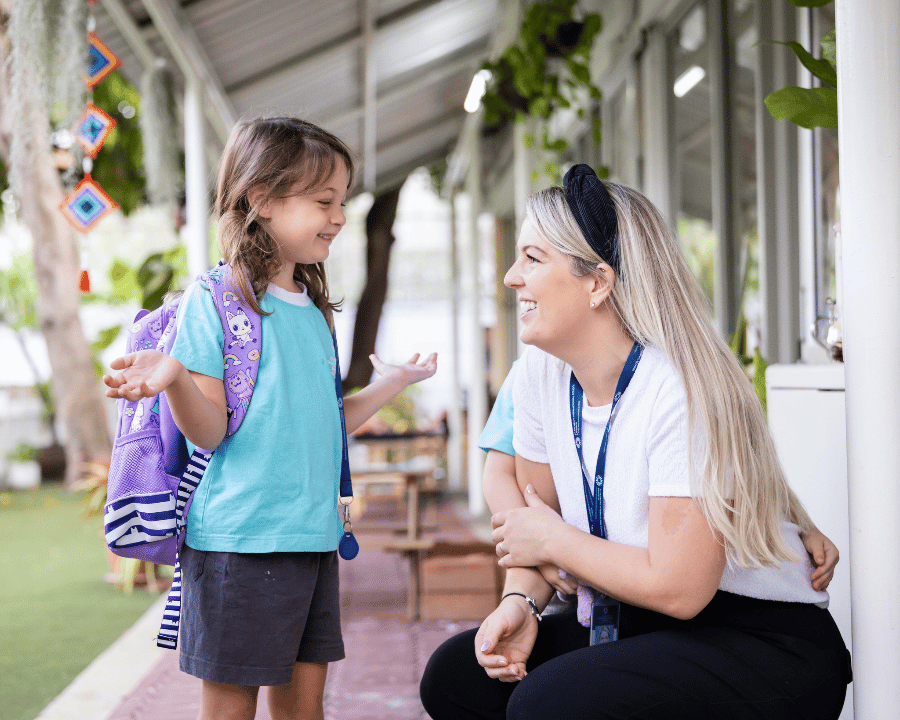
At St Andrews, students are encouraged to ask questions, share ideas, challenge themselves and develop a love of learning. Teachers get to know students as individuals, helping them build confidence and supporting them as they navigate the challenges and opportunities of school life.
Learning also extends beyond the classroom. From sport, music, drama and art to leadership opportunities, social impact projects and extracurricular activities, children can discover new interests, develop their talents and build friendships.
Pastoral care is an important part of this experience, too. Every year group has a Head of Year who leads a team of form tutors. In Primary, Heads of Year (also called Year Leaders) look after both academic progress and wellbeing. In High School, they focus mainly on pastoral care: checking on wellbeing and attendance, staying in touch with families and stepping in early when a student needs extra support. Our counsellors and Deputy Head for Student Welfare support them.
We want every student to feel safe, supported and confident to be themselves.
If you'd like to experience life at St Andrews for yourself, send an email to admissions@standrews.ac.th. Our team would be delighted to welcome you and help you discover what our school community is all about.
Frequently asked questions about British international schools
Do all British international schools follow the same curriculum?
Most British international schools follow the English National Curriculum, but they adapt it to reflect their location, community and international setting. The curriculum, subjects offered and qualifications available can vary between schools.
What qualifications can students gain at St Andrews Bangkok?
Students at St Andrews take IGCSEs in Years 10 and 11. In Years 12 and 13, they can choose between the IB Diploma Programme and the IB Career-related Programme (IBCP), which includes BTEC study.
Is the International Baccalaureate a British qualification?
No. The International Baccalaureate (IB) is an independent educational organisation based in Switzerland. However, many British international schools offer IB programmes in Senior Studies because they provide internationally recognised pathways to university.
What is British Schools Overseas (BSO) accreditation?
British Schools Overseas (BSO) is an inspection framework backed by the UK Department for Education. It evaluates overseas schools against standards used for independent schools in England, helping parents understand how a school measures up against recognised UK standards.
At what age do children start at a British international school?
Many British international schools welcome children from around age 2 or 3, depending on their early years provision. At St Andrews International School, children can join from age 2 and continue through to Year 13, when they are typically 18 years old.
Is a British international school a good choice for families moving overseas?
A British international school can offer a familiar curriculum structure for families relocating from the UK or moving between international schools. The Key Stages and year groups can help make transitions more straightforward, while the international community gives children opportunities to develop friendships and learn alongside students from different backgrounds.
Related news
News image ![Outstanding BSO Inspection Report - Outstanding BSO Inspection Report]() News | School News
 News | School News
Outstanding BSO Inspection Report
St Andrews International School Bangkok has been rated Outstanding in every area of the British Schools Overseas (BSO) inspection.
News image ![IB vs A levels - IB vs A levels]() Blog | Academic | Senior Studies
 Blog | Academic | Senior Studies
IB vs A-levels: choosing the right path to university
An in‑depth comparison of the IB Diploma and A‑levels within secondary education, exploring how each pathway prepares students for university and life beyond school. The article highlights how St Andrews Bangkok’s IB approach develops academic breadth, critical thinking, and independent learning, while also addressing how the IB is well placed to respond to the growing role of AI in education through ethical use, research skills, and future‑ready assessment practices.
News image ![web16]() News | Global Education | Homepage Featured Article | Insight & Advice | School News
 News | Global Education | Homepage Featured Article | Insight & Advice | School News
Five reasons why our IGCSE programme is the right choice for your child
When it comes to the IGCSE curriculum, one size does not fit all, and we are not your traditional international school. As contemporary inclusive educators, we understand that no one child is the same, and we all have different strengths as individuals. Learn more about how our inclusive IGCSE model supports every child to be the best they can be!
News image ![Understanding the IBCP and BTEC Pathways: Career-Focused - Understanding the IBCP and BTEC Pathways]() Blog
 Blog
Understanding the IBCP and BTEC pathways: career-focused learning at St Andrews
St Andrews’ IBCP pathway blends the academic strength of IB courses with the practical, career-focused experience of BTEC, giving students a personalised route that prepares them for both university and the workplace. Through hands-on vocational study, real-world work placements, and a holistic skills-based core, students gain the confidence and expertise needed to thrive in their chosen career paths.