We use cookies to improve your online experiences. To learn more and choose your cookies options, please refer to our cookie policy.

03 March, 2026
Developing Creative and Compassionate Thinkers for the Future
Creativity as a Way of Thinking - In School and at Home
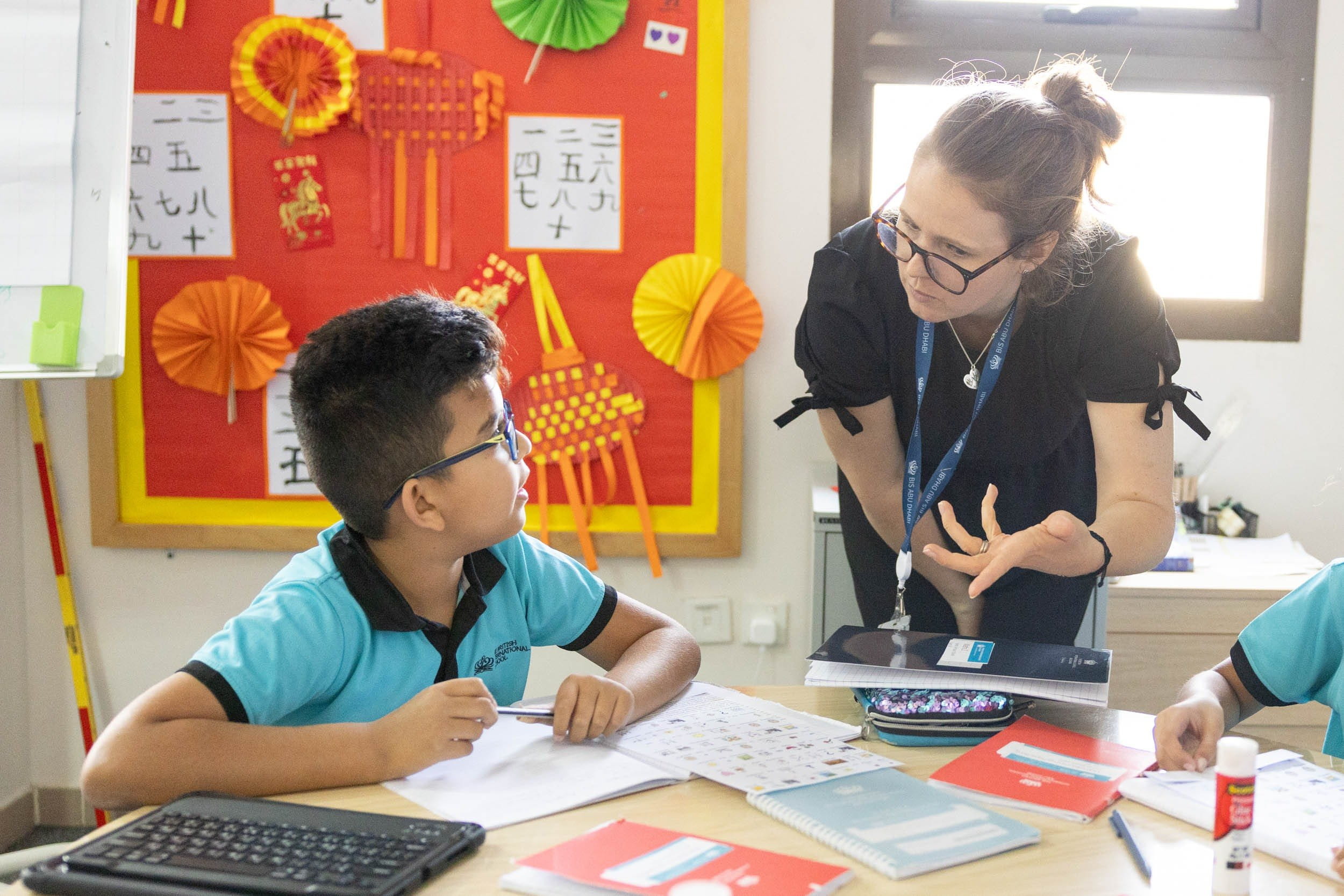
Last half term, The British International School Abu Dhabi's focus was on the following of the 6Cs or Learner Ambitions (describing the attributes we aim to develop in every child: creative, committed, curious, critical, compassionate and collaborative): creativity. While creativity is often associated with subjects such as art, we have been exploring it as a way of thinking across all areas of learning and beyond the classroom. Using routines such as ‘Colour -Symbol - Image’, 'See - Think - Wonder', and ‘How else - Why’, students have been encouraged to look at ideas from different angles, consider alternatives and explain their thinking. In maths, for example, this might mean finding more than one way to solve a problem or explaining why a method works rather than simply giving an answer.
You can support this at home too. When your child is building, drawing, solving a puzzle or making a decision, you might try a simple version of our routines. Ask, “How else could we do this?” and encourage them to think of two or three different possibilities. Follow with, “Why might that work?” to help them explain their reasoning. These small prompts help children practise generating ideas, explaining their thinking and becoming more flexible problem solvers.
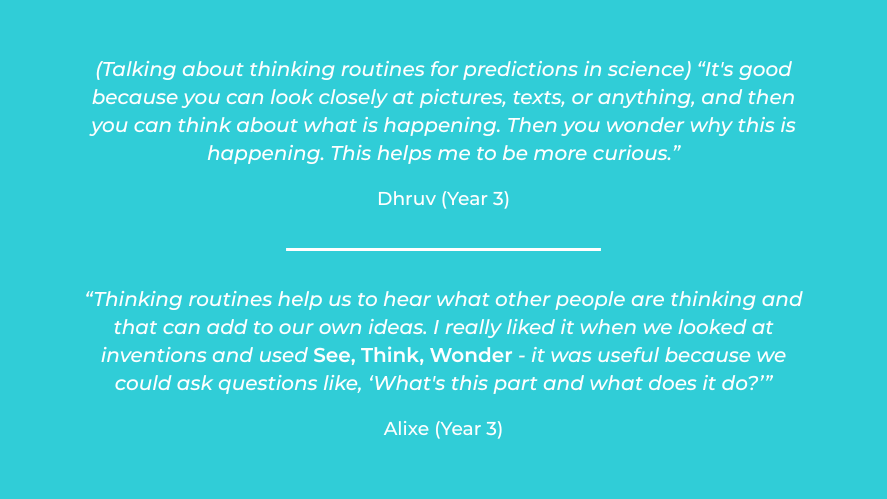
Here’s what some of our younger learners said about using these routines:
Everyday moments such as choosing a route, planning a game or working through a challenge are great opportunities to explore different possibilities together.
🎥 What do our students think?
We asked some of our students: “How do thinking routines help you?”
Future-Ready Thinking: Metacognition, AI and the Learner Ambitions
Developing Student Voice on the most important Learner Ambitions: Compassion and Collaborative
As AI becomes more present in everyday life, creativity and flexible thinking will be increasingly important. AI itself is not creative, but the person using it can think creatively about how to use it. Helping children generate ideas, question possibilities and explore different approaches will be an important skill for the future.
This work is also informed by our involvement in Nord Anglia’s global metacognition research project, which explores how we can develop our Learner Ambitions through the use of thinking routines and self-reflection. Metacognition simply means thinking about your own thinking, helping children understand how they learn, not just what they learn.
Our Learner Ambitions describe the attributes we aim to develop in every child, such as creativity, curiosity, compassion and collaboration.
The findings reinforce what we see daily in classrooms. When students are given structures to reflect, question and explore ideas, they become more independent, more confident and better able to navigate new challenges. As part of this study, students who engaged with thinking routines regularly demonstrated increases of 53% and 50% in compassion and curiosity respectively.
🎥 Hear from our students:
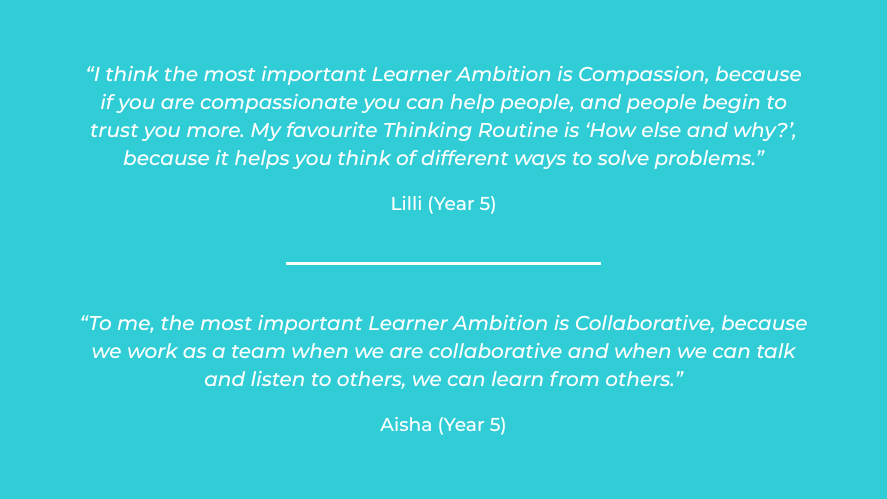
To deepen this reflection, students were asked: “Which learner ambition do you feel is most important, and why?”
Future-Ready Thinking: Metacognition, AI and the Learner Ambitions
As AI becomes more present in everyday life, creativity and flexible thinking will be increasingly important. AI itself is not creative, but the person using it can think creatively about how to use it. Helping children generate ideas, question possibilities and explore different approaches will be an important skill for the future.
This work is also informed by our involvement in Nord Anglia’s global metacognition research project, which explores how we can develop our Learner Ambitions through the use of thinking routines and self-reflection. Metacognition simply means thinking about your own thinking, helping children understand how they learn, not just what they learn. Our Learner Ambitions describe the attributes we aim to develop in every child, such as creativity, curiosity, compassion and collaboration.
The research findings reinforce what we see daily in classrooms. When students are given structures to reflect, question and explore ideas, they become more independent, more confident and better able to navigate new challenges. As part of this study, students who engaged with thinking routines regularly demonstrated increases of 53% and 50% in compassion and curiosity respectively.
🎥 Hear from our students:
To deepen reflection, students were asked: “Which learner ambition do you feel is most important, and why?”
In a world where AI can provide instant answers, these habits of thinking provide an important counterbalance. We are not simply helping students find answers, but helping them understand how to approach problems, evaluate ideas and use technology thoughtfully.
Students shared a range of perspectives on which learner ambitions matter most to them and why:
Our Next Focus: Compassion - In Classrooms and at Home
Looking ahead to the coming weeks, our next Learner Ambition focus will be compassion, which feels especially meaningful as we approach the Holy Month of Ramadan. Across the world, Ramadan is a time marked by reflection, generosity and community. It offers a natural opportunity to pause, consider others and think carefully about how our actions affect those around us. Within school, we see compassion not simply as a value to talk about, but as a way of thinking that can be developed through reflection, perspective taking and thoughtful discussion.
To support this, students will be using thinking routines such as ‘See – Think – Me - We’ and ‘Feelings and Options’. These routines help children step into different perspectives, consider how situations may affect others and reflect on the choices available to them. Across the curriculum, this might involve exploring a character’s motivations in English, discussing current events in an age-appropriate way or thinking through how to respond to challenges in the playground.
These conversations can continue at home too. During Ramadan and beyond, there are many opportunities to talk together about kindness and understanding. You might try the following steps.
‘See – Think - Me – We’
- See - What is happening in this situation?
- Think - What do you think is going on?
- Me - How would I feel in this situation?
- We - What could we do to make things better for others?
Feelings and Options
- How might each person be feeling?
- What options do they have?
- What would be the most kind or helpful choice?
These simple steps can be used when discussing global news, resolving sibling disagreements or reflecting on everyday situations. Giving children a structure for these conversations helps them develop empathy and confidence in making thoughtful decisions.
As technology and AI continue to develop, compassion becomes even more important. AI itself does not have the capacity to be compassionate, but the people using it do. Helping children learn to make kind, responsible and safe choices when interacting with others, both online and offline, will be essential for the future. Through our metacognitive approach, we are helping students make sense of AI, question what they see and use technology in thoughtful and responsible ways.
Bringing it all together
By embedding thinking routines across the school, we are helping students develop habits that support both their learning and their relationships with others. Whether they are thinking creatively to solve a problem, reflecting on how their actions affect those around them or learning to use technology responsibly, these routines provide a shared language for thoughtful decision making. In short, these routines help children think independently, act with empathy and navigate a future shaped by AI with creativity and care.
Our aim is to support children in becoming confident, reflective and compassionate learners, ready to navigate an ever-changing world with curiosity, care and understanding.
Related news
News image ![Ways to Keep Curiosity Alive During Summer Break]() Blog | Advice and Guidance | Educational Insights | Primary
Blog | Advice and Guidance | Educational Insights | Primary
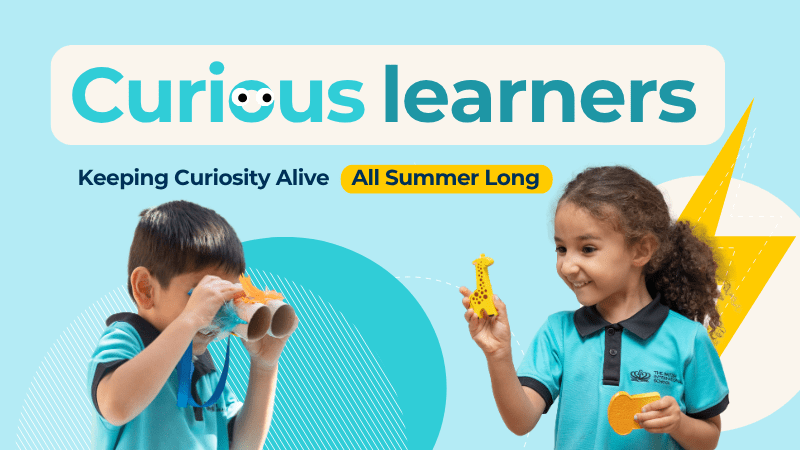 Blog | Advice and Guidance | Educational Insights | Primary
 Simple Ways to Keep Curiosity Alive Over the Summer Break
At BIS Abu Dhabi, curiosity isn’t bound to the classroom, it’s a mindset we nurture year-round. With Curious as our Term 3 ambition, we’re excited to carry this focus into Term 1 next year. Curiosity sparks exploration, strengthens connections, and drives metacognitive awareness; helping children understand how they think when they are curious. Discover simple thinking routines and summer activities that help children stay curious, reflect on their thinking, and start the new term inspired.
News image ![Metacognition at The British International School Abu Dhabi]() News | School News | Educational Insights | Nord Anglia Education
News | School News | Educational Insights | Nord Anglia Education
.jpg?h=1080&iar=0&w=1920&rev=50dae887da51433f9556bfd322b9f387&hash=2A20F3740514DF053BD4C6E9E9E7D75E) News | School News | Educational Insights | Nord Anglia Education
News | School News | Educational Insights | Nord Anglia Education BIS Abu Dhabi at the Forefront of Cutting-Edge Metacognition Research
As a proud member of the Nord Anglia family, The British International School (BIS) Abu Dhabi is at the forefront of cutting-edge research. As one of the select pilot schools, we are benefitting from innovative studies like the recent Forbes-featured Metacognition project, which aims to enhance student learning and critical thinking.
News image ![How BIS Abu Dhabi Is Preparing Students for Success - How BIS Abu Dhabi Is Preparing Students for Success Through Metacognition and Innovation]() News | Educational Insights | Global News | School News
News | Educational Insights | Global News | School News
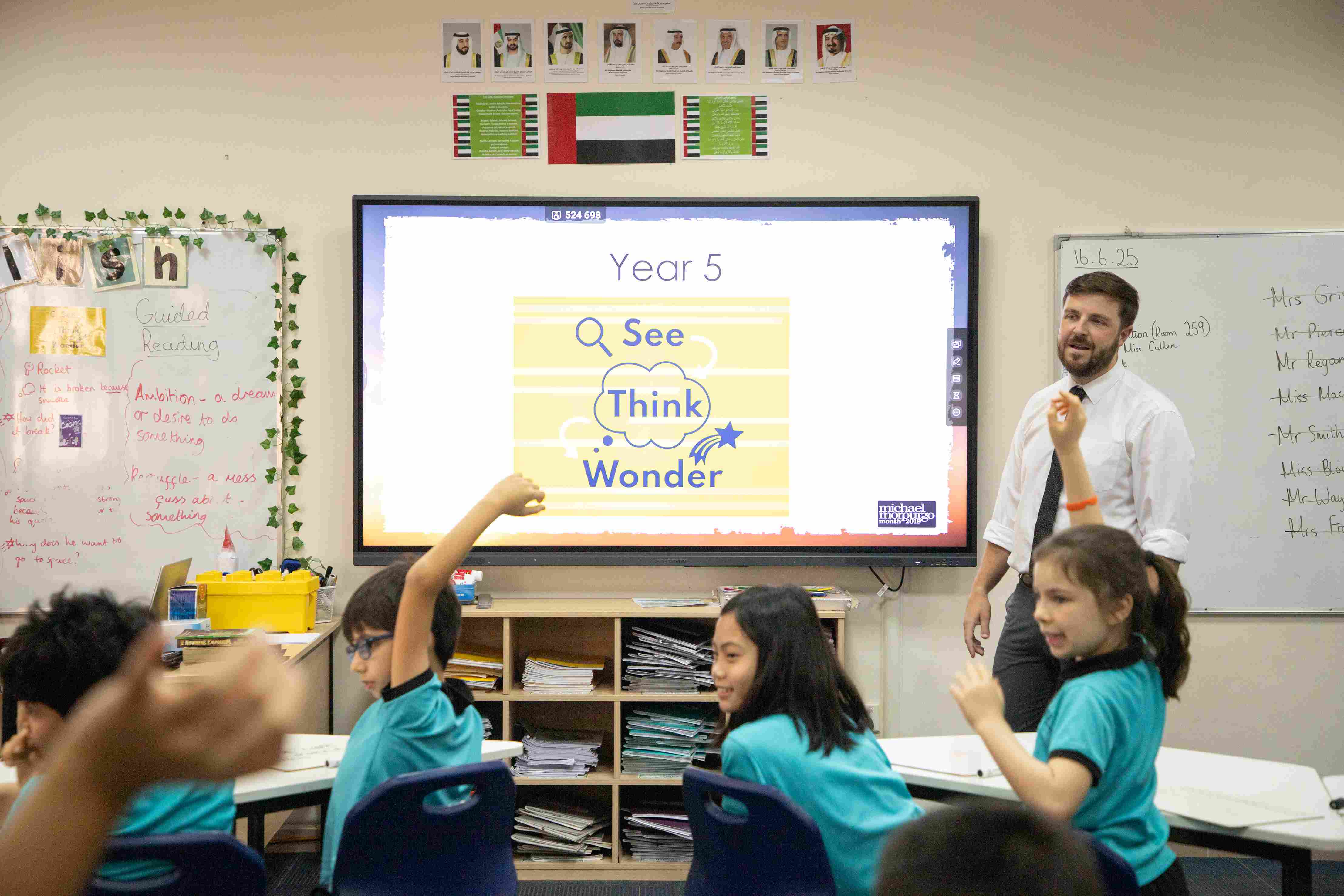 News | Educational Insights | Global News | School News
 How BIS Abu Dhabi Is Preparing Students for Success Through Metacognition and Innovation
Discover how BIS Abu Dhabi is empowering students to become independent, reflective learners through metacognitive strategies and innovative teaching practices, in collaboration with Harvard Project Zero and Nord Anglia Education.
News image  Blog | Advice and Guidance | Educational Insights | Posts From Our People | Primary
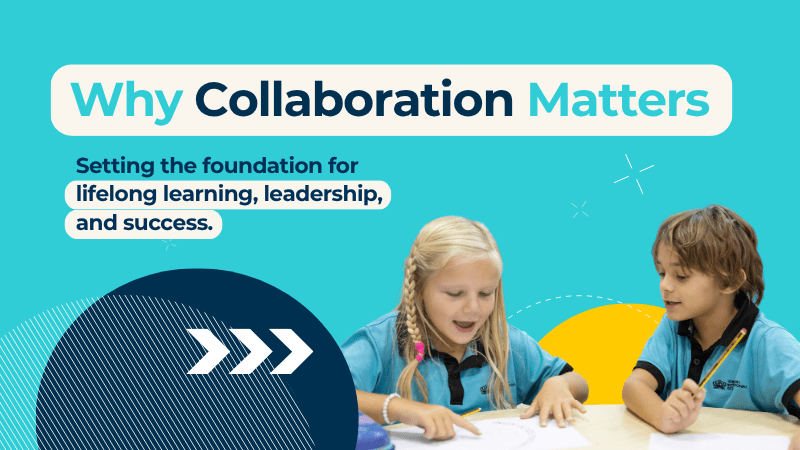 Blog | Advice and Guidance | Educational Insights | Posts From Our People | Primary
 Building the Future Together: Why Collaboration Matters for Lifelong Success
At BIS Abu Dhabi, we go beyond group work, students learn to think with others, articulate their ideas, and build on different perspectives. Using Harvard Project Zero Thinking Routines, we make thinking visible and strengthen metacognition, helping children understand how they learn through dialogue. Find out why collaboration is a future-ready skill and explore practical ways to nurture it at home.
News image  Blog | Advice and Guidance | Educational Insights | Leadership Insights | Wellbeing and Pastoral Care
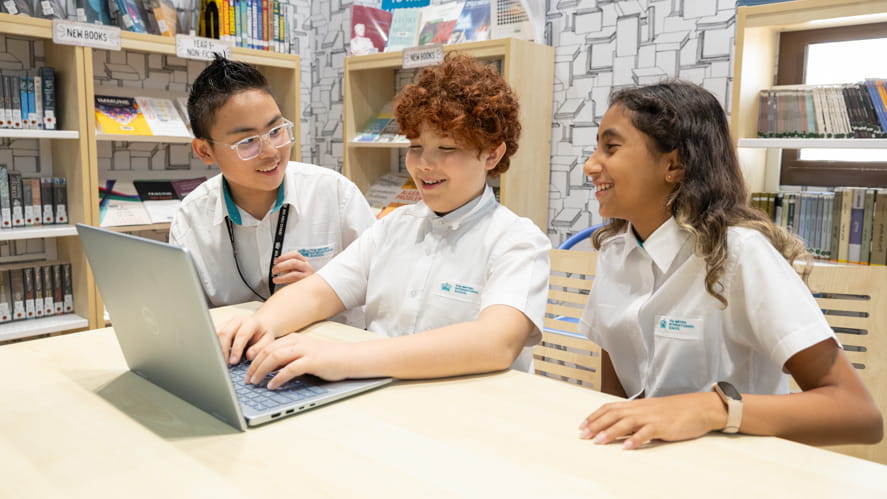 Blog | Advice and Guidance | Educational Insights | Leadership Insights | Wellbeing and Pastoral Care
 Preparing Students for an AI-Enabled Future
Discover how BIS Abu Dhabi ensures safe, responsible AI use in the classroom while building students’ confidence, critical thinking, and good digital habits.
.png?rev=1619813b30a347d9bc71977e2cfe09d2&hash=66B98CDC659BBF07EB36660B4381E1E7)