


We use cookies to improve your online experiences. To learn more and choose your cookies options, please refer to our cookie policy.
29 July, 2026
Eco-Schools at BISB: Growing a Greener Future Through Learning and Action
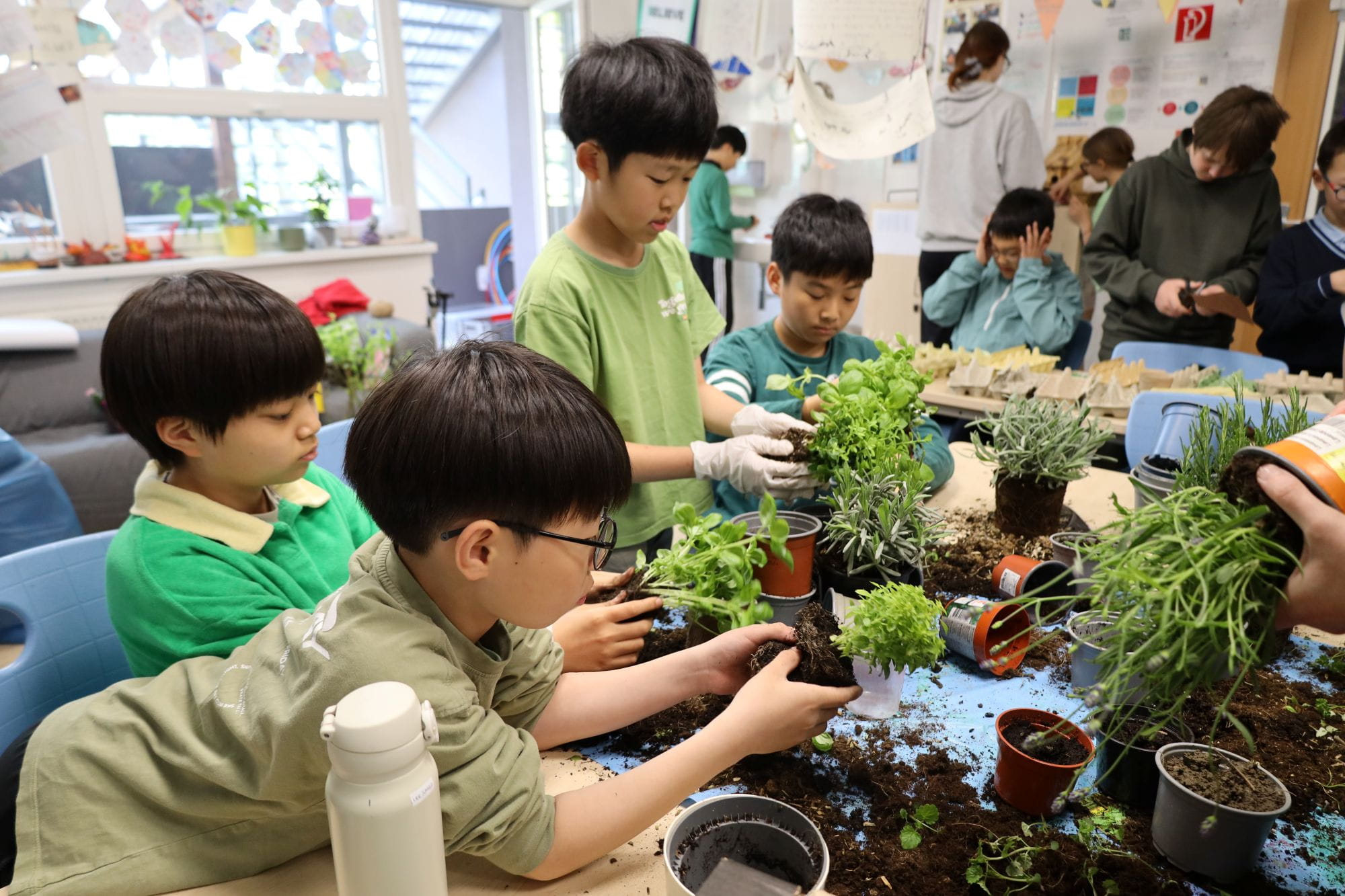
As part of our Eco-Schools Project 2024–2026, students and staff have been working together under the theme "Greenery and Nature Protection", transforming both our learning experiences and our school environment. Through outdoor learning, environmental awareness initiatives, and biodiversity projects, our community continues to take meaningful action towards a more sustainable future.
After the initial environmental audit of the school grounds both for the wildlife provision and also for the teaching and learning usage in 2024/2025 we set ourselves 3 targets for 2025/2026:
1. Learning Beyond the Classroom
One of our key Eco-Schools targets is to increase the number of lessons taught outside the classroom.
Following a comprehensive environmental audit in 2024–2025, we identified significant opportunities to make greater use of our outdoor spaces for teaching and learning. Research consistently highlights the benefits of outdoor learning, including improved wellbeing, stronger engagement, experiential learning opportunities, and a deeper connection with the natural world.
To support this goal, teachers dedicated planning time to exploring outdoor learning opportunities, sharing best practices, and collaborating across departments. This collective effort inspired many staff members to experiment with new approaches and make greater use of the school grounds and local environment.
The results have been encouraging. By March 2026, students had experienced an average of 15 lessons outside the classroom per class over a 16-week period, excluding Physical Education and including educational visits and field trips. Teachers reported increased enthusiasm, motivation, and engagement from students when learning outdoors.
Outdoor learning at BIS takes many forms, including:
•Science investigations in the school grounds
•Mathematics activities in real-world contexts
•Educational excursions and fieldwork
•Forest School sessions
•Environmental field trips and conservation projects
While our target remains ambitious, we are proud of the progress made and will continue developing outdoor learning opportunities during the 2026–2027 academic year.
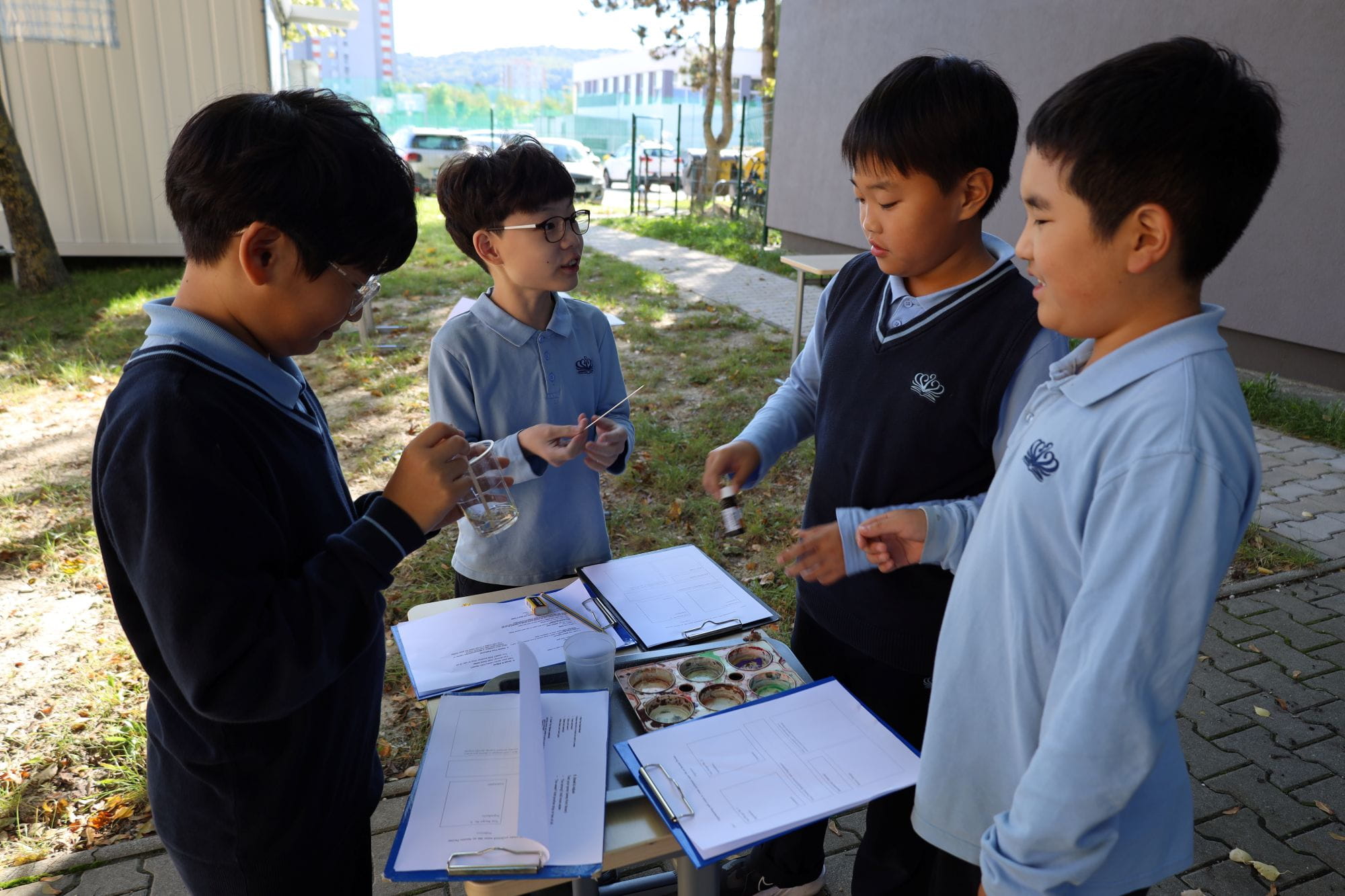
Forest School: Inspiring Curiosity in Nature
Our youngest learners continue to explore the natural world through regular Forest School experiences.
Reception and Year 1 pupils participate in hands-on outdoor learning in woodland environments and in our Maple Garden outdoor classroom. Through activities such as nature exploration, plant care, shelter building, sensory play, and creative construction, children develop scientific enquiry skills, creativity, communication, collaboration, and environmental responsibility.
These experiences help children build confidence, resilience, and a lifelong appreciation for nature while supporting key areas of the curriculum in meaningful, engaging ways.
2. Raising Environmental Awareness Across Our Community
Developing environmentally responsible citizens requires more than knowledge - it requires action.
Eco Challenges
Throughout the year, Eco Representatives in Secondary and School Council members in Primary organised a range of sustainability-focused challenges designed to encourage positive environmental habits.
Classes created Green Corners, developed their own Eco-Codes, and took responsibility for caring for plants and promoting sustainability within their learning spaces.
Congratulations to:
8CP – Winners of the Most Creative Green Corner Award
9AV – Winners of the Best Plant Care Award
Assemblies and Eco Quizzes
To keep environmental issues front and centre, students participated in four eco-themed quizzes and a whole-school assembly. These activities encouraged reflection on sustainability challenges and empowered students to consider how their own choices can make a difference.
Conservation in Action: IB Students Supporting Local Ecosystems
Environmental stewardship extends beyond the school grounds.
As part of their Biology studies and CAS (Creativity, Activity, Service) programme, Year 12 students visited Čunovské jazerá, a protected area near the old Danube riverbed, in collaboration with environmental organisation Daphne.
The conservation fieldwork provided valuable insight into habitat restoration and biodiversity protection. Students worked together to:
•Learn about protected ecosystems and native plant species
•Support habitat restoration efforts
•Remove excess branches to promote healthy vegetation growth
•Remove invasive and successional shrub species
•Explore real-world conservation practices
The experience enabled students to connect classroom learning with meaningful environmental action while contributing to the preservation of local biodiversity.
Sustainability Through CAS and Student Clubs
Students across the school have embraced sustainability through a variety of CAS and extracurricular activities.
Eco Club
Members of the Eco Club worked tirelessly to improve biodiversity on campus by:
•Building bird feeders from recycled Christmas trees
•Keeping feeders stocked throughout the winter
•Constructing and installing birdhouses
•Monitoring nesting blue tits
•Installing a bird bath during a particularly dry spring
•Building a model green roof with an insect hotel
•Planting seed-producing flowers
•Caring for fruit trees and garden plants
These projects have helped create a more wildlife-friendly environment while giving students practical conservation experience.
Bird Watching Club
Students explored local birdlife, learning how to identify species and understand the role birds play within local ecosystems.
Dare to Repair Club
Members developed practical repair skills while reducing electronic waste by repairing broken devices and giving them a second life whenever possible.
Primary Eco Week: Learning to Care Through Experience
Our annual Primary Eco Week 2026 focused on a simple but powerful idea:
"We care for what we know."
Pupils participated in a variety of hands-on environmental activities organised by class teachers, helping them develop a stronger understanding of the plants and animals that share our environment.
For Green Eco Day, students dressed in green and brought a houseplant to school, committing to care for it throughout the final term. They also enjoyed planting new vegetation in the school gardens and learning firsthand about the responsibilities involved in nurturing living things.
The result was a joyful and meaningful celebration of environmental awareness and stewardship.
Secondary Eco Days: Turning Knowledge into Action
This year's Secondary Eco Days challenged students to consider an important question:
Do we live what we teach and learn?
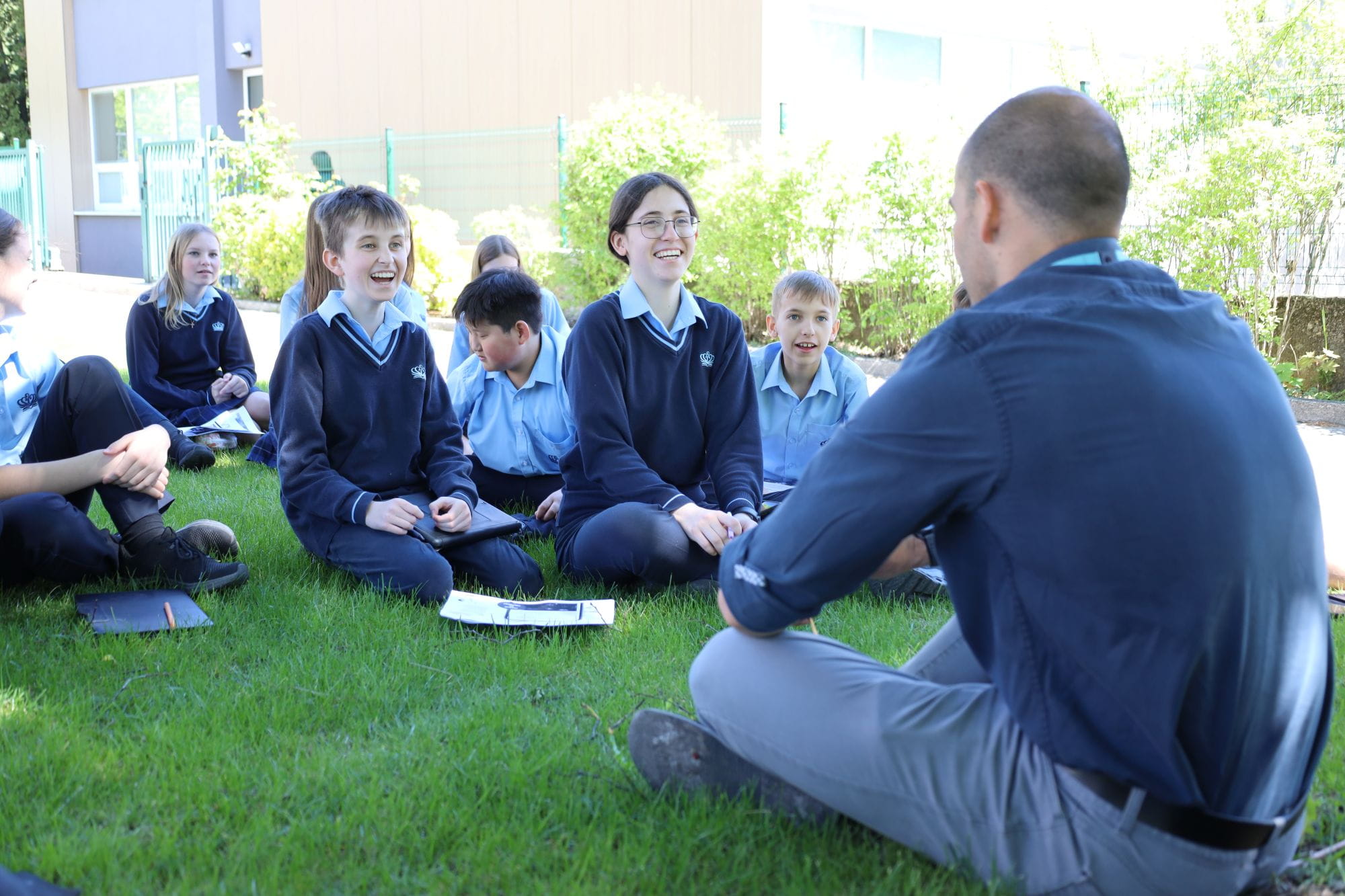
The programme focused on practical, action-oriented sustainability experiences. Activities included:
•Environmental scavenger hunts
•Eco-inspired pavement artwork created by Year 7 students
•Workshops exploring the impact of fast fashion
•Discussions on circular economy principles
•Sustainability-focused CAS activities
A highlight of the programme was a workshop led by BIS alumni Alexandra Kristofovičová alongside circular economy expert Mrs Bednáriková, helping students understand how consumer choices can support a more sustainable future.
These activities encouraged students to think critically about environmental challenges while identifying practical ways to make a positive impact.
3. Transforming Our School Grounds for Biodiversity
Our third Eco-Schools target focuses on developing the school grounds as a richer environment for teaching, learning, and wildlife.
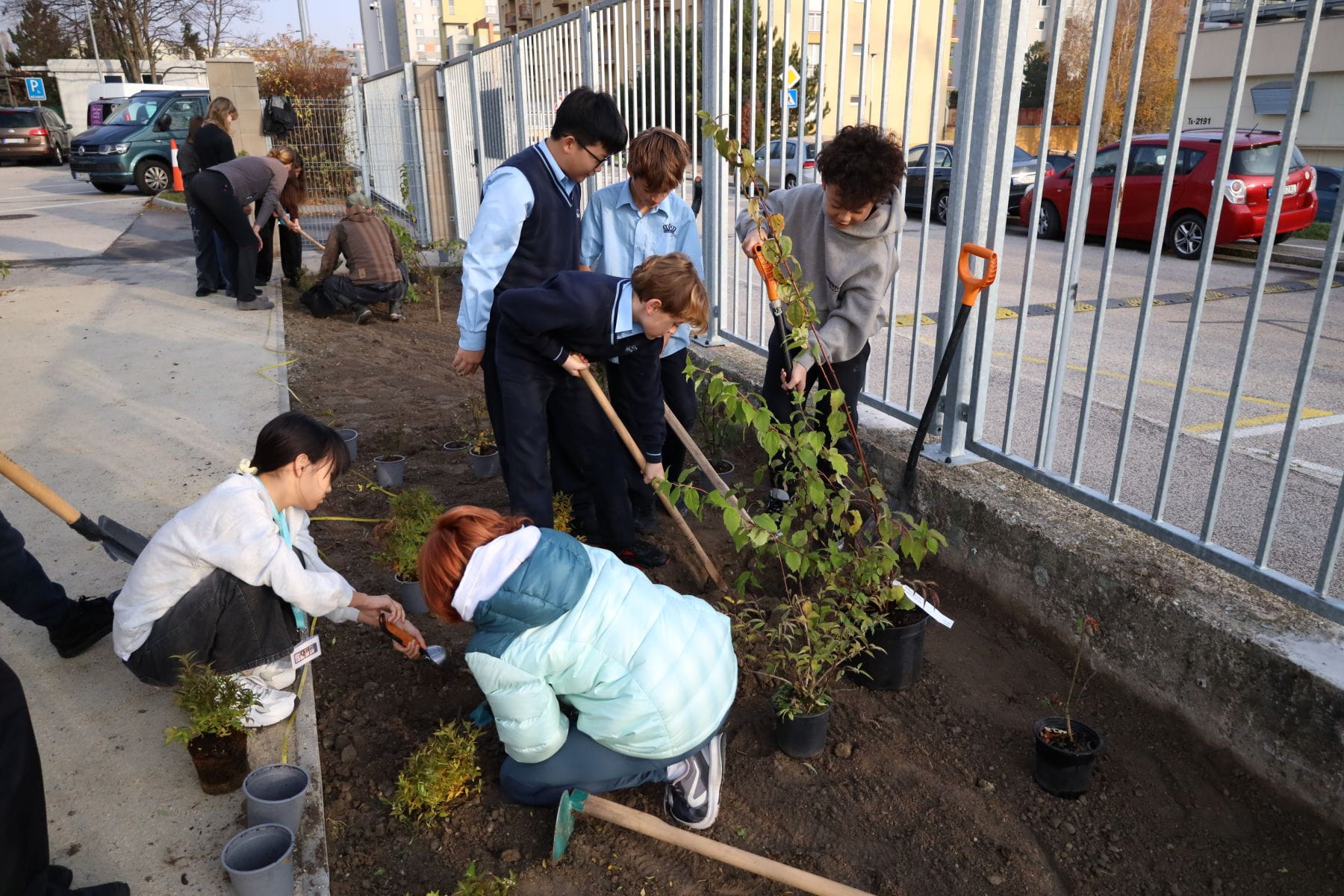
Community Planting Project
Over the last two years, students, staff, and community members have worked together to enhance biodiversity across the BIS campus.
The project began with student consultation:
•Secondary students completed a school-ground development survey.
•Twenty students participated in a professional landscape design workshop led by garden architect Ms Huscavová.
•Student feedback helped shape future planting plans.
In November 2025, Year 7 and Year 8 students played a key role in the transformation, planting:
60 native shrubs
60 trees
A wildflower meadow
Selected species were chosen specifically for their ability to withstand drought, wind, and urban conditions while providing food and shelter for wildlife.
The project has already enhanced biodiversity, improved the local microclimate, and created more inviting outdoor learning spaces for future generations of students.
Looking Ahead
The Eco-Schools Project continues to strengthen BIS's commitment to sustainability, environmental stewardship, and active citizenship.
From outdoor lessons and Forest School learning to conservation fieldwork, community planting, and student-led environmental initiatives, our students are developing the knowledge, skills, and values needed to become responsible global citizens.
By learning in nature, caring for their environment, and taking meaningful action, BIS students are helping create a greener and more sustainable future - both within our school community and beyond.
Related news
News image ![Creative Arts at BISB - Creative Arts at BISB]() Blog
Blog
 Blog
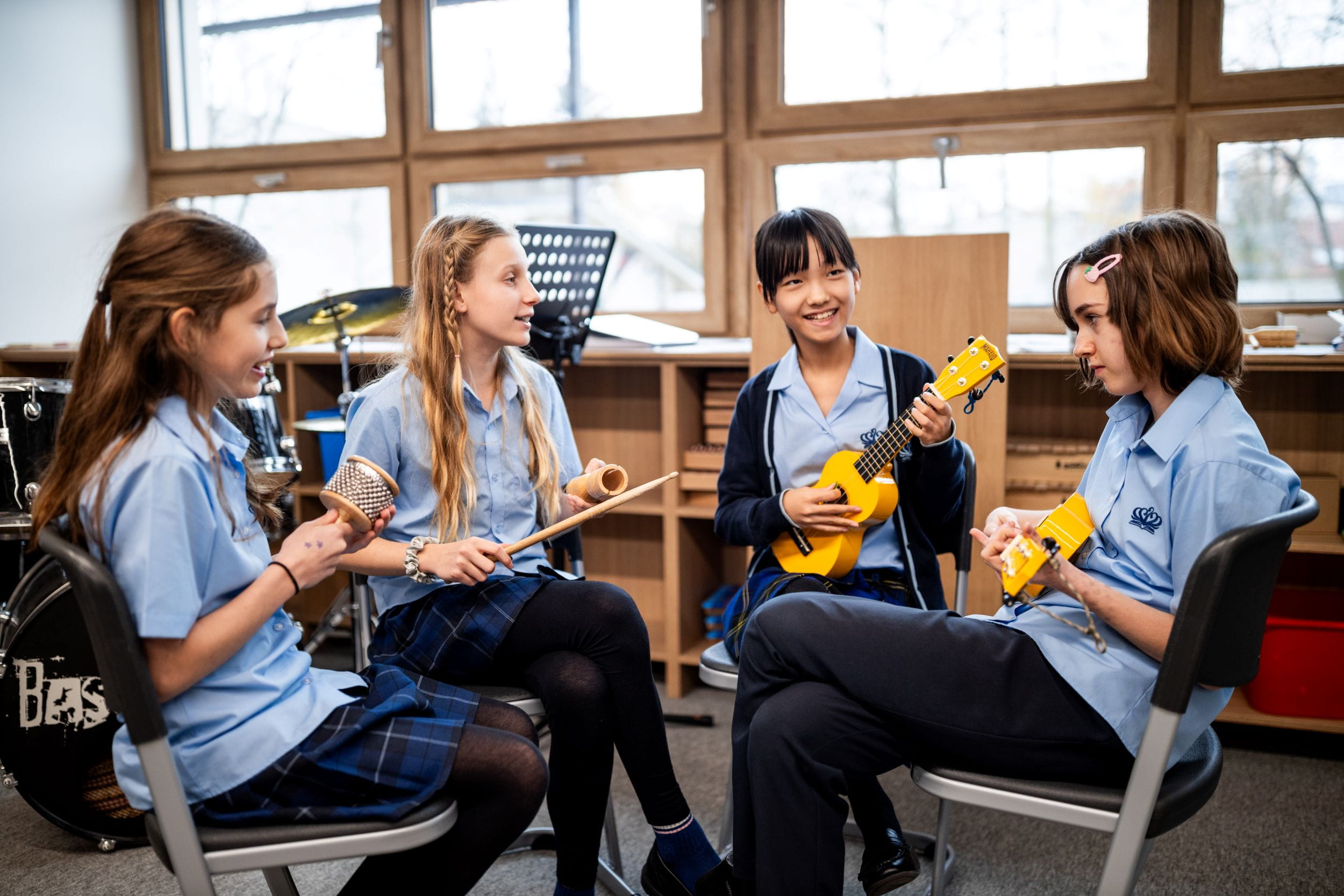
Blog Creative Arts That Shape Confident Learners | The British International School Bratislava
Discover how BISB's Creative Arts programme in Music, Dance, Drama, Art and Design & Technology helps students build confidence, creativity, collaboration and lifelong skills through world-class opportunities and global partnerships.
News image ![Admissions]() Blog
Blog
 Blog
Blog Back to School in Bratislava: Your Family Checklist
The new school year 2026/2027 is a few weeks away. Here is the practical checklist every family in Bratislava needs to get ready for the new start, without the last-minute panic.
News image ![Here are our excellent results - Here are our excellent results]() News
News
 News
News Here are our excellent results
BISB, for the second successive year, has achieved the best IBDP average score in the NAE European school's region.
News image ![IB DIPLOMA PROGRAM - IB DIPLOMA PROGRAM]() News
News
 News
News IB Diploma Programme na BISB: výzva, ktorej sa netreba báť
Výber posledných rokov stredoškolského štúdia je pre mnohých rodičov aj študentov veľkým rozhodnutím. Pri programe IB Diploma Programme sa často objavujú otázky: Bude to príliš náročné? Zvládnem skúšky? Je IB naozaj dobrou prípravou na univerzitu?


