

We use cookies to improve your online experiences. To learn more and choose your cookies options, please refer to our cookie policy.

July 24, 2026
What Inquiry-Based Learning Looks Like in Primary Education
.jpg?h=499&iar=0&w=887&rev=975a771d50a64c1694133d0a7219f09e&hash=8DF6040777C566A417CD6FCAEAD4B572)
WE LOOK FORWARD TO WELCOMING YOU!
Meet with our Director of Admissions to learn what makes us unique. After learning about our program and hearing what you're looking for in your child's next steps, we'd be delighted to welcome you to explore our beautiful facilities, interact with current students, and learn more about the admissions process.
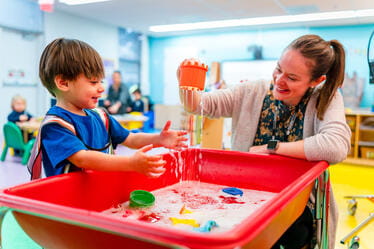
Inquire nowChildren are naturally curious. They ask questions about the world around them, explore new ideas through play, and constantly seek to understand how things work. Inquiry-based learning harnesses this natural curiosity and transforms it into meaningful educational experiences that encourage students to become active participants in their own learning journey.
In primary education, inquiry-based learning moves beyond simply memorizing facts. Instead, students investigate questions, explore concepts, collaborate with peers, and develop the skills needed to think critically and solve problems. The result is a classroom environment where learning becomes engaging, relevant, and deeply connected to the real world.
Inquiry-based learning is an approach that places students at the center of the learning process. Rather than being passive recipients of information, children are encouraged to ask questions, conduct investigations, and discover answers through guided exploration.
Teachers play a crucial role as facilitators, providing the structure, resources, and support students need to deepen their understanding. Through thoughtful questioning and carefully designed learning experiences, educators help children navigate their inquiries while developing essential academic and personal skills.
In an international learning community, inquiry-based education becomes even more powerful. Students bring diverse perspectives, experiences, and cultural backgrounds to classroom discussions, enriching the learning process for everyone. As children explore questions together, they learn to appreciate different viewpoints, develop global awareness, and build the communication skills necessary to thrive in an interconnected world. These experiences help nurture internationally minded learners who are curious, compassionate, and eager to make a positive difference in their communities.
The world our children will inherit is evolving rapidly. Success will require adaptability, collaboration, problem-solving, and a commitment to lifelong learning.
Inquiry-based learning equips students with these essential skills from an early age. By encouraging curiosity, independence, and critical thinking, primary schools can help children become confident learners who are prepared to navigate an ever-changing future.
At The British International School of Washington, we believe that every question holds the potential for discovery. Through inquiry-driven learning experiences, our primary students are empowered to explore, investigate, and develop a genuine love of learning that will stay with them throughout their educational journey and beyond.
In primary education, inquiry-based learning moves beyond simply memorizing facts. Instead, students investigate questions, explore concepts, collaborate with peers, and develop the skills needed to think critically and solve problems. The result is a classroom environment where learning becomes engaging, relevant, and deeply connected to the real world.
Inquiry-based learning is an approach that places students at the center of the learning process. Rather than being passive recipients of information, children are encouraged to ask questions, conduct investigations, and discover answers through guided exploration.
Teachers play a crucial role as facilitators, providing the structure, resources, and support students need to deepen their understanding. Through thoughtful questioning and carefully designed learning experiences, educators help children navigate their inquiries while developing essential academic and personal skills.
In an international learning community, inquiry-based education becomes even more powerful. Students bring diverse perspectives, experiences, and cultural backgrounds to classroom discussions, enriching the learning process for everyone. As children explore questions together, they learn to appreciate different viewpoints, develop global awareness, and build the communication skills necessary to thrive in an interconnected world. These experiences help nurture internationally minded learners who are curious, compassionate, and eager to make a positive difference in their communities.
The world our children will inherit is evolving rapidly. Success will require adaptability, collaboration, problem-solving, and a commitment to lifelong learning.
Inquiry-based learning equips students with these essential skills from an early age. By encouraging curiosity, independence, and critical thinking, primary schools can help children become confident learners who are prepared to navigate an ever-changing future.
At The British International School of Washington, we believe that every question holds the potential for discovery. Through inquiry-driven learning experiences, our primary students are empowered to explore, investigate, and develop a genuine love of learning that will stay with them throughout their educational journey and beyond.
Related news
News image ![Niche 2027 Banner]() Blog
Blog
 Blog
Blog BISW Celebrates Outstanding 2027 Niche Rankings
The British International School of Washington is proud to celebrate its outstanding 2027 Niche rankings, including being named the #1 Best Private High School, #1 Best College Prep Private High School, and #1 Best Private K-12 School in Washington, DC. These achievements reflect the dedication of our students, educators, and families, and our commitment to excellence, diversity, and student success.
News image ![Art All Night]() Blog
Blog
.jpg?h=499&iar=0&w=887&rev=03c8e1fc214d42e6aabb12106f4e35f3&hash=2602E966A58D10F704A81E5AC7C75DC5) Blog
Blog BISW Shines at Another Successful Art All Night
BISW students wowed audiences at another successful Art All Night event, showcasing their musical talents and passion for the performing arts. The evening was a wonderful celebration of creativity, community, and student achievement.
News image ![British Embassy visit]() Blog
Blog
.jpg?h=499&iar=0&w=887&rev=55030e6907c54910b512892d39eb6830&hash=3EADE5337D4E2273E00DAD38885104C8) Blog
Blog Art Culture and Creativity IB Visual Arts Students Visit the British Embassy
Our IB Visual Arts students enjoyed a unique and inspiring visit to the British Embassy in Washington, D.C., where they explored celebrated works of art, sketched en plein air in the Embassy gardens and gained valuable insights that will contribute to their artistic development and Process Portfolios.
News image ![Students in Library]() Blog
Blog
.jpg?h=499&iar=0&w=887&rev=291017c6c4a1435c8e385c6d47254e6a&hash=8A9A77EB924D531302DB2D8A86823AC8) Blog
Blog The Role of Imaginative Play in Early Years Development
Imaginative play is much more than fun and games. From creating make-believe worlds to acting out everyday experiences, young children develop essential cognitive, social, emotional, and communication skills through pretend play. Discover why imaginative play is a cornerstone of early years development and how parents and educators can nurture it both at home and in the classroom.


