

We use cookies to improve your online experiences. To learn more and choose your cookies options, please refer to our cookie policy.
20 October, 2026
IGCSE Explained: A Plain-English Guide for Parents
If you are considering an international school for your child, you have probably come across the term IGCSE on school websites, in admissions conversations, or in university prospectuses. But what does it actually mean? And why does it come up so often when people talk about international education?
Here is a straightforward guide to what the IGCSE is, how it works, and why it matters for your child.
What does IGCSE stand for?
IGCSE stands for International General Certificate of Secondary Education. It is a qualification for students aged approximately 14 to 16, developed by Cambridge Assessment International Education, part of the University of Cambridge.
The programme was designed specifically for students in international schools around the world, which is why it is offered in more than 150 countries. It is the international equivalent of the GCSE in England, but with a curriculum and assessment structure designed for a globally mobile student population.
What subjects will your child study?
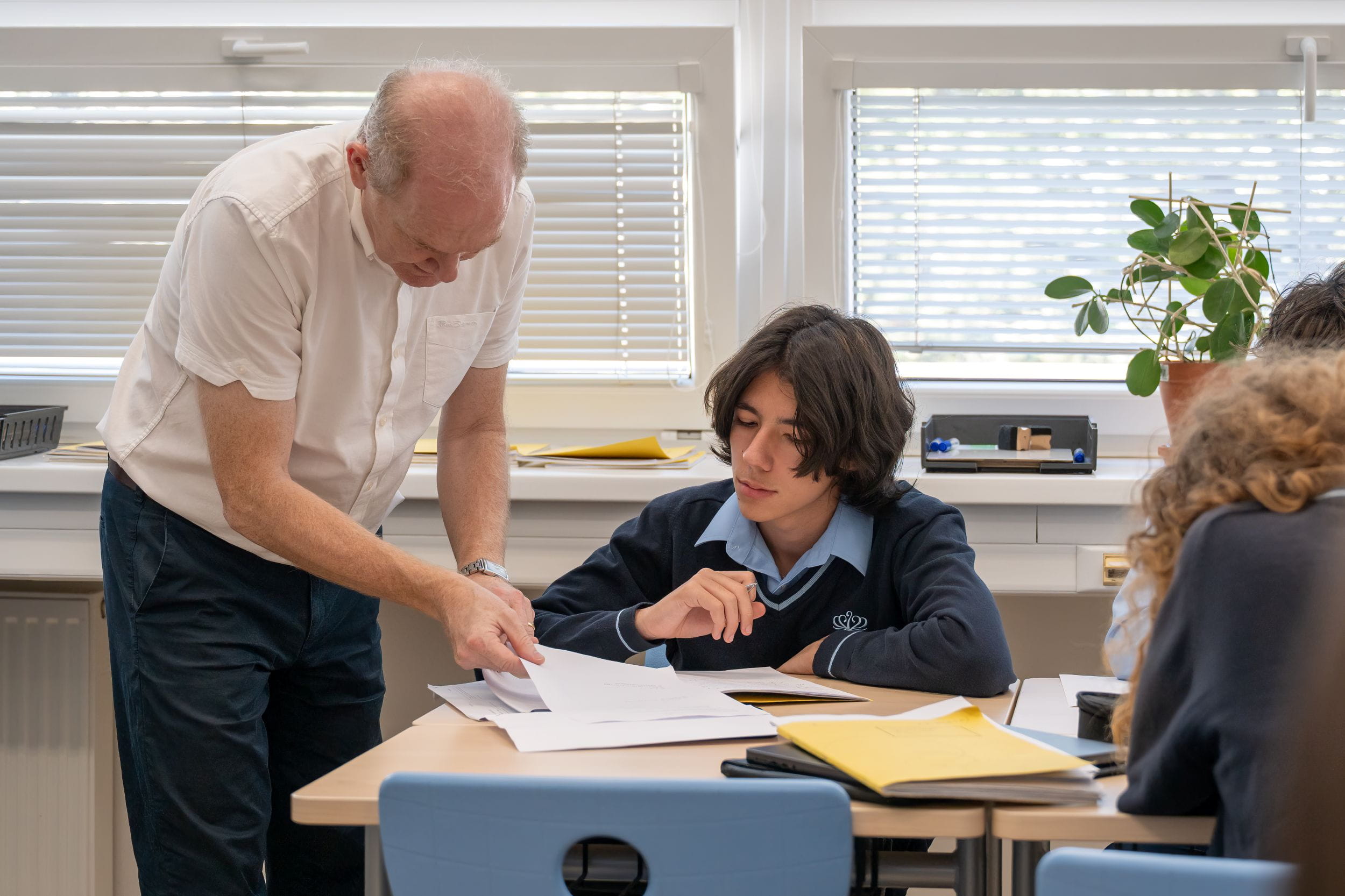
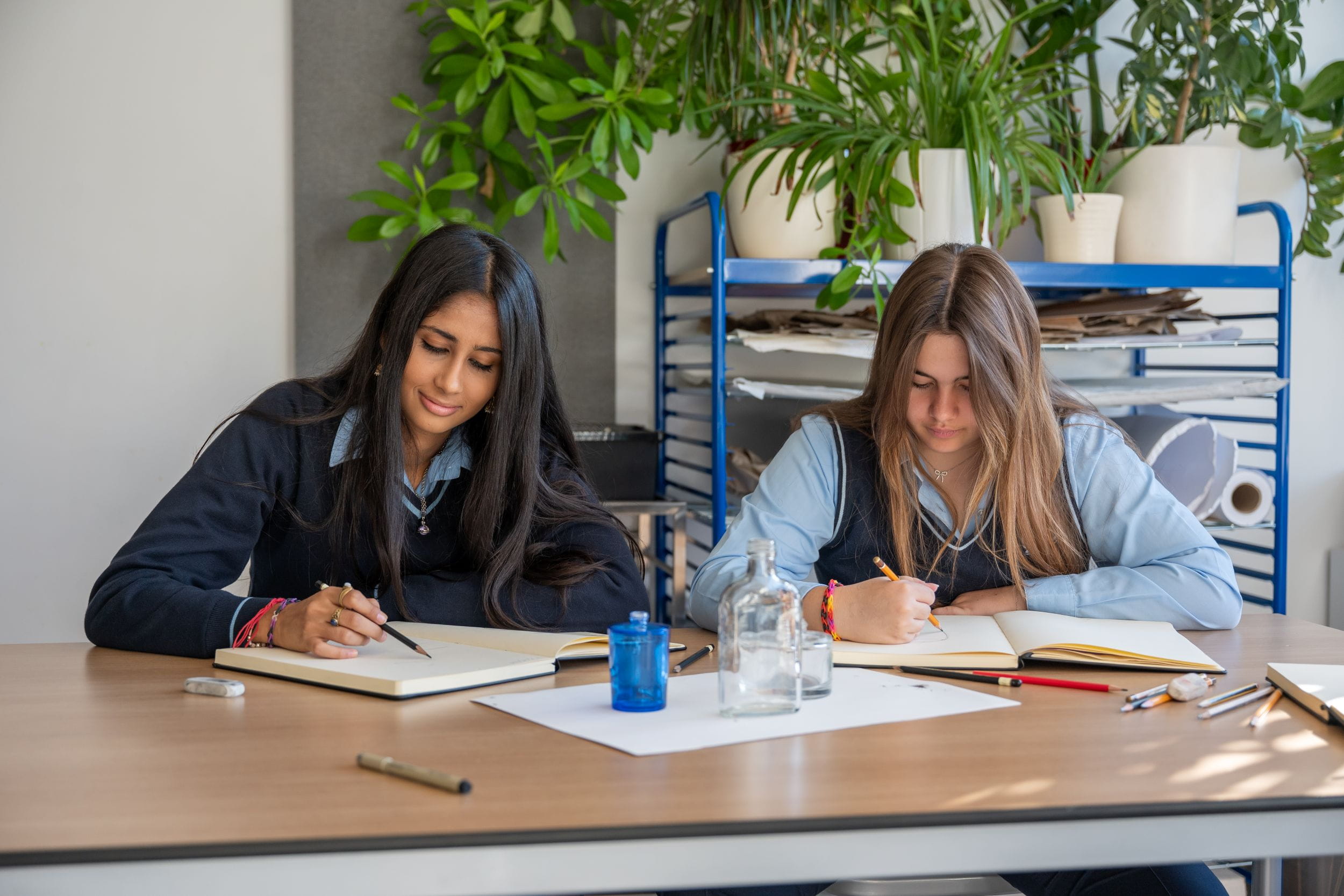
When your child begins studying for their IGCSEs, they will typically take between five and ten subjects over a two-year period. Most schools require a core programme of English, Mathematics and Science, with students choosing additional subjects from a wide range of options, including History, Geography, Modern Languages, Art, Music, Computer Science and Physical Education.
This breadth is key to ensuring a well-rounded education. By studying a diverse range of subjects at IGCSE level, your child will move on to the next stage of their education, whether that is the IB Diploma, A Levels or another qualification, with a strong and broad academic foundation.

How will your child be assessed?
Most IGCSE subjects are assessed through a combination of written examinations and coursework. Some subjects also include practical components, such as science experiments, spoken language assessments, or performances in Music or Drama.
Grades typically range from A* at the highest level to G at the lowest, with many universities and schools looking for grades between A* and C as indicators of strong academic performance. Assessment is externally moderated by Cambridge, helping to ensure consistency and comparability across schools worldwide.
How does the IGCSE compare to other qualifications?
IGCSE vs the Slovak National Curriculum
The IGCSE takes a different approach to learning than the Slovak national curriculum. Rather than being simply harder or easier, it places greater emphasis on analysis, independent thinking and written communication, while placing less emphasis on memorisation and recall.
Students who move from the Slovak system to the IGCSE often find that the transition requires some adjustment, but many also find the learning approach more engaging and more relevant to real-world situations.
IGCSE vs the IB Diploma
The IGCSE and the IB Diploma are not competing qualifications. They are part of a natural progression.
Many international schools that offer the IB Diploma use the IGCSE as a preparation stage. Students typically study IGCSEs in Years 10 and 11 before progressing to the two-year IB Diploma Programme in Years 12 and 13. The analytical, research and writing skills developed through the IGCSE provide a strong foundation for success in the IB.
Why do universities value the IGCSE?
If you think your child may eventually apply to universities abroad, the IGCSE is a valuable qualification to have.
Universities around the world consider IGCSE results for two main reasons. First, Cambridge's external assessment process ensures that grades are internationally recognised, consistent and reliable, regardless of where a student studied. Second, strong IGCSE performance is widely regarded as an indicator of future academic success.
Students who achieve A* and A grades at IGCSE often enter the IB Diploma Programme or A Levels with the academic habits, writing skills and analytical confidence needed for advanced study.
What do IGCSE results look like at international schools in Bratislava?
The standard of IGCSE results varies significantly between schools.
In 2026, at The British International School Bratislava, we were celebrating another outstanding results. This reflects both the quality of teaching and the belief that every student can achieve at a high level with the right support and guidance.
BISB Results at a Glance in 2026
35.5% A*-A
70% A*-B
92% A*-C
What comes after the IGCSE?
After completing their IGCSEs, students move on to an international pre-university programme. At BISB, this means the IB Diploma Programme in Years 12 and 13.
The IB Diploma is one of the world's most widely recognised pre-university qualifications and is accepted by thousands of universities across the globe. It is designed to develop academic excellence, critical thinking and international-mindedness.
Want to see what an IGCSE education looks like in practice?
The best way to find out whether an international school is the right fit for your child is to visit and experience it first-hand.
The admissions team at BISB would be delighted to guide you through the secondary school programme, discuss subject choices, and show you what everyday life looks like for students in Years 10 and 11.
Related news
News image ![Beyond the Sandpit_Why Play-Based Learning Matters in the Early Years - Beyond the Sandpit_Why Play-Based Learning Matters in the Early Years]() Blog
 Blog
Beyond the Sandpit: Why Play-Based Learning Matters in the Early Years
Discover how play-based learning at BISB helps young children develop critical thinking, creativity and confidence. Join our Early Years Open Day in Bratislava and see our classrooms in action.
News image ![Creative Arts at BISB - Creative Arts at BISB]() Blog
 Blog
Creative Arts That Shape Confident Learners | The British International School Bratislava
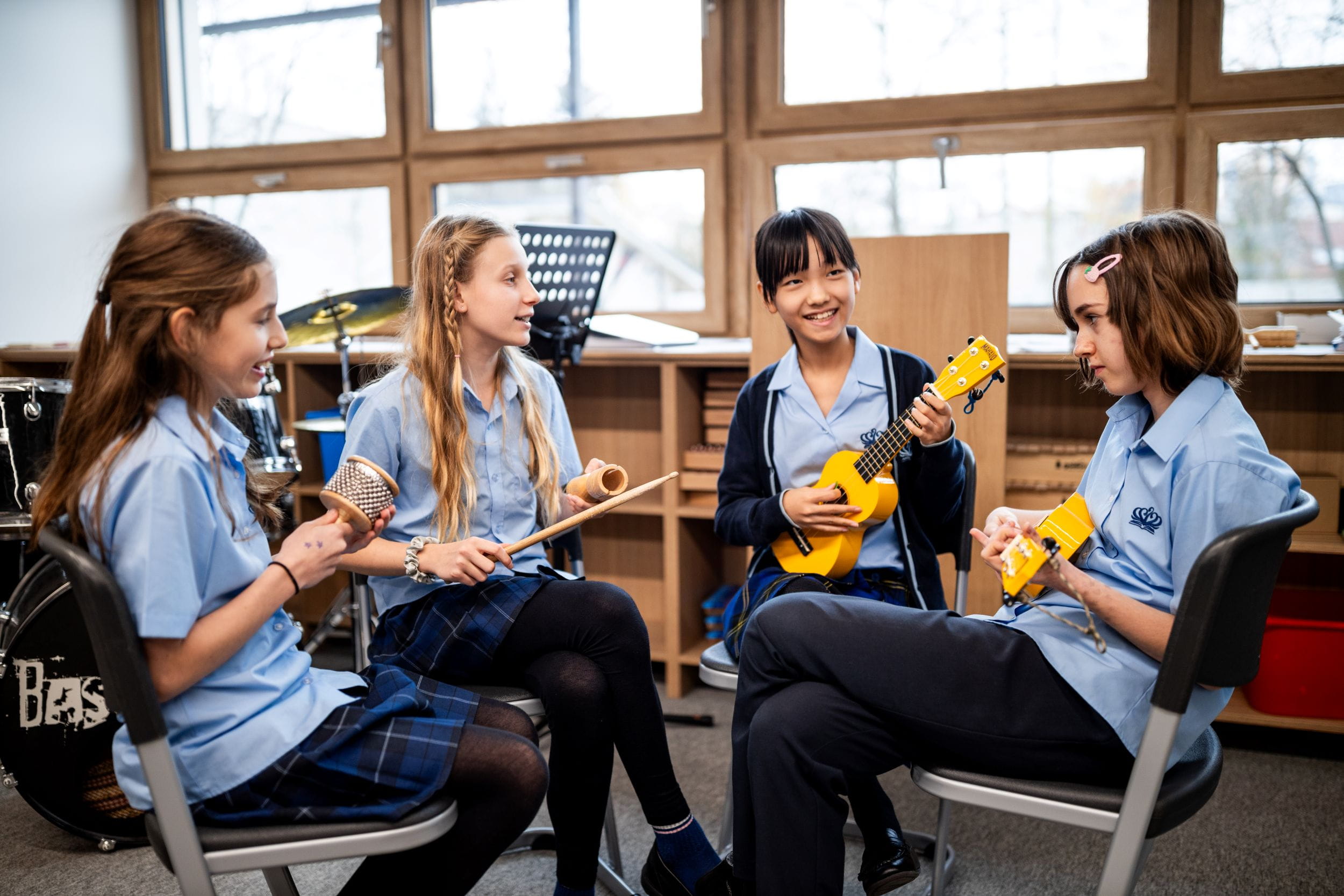
Discover how BISB's Creative Arts programme in Music, Dance, Drama, Art and Design & Technology helps students build confidence, creativity, collaboration and lifelong skills through world-class opportunities and global partnerships.


