


Building Strong Literacy Skills
From Early Years and Beyond: Building Strong Literacy Skills
A confident start in reading can shape the way a child feels about learning for years to come. In the early years, literacy is not about rushing children into formal reading before they are ready. It is about building strong foundations through listening, speaking, vocabulary, stories, play and carefully structured teaching.
At Nord Anglia International School New York, children are supported through a clear and responsive approach that helps them grow as confident readers, writers and communicators.
Building the Foundations for Reading
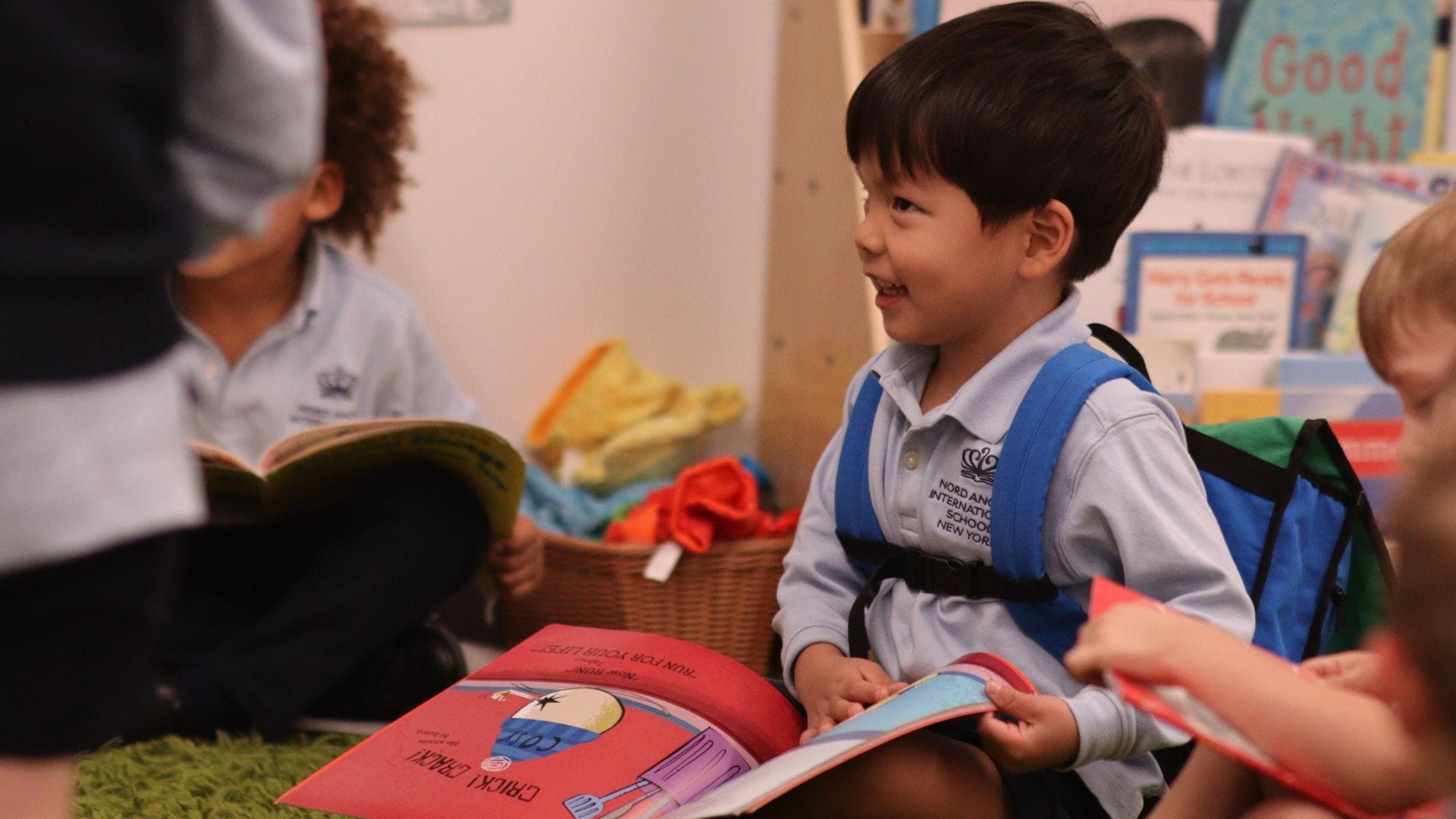
Learning to read begins long before a child opens their first reading book. Stories, songs, and nursery rhymes help young children develop their listening skills, expand their vocabulary, and become familiar with the rhythms and patterns of spoken language.
Activities involving rhyme, rhythm, and alliteration also help children notice the different sounds within words, an important step towards learning phonics and eventually blending sounds together to read independently.
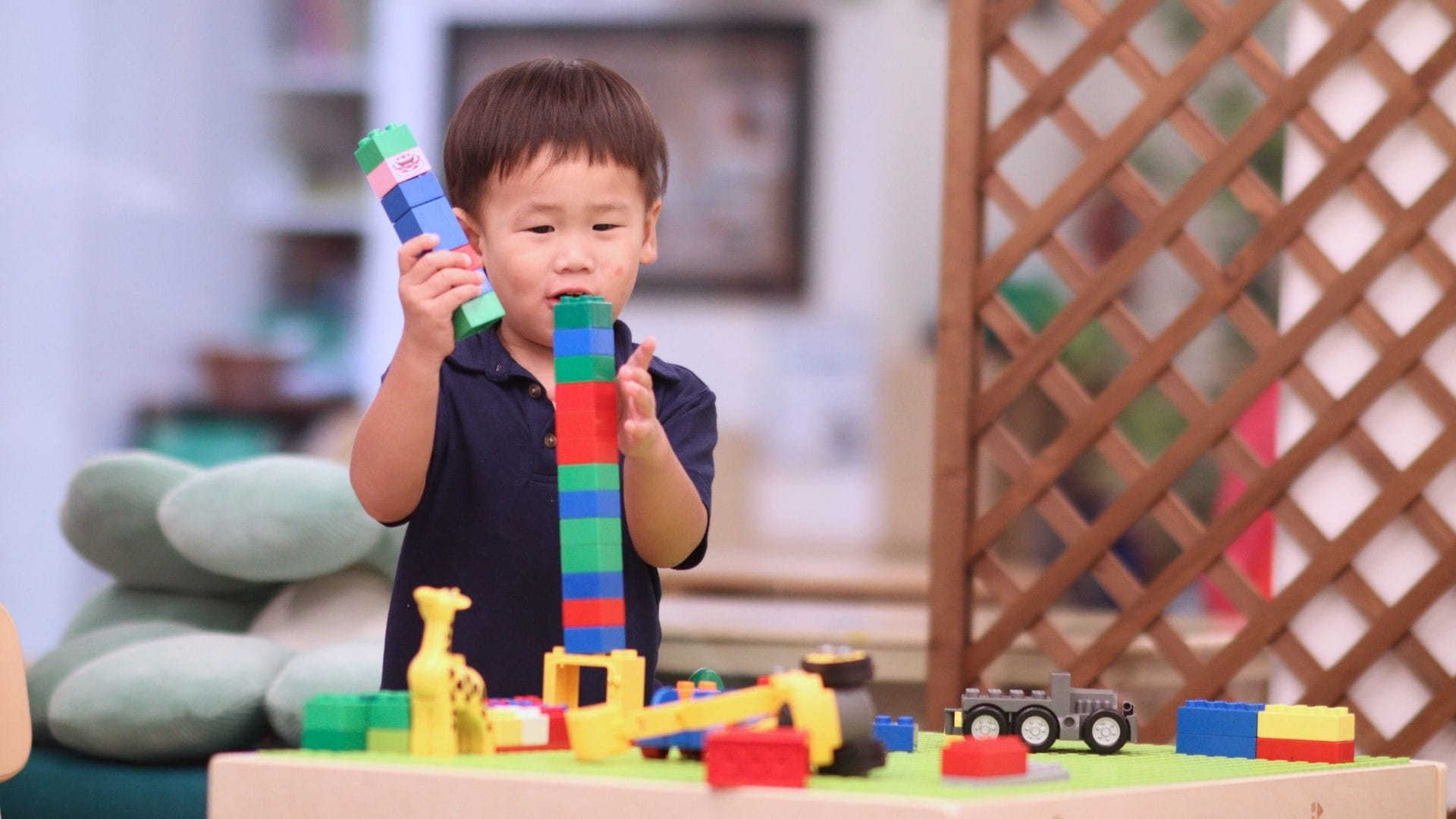
Play has an important role too. Through imaginative play, conversations with adults and interactions with other children, young learners develop the communication skills and vocabulary that underpin later reading and writing. As children become developmentally ready, these experiences are complemented by more purposeful adult-led activities that prepare them for systematic phonics teaching.
How Phonics Builds Confident Readers
Phonics helps children understand the relationship between the sounds they hear and the letters they see on the page. Through systematic teaching, children learn to recognize individual sounds and blend them together to read unfamiliar words.
As these skills become more secure, reading becomes increasingly fluent, allowing children to focus less on decoding individual words and more on understanding what they read. Talking about stories, making predictions and discussing characters and new vocabulary also help comprehension develop alongside fluency.
At NAISNY, we use Little Wandle Letters and Sounds Revised, a validated systematic synthetic phonics programme used by thousands of schools. Children progress from early sound awareness and oral blending in Nursery to daily phonics sessions in Reception, before applying their knowledge with increasing fluency and independence in Year 1 (Kindergarten).
In Nursery, activities such as Rhyme Time, What’s in the Box?, and oral blending games encourage children to listen for, recognize and play with sounds in words.
In Reception (Pre-K), daily phonics becomes a regular part of learning. Children begin making connections between the sounds they hear and the letters they see and apply this knowledge in both reading and writing.
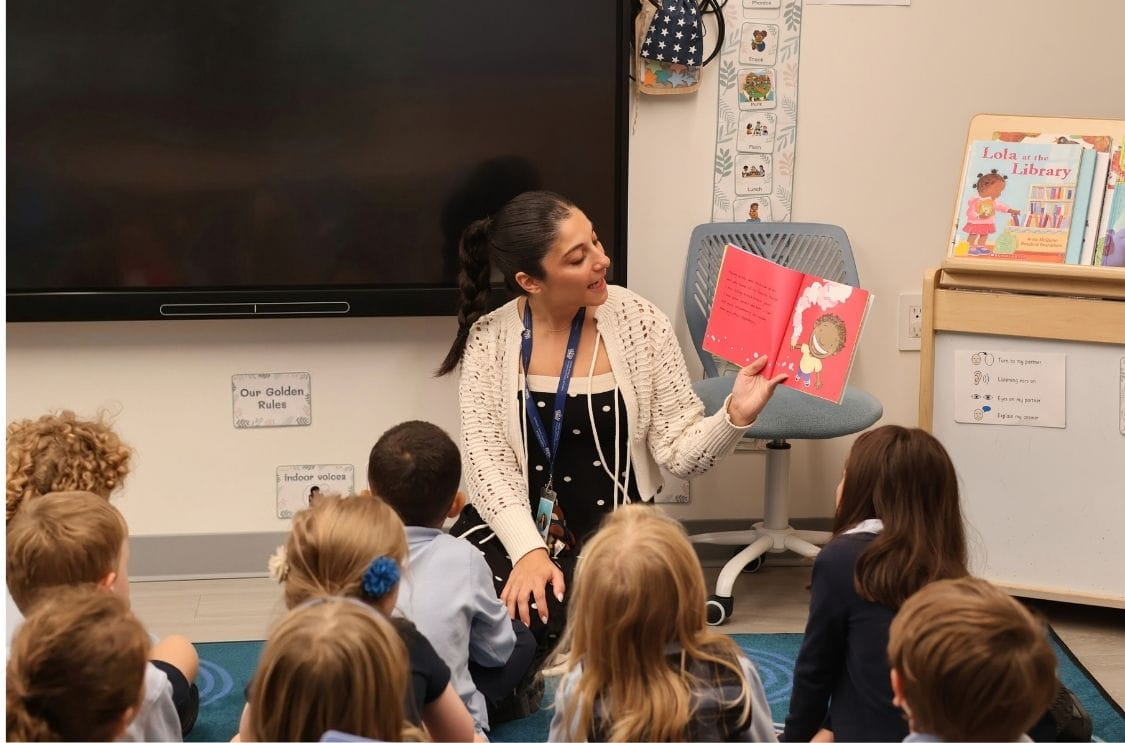
“In Reception, literacy is about building a love of reading and writing while giving children the skills and confidence to try for themselves. We want children to see that literacy is all around them, so we create lots of opportunities to bring their learning to life through exploration, conversations and real-life experiences. It’s wonderful to see them make those connections for themselves and become excited to use their growing reading and writing skills each day.”
Mrs. Volpe, Reception (Pre-K) Teacher
This progression continues into Year 1 (Kindergarten), where children build on their phonics knowledge and become increasingly independent readers and writers. Alongside accuracy and fluency, there is a growing focus on understanding what they read and applying their literacy skills independently.
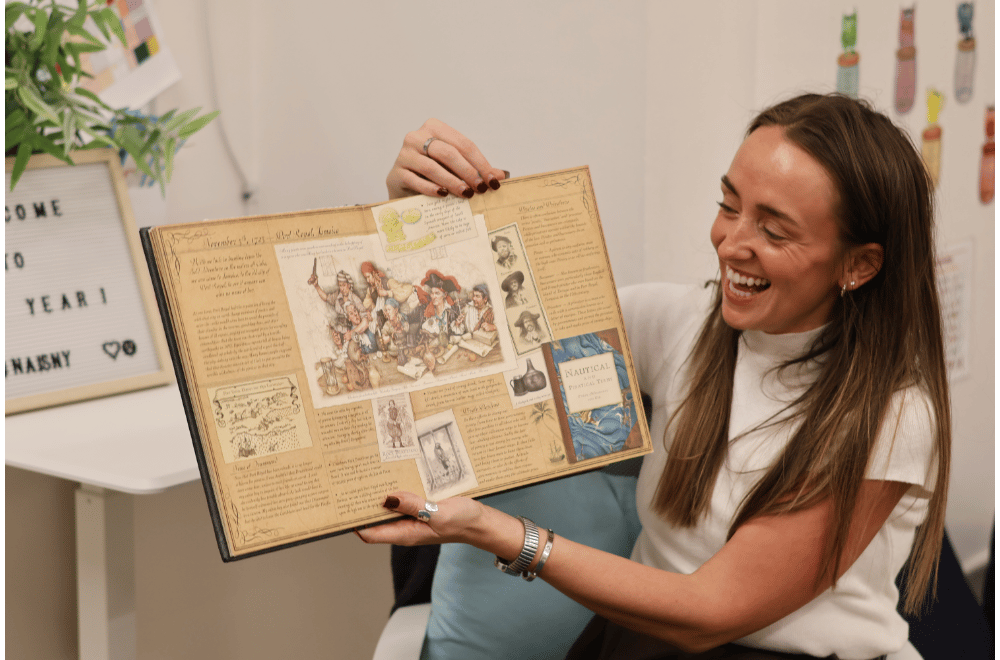
“Phonics gives children the tools to approach reading and writing independently. By building carefully on the sounds they already know, children begin to experience success early on. It’s wonderful to see that moment when they realize, ‘I can read this,’ and their confidence starts to grow.”
Miss Roberts, Year 1 (Kindergarten) Teacher
Beyond Phonics: Growing as Readers and Writers
Phonics is an important part of learning to read, but literacy development extends far beyond decoding words. As children become more confident readers, the focus begins to shift towards understanding and talking about what they have read. Through a wide range of books and opportunities to discuss and write about their learning, children build their vocabulary, develop their comprehension and learn to express their own ideas more clearly.
Developing a genuine love of reading is equally important. Hearing stories read aloud, exploring high-quality texts, choosing books independently and sharing recommendations can help children see reading as something to enjoy, not simply a skill to master.
Families can support this at home in simple ways. Sharing a story together, talking about the characters, asking what might happen next and letting children choose books all help make reading part of everyday life. For younger children, songs, rhymes and word games are also great ways to play with sounds and language.
Supporting Individual Progress
Every child develops as a reader and writer at a different pace. At NAISNY, our small class sizes allow teachers to know each child well, recognize their strengths and identify the next steps in their learning.
Regular assessment and observation help teachers respond to individual needs. Some children may benefit from additional practice or targeted support, while others may be ready for greater challenge. Within phonics, this can include Little Wandle’s Keep-up support, giving children additional opportunities to revisit and secure their learning when needed.
Building a Lifelong Love of Reading
The journey from listening to a favorite story to independently reading and creating texts takes place over many years. Throughout that journey, strong literacy teaching should develop not only the skills children need to read and write, but also the curiosity and enjoyment that encourage them to keep doing both.
At NAISNY, systematic phonics, responsive teaching and small classes help children build strong foundations while receiving the individual support and challenge they need as they progress.
For families considering a private school in New York City, visiting our classrooms is the best way to understand how literacy comes to life at NAISNY. You’ll meet our teachers, see our small class environment and discover how children build strong foundations in reading and writing from their earliest years.
Book a tour or join an upcoming open day to learn more.
Related news
 Blog | Teaching Practice
  Blog | Teaching Practice
  Blog | Teaching Practice
  Blog | Teaching Practice | Student Success | Admissions


