Nord Anglia Awards US$249,000 to Student-Led Community Initiatives Strengthened by Metacognitive Learning
.jpg?h=249&iar=0&w=374&rev=03bee5ab1d2c41fabd2c427ac897415e&hash=38A635EBCF2CE5A181170C066BB49369)
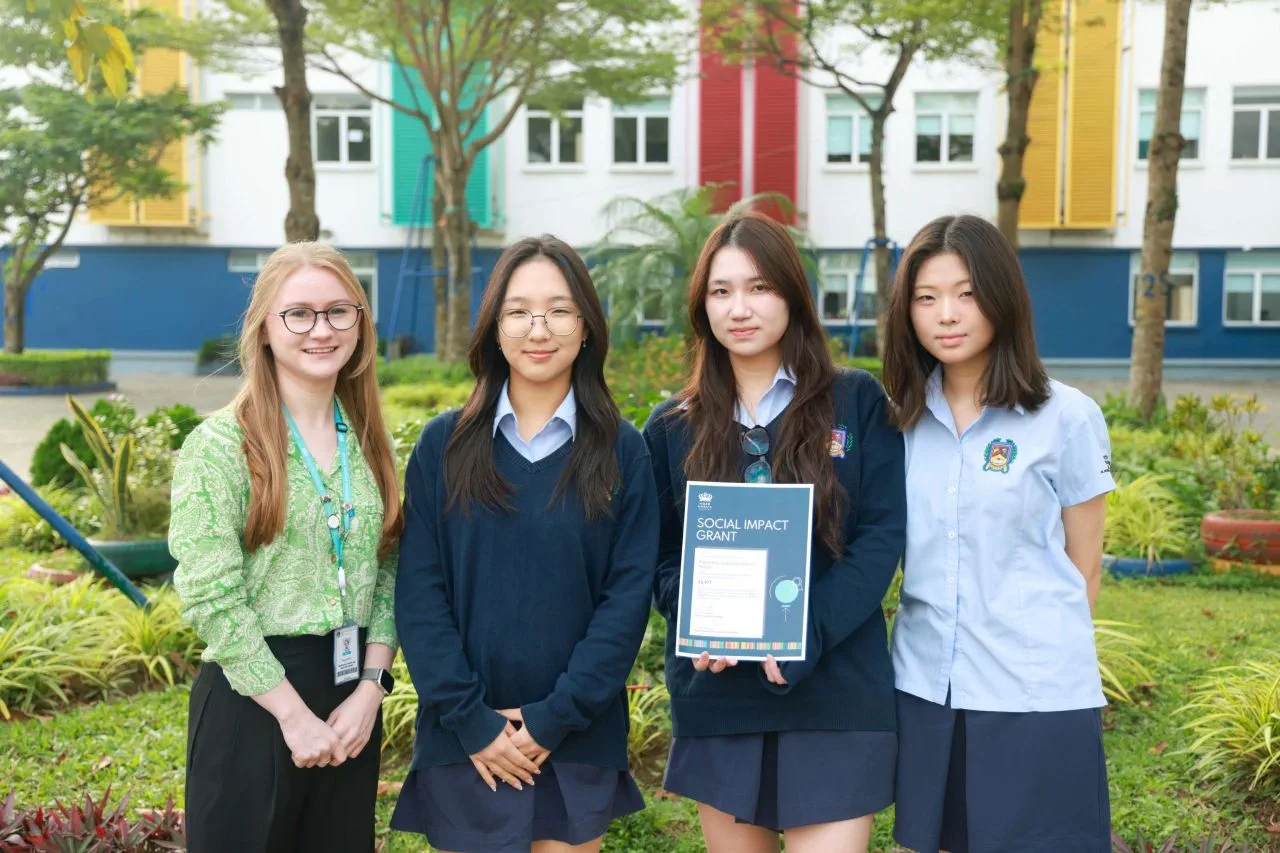
This marks the sixth round of funding since the launch of Nord Anglia’s Social Impact Grants in 2021, which has awarded US$1 million to student-led projects around the world.
Combining Research, Reflection, and Metacognition to Drive Impact
More projects than ever were developed using scientific inquiry, data analysis, or research-based problem-solving, as students seek to understand root causes before creating their social impact projects.Nord Anglia’s focus on metacognition, which helps students understand how they learn best, also strengthened this year’s projects. In practice, this means students pause to reflect on what motivates them, how they solve problems, and which skills they need to develop. They do this through the framework of six key skills: curiosity, compassion, commitment, collaboration, creativity, and critical thinking, which help students design more meaningful social impact projects and better evaluate the impact they are making in their communities.
Dr Leslie Williams, Nord Anglia’s Group Head of Social Impact and EDIB, said: “We’re enabling students to ground their ideas in academic research and use what they learn in class to design practical, evidence-based solutions. By helping students reflect on their strengths, their thinking, and the impact they want to make — in other words, teaching them to understand how they learn and why their choices matter — we’re equipping them to tackle complex global challenges, from technology-driven transformation to climate action and children’s rights.”
Highlights From This Year’s Social Impact Grant Recipients
- Nord Anglia Schools in Vietnam – “Lovientus”
Lovientus is a collaborative project between students from three Nord Anglia schools in Vietnam. Together, they are developing a health education model to support mobility, nutrition, and well-being for disadvantaged communities across Vietnam.
- At the British Vietnamese International School Ho Chi Minh City, students are creating nutrition programmes designed to improve long‑term health.
- Students from the British Vietnamese International School Hanoi are researching and developing low‑cost, durable prosthetic limbs, focusing on suitability to rural northern communities.
- Students at the British International School Ho Chi Minh City are focusing on prototyping and refining prosthetic designs to improve comfort, usability, and affordability.
Over the next year, students will run workshops on accessibility and inclusion, balanced diets, and affordable cooking for young people. Their aim is to help reduce healthcare barriers, support culturally familiar nutrition, and improve access to prosthetics, while also creating opportunities for communities to connect and share experiences.
- Country Day School in Costa Rica – “The Coral Restoration Initiative”
Students at Country Day School in Costa Rica are responding to coral bleaching through a student-led research and conservation initiative. Their work includes controlled experiments, cultivating and replanting resilient coral species, and raising awareness to protect marine ecosystems. By combining scientific inquiry with hands-on restoration, students are helping preserve biodiversity and strengthen ocean resilience.
- Colegio Menor Quito in Ecuador – “Sanagua”
Students are addressing water inequality in Esmeraldas by installing sand biofilters that provide long-term access to clean water. Through fieldwork and community workshops, they help families understand how clean water supports health, hygiene, and overall well-being. The project blends practical engineering with education to ensure lasting impact.
- NACIS Shanghai in China – “Black Soldier Fly Committee”
At NACIS Shanghai, students are transforming kitchen waste into nutrient‑rich compost and sustainable protein. Using “black soldier fly” technology, aquaponics, and insect‑based feed, the project aims to reduce landfill waste, support local agriculture, and promote eco‑friendly farming practices. Alongside this scientific work, students are encouraging responsible consumption and climate‑conscious habits. This project was also a finalist in the Know+ Climate Change Challenge led by Oxford University’s Saïd Business School.
- Oakridge International School Bengaluru in India – “Project Hearthstone”
Students at Oakridge Bengaluru are championing disability inclusion through Project Hearthstone, an assistive‑technology programme designed to support individuals who are hard of hearing or non‑verbal. Using small, affordable Raspberry Pi computers, they are developing a system that converts American Sign Language hand movements and facial expressions into spoken audio.
Lord Jim Knight, Chair of Nord Anglia’s Social Impact Grants Committee and a member of its Education Advisory Board, said: “These initiatives show what students can achieve when they lead with purpose and creativity. From designing sustainable food systems to conducting scientific studies that support coral restoration, we’re proud of how students are amplifying their projects through research-informed classroom learning. The Social Impact Grants give young people the tools to innovate confidently and create sustainable, measurable change.”
Across these projects, Nord Anglia students are contributing to the UN Sustainable Development Goals through practical, community-focused action. Their work spans improving access to healthcare and well-being (SDG 3), reducing inequalities (SDG 10), supporting sustainable and resilient communities (SDG 11), advancing climate awareness and environmental action (SDG 13), and more. Taken together, this year’s grants demonstrate how to drive progress toward global goals through local impact.
Related news
 Press Releases | Group News | Featured
  Press Releases | News From Our Schools | Featured | Group News | In the Media
  Press Releases | News From Our Schools | Featured | Group News | In the Media
 /july-20-blog-header/20250918-220/20250918-2201/20250918-2201.jpg?h=2116&iar=0&w=4500&rev=217a8c9a634d47ccb330b6dc946530b8&hash=F76E9F7CA9D3441A5210315C36DFCE42)