



We use cookies to improve your online experiences. To learn more and choose your cookies options, please refer to our cookie policy.
18 September, 2026
Why Standardised Testing Matters in an Inquiry-Based IB Education

By Jason Berkeley
Deputy Head Secondary, Academic
IBDP Business Management
At Northbridge International School Cambodia, we believe that exceptional education combines a love of learning with outstanding academic outcomes. This year, we celebrated an important milestone as our first cohort of students received their International Baccalaureate (IB) Middle Years Programme (MYP) Certificate results.
Among these achievements, our highest-performing student earned an impressive 50 out of 56 points, placing them among the top 15% of students worldwide. This accomplishment reflects years of dedication from our students, teachers, and wider school community, while highlighting the strength of our inquiry-based IB education.
As an IB World School, Northbridge is committed to developing curious, confident learners who are equipped to thrive in an increasingly complex world. But how does an inquiry-driven approach connect with success in standardised assessments such as the MYP eAssessments or IB Diploma examinations?
The answer lies in the very skills that define high-quality learning.
Inquiry-Based Learning and Academic Excellence
The International Baccalaureate is founded on the belief that students learn most effectively when they actively engage with ideas, ask meaningful questions, and develop a deep understanding of concepts.
Across the MYP and Diploma Programme (DP), students are encouraged to think critically, make connections between subjects, and apply their learning in authentic contexts. Rather than focusing solely on memorising information, they develop the ability to analyse, evaluate, and solve complex problems.
This emphasis on conceptual understanding is increasingly recognised by educational research as a key driver of long-term academic success. Students who understand the "why" behind their learning are better prepared to transfer knowledge, respond to unfamiliar challenges, and demonstrate deeper levels of thinking in assessments.
These are precisely the skills that modern examinations are designed to measure.
Do Inquiry-Based Learners Perform Well in Exams?
Some families naturally wonder whether an inquiry-based education can deliver strong examination results. In reality, inquiry and academic achievement are not competing priorities. They are closely connected.
The most successful students are rarely those who simply memorise content. Instead, they are students who can think critically, communicate effectively, analyse evidence, and apply knowledge in new situations.
Within the IB framework, these capabilities are intentionally developed through the Approaches to Learning (ATL) skills, including:
Critical thinking
Communication
Research skills
Organisation and time management
Self-management and reflection
Collaboration
These transferable skills not only support success in examinations but also prepare students for university and beyond.
The Role of Standardised Testing in an International School Education
At Northbridge, we view standardised testing as one important part of a balanced and ambitious educational journey.
External assessments such as the MYP eAssessments and IB Diploma examinations provide valuable insight into student achievement against rigorous international benchmarks. They help schools evaluate programme effectiveness, celebrate areas of strength, and identify opportunities for continuous improvement.
For students, they offer an opportunity to demonstrate both knowledge and higher-order thinking skills developed throughout their learning journey.
Importantly, strong results in internationally recognised qualifications can open doors to leading universities around the world. They provide students with a globally respected measure of achievement and help them showcase their readiness for higher education.
Preparing Students for University and Life Beyond
Success today requires more than examination performance alone.
Universities and employers increasingly seek young people who can think independently, communicate confidently, collaborate effectively, and adapt to new challenges. These qualities are central to both the IB learner profile and the Northbridge educational experience.
Our goal is not simply to prepare students for their next assessment. It is to prepare them for their future.
By combining inquiry-based learning, conceptual understanding, and explicit assessment preparation, we help students develop the confidence, resilience, and academic capability needed to excel in a rapidly changing world.
A Milestone Worth Celebrating
The success of our first MYP Certificate cohort is a testament to the power of this approach.
These results represent more than excellent examination performance. They reflect the growth of thoughtful, internationally minded young people who are ready to make a positive impact wherever their futures take them.
As Northbridge continues to strengthen its academic programmes, we remain committed to providing an education that inspires curiosity, nurtures personal growth, and empowers every student to achieve their highest potential.
We are incredibly proud of what our students and educators have accomplished and look forward to building on this success for many years to come.
Related news
News image ![BritCham]() News | Whole School
News | Whole School
 News | Whole School
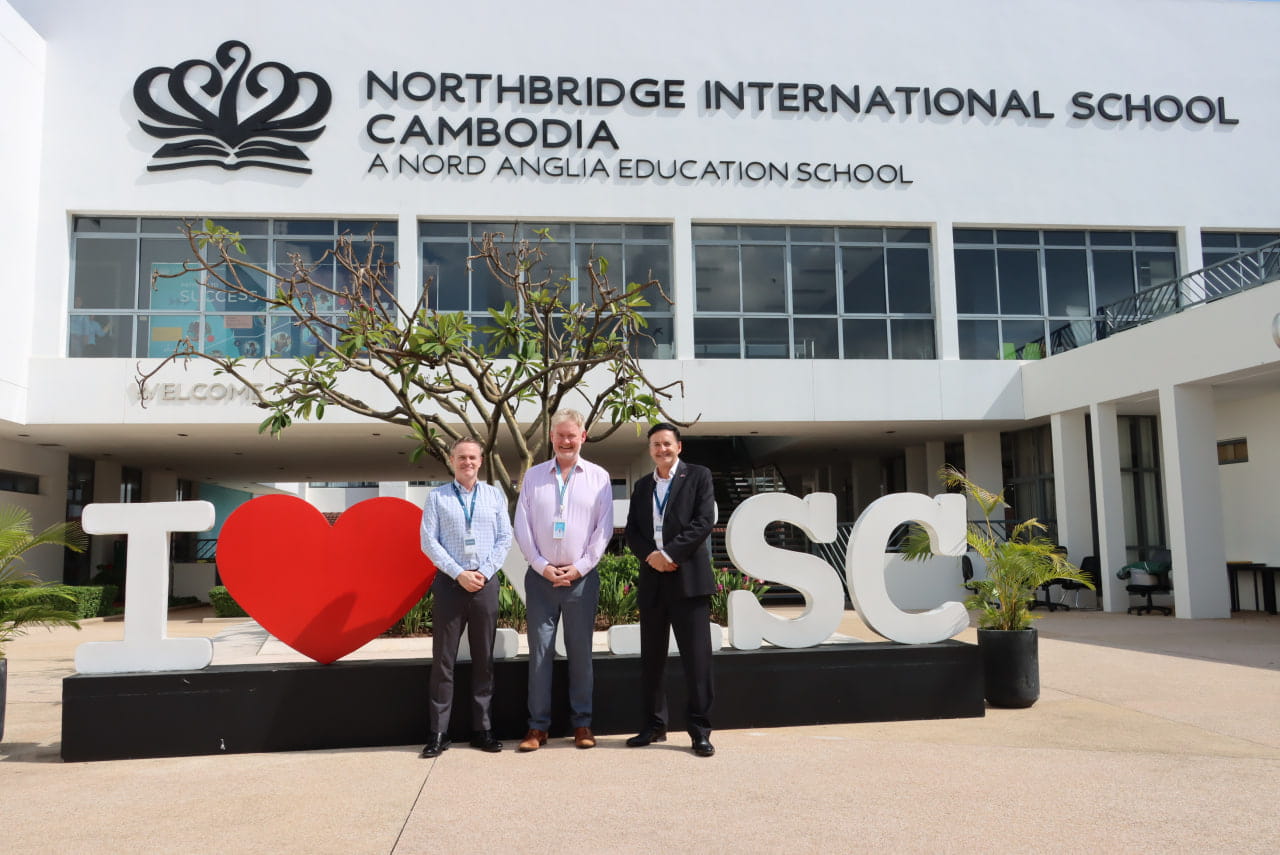
 BritCham Interview with Christopher Short Interim Principal
Meet Northbridge’s Interim Principal as he shares his first impressions of Cambodia, educational philosophy, career journey, and advice for students.
News image ![IBDP Results 2026]() News | Whole School
News | Whole School
 News | Whole School
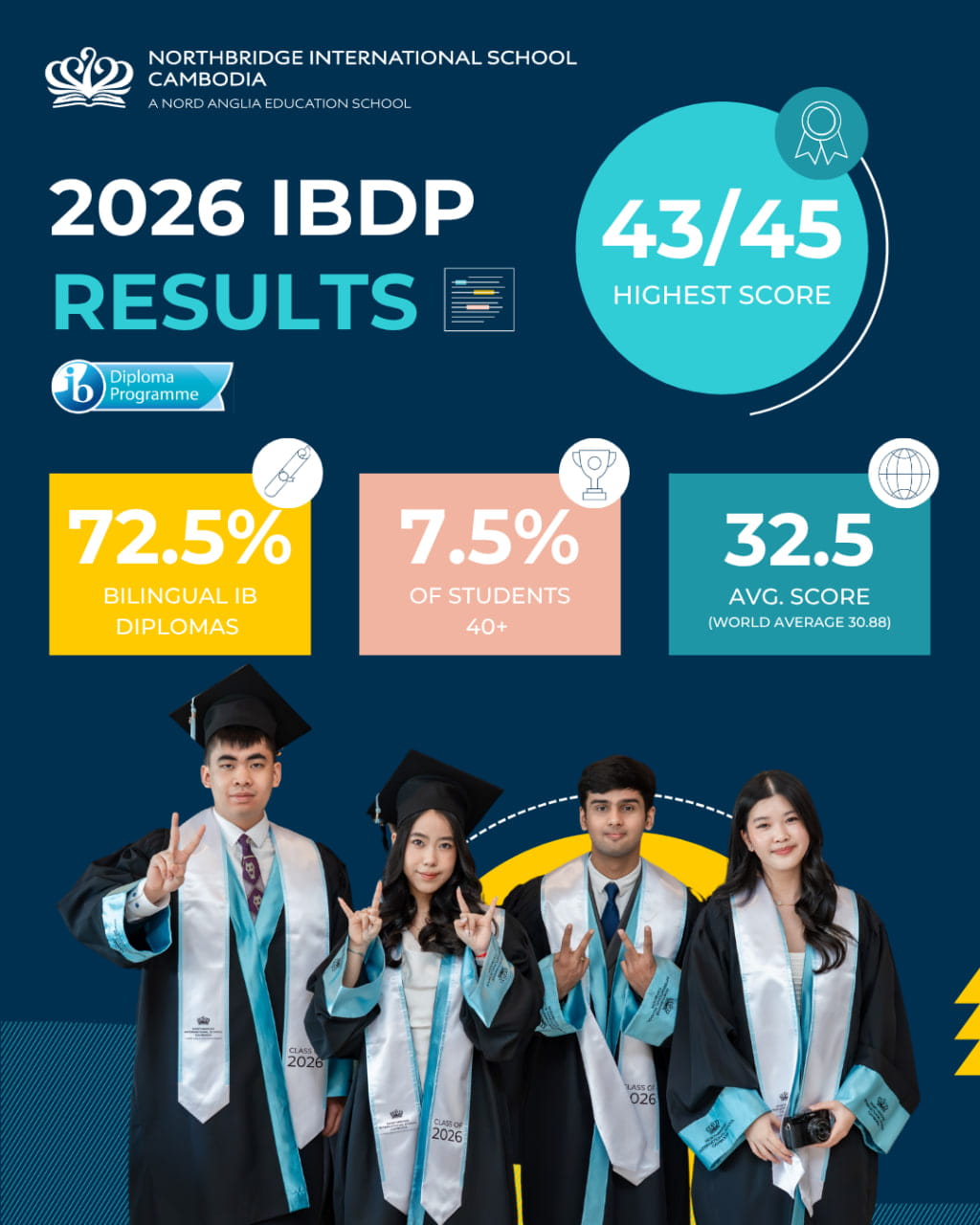
 NISC Celebrates Outstanding 2026 IBDP Results
Celebrating exceptional 2026 IBDP results, Northbridge students surpassed the global average, achieved a top score of 43/45, and received nearly 300 university offers.


