


10 November, 2026
Questions to Ask on a School Visit or Open Day
A school visit is one of the most valuable things you can do when choosing the right school for your child. The right questions turn a tour into a genuine insight into whether a school is the right fit for your family.
Most school websites cover curriculum, facilities, and exam results well enough. What they rarely answer clearly are the things that matter most to parents choosing a school for a child who is navigating a new country, a new language, or a new start.
Here are five areas to focus on, with the questions most worth asking in each.
Before You Arrive
A well-prepared visit is a better visit. Before you go, spend 5 minutes on the school's website. Look at the curriculum, the co-curricular offer, and any accreditation or inspection reports. Note down anything that is unclear or that you want to understand better. Arriving with specific questions signals that you are a serious family and often prompts more detailed, honest answers from staff.
Also think about your child's particular situation. Are they anxious about making new friends? Do they have a specific learning need? Are they joining mid-year? These specifics should shape the questions you ask.
1. Settling In and Pastoral Support
This is the area schools are most likely to answer vaguely. Every school will tell you they have a pastoral care system. What you actually want to know is what that looks like in practice, specifically for a child who is new.• How do you support new students in their first term, specifically? Ask for detail. A buddy system, pastoral check-ins, and a parent welcome event are all positive signs. A generic answer about the school being a community is not.
• What happens when a child is struggling, socially or academically, and who is the first point of contact? The answer tells you whether the system is built around the child or around administrative processes.
• How long does it typically take for a new child to feel settled? No school can guarantee this, but a school that has thought about it will give you a considered answer.
Pay attention to how staff talk about individual children. Warmth and specificity in those answers tells you more about the school's culture than any prospectus.
2. Language Support
Language is a concern for two very different groups of families, and it is worth asking about both sides of it.For internationally mobile families, the question is whether the school can support a child who is stepping into English-medium education for the first time. For Czech families, the question is often the reverse: whether their child will lose ground in Czech, and whether the school understands what it means to transition from the Czech system into an international one.
• What does the English as an Additional Language programme look like in practice? Ask whether EAL teachers work alongside class teachers in lessons, or whether children leave lessons for separate support. The first approach is generally more effective and less disruptive.
• How long does it typically take for a child joining without English to feel confident in the classroom? A school with real experience of this transition will be able to answer with specifics.
• For Czech families: how does the school support children who are making the transition from Czech-medium schooling? Ask whether there is a structured pathway, and whether the school has experience of children coming from the Czech national curriculum.
3. Teaching and Learning
Exam results are easy to find on a website. What is harder to assess is how well teachers actually know and respond to individual children.
• How do you identify children who are ahead of or behind where they should be, and what happens next? The answer reveals whether assessment is used to support learning or simply to measure it.
• How do you communicate with parents when a child is not making the progress expected? Look for a clear, specific answer about who contacts you, how quickly, and what the follow-up process looks like.
A school that communicates well when things are difficult is a school that treats parents as partners. That matters far more than a glossy prospectus.
4. Life Beyond the Classroom
Majority of schools with offer co-curricular activities, but there's more to it, especially at larger schools.
• How does a new student find their way into extracurricular activities, and is there support to help them get involved early? The first term is when friendships are formed, and activities are one of the most reliable ways for new children to find their people.
• What global learning opportunities are available through the school's wider network? For schools within a larger group like Nord Anglia, the answer to this reveals how much value the school actually draws from its wider connections.
At PBIS, students have access to more than 80 clubs and activities, as well as global collaborations with MIT, the Juilliard School, and UNICEF through the Nord Anglia Education network. These are not marketing claims. They are programmes that students actively participate in, including projects like the hydrogen racing challenge that junior students took on in 2026.
5. University Preparation
For families with secondary-age children, or those planning ahead, university preparation is one of the most important topics to explore on a visit, and one of the least clearly explained online.
• When does university guidance begin, and who delivers it? Some schools start the process early and dedicate a specialist counsellor to it. Others leave it late and treat it as an afterthought.
• Where do your graduates typically go, and what does your support for international university applications look like? Results tables tell you outcomes. This question tells you how those outcomes happen.
At PBIS, students follow the IB Diploma Programme in the secondary years, achieving an average score of 34 in 2026, significantly above the global average of 30.8. Alumni have gone on to Oxford, Cambridge, Stanford, and universities across Europe and Asia. Laura, a PBIS graduate, recently began a PhD at Oxford after graduating top of her class in biochemistry from King's College London. She has reflected that what her years at PBIS gave her was not a predetermined path, but the confidence and the understanding that you cannot achieve anything meaningful alone.
What to Look For Beyond the Questions
Not every important observation comes from a conversation. Pay attention to what you see as well as what you are told.
• Do students seem purposeful and engaged, or subdued and disengaged?
• How do staff speak to and about students? Is the tone warm and respectful?
• Does the school feel like a community, or does it feel transactional?
• How does the school handle the moment you arrive? Are you greeted warmly, or left to wait?
A good open day leaves you with a clear sense of whether a school feels right, not just whether it looks impressive. Trust your instincts alongside the answers you receive.
A Quick Reference Checklist
Use this table to keep track of your questions during the visit.
| Topic | Question to ask |
| Settling in | How do you support new students in their first term, specifically? |
| Settling in | What happens when a child is struggling, and who is the first point of contact? |
| Settling in | How long does it typically take for a new child to feel settled? |
| Language support | What does the EAL programme look like in practice, inside or outside the classroom? |
| Language support | How long does it take for a child without English to feel confident in class? |
| Language support | For Czech families: how does the school support children transitioning from Czech-medium schooling? |
| Teaching and learning | How do you identify children who are ahead of or behind where they should be? |
| Teaching and learning | How do you communicate with parents when progress is a concern? |
| Beyond the classroom | How does a new student find their way into extracurricular activities? |
| Beyond the classroom | What global learning opportunities are available through the school's wider network? |
| University preparation | When does university guidance begin, and who delivers it? |
| University preparation | Where do graduates typically go, and what does international applications support look like? |
| Your own observation | Do students seem engaged and purposeful? |
| Your own observation | Does the school feel like a community? |
This overview can also serve as a useful guide when attending school Open Days. Don’t hesitate to ask questions and take the time to explore what each school has to offer. If you’d like to learn more about our school, you can arrange a visit with our Admissions Team.
Related news
News image ![PBIS_Prague_June 2024_170]() Blog
 Blog
Why School Accreditations Matter and What They Mean for Your Child
What do COBIS, ECIS, HMC, IBO, and BSO mean for your child? Find out why school accreditations matter and what they tell you about an international school in Prague.
News image ![Meet the Student Entrepreneurs Leading PBIS Enterprise Club - PBIS student mentors]() Blog | Secondary
 Blog | Secondary
Meet our JA Enterprise Club Mentors
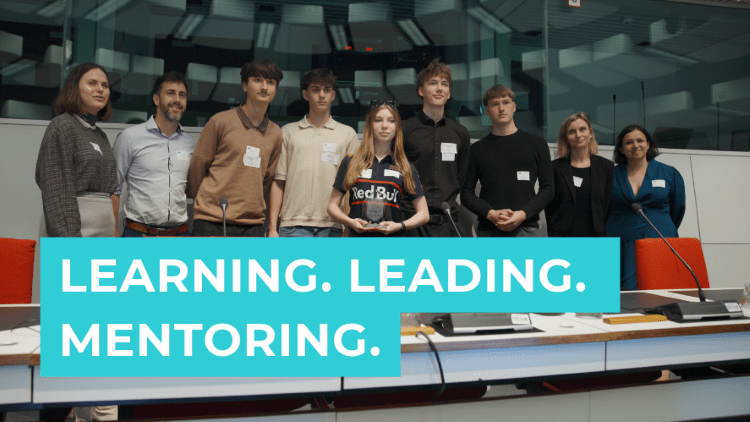
JA Enterprise Club Mentors know what it feels like to start with an idea, question it, improve it, present it, and test it beyond the classroom. Here we introduce the students who are now helping younger students begin that same journey.
News image ![PBIS_Prague_June 2024_270]() Blog | Early Years | Primary | Secondary
 Blog | Early Years | Primary | Secondary
Why Great Teachers Matter More Than Ever
When parents choose a school, they often compare curricula, facilities, extracurricular activities and examination results. While all of these factors are important, there is one element that has a lasting impact on a child's educational journey: the quality of their teachers.
News image ![Preparing Students for the Future | Forbes Podcast with PBIS Interim Principal - Forbes podcast - education should prepare children for unpredictable future]() News | School News | Primary | Secondary | Early Years
 News | School News | Primary | Secondary | Early Years
Preparing Students for an Unpredictable Future: David Lawlor Discusses the Skills That Matter Most
In a recent Forbes podcast, David Lawlor, Interim Principal of PBIS, shares why future-ready education must focus on transferable skills, critical thinking, and responsible use of artificial intelligence.