



We use cookies to improve your online experiences. To learn more and choose your cookies options, please refer to our cookie policy.

23 April, 2026
What makes a school a strong long-term choice for families
An international school can look impressive on a school tour. Facilities are modern, lessons are engaging, and students appear happy. But for many families, the more important question comes later: will this still be the right school in five or ten years’ time?
Choosing a school is not just about the present. It is a long-term decision that shapes a child’s academic journey, confidence, and sense of belonging over many years.
At St Andrews International School Bangkok, long-term strength is built through consistency, strong teaching, and a community that supports students and families over time.
Consistency that supports progress
One of the most important qualities of a strong school is consistency.
Students benefit when expectations, teaching approaches, and support systems remain stable as they move through different stages of their education. This allows learning to build gradually, rather than being disrupted by constant change.
Mr Bartek Moskwa, Director of Admissions and Marketing, highlights how parents can identify a school's long-term quality:
“A school’s long-term strength comes from experienced teachers, clear values, and a supportive community that remains consistent over time.”
At St Andrews, this consistency is visible in the way teaching is delivered across the school. Students experience high-quality instruction from specialist teachers, from Primary through to Year 13.
This continuity helps students develop confidence in their learning, knowing that expectations and support will remain clear.
Leadership that sustains high standards
Strong schools maintain quality through clear leadership and well-established systems.
At St Andrews Bangkok, leaders set high expectations and ensure that teaching and learning are regularly reviewed. Professional development is a key part of this process, allowing teachers to refine their practice and stay aligned with best practice.
“Leaders maintain high standards by setting clear expectations, investing in professional development, and encouraging collaboration across the school,” shares Mr Bartek.
Regular training opportunities, including dedicated development days, allow teachers to share ideas and strengthen their teaching practices. Access to global networks further strengthens this approach, connecting staff with wider expertise and resources.
This structured support helps ensure that standards remain consistent across year groups and subjects.
A community that grows with families
A strong school in the long term is not only defined by its academic systems. It is also shaped by its community.
At St Andrews, relationships between students, families, and staff develop over time. This creates a sense of belonging that supports both learning and wellbeing.
“The school community plays a vital role, bringing together parents, alumni, and staff to create a supportive and connected environment,” adds Mr Bartek.
Events, celebrations, and shared initiatives help strengthen these relationships. Students and families feel part of something larger, rather than simply attending a school.
This sense of continuity is particularly valuable for families who remain with the school over many years.
Stability through key transitions
A child’s education includes several important transition points, each of which can affect confidence and progress.
At St Andrews, these transitions are carefully supported. Whether moving from early years into primary, from primary into secondary, or into examination programmes, students are guided through each stage with both academic and pastoral support.
“A stable environment helps students move confidently through key transitions, knowing they are supported at every stage,” adds Mr Bartek.
This continuity allows students to focus on learning rather than adapting to new systems. It also helps maintain momentum in their academic development.
Long-term outcomes built over time
The value of a school becomes clearer over time.
When students remain in a consistent, supportive environment, they are able to develop stronger academic skills, greater confidence, and a clearer sense of direction.
At St Andrews, this long-term approach ensures that students are not only prepared for examinations, but also for future pathways beyond school.
The combination of consistent teaching, strong leadership, and a supportive community creates an environment where students can grow steadily and confidently.
A confident choice for families
Choosing the right school is about more than comparing facilities or academic results. It is about understanding how a school will support a child over the long term.
At St Andrews International School Bangkok, this support is built through consistency, strong teaching, and a community that grows with each family.
For parents, this provides reassurance that their decision is not only right for today, but will remain the right choice as their child progresses through their education.
Parents who would like to learn more about how St Andrews supports long-term development are always welcome to speak with the academic team and explore how these principles are reflected across the school.
Related news
News image ![SLRI IGCSE IB Physics Student Internship - SLRI IGCSE IB Physics Student Internship]() Blog | Academic | High School | Senior Studies
Blog | Academic | High School | Senior Studies
 Blog | Academic | High School | Senior Studies
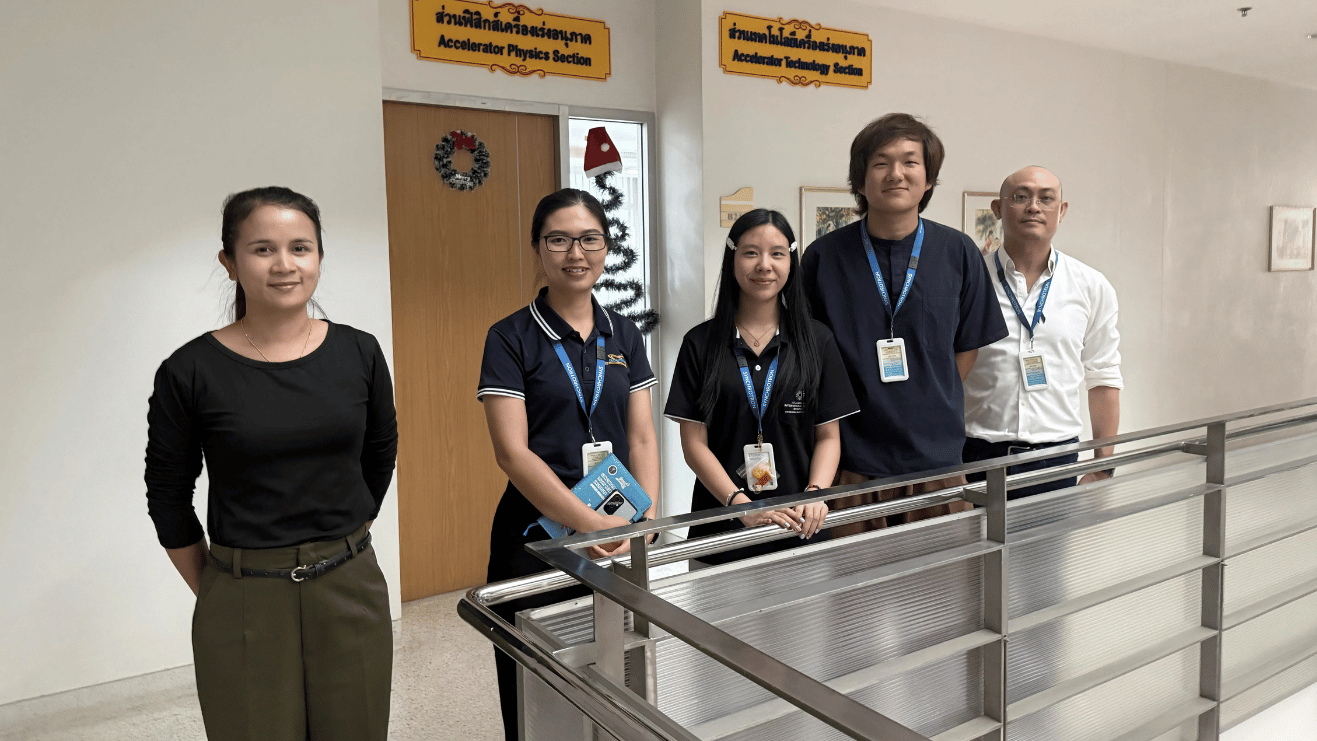
 St Andrews Bangkok IGCSE and IB Physics students gain real-world experience through summer internship
Select St Andrews Bangkok’s IGCSE and IB Physics students gained hands-on experience in advanced scientific research through a visit and summer internships at the Synchrotron Light Research Institute (SLRI). Working alongside scientists and engineers, students contributed to real-world projects involving particle accelerators and synchrotron technology, helping them connect classroom learning with practical applications in physics and engineering. The experience also provided valuable insight into future study and career pathways in science, research, and innovation.
News image ![oct camp]() News | Extracurricular Activities (ECAs) | High School | Primary School | Sport and PE
News | Extracurricular Activities (ECAs) | High School | Primary School | Sport and PE
 News | Extracurricular Activities (ECAs) | High School | Primary School | Sport and PE
 Stay active this break with our popular Activity Camps
Stay active and join our popular Activity Camps. Offering a wide variety of activities at both the Primary and High School for children aged 4 years old and up to keep active during the half-term break.
News image ![Teachers at St Andrews - Teachers at St Andrews Bangkok]() Blog | Staff | Primary School | STA Community
Blog | Staff | Primary School | STA Community
 Blog | Staff | Primary School | STA Community
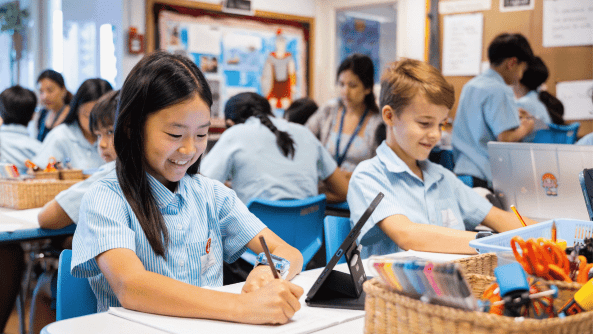
 The dedication and care of teachers at St Andrews Bangkok
St Andrews Bangkok is portrayed as a school where teaching is defined by care, compassion, and a commitment to student wellbeing alongside academic excellence. The article highlights Year 2 teacher Mr Sam, whose warmth, positivity, and dedication exemplify the school’s ethos and show how educators nurture confidence, individuality, and resilience in every child. Through professional development and evidence‑based practices, the school ensures that its teachers continue to inspire growth and create environments where children thrive academically, socially, and emotionally.
News image ![STA Music Programme Young Producers - STA Music Programme Young Producers]() Blog | Performing Arts | Primary School
Blog | Performing Arts | Primary School
 Blog | Performing Arts | Primary School
 St Andrews Music Programme empowers students to compose original soundtracks
Year 6 students at St Andrews took part in an inspiring international collaboration. Working with peers in Australia and Scotland as part of our Young Producers pathway within the St Andrews Music Programme, they first created films that captured each country's landscapes. They then composed original soundtracks to accompany the footage, blending creativity with technical skill.