

We use cookies to improve your online experiences. To learn more and choose your cookies options, please refer to our cookie policy.

11 November, 2026
How outdoor play supports brain development: every jump, spin and climb matters
By Ms Meg, Assistant Head of EYFS and Y1, St Andrews International School Bangkok
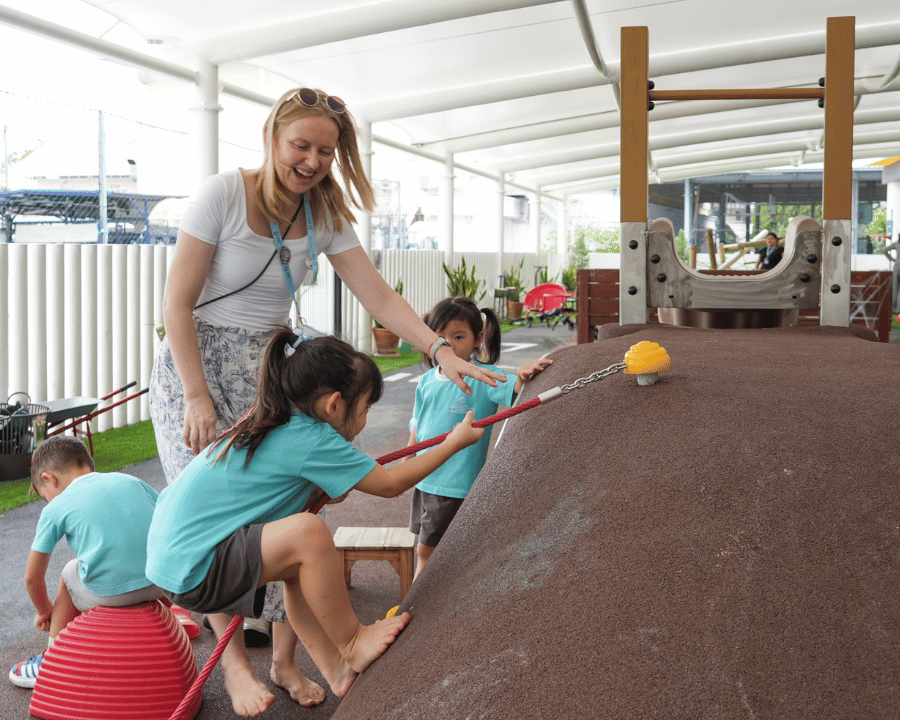
When young children climb, balance, swing and jump, they develop essential physical skills, including coordination, body awareness and core strength. These skills provide the foundations for later learning, from developing handwriting control to supporting concentration and emotional regulation. At St Andrews International School Bangkok, our purpose-designed outdoor play spaces are an integral part of every school day, recognising that the learning environment plays an important role in children's development and offering opportunities to explore, collaborate, experiment, take appropriate risks and make discoveries through play.
The British EYFS curriculum recognises seven interconnected areas of learning, with Physical Development, Personal, Social and Emotional Development, and Communication and Language forming the three prime areas. At St Andrews Bangkok, our active learning approach reflects these principles by giving children opportunities to develop essential skills through meaningful, hands-on experiences.
Designing for physical development
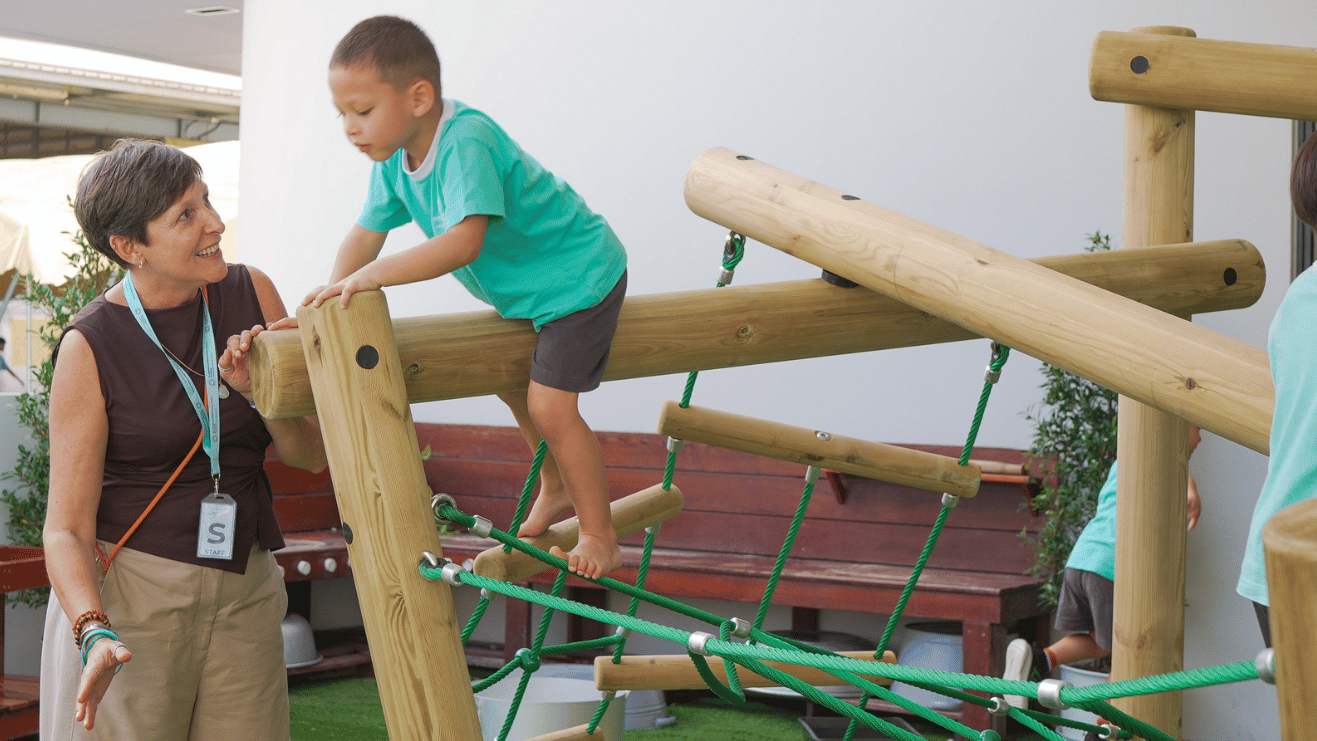
When we opened our new purpose-built Foundation Stage Centre, one high-profile element was missing: our climbing frames, delayed in transit by global shipping disruptions. When the children returned from their half-term break, they met the newly installed, open-ended gross motor frame with immediate, unprompted enthusiasm.
Beyond the excitement of new equipment, the climbing frames highlight a fundamental principle of early childhood development: movement opportunities in the early years are crucial because they shape brain development and lay the foundation for learning. Young children explore their bodies and understand their world primarily through movement. Climbing, balancing, crawling, jumping and swinging are not merely recreational; they are the foundations of motor control, spatial awareness and sensory integration.
How does movement support brain development in young children?
Movement stimulates two sensory systems that the brain relies on. The proprioceptive sense tells the brain where the body is and how much force it is using. The vestibular system, located in the inner ear, governs balance and spatial orientation. Both systems are essential for everything from sitting upright at a desk to fluent handwriting and emotional self-regulation, which is why rich early movement experiences support attention and readiness to learn.
Developing these systems does not require rigid timetable slots or targeted adult-led interventions. It requires intentional environment design.
Why is outdoor play important for gross motor skills?
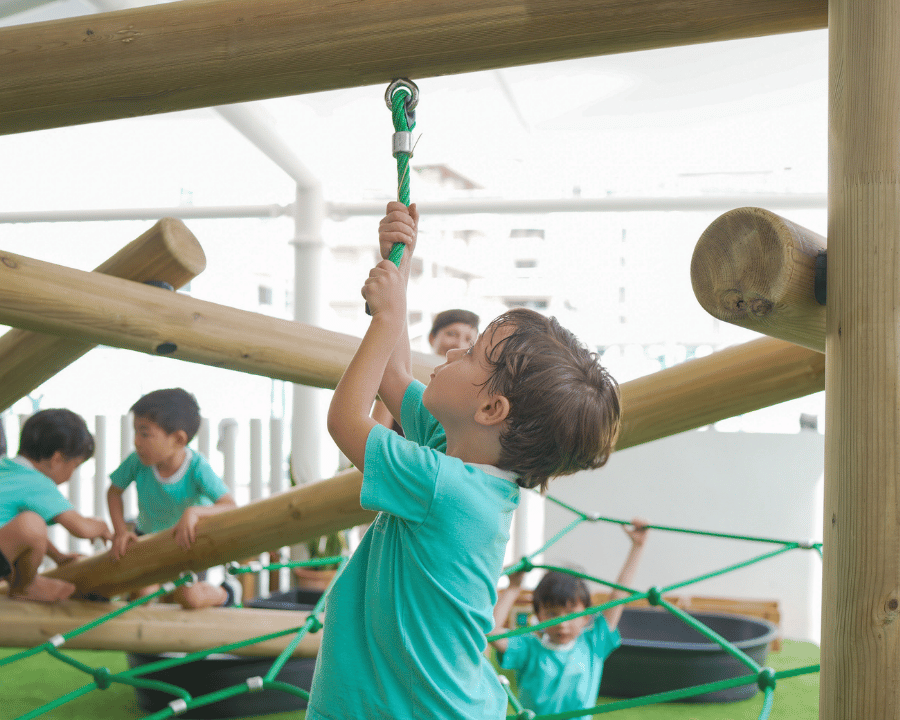
The EYFS Physical Development framework emphasises consistent opportunities for children to refine movement, coordination and bodily control. The early years are a critical period when children develop and master fundamental movement skills. When physical spaces include varied challenges, such as rope networks, natural logs, tiered steps and tunnels, children set their own level of physical risk and progression. With supervision and positive reinforcement, risk-taking becomes a valuable part of how children learn to move, think and interact (Beaulieu & Beno, 2024).
Recent educational research shows that outdoor learning environments contribute significantly to children's spatial awareness and physical control (Falode et al., 2026). In that study of children aged three to five, outdoor play sessions produced greater gains in gross motor skills than indoor sessions. Outdoor play spaces offer dynamic, multi-dimensional challenges that cannot be replicated inside a traditional classroom.
A well-designed outdoor environment offers progressive challenges, encouraging learners to consolidate familiar movements while building confidence with risk. When physical development is built into the physical landscape, fundamental motor skills stop being an isolated learning objective and become a continuous part of daily play.
How does climbing help children learn to write?
It is easy to view climbing and swinging as purely physical milestones, but they are also prerequisites for mark-making and writing. Writing is not only a hand-and-finger task; it relies on physical development that begins in the body's centre.
Before a child can control a pencil accurately, they need strong core stability, shoulder strength and upper-body coordination. Hanging from monkey bars, pulling up on rope nets, and crawling through tunnels build the shoulder and trunk stability that lets hands and fingers work with precision.
The proprioceptive feedback children gain from pushing, pulling and holding their own body weight also teaches them to control pressure, a skill they later use when learning how hard to press a pencil onto paper. By developing core and shoulder strength through outdoor physical play, we are building the physical foundations for fluent, comfortable handwriting.
How does open-ended play build imagination?
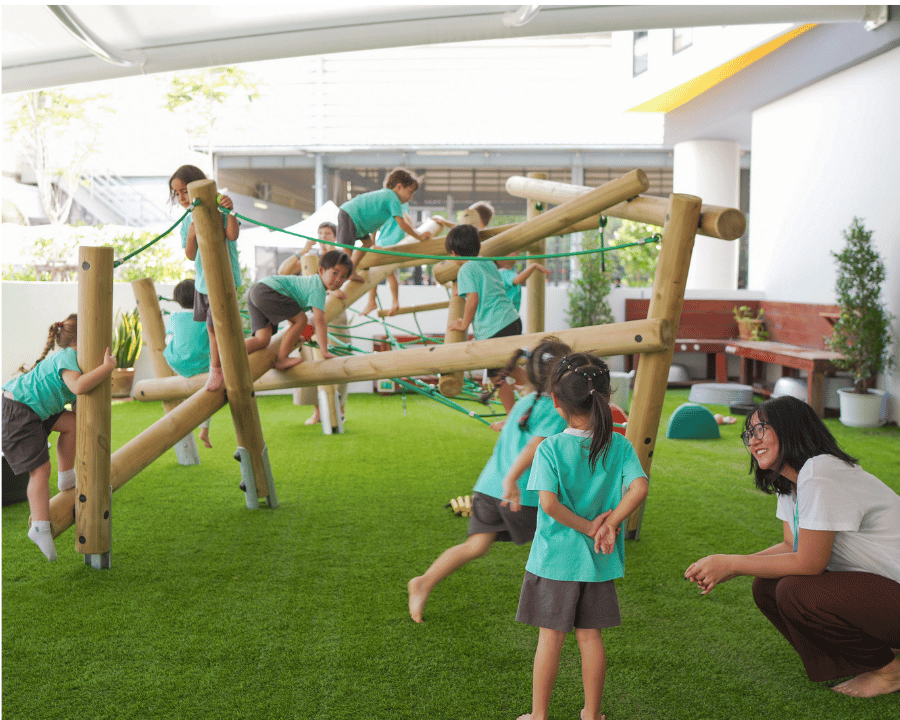
From the first moment the new equipment opened, children brought their own ideas to it. It was a pirate ship, a jungle or a spider's web, depending on their interests and imagination. Children invited friends to join their games, making it a social experience too.
This is where open-ended play becomes particularly valuable. Rather than prescribing how a resource should be used, a flexible environment lets children take the lead, invent scenarios and develop their own stories.
The EYFS area of Expressive Arts and Design encourages children to develop their imagination, creativity and self-expression. Through imaginative play, children also practise language, communicate ideas and learn to build on one another's thinking. A playground that invites different interpretations supports creativity alongside physical development.
How does playground play develop social skills?
Playgrounds provide natural opportunities for social learning. As children navigate climbing routes, balance across logs or decide how to use a shared space, they communicate, cooperate and solve problems together. These elements encourage healthy, age-appropriate risk-taking, where children test their limits in a safe environment. Overcoming physical uncertainty together builds both personal resilience and trust among peers.
These experiences connect directly to the EYFS areas of Personal, Social and Emotional Development and Communication and Language. Children learn to listen to others, express their ideas, negotiate and consider different approaches to a challenge.
Providing appropriate challenge is also an important part of playground design. Within a carefully considered environment and with suitable supervision, children begin to assess their abilities, adapt their actions and develop greater independence.
What is the teacher's role in child-led play?
A child-led approach does not mean leaving learning to chance. Educators consider how spaces and resources can support development, observe how children engage with them and respond to their emerging interests and needs. This is a constant part of a teacher's role: observing, reviewing the environment and drawing on deep knowledge of every area of child development.
Sometimes a teacher might introduce a new idea or ask a question to extend a child's thinking. At other times, stepping back gives children the time and space to experiment, collaborate and discover solutions independently. Teachers also respond directly to what they observe in children's play, such as noticing a child making sand ice creams and helping them create an ice cream parlour for their friends to visit. Careful observation, combined with knowledge of child development and skilled facilitation, allows play to support and enrich children's learning.
The EYFS framework emphasises experiences that respond to children's individual needs, interests and stages of development. Thoughtful playground design supports this by offering varied opportunities for exploration, challenge and discovery.
Building foundations through play
A thoughtfully designed playground brings together physical development, creativity, communication, problem-solving and social learning in one environment.
For the Foundation Stage team at St Andrews Bangkok, play's value lies in these everyday opportunities for discovery. Climbing builds physical confidence, imaginative play sparks creativity, and shared challenges encourage cooperation and perseverance.
When playgrounds are designed with children's development in mind, they become environments where the principles of the EYFS curriculum come to life, giving children the freedom to explore, build independence, and lay the foundations for future learning. We often take climbing frames for granted as standard early years equipment, but their temporary absence showed us how important they are for developing essential skills in every child.
Frequently asked questions
What are gross motor skills?
Gross motor skills use the large muscles of the body for movements such as running, jumping, climbing and balancing. In the EYFS, they are part of Physical Development, one of the three prime areas of learning.
Is outdoor play better than indoor play for young children's physical development?
Both help, but a 2026 study of children aged three to five found that outdoor play sessions led to greater gains in gross motor skills than indoor sessions (Falode et al., 2026).
Is risky play safe for young children?
Age-appropriate risky play, such as climbing and balancing, supports physical, social, and emotional development when adults supervise in ways that suit the activity and the child's skill level (Beaulieu & Beno, 2024).
How does physical play help with handwriting?
Climbing, hanging and crawling build the core and shoulder stability children need before they can control a pencil, and pushing and pulling teaches them to judge pressure.
References
Beaulieu, E., & Beno, S. (2024). Healthy childhood development through outdoor risky play: Navigating the balance with injury prevention. Paediatrics & Child Health, 29(4), 255–261. https://academic.oup.com/pch/article/29/4/255/7717895
Falode, O. C., Mohammed, I. A., Sobowale, F. M., Muftahu, H. M., & Opeyemi, T. (2026). Effects of indoor and outdoor play on children's gross motor development: Implications for early childhood instructional design. Mediterranean Journal of Social & Behavioral Research, 10(1), 3–12. https://doi.org/10.29333/mjosbr/17559
About the author
Ms Meg is Assistant Head of EYFS and Year 1 at St Andrews International School Bangkok.
She is an early years specialist with more than 30 years’ experience. Her research for Nord Anglia’s Metacognition Project, which used Harvard’s “See, Think, Me, We” thinking routine to build empathy in young learners, resulted in the implementation of metacognition skills in the Year 2 curriculum and has been presented at Boston College. Ms Meg also leads the Little Bunnies Playgroup at St Andrews along with the Foundation Stage team.
Related news
News image ![fs1]() Blog
 Blog
Starting Foundation Stage 1: an exciting learning journey begins at St Andrews Bangkok
As you prepare your child for the beginning of their learning journey at St Andrews Bangkok and especially their entry into Foundation Stage 1 (FS1), we are sure you will have lots of questions. Hopefully, we can help you with as many answers to these questions to help your child get ready for FS1.
News image ![A look inside St Andrews Primary School - A look inside St Andrews Primary School]() Blog | Academic
 Blog | Academic
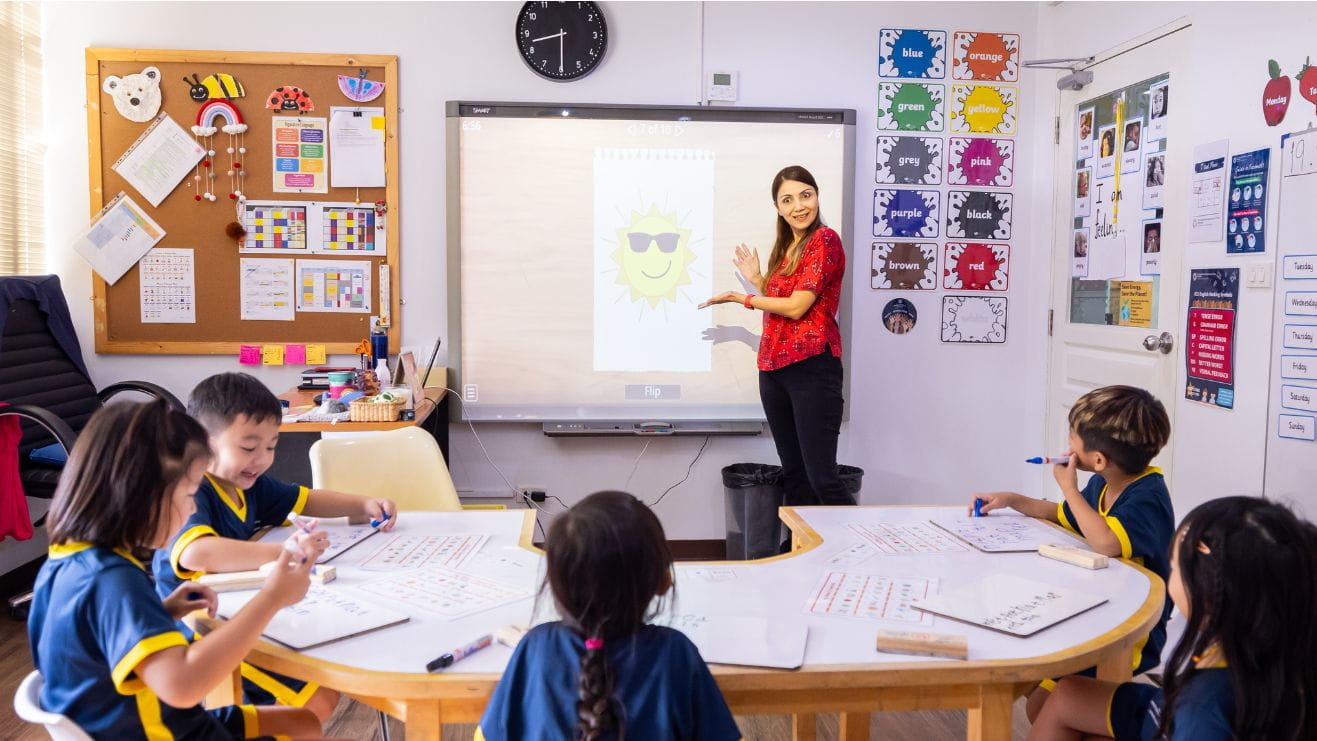
Where learning comes alive: a look inside St Andrews Primary School
St Andrews Primary School in central Bangkok offers a safe, modern, and nurturing learning environment with world-class facilities and a diverse curriculum, designed to help every child thrive academically, creatively, and personally. Its central location in Sukhumvit Soi 71 provides easy access while fostering curiosity and growth through specialist lessons and a vibrant extracurricular programme.
News image ![A small school within a big school: how St Andrews nurtures - Transition to big school]() Blog | Homepage Featured Article | Insight & Advice | Primary School
 Blog | Homepage Featured Article | Insight & Advice | Primary School
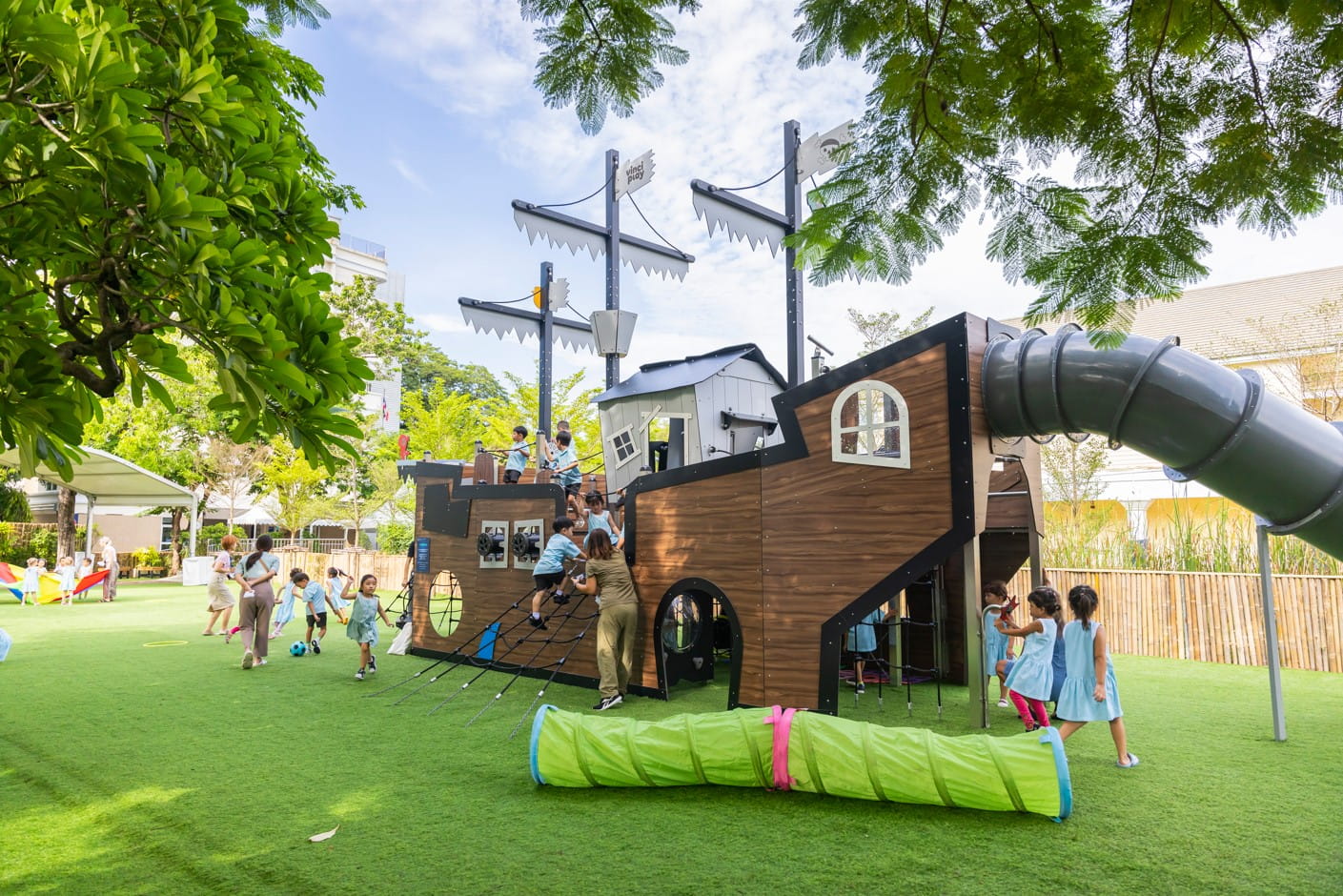
A small school within a big school: how St Andrews nurtures its youngest learners
At St Andrews, our Early Years Foundation Stage (FS1–FS3) offers a warm, purpose-built environment where children aged 2 to 5 can grow, explore, and thrive through play-based, personalised learning. With small class sizes, dedicated spaces, and strong relationships between educators, children, and families, we create a nurturing ‘small school’ experience within our larger international community, laying the foundation for confident, lifelong learners and an easier ‘big school’ transition.
News image ![How metacognition builds independent minds - Metacognition independent minds St Andrews Bangkok]() Blog | Academic
 Blog | Academic
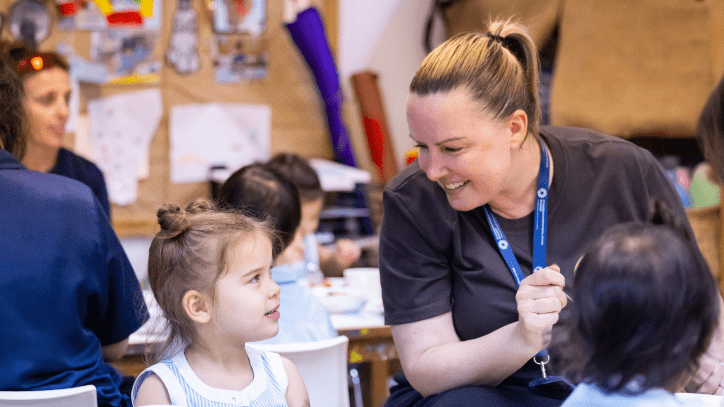
Metacognition in classrooms: how St Andrews builds independent minds
For families considering international schools in Bangkok, one of the most important questions is: How does this school help my child grow, not just academically, but as a confident, independent learner? At St Andrews International School Bangkok, the answer lies in metacognition, a teaching approach that helps children understand how they learn, reflect on their progress, and build the independence to succeed in school and beyond.