

At TBS Warsaw, we encourage our students to face challenges and take on international opportunities. Recently, we’ve had a chance to speak with one of our students who has just returned to us after finishing her journey across the Atlantic. Nicole Szczepka spent two months at sea, participating in a Polish initiative called Blue School, where she had a chance to experience life on a ship, visit incredible places and gain new skills - all of that while continuing her learning and preparing for the exams. Let’s hear what she has to say about her journey!

23 June, 2026
Journey Across the Atlantic: Inspiring Story from Our Student
Interviewer: First things first, let’s talk about the whole idea. What is Blue School, and what do you do there?
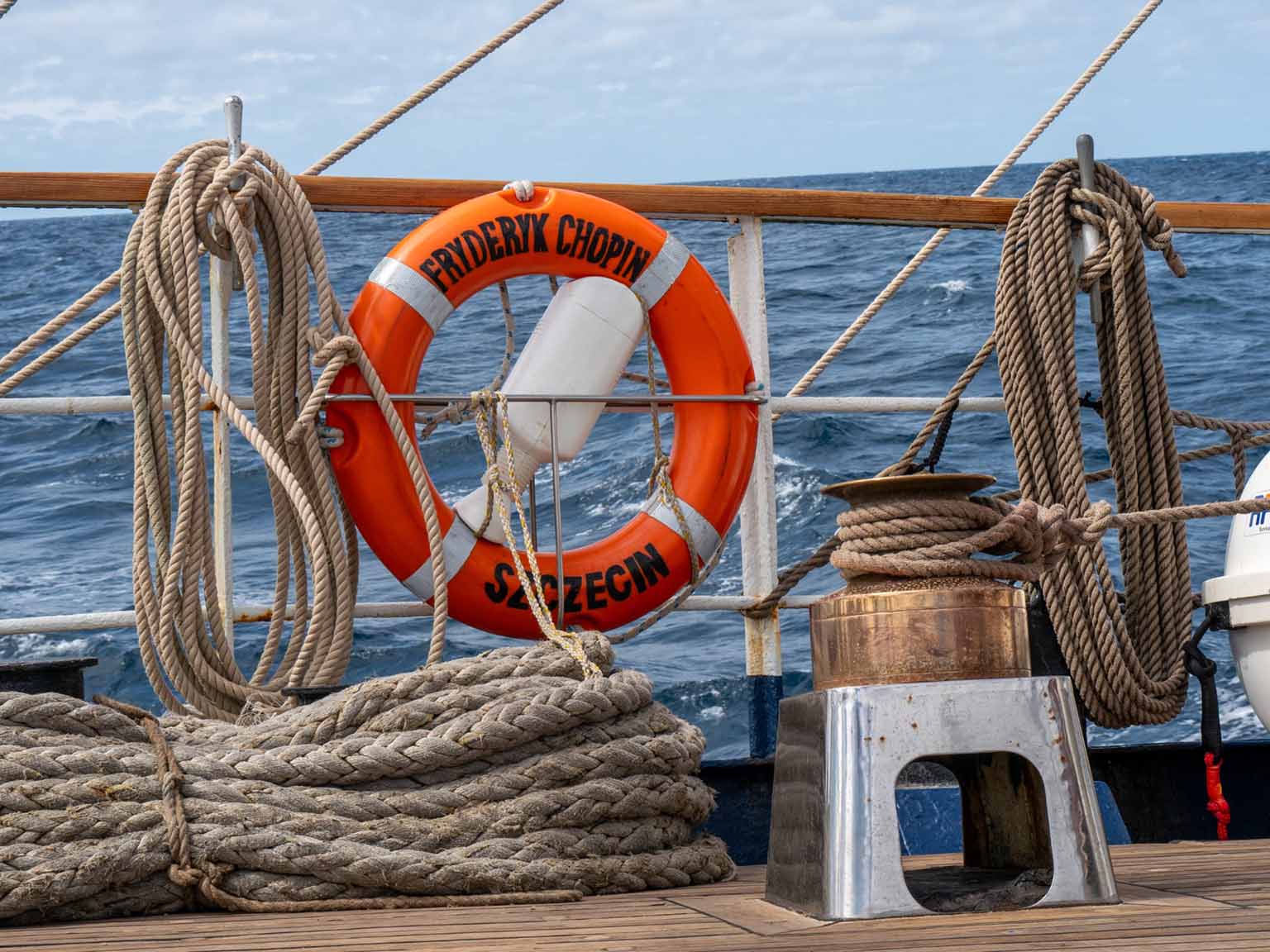
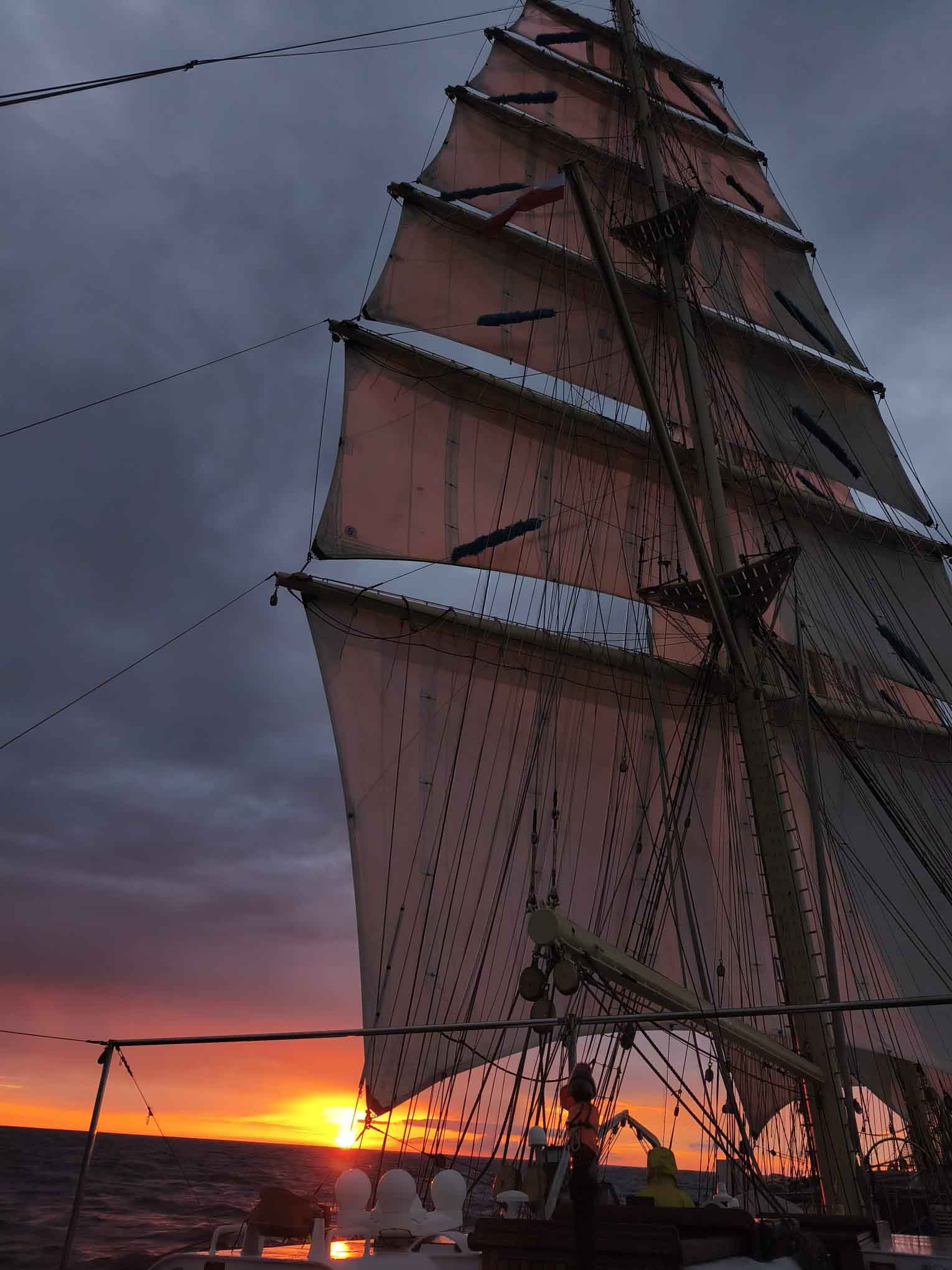
Nicole: The Blue School (Niebieska Szkoła) is an organisation that has been working for, I think, over 20 years now, and the general idea is that you take a group of young people from all around Poland and they all go on a tall ship, so in this case, STS Fryderyk Chopin, and together they go sailing.
In my case, the journey was across the Atlantic, but there are different ones you can go on. A lot of it is focused on teaching children independence and responsibility. It’s meant to be this whole very holistic experience where you learn, you get an opportunity to spend some significant amount of time away from your parents, but also to take on the responsibility of working in a crew and knowing that all of your actions actually have a big impact on everyone around you. So that’s the general idea of it.
I: And what drew you to this idea? Because it’s rather unusual.
N: So, I always kind of had a background in sailing, from when I was really young. The first time I got on a boat – Optymist is what it was called – I was five years old. And then, on and off, I’ve always been sailing. And the actual initiative - I heard about it when I was at a camp, Our Future Foundation at Mazury, and the person steering my boat told me about how she went to this Blue School. And I thought it was a really great opportunity that I also wanted to go on. So, I’ve read a bit about it, and the more I read, the more I looked at photos and videos of what it was like, the more I knew I really wanted to experience this.
I: Tell us where you have been, what you have seen during this trip?
N:My Blue School, it was across the Atlantic, so we started at St. Martin. We spent about one or two weeks in the Caribbean, learning how to sail, before heading off onto the Atlantic. We visited Dominica, St Isles and also Guadeloupe. Then we headed off across the Atlantic. That was the longest time we were without land - fifteen, almost sixteen days. Then we stopped at the Azores, in Horta. We stayed there for a couple of days to resupply, and then we continued our journey up North, stopping in Stornoway in Scotland, in Norway, in Stavanger and then in Denmark, in Helsingør. And then we arrived in Świnoujście and Szczecin. So quite a lot of places.
I: Yes, did you have the time to wander around them?
N: We had both organised trips to volcanoes and fjords in Norway that we went together, and then we also had free time to walk around the cities to explore. Most of the time we’ve been at ports, we were given the opportunity to really use it as much as possible, because like, when’s the next time you're gonna be in the Caribbean?
I: Right? And what was your favourite place to visit?
N: I think my favourite was the Azores, because Denmark, Norway, Scotland - maybe I’ll come back there one day, but the Azores are in the middle of the Atlantic. And also, there’s this tradition of all sailing crews – they paint a mural of their boat. So as you walk around the docs, you can see all the different murals just covering the streets, and it’s a really nice place.
I: Oh, it has to look fantastic! I also have a question about how learning looked on the ship? I know you have exams happening right now, so was there any form of studying included in the programme?
N:We did have organised lessons, so we had seven teachers on board from different subjects, and we were separated into classes based on the number of hours of different subjects. We had time-tabled lessons, so eight lessons per day, each forty-five minutes, so there was quite a structure to it. It was definitely different from back here, because we had lessons every single day except when we were in ports or if the weather was worse, but there was definitely a lot of independence to it. So you had the teacher, and if you had any questions, you could obviously ask. But the majority of people really had the opportunity to do their own work. Everyone had to organise themselves and know what they had to do to be ready when they came back to school. I think it was a great preparation for the university, where you also have to take more responsibility for your learning.
I: And how have you incorporated exams into it?
N:Mainly, before I left, I made sure to talk to all of my teachers. I had a plan, I knew exactly what I had to cover each week, and I incorporated revision into that, so I just knew what I had to get done, and I got it done.
I: Wow, you were really organised! That’s uncanny.
N: *laughter* Yes.
I: Okay. Now, maybe describe to us a usual day on the ship.
N: Okay, so the whole crew was split up into three watches. The majority of my time I spent in the first watch – our watch was from midnight to 4 AM, and then noon to 4 PM. During your watch, you had to be outside on standby. We were given the opportunity to steer the ship, so maybe one hour of steering and three hours being on standby, while other people steered.
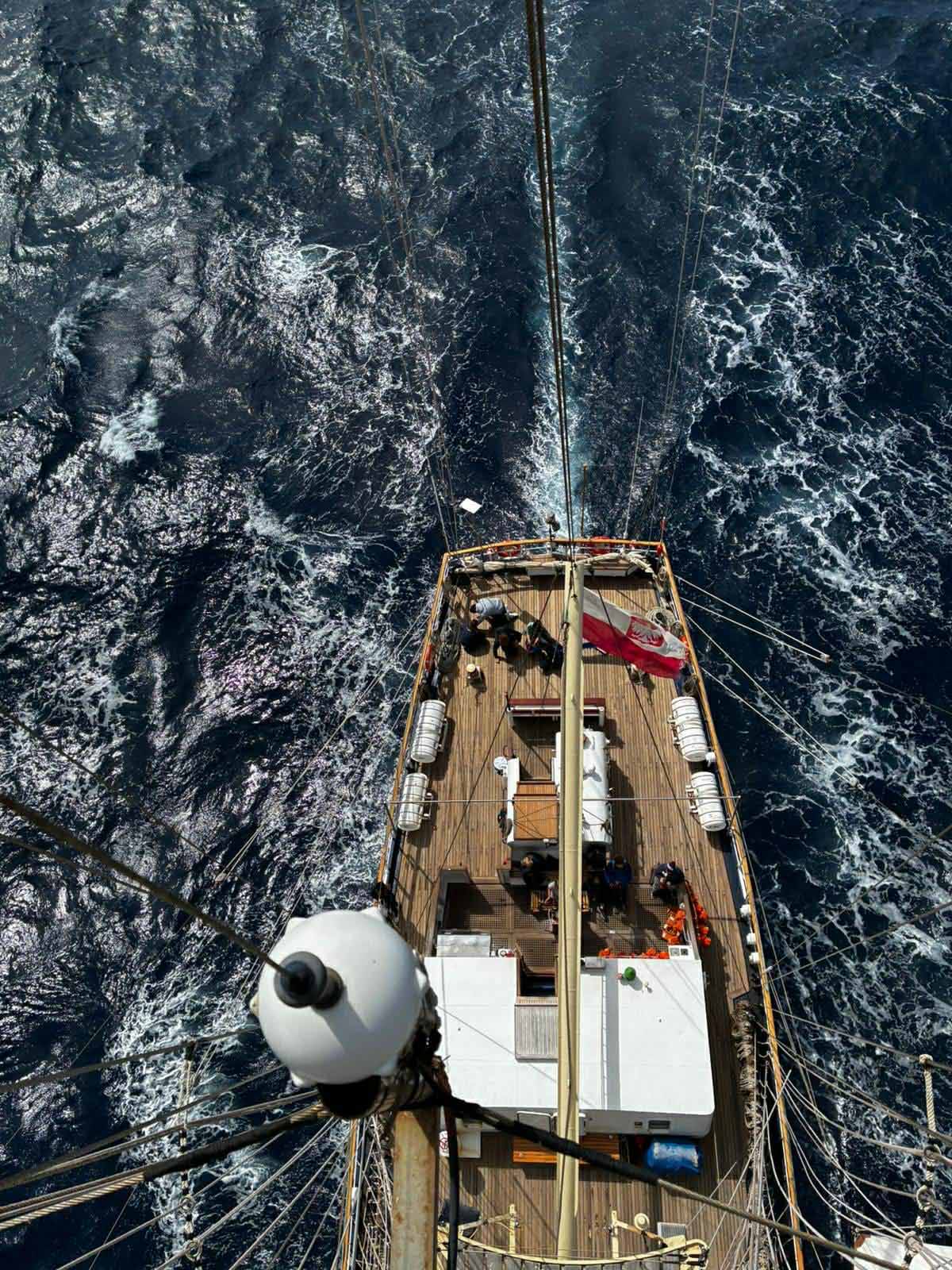
Most days, I went to sleep at 4 AM, and then there was a bell at 7:30 for everyone to wake up. We had half an hour to get ready, because at 8 AM we had bandera – it’s from the tradition of past sailing days, when the whole crew gathers at the back of the boat, on the stern, and then there’s an official ceremony of pulling up the Polish flag to show that we are a Polish sailing trip. During that time, there was an opportunity for the captain to announce any plans for the day. After that, we had breakfast from 8 to 8.30, and then we had a little bit of time to either relax or we were given watches. Every single day, someone had to clean a ship before the school day.
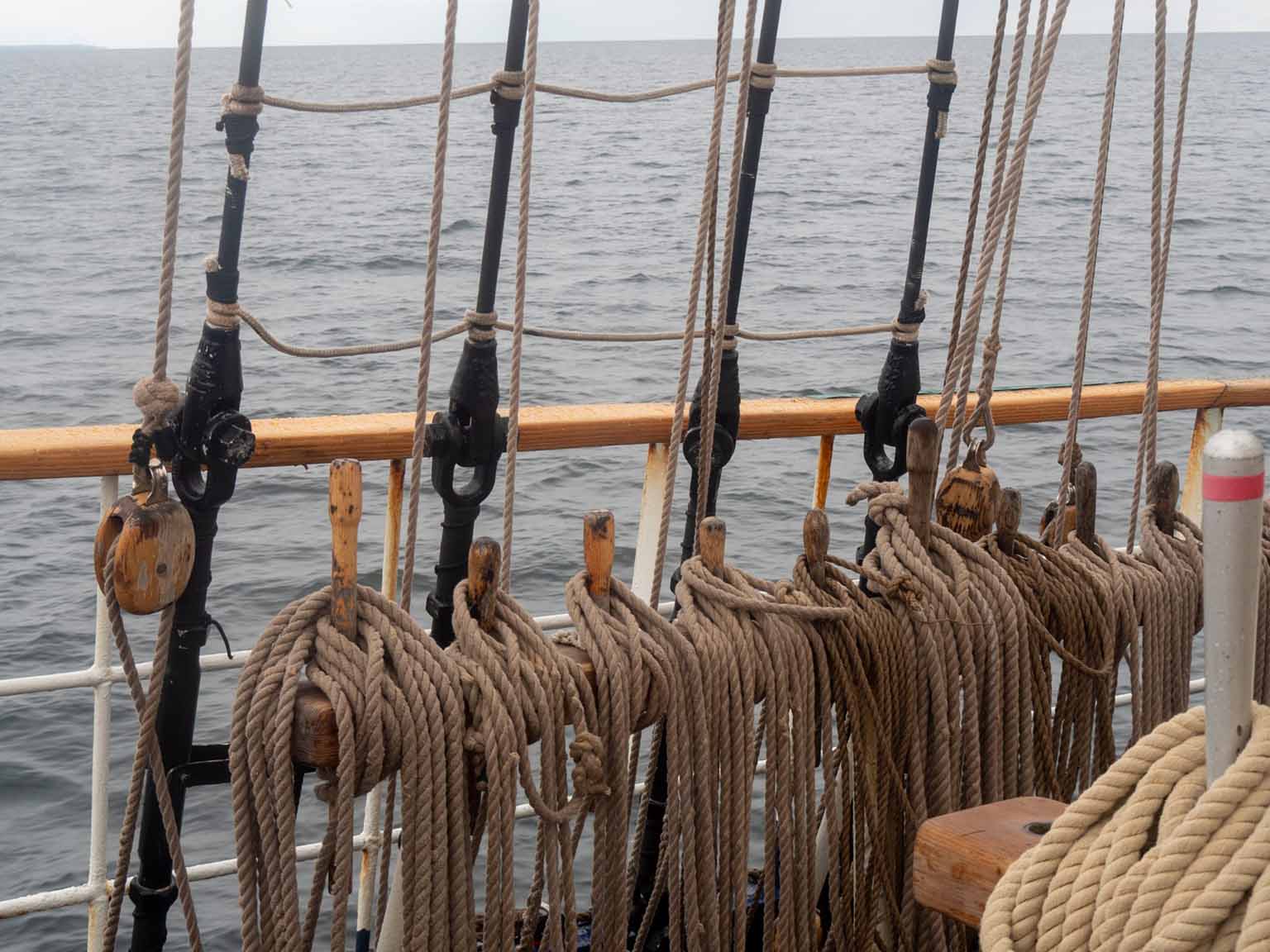
At 10 AM, lessons started. We had eight lessons per day, and in the middle, we had lunch. And then, after the lessons finished at around 6 PM, we had time for different tasks to do aboard the boat. For example, we learned a lot from our bosman – how to work with ropes and wood, and how to replace ropes to climb the rigging. Also, throughout the day, we had to be prepared because there might be a bell and we might have a sail alarm. When the weather conditions changed and we had to make a turn, all the crew had to run onto the deck as fast as possible, and we all gathered in each of our respective areas. If we had to do something with the sails, we got it done. Then, in the evening, we got supper, and since I had to wake up at midnight, I usually went to sleep as early as possible.
I: About these bells – did some extreme situations happen during your journey, or was it rather peaceful?
N: It was rather calm. We were really, really lucky, because the one storm that we had, we happened to be in the port. Although when the waves got really big, our ropes, which held us to the deck, started breaking, so we had to emergency leave port and put down anchor, and weather the storm out at sea as well. Other than that, there were some days when the wind got stronger up to I think thirty, maybe forty knots. The highest waves we had were around five meters, so pretty big, but still not extreme. We were pretty lucky with good weather conditions.
I: So, it was rather safe.
N: Yes, definitely rather safe. I knew the captain was experienced, and the officers knew what they were doing.
I: That’s nice. Okay, so then, what is your finest memory from the ship?
N: Oh, that’s a difficult question. I think definitely the official coming back to Szczecin is something I will always remember. When we were coming into port, we knew everyone will be waiting, there will be TV, things like that, so the procedure was we did something called ‘Manning the yards’ – we all had our respective places to stand and the entire crew went up into the rigging, so as we came in we had one person steering and then the rest of the crew was up at the sails. I was lucky enough to be at the very top. We had music, and there was such a great atmosphere because everyone was reflecting on the fact that we did it, we crossed the Atlantic, and we got to see Poland again after two months. So, I think that was definitely one of the best experiences.
I: How did it feel, coming home? Was it exciting, or were you a little bit sad that this great journey was coming to an end?
N: I was excited, but yes, I was also kind of sad. It was all ending. It feels really strange to be back. I got really used to people there, because we spent so much time together. It was a great atmosphere. Everyone got really close, and everyone was great friends by the end of it, so it was pretty sad leaving everything behind. But hopefully not forever. Maybe I will get back one day.
I: Yes, definitely! The experience must have bonded you quite well. Okay, so I think I’m slowly coming to the end of my questions. I also wanted to ask you what you consider the biggest challenge of this entire trip?
N: The biggest challenge… I think definitely these two months are the hardest I have ever worked in my life. But I think in general, you need to have a good mindset to be motivated to be there to really cope with it. There was a lot of work and responsibility put on you, but if you had the correct mindset, if you enjoyed everything you were doing, then it was possible to really enjoy it and learn a lot. Out of situations, I think the hardest thing I found personally to do… I love the rigging, I love the sails, I love replacing things, but what I didn’t love as much was working in the kitchen. One time, I had to make around five hundred dumplings for the entire crew. So as you can imagine, making five hundred dumplings… a lot of work.
I: Yes. *laughter* How long did it last? The preparation of these dumplings?
N: A couple of hours – the entire day. Yes, but I still loved it. It was great.
I: And what surprised you the most from all the things that you’ve learned?
N:I’ve definitely learned a lot of new things. The ship had over a hundred different ropes, and we had to know what each one was called. So, if we had a command to go to this one, we had to know where it was. Definitely, sailing a tall ship is completely different to the smaller ones.
I think the thing that interested me the most was navigation. They’d turn off all electronic monitors – and we had an opportunity to navigate by map like they did in the old days. So, I think that’s what I found the most interesting – the different calculations, the very mathematical part of it, calculating your position, your course and your speed – all of that.
I: Oh wow, that sounds amazing. If you had to advise someone who is thinking about going for something similar, would you say there’s a specific skill set they need to have before starting? Who do you think will fit best into these conditions?
N: If you consider going, you should be sure that you love sailing. You need to love it, because if you don’t, it’s definitely a lot of hard work. It’s tiring, so you have to make sure you will be able to stay positive and optimistic, even if it’s cold. In terms of any set skills, so many different people were there, so it’s not like you have to be good at maths, because one person can navigate, another person can do different knots... There are some basic things that you will have to remember – like where the different ropes are, but I think mostly the skills that you need are being able to stay positive and also teamwork. You are living in a small place with people that you don’t know for eight weeks. So, you need to be able to cooperate and communicate well.
I: Okay, so from me, that’s all. Do you have something to add?
N:I think what I have taken away from this whole experience. Now, coming back, my perspective has changed a lot. I feel like I’m a different person from who I was when I got on the ship. I’ve learned so much. Maybe, if anyone is now hearing about it and thinks they want to go, I’d definitely like to encourage people to try. It’s an amazing experience, and you will learn so much.
Also, I need to say a massive thank you to the school. Without the help of my teachers before I left, and everyone being flexible regarding how I cover the content, I would never have been able to go.
Related news
News image ![A blogpost cover with Frederick Chopin statue in the background]() Blog | Trips
Blog | Trips
 Blog | Trips
 Summer in Warsaw with Children: Your Complete Family Guide
Looking for the best things to do in Warsaw with children this summer? From the Vistula riverbanks to Kampinos forest, here is everything your family needs.
News image ![blogpost cover for metacognition]() News | Posts From Our People
News | Posts From Our People
 News | Posts From Our People
 What does successful metacognition look like in practice?
Our teacher, Sarah Zakowicz, shares her insight on metacognition.
News image ![cover]() Blog | Homepage Featured Article | IB | School News | Community
Blog | Homepage Featured Article | IB | School News | Community
 Blog | Homepage Featured Article | IB | School News | Community
 The Importance of Mental Health at School
Mental Health is an extremely important topic at TBS Warsaw. With Mental Health Awareness Week and exams happening right now, let's discover together how to navigate this challenging time!