
We use cookies to improve your online experiences. To learn more and choose your cookies options, please refer to our cookie policy.

18 May, 2026
Developing Critical Thinking in Classrooms and at Home
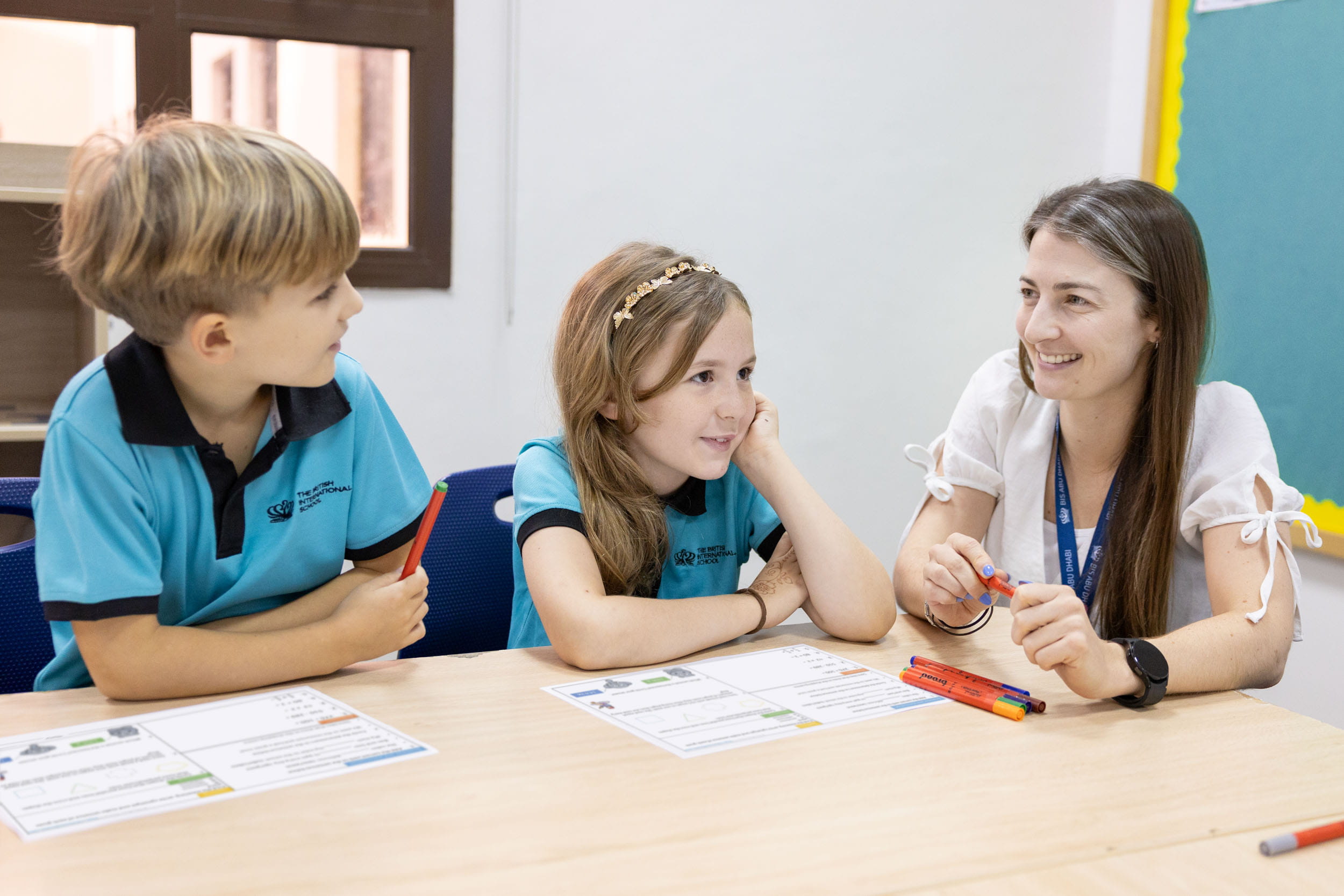
Critical thinkingis a fundamental skill for young people growing up in a world rich with information, opinions, and rapidly evolving technology. The ability to think carefully, ask thoughtful questions, and consider different perspectives is more important than ever.
At BIS Abu Dhabi, we see critical thinking not simply as finding the ‘right’ answer, but as a way of thinking that can be developed through comparison, perspective taking and reflection. It helps children slow down, explain their ideas and make more informed decisions.
Building Critical Thinking in School
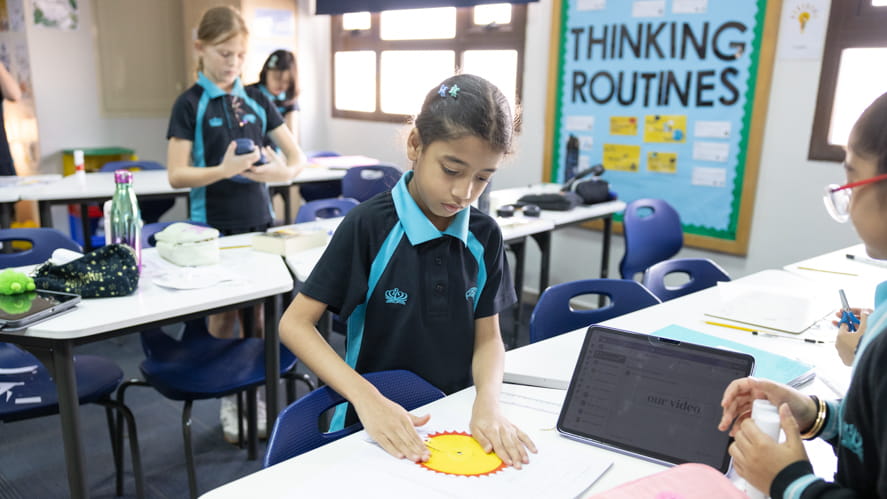
To support this, students use age-appropriate thinking routines.
In EYFS and Years 1, 2 and 3, children use Same, Different, Gain, helping them compare two ideas, objects, stories or situations by noticing what is similar, what is different and what can be learned from the comparison.
In Years 4, 5 and 6, children use Lenses, encouraging them to look at an idea, issue or situation from different perspectives and understand that people may see things in different ways, depending on their experiences, knowledge or role.
These routines build a shared language that helps students think more deeply and explain their reasoning with confidence.
Encouraging Critical Thinking at Home
These approaches can easily be used at home in everyday conversations. You might use these routines when reading a story, discussing something your child has seen online, watching the news, comparing choices or talking through a disagreement.
1. Same, Different, Gain
Steps:
- Same - What is the same?
- Different - What is different?
- Gain - What have we learned by comparing them?
2. Lenses
Steps:
- What lens are we looking through?
- How might someone else see this differently?
- What would they notice or care about?
- Has this changed or deepened our thinking?
These simple steps can be used in short, natural conversations at home. For example, younger children might compare two characters in a book, two animals, two places or two choices they need to make. Older children might use different lenses to think about a news story, an advert, a social media post, a family decision or something created by AI.
Giving children this shared language helps them understand that critical thinking is not just something they do in school. It is something they can use to make sense of the world around them.
Preparing for a Changing World
As technology and AI continue to develop, critical thinking becomes even more important. AI can provide answers quickly, but children still need to question what they see, check whether information is reliable and consider different perspectives. Through our metacognitive approach, we are helping students become thoughtful users of technology, rather than passive consumers of information.
By embedding thinking routines across school and encouraging them at home, we are helping students develop habits that support their learning, relationships and decision making. Whether they are comparing ideas, looking through different lenses or questioning information online, these routines provide a shared language for careful and thoughtful thinking.
Our aim is to support children in becoming confident, reflective and critical learners who can ask thoughtful questions, make informed decisions, and navigate an ever-changing world with curiosity, clarity and care.
We encourage families to continue using these thinking routines at home, helping children apply critical thinking skills confidently in everyday situations.
Related news
News image  News | Educational Insights | Nord Anglia Education | School News
.jpg?h=1667&iar=0&w=2500&rev=316a521916e845bdba2e70442ff00371&hash=71FEA428D6FD9D1112C41B72452F7F15 "How Metacognition Builds the Skills AI Can’t Replace") News | Educational Insights | Nord Anglia Education | School News
News | Educational Insights | Nord Anglia Education | School News How Metacognition Builds the Skills AI Can't Replace
Discover how metacognition at BIS Abu Dhabi helps students build the skills AI can’t replace, including curiosity, confidence, independence and critical thinking.
News image  News
News
 News
News Developing Creative and Compassionate Thinkers for the Future
Helping students build creativity, compassion and flexible thinking through routines that prepare them for a changing world.
.png?rev=1619813b30a347d9bc71977e2cfe09d2&hash=66B98CDC659BBF07EB36660B4381E1E7)