
/microsoftteams-image-(7)/hanoi-w.png?h=48&iar=0&w=235&rev=1d3bc711cdeb4b6282c27183e9a86f6a&hash=0DF2F1F1B8575D3D4EC23A938468783C)
.jpg?h=562&iar=0&w=1000&rev=0466bd02f351432eb5728d25a960a063&hash=0B379DE3851CDDF614EC4D19B6BF1A0A)

We use cookies to improve your online experiences. To learn more and choose your cookies options, please refer to our cookie policy.
10 March, 2026
What continuity of education really means from primary to secondary
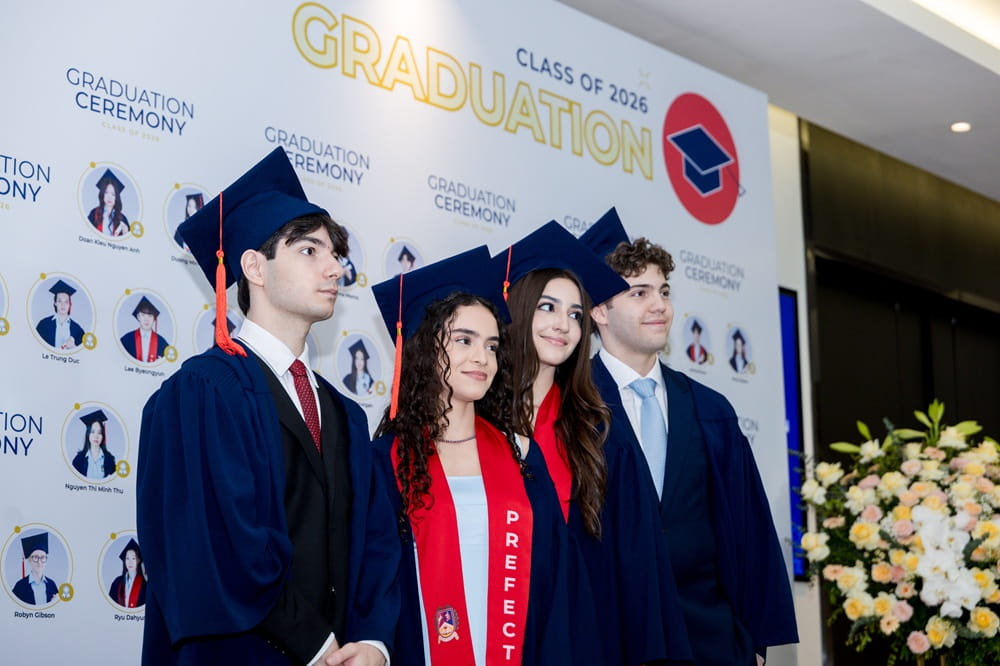
For many families, the move from primary to secondary is one of the most important points in a child’s school journey. It is often the stage when parents look more closely at whether a school can offer real continuity of education, not just in structure, but in daily experience, expectations, and support.
A school may have primary and secondary on the same campus, but continuity is not simply about location. Parents are trying to understand something deeper. Will their child still feel known? Will the school’s values remain consistent? Will the transition be well managed, both academically and personally?
At the British International School Hanoi, Laurence Cabanne, Head of Primary, sees continuity as something families experience over time rather than something a school merely claims.
“When families are uprooted and living in a country that is not their own, continuity starts with knowing your school, knowing the teachers, and knowing your child is recognised,” she explains. “That helps students settle, and it also helps parents begin to build their own relationships with the school community.”
What stays consistent as children grow
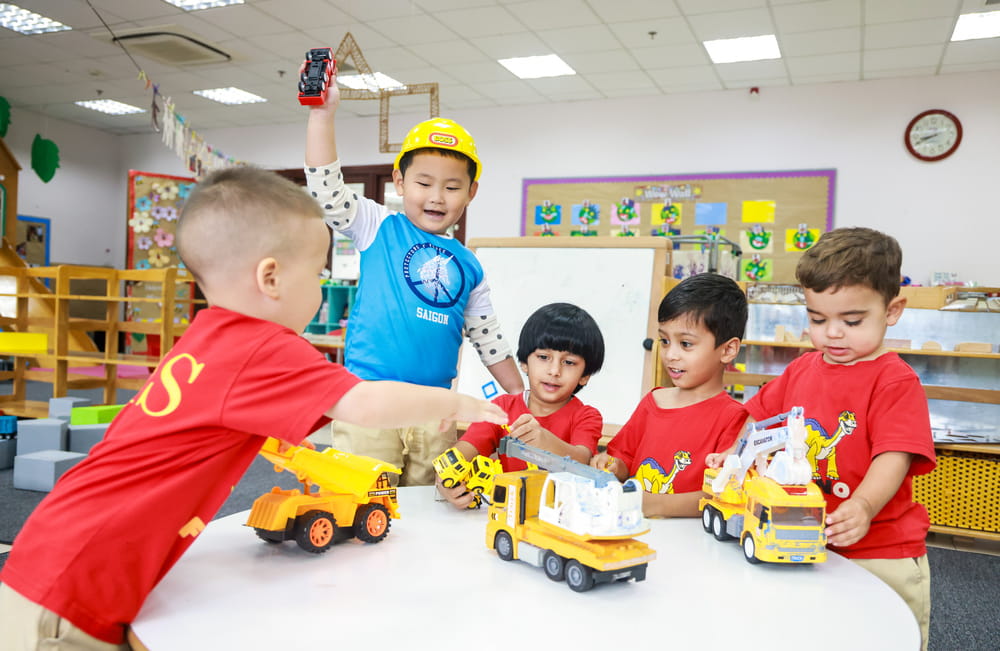
One of the clearest markers of continuity is consistency in the school’s core expectations. These may look a little different as children grow older, but the principles underneath them should remain steady.
Laurence points to shared values as an important part of that continuity. “The expectations of our core values stay the same,” she says. “Integrity, respect, and care are the core things we believe in, and these are seen throughout our behaviour policies.”
That matters because transitions from primary to secondary can otherwise feel abrupt. Children move into a new timetable, work with more teachers, and face higher academic expectations. If the culture underneath those changes remains stable, students can adapt more confidently.
For parents, this can be one of the clearest signs that a school is thinking long term. Continuity is not about making primary and secondary identical. It is about ensuring that change feels purposeful rather than disruptive.
What changes between primary and secondary
A smooth transition does not mean nothing changes. In fact, some changes should be expected.
As students move into secondary, they usually begin working with a wider range of subject specialists rather than one main class teacher. Their timetable becomes more complex. The level of independence expected from them also increases.
Laurence explains this in practical terms. “One of the main changes is that, instead of having one single teacher, students start to interact with many more teachers when they move into secondary,” she says. “That is a normal part of the transition.”
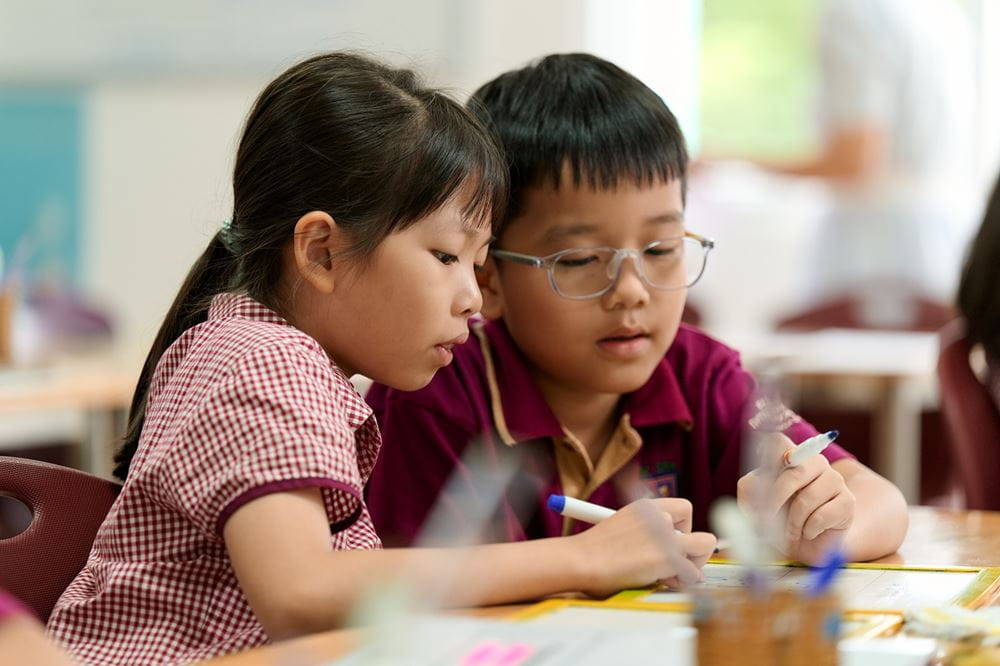
This is where clarity matters. Parents need to understand not only what will change, but also why those changes are introduced when they are. Preparation begins early in the year, so that the transition to Secondary is gradual and well supported.
At BIS Hanoi, transition work begins well before the final move. Laurence notes that the school runs Parent Connect sessions to talk families through the process and expectations, and students are also involved in building their understanding of what comes next.
That preparation has practical academic value. When students know what to expect, they are better able to focus on learning rather than spend the first term simply adjusting to uncertainty.
How schools support the transition
Continuity of education depends on more than a handover meeting. It requires collaboration between teachers and leaders across phases.
“We work very closely between early years and primary, and between primary and secondary, to make sure the transition is smooth,” Laurence says.
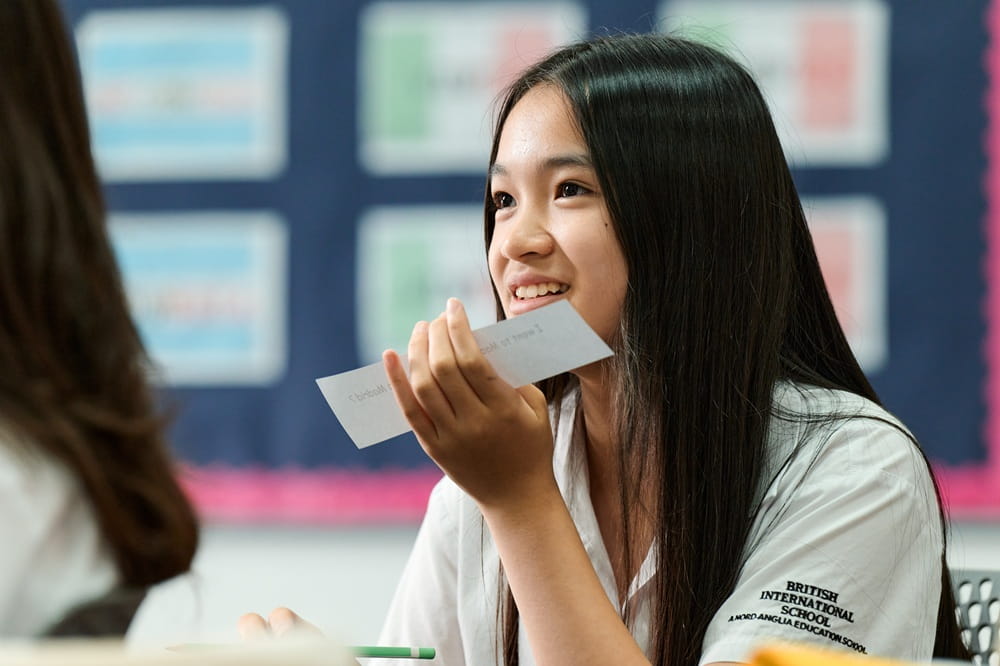
This kind of planning helps schools carry forward useful knowledge about each student. It can include academic information, but it also includes a fuller understanding of how a child learns, how they respond to change, and what support helps them thrive.
For parents, that continuity should be visible. It may show up in clear communication, early preparation, or in the way teachers already know something about the child before the new school year begins.
Looking at continuity with more confidence
When parents assess continuity of education, they are asking whether the journey from one stage to the next is coherent, well communicated, and thoughtfully supported.
At the British International School Hanoi, continuity is rooted in shared values, early preparation, and close collaboration across phases. Those structures help students move forward with confidence while keeping academic progression on track.
For families considering how a school supports children over time, the most useful conversations are often the ones that explore what stays consistent, what changes, and how those changes are managed. Our academic leaders are always happy to discuss that journey in more detail.
Related news
News image ![BIS Hanoi scholars for AY 2026-27: Celebrating excellence across our community | British International School in Hanoi9 - BIS Hanoi scholar for AY 2026 2027 Celebrating Excellence Across Our Community]() News
News
 News
News BIS Hanoi scholars for AY 2026-27: Celebrating excellence across our community
BIS Hanoi is proud to recognise and celebrate 48 exceptional students who have been awarded scholarships for the 2026-27 academic year.
News image ![What Is the IB Diploma Programme? A Parent's Guide to IBDP in Hanoi | BIS Hanoi - A Parent Guide to IBDP in Hanoi]() Blog | IB Diploma Programme | International Education | Educational Insights
Blog | IB Diploma Programme | International Education | Educational Insights
 Blog | IB Diploma Programme | International Education | Educational Insights
 What Is the IB Diploma Programme? A Parent's Guide to IBDP in Hanoi
Discover what the IB Diploma Programme (IBDP) is, what students study, and how it prepares them for university. Learn why families choose BIS Hanoi, a leading IB school in Hanoi.