
.jpg?h=249&iar=0&w=374&rev=5c3dacca1895403ea4fbab0c28e6fe0d&hash=E43DDE2E55CCD139473D7779AE3ADAD8)
We use cookies to improve your online experiences. To learn more and choose your cookies options, please refer to our cookie policy.
13 April, 2026
How international school pathways prepare students

For many families, the biggest question when choosing an international school in Tashkent is whether the investment will translate into university acceptance and success.
Parents want reassurance that their child will not only gain entry to leading universities but also arrive prepared to thrive once they get there.
At The British School of Tashkent (BST), this connection is built deliberately. Academic pathways are designed to move students from broad exploration to focused preparation, ensuring they develop both the knowledge and the independence needed for university life.
Strong schools don’t leave this readiness to chance, they structure it step by step, so families can be confident in the outcome.
Starting broad to build strong foundations
Strong academic pathways begin with breadth.
At BST, students follow a broad and balanced curriculum from Primary through to Key Stage 3. This stage is not about narrowing options. It is about building the core skills and knowledge that support later decisions.
Rebecca Wolfe, Head of Secondary, explains this clearly.
“Students study a broad curriculum from the start of their educational journey at BST, allowing them to develop the skills and understanding needed for future study.”
This includes:
- literacy and numeracy
- scientific and analytical thinking
- exposure to a range of subject disciplines
This breadth matters because it allows students to discover strengths before making decisions that affect future pathways.
Making informed subject choices
The first major step in shaping a pathway comes during subject selection.
At the end of Key Stage 3, students begin to choose IGCSE subjects that align with their interests and strengths.
Rebecca explains how this process is carefully supported by teachers.
“Teachers guide students through subject selection, helping them choose options that reflect their strengths, interests and their future ambitions.”
This guidance is critical. Without it, students may choose based on short-term preference rather than long-term impact.
At BST, subject selection is supported by:
- teacher insight into student progress
- structured option blocks
- ongoing academic guidance
This ensures that choices are both informed and realistic.
From exploration to specialisation
As students move into Key Stage 4 and beyond, their pathway becomes more focused as they begin to select A Levels.
“At Key Stage 5, students focus their studies by selecting 3 or 4 A Levels that support their future aspirations, opening the door to university and higher education.”
This stage requires a balance between maintaining academic challenge, aligning subjects with university requirements and ensuring students are working within their strengths.
Connecting school learning to university pathways
One of the most important roles of a school is helping students understand the connection between subject choices and future opportunities.
At BST, this connection is made explicit through structured support.
“University fairs and career guidance events help students understand the pathways available to them and how their current choices shape future options,” explains Rebecca.
With the support of specialist staff, students are encouraged to consider:
- university requirements for specific courses
- how subject combinations influence opportunities
- long-term career interests
This ensures that decisions are not made as part of a broader academic journey.
Keeping options open while providing direction
A strong pathway balances guidance with flexibility.
Students need enough direction to make informed decisions, but also enough flexibility to adapt as their interests develop.
At BST, this balance is achieved through the IGCSE years. Students begin to select subjects, but they retain core subjects such as English, Mathematics, and Science.
This means they start to explore their specialisations while still maintaining a broad academic foundation. By the time they choose their A-Levels, students have a clearer understanding of their strengths, passions, and aspirations, leading to more informed subject selections.
By contrast, schools that only begin specialisation at age 16 require students to commit without this intermediate stage, often narrowing too quickly.
At BST, the IGCSE years provide that crucial bridge, giving students the chance to deepen their interests, discover their strengths, and then refine their choices with confidence at A-Level.
“The aim is to keep pathways open while helping students make informed decisions that support their future goals,” explains Rebecca.
This approach reduces the risk of students closing off opportunities too early.
A clearer view of where education leads
For parents, understanding international school pathways provides reassurance.
It shows that learning is structured, not fragmented. Subject choices are guided, not left to chance and progression is planned, not reactive.
At The British School of Tashkent, academic pathways are designed to support both exploration and progression, helping students move confidently towards university.
For families, this offers a clearer answer to an important question. Education is not just about what students learn today, but how it prepares them for what comes next.
Parents who would like to explore subject pathways and university preparation at BST are always welcome to speak with the academic team and see how these decisions are supported at each stage.
Related news
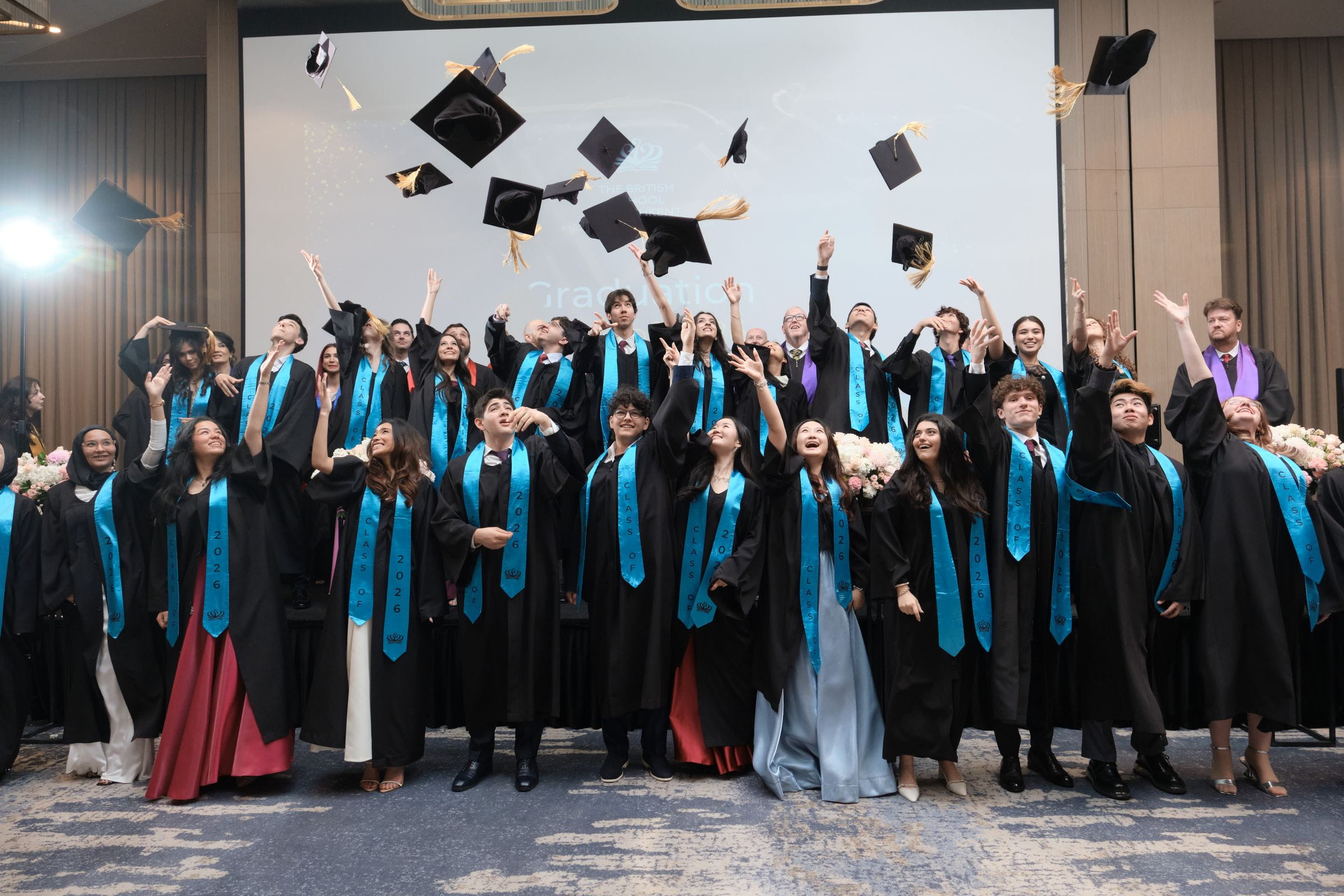
News image ![Students from The British School of Tashkent celebrating at Graduation by throwing their caps in the air]() News | Academic | Highlights
News | Academic | Highlights
 News | Academic | Highlights
 Celebrating GCSE and A Level success at The British School of Tashkent
The British School of Tashkent celebrates strong 2025/26 GCSE and A Level results, with students achieving highly at different stages of their education
News image ![News Default Image]() Blog
Blog
 Blog
Blog Why student wellbeing is one of the strongest predictors of success
Student wellbeing plays a vital role in academic success. Discover why wellbeing matters and how strong schools create environments where students feel supported, connected and ready to thrive.
News image ![Young Musician Award Win - Young Musician Award Win]() News | Events | Highlights | Music and Drama
News | Events | Highlights | Music and Drama
 News | Events | Highlights | Music and Drama
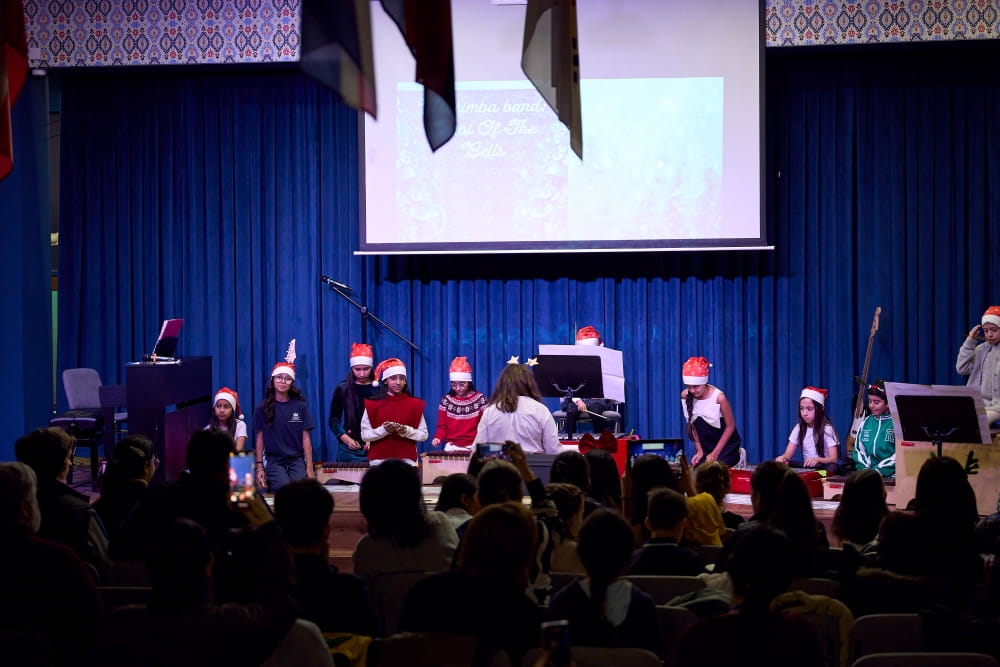
 BST Students Win Global Young Musician Category Award
Primary students from The British School of Tashkent win a global category award in the Virtual Young Musician of the Year competition, competing against 3,758 students worldwide.
News image ![BST students win medals at German Math Olympiad and Hi-Lingua Competition - The British School of Tashkent students win medals at international Olympiads in Frankfurt]() News | Academic
News | Academic
 News | Academic
 The British School of Tashkent students win medals at international Olympiads in Frankfurt
Students from The British School of Tashkent achieved outstanding results at the German Math Olympiad and Hi-Lingua Language Competition in Frankfurt, Germany, winning multiple Gold, Silver, and Bronze medals against competitors from 47 countries.