
.jpg?h=249&iar=0&w=374&rev=5c3dacca1895403ea4fbab0c28e6fe0d&hash=E43DDE2E55CCD139473D7779AE3ADAD8)


We use cookies to improve your online experiences. To learn more and choose your cookies options, please refer to our cookie policy.
13 April, 2026
Why strong teacher–student relationships matter for learning
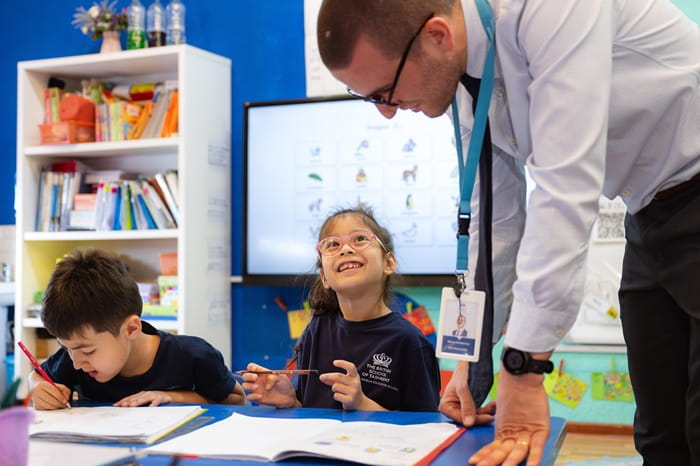
A classroom can have strong teaching, clear structure, and well-planned lessons. But without strong relationships, something essential is missing.
Ambition grows when students feel confident to participate, question, and persist. That confidence comes from trust; the trust built between teachers and students.
This is why the quality of the teacher–student relationship has such a direct impact on how well students engage and progress over time.
At The British School of Tashkent (BST), these relationships are built deliberately, through structure, daily interaction, and a consistent focus on student wellbeing.
Building relationships from the very beginning
Strong teacher-student relationships are built early and remain consistent.
Rebecca Wolfe, Head of Secondary, shares how students are introduced to key members of staff from the start of their journey.
“From the very beginning, students are supported by a network of adults who get to know them well and guide their experience throughout the school.”
This network includes the Head of School, Heads of Year, and Form Tutors who work closely with students on a daily basis.
Form Tutors play a central role in this process. Daily contact allows them to build familiarity, understand each student’s needs, and provide ongoing guidance.
This structure ensures that no student feels overlooked and that relationships are consistent across the school.
Why confidence drives learning
The link between relationships and learning is clear: students participate more when they feel confident.
At BST, creating an environment where students feel heard and valued is a key priority.
Rebecca explains how “students thrive in an environment where their voices are heard and they feel confident to contribute their ideas.”
This confidence has a direct impact on learning. Students who feel supported are more likely to:
- ask questions
- engage in discussion
- attempt challenging work
They are also more resilient. When they encounter difficulty, they are more willing to persist and improve.
Over time, this leads to stronger academic progress.
Supporting students through challenges
Not all students feel confident all the time.
Periods of uncertainty are a normal part of school life, whether linked to academic pressure, social dynamics, or transitions between stages.
At BST, support systems are in place to respond to these challenges.
“We have dedicated counsellors who support students with a range of challenges, from adjusting to a new school to managing academic pressure,” explains Rebecca.
Teachers, tutors, and counsellors work together to ensure that students receive appropriate support when needed.
This coordinated approach allows concerns to be addressed early, helping students regain confidence and continue progressing.
Creating a consistent and supportive environment
Relationships are strengthened through consistency.
At BST, expectations are clear and supported by a positive behaviour policy. This ensures that students understand what is expected of them while also feeling supported.
Recognition systems, such as rewards and house points, reinforce positive behaviour and celebrate student success.
“Consistent expectations and recognition help students feel secure and motivated within the school environment,” adds Rebecca.
This balance between structure and support creates an environment where students feel both challenged and cared for.
The long-term impact of strong relationships
Over time, the effect of strong teacher–student relationships becomes more evident.
Students develop:
- greater confidence in their abilities
- stronger engagement with learning
- improved resilience when facing challenges
They also build trust in the school environment, which supports both academic and personal development.
A clearer way to understand school quality
For parents, understanding the importance of relationships provides a clearer way to evaluate a school.
It is not only about curriculum; it is about whether the environment supports students to engage, contribute, and grow.
At BST, strong relationships ensure that students feel supported throughout their journey, helping them continue to thrive over time.
Parents who would like to learn more about how BST supports student wellbeing and engagement are always welcome to speak with the academic team and explore how these relationships are built across the school.
Related news
News image ![Secondary student developing an Art project at The British School of Tashkent.]() Blog | Art
Blog | Art
 Blog | Art
 Why study Art at GCSE and A Level? The value of creative education
Discover the benefits of studying Art at GCSE and A Level, including academic skills, creative thinking, university pathways and future career opportunities.
News image ![Students from The British School of Tashkent celebrating at Graduation by throwing their caps in the air]() News | Academic | Highlights
News | Academic | Highlights
 News | Academic | Highlights
 Celebrating GCSE and A Level success at The British School of Tashkent
The British School of Tashkent celebrates strong 2025/26 GCSE and A Level results, with students achieving highly at different stages of their education