
A week in the life of a boarding student in Lausanne, Switzerland

When parents consider boarding school for their child, one of the first questions is simple but important: what does daily life actually look like? The brochure version only goes so far. Understanding the rhythm of a real week, how time is structured, what students do between lessons and how evenings and weekends unfold, gives a much clearer picture of whether boarding is the right fit.
Monday to Friday: the shape of a school day
Boarding students start the day earlier than day students. Morning routines in the boarding house include breakfast together, time for personal organisation and departure for lessons. The structure is intentional: it builds habits of independence and self-management that carry through the academic day.
Lessons run through the morning and into the afternoon. For students in a bilingual programme, French and English are used across different subjects as a matter of course, not just in dedicated language classes. This daily immersion builds genuine fluency rather than classroom-level competence.
The afternoon opens up after lessons. Supervised study periods, sport, extracurricular activities and free time are all built into the schedule. Boarding students need enough direction to stay on track academically, but enough autonomy to develop the self-reliance that is one of the most valuable things the experience provides.
Evenings in the boarding house
Evenings follow a consistent pattern. Dinner is communal, and this daily shared meal matters more than it might first appear. It is where friendships form, where students from different countries sit together and talk, and where the social fabric of the boarding community is built and maintained.
After dinner, supervised study time is standard. House parents are available throughout, and students who need help can access it. The habit of daily study in a quiet, structured environment builds the kind of academic routine that serves students well long after they leave.
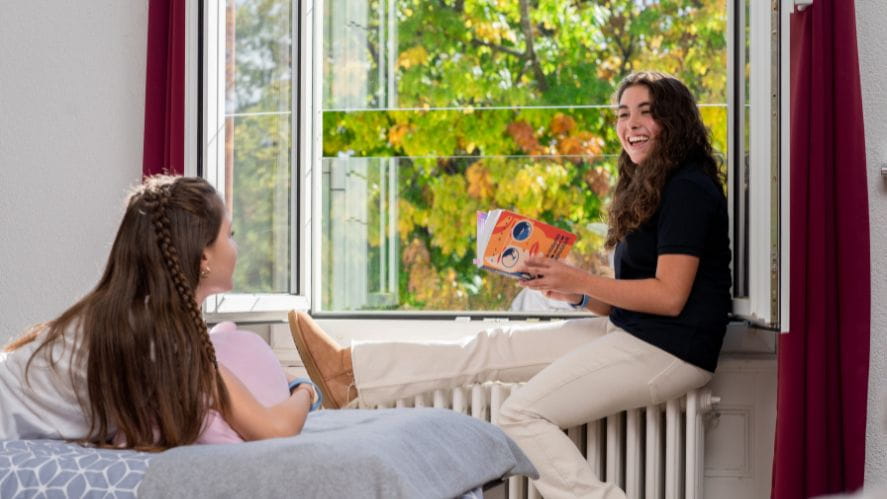
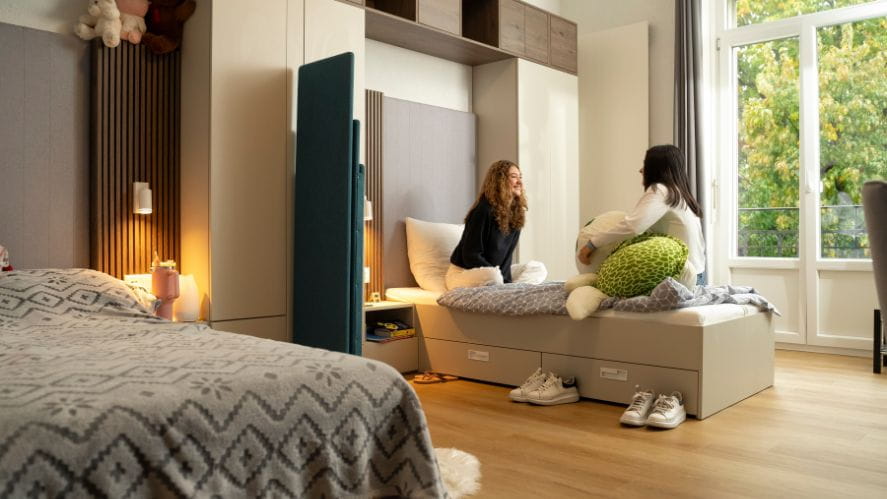
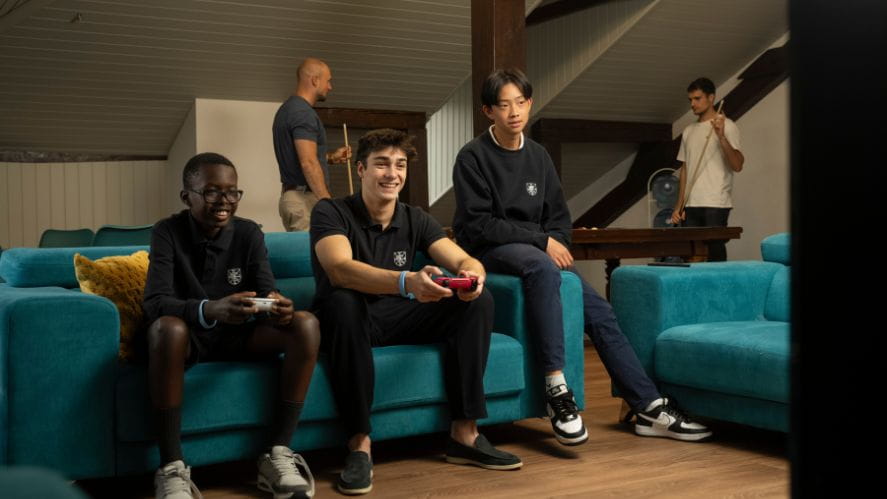
Before lights out, students have free time. Some read, some play music, some simply talk. The evenings in a boarding house are where many of the most lasting friendships are formed.
Sport and extracurricular activities
A strong boarding programme extends well beyond the classroom. Sport, music, art, drama, technology, leadership and community service all feature across the week. In the Lake Geneva region, the setting adds a natural dimension. Watersports on the lake, skiing in the Alps in winter, cycling and hiking in the warmer months: these are real activities that shape the physical confidence and resilience boarding students typically develop.
The social and cultural dimension is just as important. Cultural Nights bring the international community together around food, music and traditions from the many nationalities represented across the school community. Boarding trips run throughout the year, taking students to destinations across Europe and beyond.
Humanitarian trips and community service projects give students first-hand experience of the world beyond the campus. The chaplaincy provides a space for reflection and personal development that sits alongside, and is distinct from, the academic programme.
Weekends: what seven-day boarding actually looks like
The majority of Champittet boarding students choose to stay on campus for the weekend. This tells you something important: weekends here are not a gap in the programme. They are a core part of it.
Saturdays and Sundays are built around activity and shared experience. On any given weekend, students might be out on Lake Geneva sailing, paddleboarding, wakeboarding or water-skiing. Or up in the hills climbing, hiking or mountain biking. During ski season, students can ski regularly throughout the season. Evenings bring shopping trips into Lausanne, meals in local restaurants or visits to the opera.
Trips to different parts of Switzerland, Italy and France run throughout the year. A weekend in Milan, a day in the Italian lakes, an excursion to the French Alps: these are not occasional highlights. They are part of the regular rhythm of boarding life at Champittet.
The variety matters. Weekend activities shift from week to week, which means students are constantly doing something new alongside peers they are getting to know well. Many of the friendships formed in boarding are cemented not in the classroom but on a boat on Lake Geneva or at the top of a ski run on a Saturday morning.
What about five-day boarding?
For students on five-day boarding, the week follows the same structure as seven-day boarders from Monday to Friday. The difference is that five-day boarders return home on Friday evening and rejoin the community on Monday morning.
This model suits families based within reasonable distance of Lausanne who want the academic rigour and social immersion of boarding during the week, while maintaining a strong home connection at weekends. It also works well for younger students who are building their independence gradually.
The role of house parents
House parents are central to the boarding experience. They are the consistent adult presence in a student's daily life: the person who notices when something is not quite right, who manages the practical side of the boarding house and who provides the pastoral continuity that sits underneath the academic programme. Their relationship with students is one of the most important factors in how well a child adapts to life away from home.
What students say
“What I love most about boarding at Champittet is the range of activities on offer. It's so easy to make friends and we get great support from our teachers.” Alexander, student
“I've made incredible connections and friendships in such a short time. The boarding parents helped me overcome my challenges and made me feel at home and very happy.” Manuela, student
Boarding at Collège Champittet
At Collège Champittet, the boarding programme runs from age ten on the Pully campus, four hectares between Lake Geneva and the Alps. House parents are present throughout the day and evening, and the wellbeing team includes a school nurse and dedicated counsellor.
A wide range of extracurricular activities are available to boarders, spanning sport, music, arts and student-led clubs. Weekends include organised excursions, ski outings in winter and access to the wider cultural life of the Lausanne and Lake Geneva region. Through Champittet's partnership with EHL, students can take part in soft skills workshops and leadership development programmes. A mentoring programme with the International Olympic Committee, based in Lausanne, gives older students direct access to one of the world's most distinctive professional communities.
Our boarding daily life page gives a more detailed picture of the week. To see it for yourself, book a visit or join one of our open days.
For a full overview of how to choose a boarding school in Switzerland, our Parent's guide to choosing a boarding school in Switzerland covers everything families need to consider.
Frequently asked questions
What does a typical day look like for a boarding student in Switzerland?
Boarding students follow a structured day that begins with a communal breakfast, moves through a full programme of lessons, and continues into supervised study, sport, extracurricular activities and communal dinner in the evening. The balance between structure and free time varies by school and age group.
How often can boarding students go home?
Most Swiss boarding schools build regular home weekends into the term calendar, typically three or four per term, alongside half-term breaks. The exact pattern varies by school.
Related news
 Blog | Our Blog
 Blog | Our Blog