



We use cookies to improve your online experiences. To learn more and choose your cookies options, please refer to our cookie policy.

29 September, 2026
Why There's No Such Thing as 'Just Playing' in Early Years
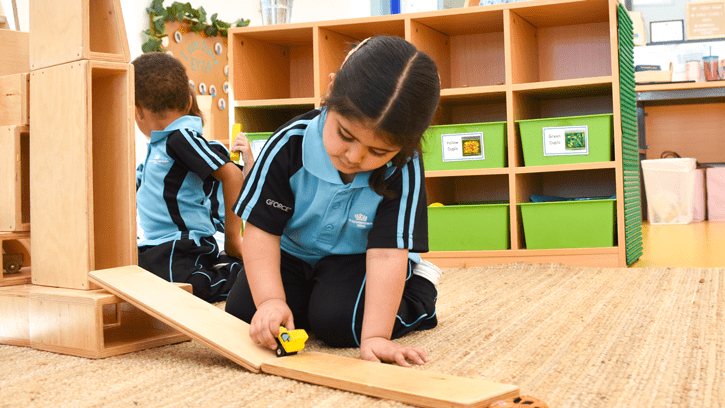
At Compass recognise that the formative years of a child’s development are spent primarily through playtime. However, it’s important to recognise that beyond the pretend play, imaginative storytelling and lively games, children are actively developing the necessary skills relating to lifelong success.
Children here are encouraged to explore, test boundaries and evolve as they follow their curiosities through purposeful play. This emboldens our students to seek future challenges with strengthened cognitive ability and emotional learning, all during their Early Years.
Building the Foundations for Lifelong Success
It’s worth noting that between the ages of 0–3, eighteen percent of the human brain takes shape until the age of 5, where it reaches an astounding ninety percent. These impressionable years highlight the value of play-based exploration; with all their senses engaged and curiosities piqued, we’re guaranteed to aid in their cognitive development.
Physical and motor skills are another valuable skill that children can expect to pick up in Early Years. As they burst with energy during play, students strengthen their bone density, strength and endurance whilst refining their balance, co-ordination and spatial awareness. Arts & crafts and outdoor play are examples of play that support these areas; drawing and colouring help improve fine motor skills for day-to-day writing, while energetic games strengthen physical co-ordination.
Wellbeing & Security
Aside from the physical benefits of energy-fuelled playtime, it’s essential to bear in mind that children will learn to become emotionally resilient and independent if their mental health is also given careful attention.
We at Compass believe that children learn best when they’re happy. In creating that safe space for exploration and adventure, we accommodate their natural desire to learn, an incredible human trait rooted in curiosity. By association, children learn that being inquisitive is encouraged, creating a positive environment which fosters an eagerness to engage in class.
However, through play, children also become accustomed to social skills, beneficial towards developing stronger and healthier relationships in the future. By teaching them to communicate, they’ll be able to form their own supportive communities which, in turn, allow them to become resilient and control their emotions effectively in situations where they feel overwhelmed. All of these aspects therefore contribute towards their independence as their decision-making improves.
Creating Purpose in Play
As a school, we’ve created a play-based approach which develops the foundational skills needed to access excellent future opportunities. Through prestigious curriculum programmes and dedicated Early Years spaces, we ensure that our children receive the necessary specialist resources.
Our Early Years teachers bring global experience and expertise that are paramount to your children's development. With limited class sizes, we can ensure that every child receives responsive care whilst being enriched by our multicultural community, giving them the opportunity to understand what the world has to offer through interactive classroom experiences.
What to Take From This
Overall, we’re proud to take on the responsibility of guiding our Early Years students into further education by expanding on their curiosities. By combining playtime with intention, we align fun with our curricula, making play a pivotal resource for growth!
Written by:
Made Y.
Related news
News image ![Accredited Dutch School Programme in Qatar | Nord Anglia Education Doha - Qatars only accredited Dutch school programme expands with a dedicated classroom at Compass]() News | Featured | News | Themaid
News | Featured | News | Themaid
 News | Featured | News | Themaid
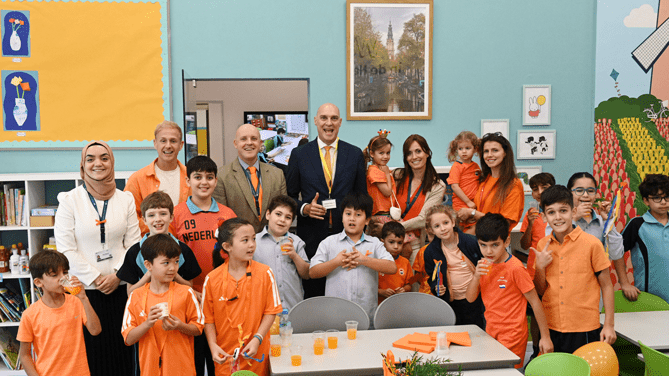
 Qatar’s only accredited Dutch school programme expands with a dedicated classroom at Compass
Qatar’s only accredited Dutch school programme expands with dedicated classroom at Compass International School Doha
News image ![Student Motivation and Learning |Nord Anglia Doha - Our Principal Featured in Education Middle East Magazine]() Blog | Featured | homepagefeaturedarticle
Blog | Featured | homepagefeaturedarticle
 Blog | Featured | homepagefeaturedarticle
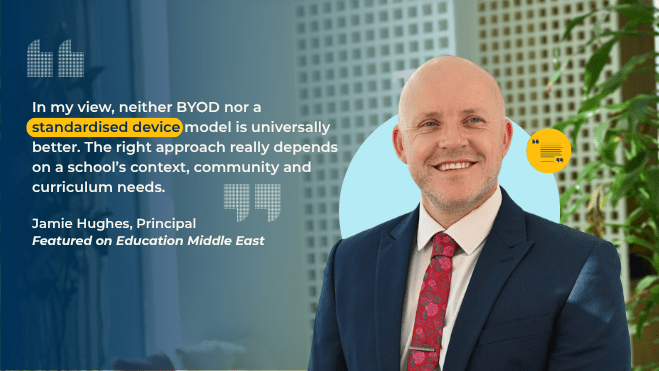
 Our Principal Featured in Education Middle East Magazine
We are proud to see Principal, Jamie Hughes, featured in the latest issue of Education Middle East magazine, contributing to an important regional discussion on BYOD policies and cybersecurity in schools. In the feature, Jamie shares Compass’ balanced approach to digital learning, highlighting how the school combines technology, safeguarding, and community values to create a safe and effective learning environment for students.
News image ![Mid-Year School Transfers | Compass Intl School Doha - Finding the right school for your child mid-year]() Blog | Featured
Blog | Featured
 Blog | Featured
 Finding the right school for your child mid-year
Changing schools mid-year can feel daunting, but sometimes it’s exactly what your child needs to thrive. From adjusting to a new environment to finding the right support and curriculum, a mid-year transfer comes with questions, worries, and opportunities. This guide helps parents explore their options, understand what to look for in a new school, and make a confident decision that puts their child’s growth, confidence, and wellbeing first.


