



We use cookies to improve your online experiences. To learn more and choose your cookies options, please refer to our cookie policy.
07 April, 2026
Is Your Child Ready for a World That Does Not Exist Yet
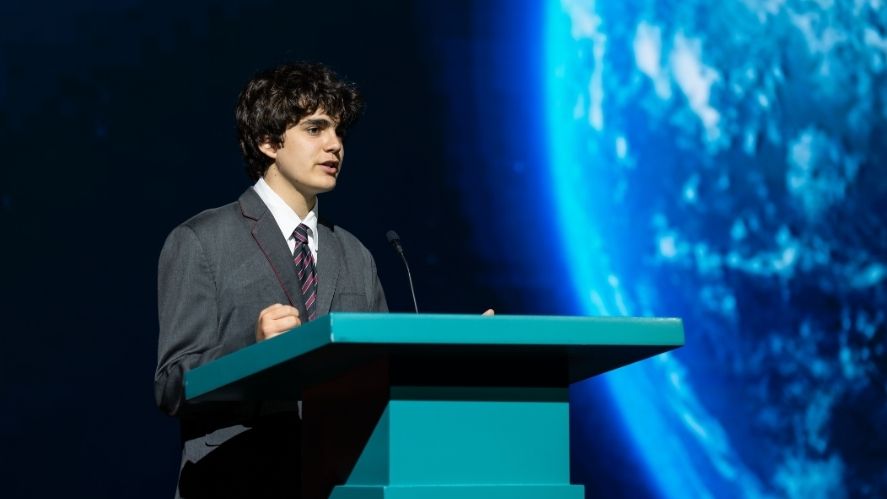
There is no denying that Artificial Intelligence is evolving at an extraordinary pace. What once felt futuristic is now part of everyday life, and each day brings new tools, possibilities, and questions about the world our children will grow up with.
As educators, this rapid change comes with responsibility. Schools can no longer focus solely on helping students keep up with the present; we must prepare them for a future that is still unfolding. At NAS Dubai, our role is not simply to adapt to change but to ensure our students are confident, curious, and capable of shaping it.
For parents, this raises an important question: How do you prepare your child for a world that is constantly changing?
At NAS Dubai, we strongly believe the answer lies in STEAM education. Not as a standalone subject, but as a way of thinking and responding to the world.
In 2026, access to information is no longer the challenge. With tools like ChatGPT and Google Gemini, students can find answers instantly. What truly matters now is how they think: how they ask questions, apply knowledge creatively, evaluate information critically and adapt ideas to new contexts. STEAM equips students to do exactly that, preparing them not just for exams but for lives and careers that do not yet exist.
More Than STEM: Why the ‘A’ Matters
You may already be familiar with the term STEM — Science, Technology, Engineering and Mathematics. These disciplines provide the technical foundations students need to understand the modern world and power many of today’s fastest-growing careers. However, research and global workforce trends tell us that technical knowledge alone is no longer enough.
At NAS Dubai, we place equal importance on the Arts, because this field is where innovation truly begins. The Arts bring creativity, ethics, design thinking and communication into the learning process. They allow students to move beyond “How does this work?” to ask deeper, human-centred questions like “Who is this for?” and “How could it be better?”
This matters because employers increasingly value skills that cannot be automated. According to the World Economic Forum’s Future of Jobs Report 2025, while demand for technical skills in AI and data continues to rise, creative thinking, resilience, adaptability and collaboration are among the fastest-growing skills worldwide.
By integrating the Arts into STEAM, students learn not only to solve problems but also to design solutions thoughtfully and with purpose, ethics and real-world impact. In a world increasingly shaped by automation, it is human creativity that sets individuals apart.
Why STEAM Matters Now More Than Ever
The pace of change facing today’s children is unprecedented. The World Economic Forum estimates that 65% of children entering primary school today will work in jobs that do not yet exist. Between now and 2030, global job disruption will affect around 22% of the workforce, with nearly 40% of core job skills expected to change. This reality fundamentally reshapes the role of education.
Rather than preparing students for a single, predictable career path, schools must prepare them to adapt, relearn and innovate throughout their lives. At NAS Dubai, STEAM education is designed to do exactly this.
Through interdisciplinary learning, students develop critical thinking, learn to approach challenges from multiple perspectives and gain confidence in navigating complexity. They are encouraged to test ideas, accept feedback, and view failure as a learning opportunity, thereby developing resilience in addition to academic knowledge.
These are the qualities universities and employers increasingly seek. Academic excellence remains important, but it is adaptability, creativity and problem-solving that make students future ready. STEAM ensures our students are not limited by what they know today but empowered by how they will learn tomorrow.
Learning That Evolves With Your Child
A key strength of STEAM education at NAS Dubai is that it grows alongside each student, developing with their confidence, curiosity and capability.
Primary Years: Curiosity Begins Here
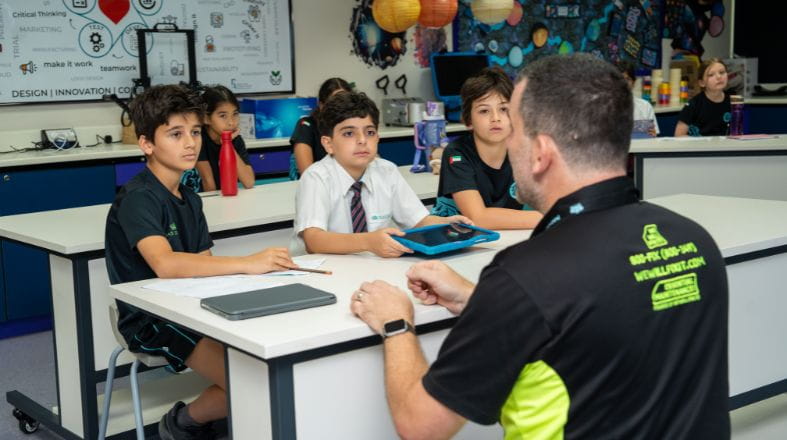
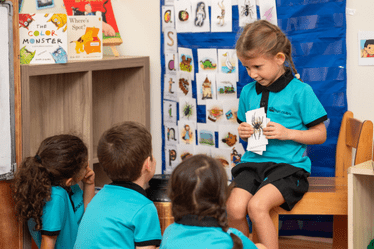
In our Primary years, STEAM starts with wonder. Through our DICE (Design, Innovation, Creativity and Enterprise) lessons, children are encouraged to explore, build and experiment. Whether they are constructing simple structures, identifying patterns through art or asking questions about how the world works, learning is hands-on and joyful.
At this stage, the focus is not on getting the “right” answer, but on nurturing curiosity and helping students see learning as something dynamic, creative and exciting.
Secondary Years: Innovation Takes Shape
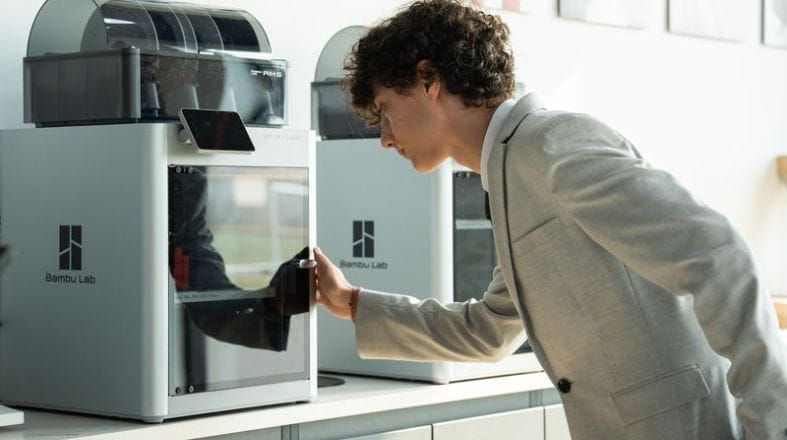
As students move into Secondary School, curiosity is channelled into structured innovation. Students begin working with advanced tools such as 3D modelling, engineering design processes and data analysis, applying their learning to real-world challenges.
Subject boundaries become increasingly fluid. A single project may combine scientific understanding, mathematical precision and creative design. Students learn that real-world problems are rarely confined to one discipline and that meaningful solutions require both logic and imagination.
A World-Class Edge: The MIT Collaboration
A defining feature of a Nord Anglia education is our collaboration with the Massachusetts Institute of Technology (MIT), which is one of the world’s leading institutions for science, technology and innovation.
Through this partnership, NAS Dubai students take part in global STEAM challenges developed by MIT specialists. These challenges invite students to explore themes such as sustainability, future cities and technological advancement, encouraging them to think far beyond the classroom.
What makes this experience especially powerful is its authenticity. Students are not working on hypothetical scenarios; they are grappling with real-world issues faced by communities and industries today. This fosters purpose and the realisation that their ideas can have impact beyond school.
From Classroom to Real-World Impact
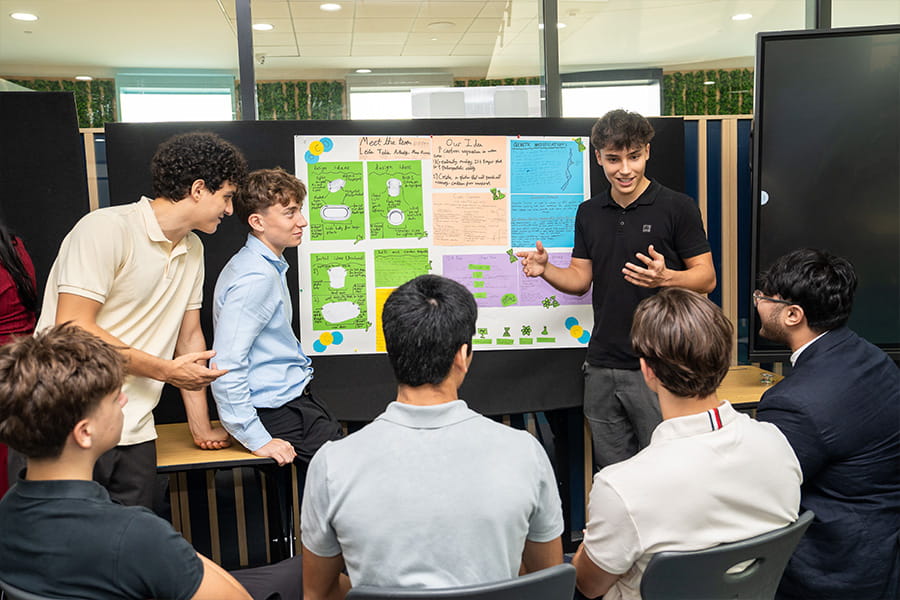
The true strength of STEAM education is best seen in the students it develops. At NAS Dubai, students are encouraged to take ownership of their ideas and turn them into action.
One inspiring example is Henry Heitmann (Year 11), who has been selected to take part in the MIT–Nord Anglia Student Trip this November, which is an extraordinary opportunity within the MIT–Nord Anglia STEAM Collaboration.
Henry will join 68 students from over 50 Nord Anglia schools worldwide for an immersive programme of workshops, lectures, campus tours and collaborative projects at MIT.
His project explored Climate-Smart Schools designed for cities experiencing extreme heat and high humidity. Drawing on MIT research, Henry proposed how educational institutions can adapt to future climate conditions using passive cooling techniques, advanced materials and data-driven systems.
The Future Starts Here
The world your child will graduate into will look very different from the one we know today. The challenges they face, and the opportunities they embrace, will demand more than academic knowledge alone.
They will require adaptability, creativity and confidence.
At NAS Dubai we are committed to delivering a world-class STEAM education that equips students not only to succeed in the future but also to lead within it. We are preparing them for a world that doesn’t yet exist and empowering them to help define it.
Related news
News image Blog | Homepage Featured Article | blog
Are UAE parents doing enough?
Why strong school-family partnerships help children thrive in the Year of the Family
News image ![Global Education Beyond the Classroom - Global Education Beyond the Classroom]() Blog | Homepage Featured Article | blog
Blog | Homepage Featured Article | blog
 Blog | Homepage Featured Article | blog
 Global education beyond the classroom why It matters for your child
What does it truly mean to be part of something bigger than yourself?
News image ![Professor Rose Luckin speaking with students during an AI and digital fluency panel discussion at Nord Anglia International School Dubai.]() News
News
 News
News Welcoming AI Expert Professor Rose Luckin to NAS Dubai: Why Responsible AI Education Matters for Families Today
Professor Rose Luckin visits Nord Anglia School Dubai to explore ethical AI in education, critical thinking, digital wellbeing, and how AI can enhance – not replace – learning.


