We use cookies to improve your online experiences. To learn more and choose your cookies options, please refer to our cookie policy.

11 November, 2026
What does losing teach your child that winning can’t?
You encourage your child to aim high, take chances, and give everything their best shot. Yet when they don’t quite achieve what they wanted to, you'd do almost anything to take away their disappointment.
How you help your child through these moments can shape their resilience and confidence.
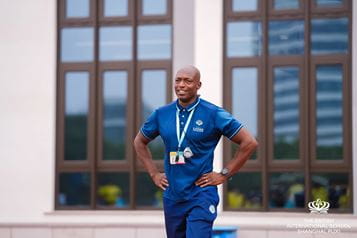
At British International School Shanghai, Puxi, Nord Anglia teacher and Olympic gold medallist Marlon Devonish MBE OLY knows both sides of success. What he learned on the track continues to shape his teaching.
Alongside insights from Nord Anglia educators and IMG Academy Mental Performance Coach Sloan Johnson, Marlon shares five ways to help your child learn from disappointment and find the courage to try again.
1. Don’t be afraid to let your child lose
"I lost far more races than I won," Marlon says.
Despite being an Olympic gold medallist, Marlon knows success rarely follows a straight path.
"Progress isn't linear. You can work incredibly hard and still not get the result you want."
He believes children need to experience disappointment rather than be protected from it. When their efforts fall short, asking what they could do differently next time helps them recognise that one setback doesn't define what they're capable of.
2. Make space for disappointment
When something goes wrong, it can be tempting to immediately reassure your child or offer solutions. Marlon believes it's often more helpful to listen first.
"Not achieving something today doesn't mean they're incapable of achieving it tomorrow."
For teachers, nurturing resilience means knowing when to step in, and when to give students room to find their own way forward.
Nick Haines, Head of Senior School at d'Overbroeck's, remembers a student who had always found learning relatively easy. When her Year 12 exam results fell below expectations, she was so disappointed that she talked about giving up school altogether.
Nick helped her understand that her results didn't define who she was. Her teachers still saw her as a determined, ambitious, and talented young person.
She went on to excel in her final exams.
At home, sometimes the most useful question for your child to ask isn't "Why didn't I succeed?" but "What can I learn from this?"
3. Focus on what they can control
In sprinting, the smallest margins can separate success from disappointment. At the Olympics, four years of preparation can come down to one performance.
"You can't always control the outcome. You can control how you prepare, how you respond, and what you learn."
For your child, that might mean looking beyond a mark to understand where they could improve. Perhaps a different approach to revision, more practice, or a conversation with their teacher could make all the difference.
Marlon encourages parents to focus on what their child can influence. Did they prepare effectively? What went well? What would they change next time?
The result can't be changed, but what they do next is still in their hands.
4. Growth starts outside their comfort zone
Even as an Olympic sprinter, Marlon felt more confident competing in the 200 metres than the 100 metres.
He knows that stepping outside your comfort zone can feel uncomfortable, even when you're experienced. But avoiding what you find difficult can also mean missing opportunities to improve.
Sloan Johnson, Mental Performance Coach at IMG Academy, shares this perspective. IMG Academy is one of Nord Anglia’s global partnerships, helping students build their confidence, resilience, and physical and mental wellbeing through sport.
“I’ve learned that it’s easy to feel confident when you’re doing something you already know you’re good at. But where’s the growth in that? After all, confidence isn't always a prerequisite for trying something difficult. It's often the result of doing it.”
It’s a lesson that extends well beyond sport. A child who once hesitated to contribute in class begins sharing their ideas, while another who struggled with a difficult subject starts attempting questions independently.
5. Celebrate the courage to try again
One of the things Marlon enjoys most about teaching is seeing students recognise their own progress.
With encouragement and practice, a child who once said, "I can't do this at all," begins to say "I just did it!" or even "How can I get even better at this?"
Julia Wadsworth, Music Department Chair at North Broward Preparatory School, encourages students to see disappointment as part of learning.
"When a student feels disappointed with a result, I try to remind them that disappointment is a great indicator of caring. It reveals what we value, what matters to us, and ultimately, what we want to work towards."
For parents, recognising the effort it takes to try again can be just as important as celebrating success. When your child returns to a difficult piece of music or asks for help after a disappointing test, take time to acknowledge their determination.
It's something Marlon believes strongly, too.
“For me, resilience isn't always demonstrated by the child who wins. Sometimes it's demonstrated most clearly by the child who finds the courage to try again.”
Discover your child’s potential
At Nord Anglia Education, we believe every child has the potential to achieve more than they thought possible.
Find a Nord Anglia school that’s right for your child.
Related news
News image ![Nord Anglia’s Oakridge schools recognised among India’s best in EducationWorld rankings - Oakridge schools ranked best in India rankings]() Press Releases | In the Media
 Press Releases | In the Media
Nord Anglia’s Oakridge schools recognised among India’s best in EducationWorld rankings
All five Oakridge International Schools have secured leading positions in the EducationWorld India School Rankings 2026-27, with Oakridge Visakhapatnam ranked among India's top 10 International Day/Boarding Schools.
News image ![Nord Anglia schools rated among best in America in latest Niche school rankings - Nord Anglia schools rated among best in America in latest Niche school rankings]() Press Releases | Group News | Featured
 Press Releases | Group News | Featured
Nord Anglia schools rated among best in America in latest Niche school rankings
Nord Anglia’s US schools achieved outstanding results in Niche’s 2027 rankings, with two schools ranked among America’s top 11 private K-12 schools and 10 schools earning Niche’s highest A+ rating.
News image ![IBDP and A Levels: Which pathway best suits your child? - IBDP and A Levels]() Blog | Parent Advice
 Blog | Parent Advice
IBDP and A Levels: Which pathway best suits your child?
IB Diploma Programme or A Levels? Here’s a guide to choosing the right pathway for your child.
News image ![A Day in the Life at Boarding School: How Stimulating Environments Shape Confident Students - A Day in the Life at Boarding School]() Press Releases | Parent Advice | School Activities | Student Stories
 Press Releases | Parent Advice | School Activities | Student Stories
A Day in the Life at Boarding School: How Stimulating Environments Shape Confident Students
What does a full day in a vibrant boarding school community really look like? From early-morning training sessions to evening study halls, life at a Nord Anglia Education school is shaped by opportunity, independence, and the support of a close-knit residential team.