Why Wellbeing Matters More at International Schools
Children at international schools in Warsaw often face pressures that their peers at national schools do not. Many are learning in a second or third language. Some have moved country recently and are navigating a new city, a new social environment, and a new school all at once. Others are managing the academic demands of internationally recognised qualifications like the IGCSE or IB Diploma alongside the ordinary challenges of growing up.
Research consistently shows that strong relationships and a sense of belonging at school support both student wellbeing and academic outcomes. An updated meta-analysis by Korpershoek et al. (2025), published in the Review of Educational Research, found small but significant positive effects of classroom management interventions on students' academic, behavioural, and social-emotional outcomes across 76 studies. This makes the quality of pastoral care at an international school not a secondary consideration but a primary one.
What Good Pastoral Care Looks Like Day to Day
Pastoral care is not a department. It is a culture. At schools where it works well, it shows up in small details as much as large ones. Teachers who notice when a student is quieter than usual. Form tutors who know enough about each child to ask the right question at the right moment. A school counsellor who students feel comfortable approaching before things become serious, not only after.
At The British School Warsaw, pastoral care runs through every stage of the school from Early Years through to Year 13. Every student has a form tutor who takes responsibility for their overall experience at school, not only their academic progress. The school also has a dedicated school counsellor and access to a psychologist, available to students and families throughout the year.
The pastoral team communicates proactively with families rather than waiting untilconcernsarise. For parents who are new to Warsaw and still building their local support network, the reassurance of knowing that the school is attentive, engaged, and in regular contact can make a significant difference.
Settling In: The First Term
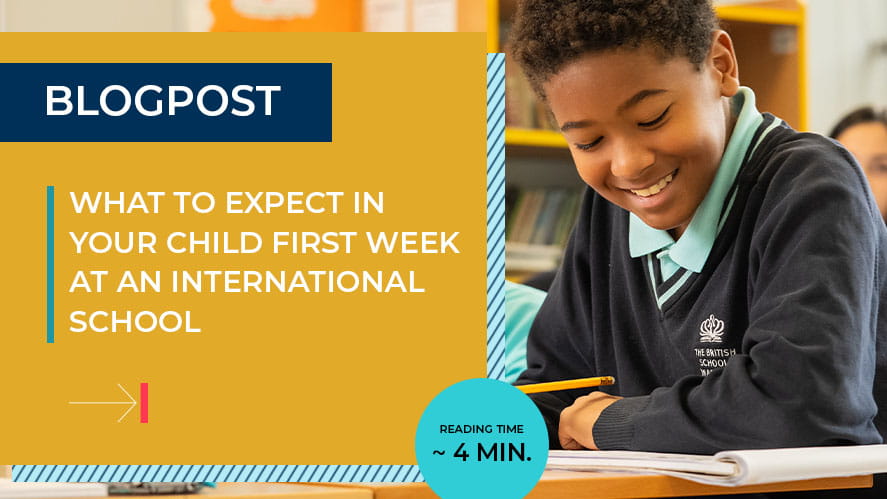
The first term at a new school is the period when pastoral care matters most and when the difference between schools becomes most visible. Children who are new to TBS Warsaw, whether they are joining from another country or transferring from a local school, go through a structured induction process designed to give them the practical knowledge and the human connections they need to feel settled quickly.
New students at primary level are paired with a buddy from an existing class from day one. At secondary level, form tutors make deliberate introductions and monitor the social integration of new students closely in the opening weeks. The admissions team passes detailed information to the teaching team before a new student arrives, so that the child's teachers already know their background, their language situation, and anything the family has flagged as important.
Language, Identity, and Belonging
For many students at international schools in Warsaw, wellbeing and language are closely connected. A child who is not yet confident in English, or who feels that their home language and culture are not valued at school, is a child who is less likely to feel that they belong. Belonging, as the research shows, is foundational to everything else.
At TBS Warsaw, the EAL programme supports students who are developing English as an additional language with structured, individualised support from specialist teachers. In parallel, the school's multilingual community means that students who speak Polish, French, German, Spanish, or any number of other languages at home do not feel alone. The international environment is the norm, and that normalisation matters for how children feel about themselves.
Mental Health Support
Schools are increasingly the first place where mental health challenges in young people become visible, and a good international school takes that responsibility seriously. At TBS Warsaw, mental health support is available through the school counsellor, who works with students experiencing anxiety, stress, social difficulties, and the challenges of transition.
The support is designed to be accessible and preventative, helping students before challenges become more serious. Students do not need to be in crisis to seek help. The counsellor is a familiar and approachable member of the school community, ready to listen whenever students need someone to talk to. For families who want to understand more about how TBS Warsaw approaches mental health, our article on the importance of mental health at school covers this in more detail.
What to Ask When You Visit
When you visit an international school in Warsaw, take the opportunity to ask about pastoral care directly. A few useful questions:
Wellbeing Is Not Separate From Learning
The most important thing to understand about student wellbeing at a good international school is that it is not separate from academic life. It is the condition that makes academic life possible. A child who feels known, supported, and safe at school is a child who can take intellectual risks, ask questions, form friendships, and grow into the kind of confident, curious person that an international education is designed to produce.
At TBS Warsaw, wellbeing is built into the structure of the school day, the relationships between staff and students, and the culture that families join when they enrol. It is not a programme running alongside the school. It is how the school runs.
Bibliography:
Korpershoek, H., de Boer, H., & Mouw, J. M. (2025). An update of the meta-analysis of the effects of classroom management interventions on students' academic, behavioral, social-emotional, and motivational outcomes. Review of Educational Research. Advance online publication. https://doi.org/10.3102/00346543251361903