.jpg?h=3648&iar=0&w=5472&rev=79fae92f9b044e3d856ef3e8675d9941&hash=B5C31C95C1E87EB5ECC623033BE67DD9 "Year 12 British International School Abu Dhabi Student Tanvi Published in IJSR for Microbiota‑Gut‑Brain Research")
We use cookies to improve your online experiences. To learn more and choose your cookies options, please refer to our cookie policy.

11 April, 2026
Student Excellence at BIS Abu Dhabi: Tanvi Published in the International Journal of Scientific Research (IJSR)
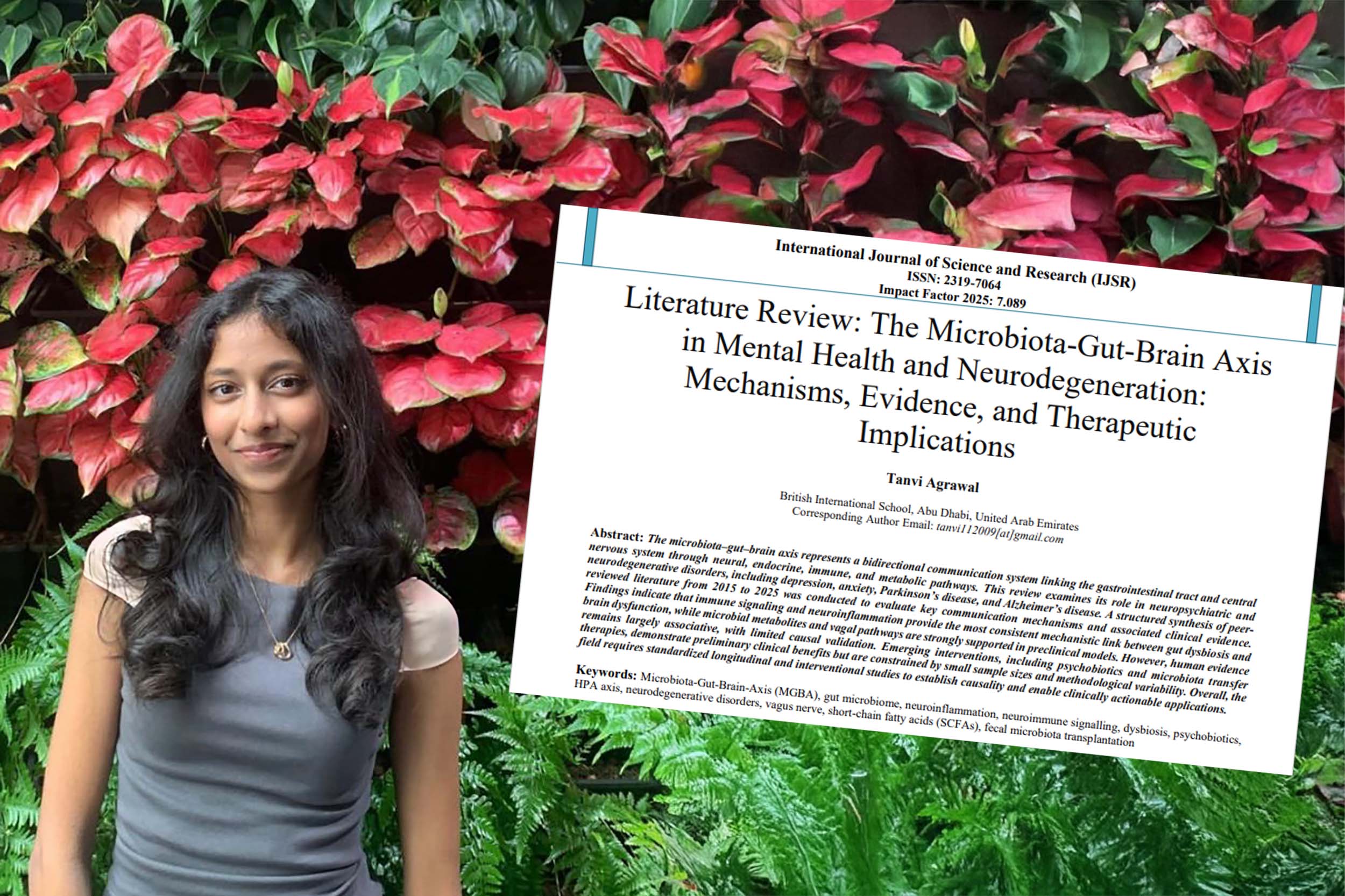
We are incredibly proud to celebrate the outstanding academic achievement of Tanvi, a Year 12 student at The British International School Abu Dhabi, whose literature review has been published in the International Journal of Scientific Research (IJSR), a globally recognised, peer-reviewed journal that publishes high-quality research across a wide range of academic disciplines.
Tanvi’s publication can be read here: Literature Review: The Microbiota-Gut-Brain Axis in Mental Health and Neurodegeneration: Mechanisms, Evidence, and Therapeutic Implications
Tanvi has made an exceptional impact through her academic curiosity, dedication, and commitment to independent research. Her research paper, which explores the relationship between the mind, gut and brain, was accepted following a rigorous review process, an achievement rarely reached at school level. In recognition of her dedication, originality and academic excellence, Tanvi received a Headteacher’s Commendation Award.
We spoke to Tanvi about what inspired her research journey, the challenges she overcame, and her advice for students interested in academic writing.
Q&A with Tanvi
What sparked your interest in this topic and led you to undertake this literature review?
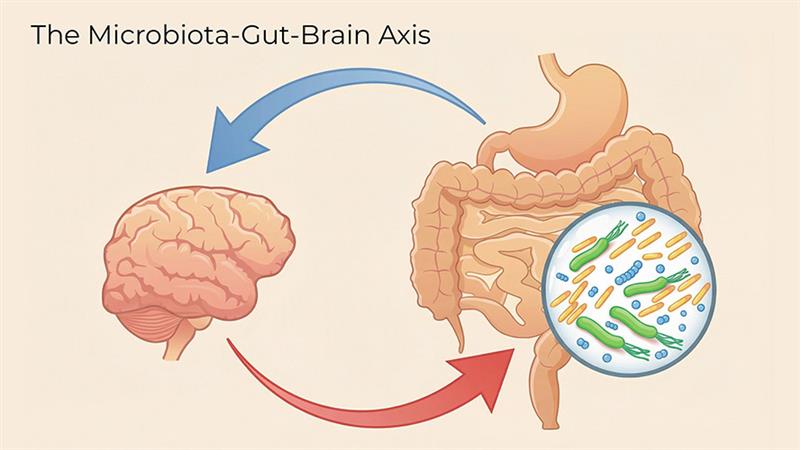
In Year 11, I came across a book called The MindGut Connection by Dr. Emeran Mayer. It explores the constant communication between our mind and gut, including the idea of a “second brain”, something I had never heard about before.
Before I knew it, I was spending most of my time on PubMed and ScienceDirect, pasting interesting information into my notes app. One thing led to another, and I decided to use my passion and the months of knowledge I had collected to create a comprehensive paper that synthesises existing research and presents it in one accessible, organised piece.
Was this research completed as part of your Biology studies?
While our curriculum is already diverse, this research project extended well beyond my Biology studies. I wanted to explore something beyond the textbook, to pursue a topic I was truly passionate about and take my learning further independently.
How did it feel when you found out your work had been accepted and published?
To be very honest, my first reaction was one of immense relief rather than happiness. Months of tedious work, learning how to review heavy scientific literature, shaping information into an original piece, and making countless last minute edits, had all led to that single moment.
It’s only later, when the realisation set in that my work had actually been published, that I felt truly happy and very much in the mood for celebration!
What did you find most challenging, or most rewarding, about the process?
The most challenging part was definitely starting the writing process and staying committed to it. After reading endless research papers and collecting information, writing felt like the biggest hurdle, I remember procrastinating over my introduction for days.
Balancing everything with schoolwork was difficult, and there were times when it felt like the end was never in sight. But I’ve learnt so much through the process, and I think those difficult moments made the final outcome even more rewarding.
How has this experience influenced your future ambitions?
I was already quite certain that I wanted to become a doctor, but this journey deepened my passion for neuroscience and gut microbiology in particular. It made me realise just how invested I am in science and medicine, and it has made my path forward clearer than ever.
.png?rev=eb610d1ae54747809ed770f08c6b4d5b&hash=2066142D419AD2FBA9FB2D636C618E1D)
What advice would you give to other students interested in research or academic writing?
My biggest piece of advice is not to wait until you feel “ready”, because you never fully will be! When I started, I had no idea how peer-reviewed literature worked or how to structure an academic paper. The only way to learn is to begin.
It’s easy to feel intimidated by the formal nature of academic writing, but starting with a topic you genuinely enjoy makes all the difference. Passion really carries you through the more challenging moments. I also recommend keeping a running note of anything interesting you come across, much of my literature review was built from snippets I had saved long before I even considered writing a paper.
A Remarkable Achievement
Tanvi’s accomplishment is a powerful example of what can be achieved when curiosity, commitment, and academic ambition come together. Her work was praised by staff for both its depth and originality, and her Biology teacher Dr. Lyndsay McDowell described the publication as “an immense achievement”, highlighting her potential in the field of medical science.
We congratulate Tanvi on this exceptional milestone and look forward to following her journey as she continues to pursue her passion for research and medicine.
Related news
News image  News | School News | Secondary | Student Achievement
 News | School News | Secondary | Student Achievement
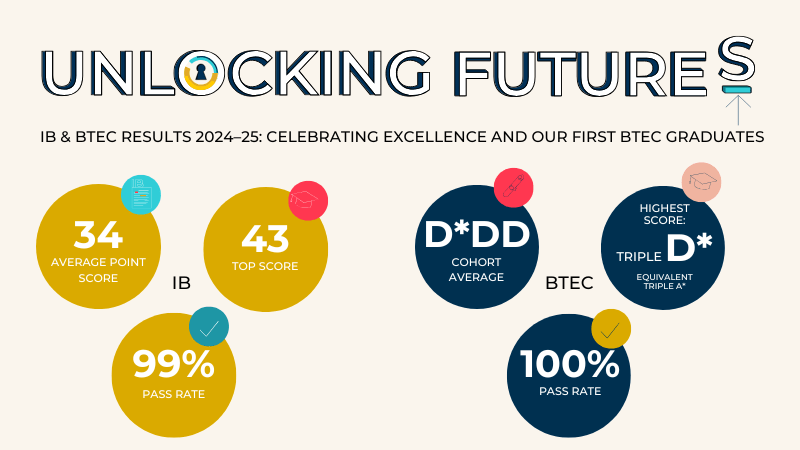
 Exceptional IB and BTEC Results at BIS Abu Dhabi
We’re proud to share that students at The British International School Abu Dhabi are celebrating another year of outstanding success in the IB Diploma Programme, as well as a landmark achievement with our first ever BTEC International Level 3 Extended Diploma results for the 2024/25 academic year. Read on to discover how our students excelled in both academic and vocational pathways, and what exciting opportunities lie ahead.
News image  News | Secondary | Student Achievement | Choosing A School
 News | Secondary | Student Achievement | Choosing A School
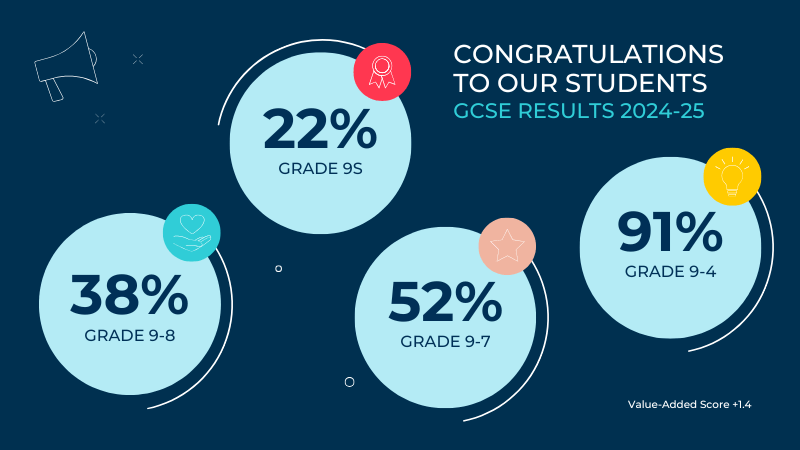
 Academic Excellence Continues at BIS Abu Dhabi with Outstanding GCSE Results
We are proud to celebrate another year of outstanding GCSE results at The British International School Abu Dhabi. Our students have once again demonstrated exceptional academic achievement and remarkable personal growth, continuing a strong trend of year-on-year improvement. Discover the stories behind the success in the full article.
News image ![Celebrating Outstanding Achievements in Academics and Science - Celebrating Outstanding Achievements in Academics and Science]() News | School News | Secondary | Student Achievement
News | School News | Secondary | Student Achievement
 News | School News | Secondary | Student Achievement
 Celebrating Outstanding Achievements in Academics and Science
We are delighted to celebrate the exceptional accomplishments of our students in academics, showcasing their dedication, talent, and passion for learning.
News image  News | Choosing A School | Global News | School News | Student Achievement | Secondary
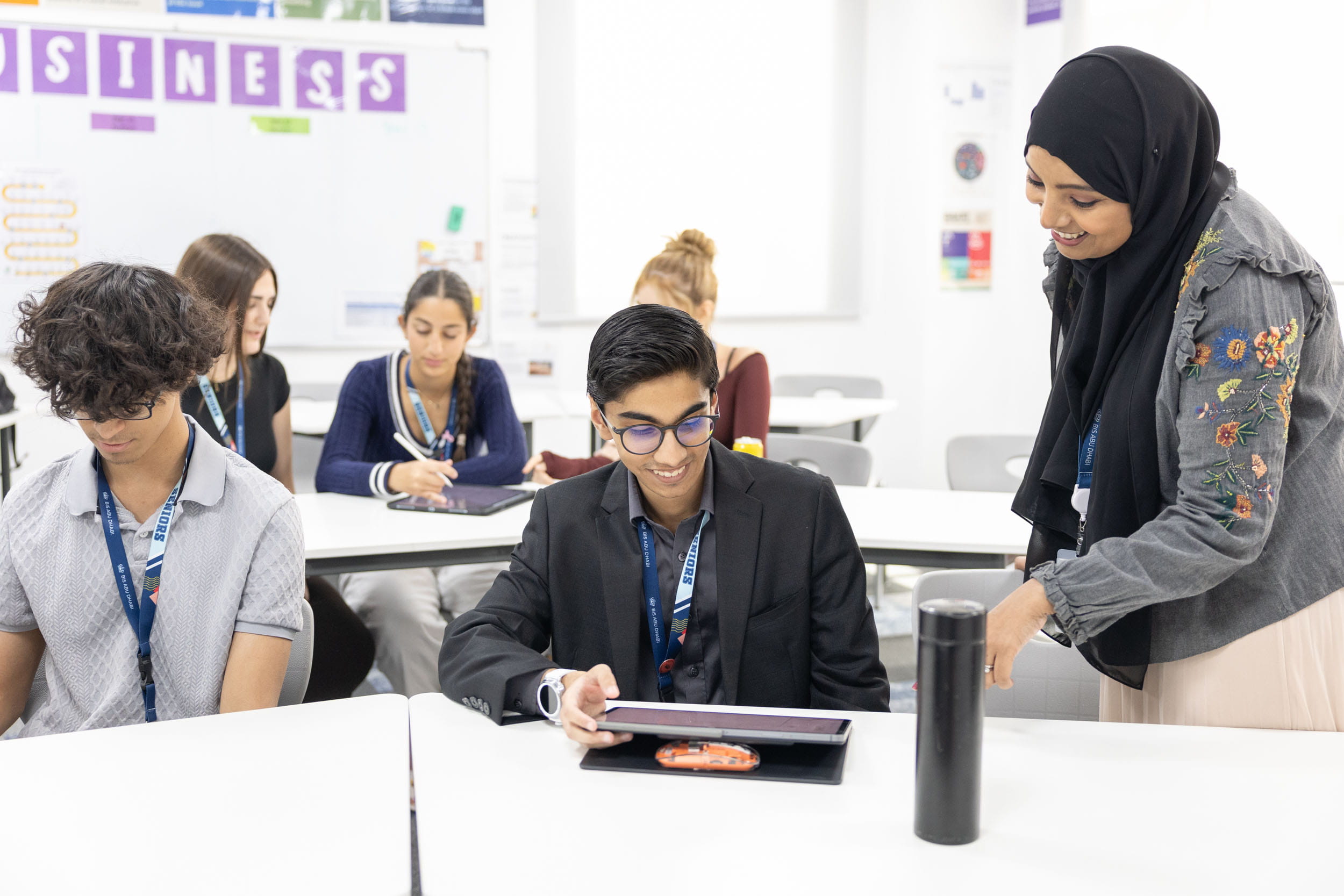 News | Choosing A School | Global News | School News | Student Achievement | Secondary
 Wadeed's Resilience and Confidence in Business Studies Earn Global Recognition
For Wadeed, Year 12, a quiet confidence and love for Business Studies have led to something extraordinary. This year, he achieved the highest grade in the world for the 2025 IGCSE Business Studies exam, scoring an incredible 149 out of 160. But behind the headline is a story of growth, resilience, and the power of great teaching.
News image  Blog | Nord Anglia Education | Secondary | Student Achievement
 Blog | Nord Anglia Education | Secondary | Student Achievement
 BIS Abu Dhabi and MIT: A Global Collaboration
As part of Nord Anglia Education’s exclusive partnership with the Massachusetts Institute of Technology (MIT), BIS Abu Dhabi students gain access to world-class STEAM learning experiences that inspire creativity, problem-solving, and innovation. Continue reading to see how Year 12 student Sai turned this opportunity into a life-changing experience!
News image  Blog | Nord Anglia Education | Advice and Guidance | Educational Insights | Student Achievement
 Blog | Nord Anglia Education | Advice and Guidance | Educational Insights | Student Achievement
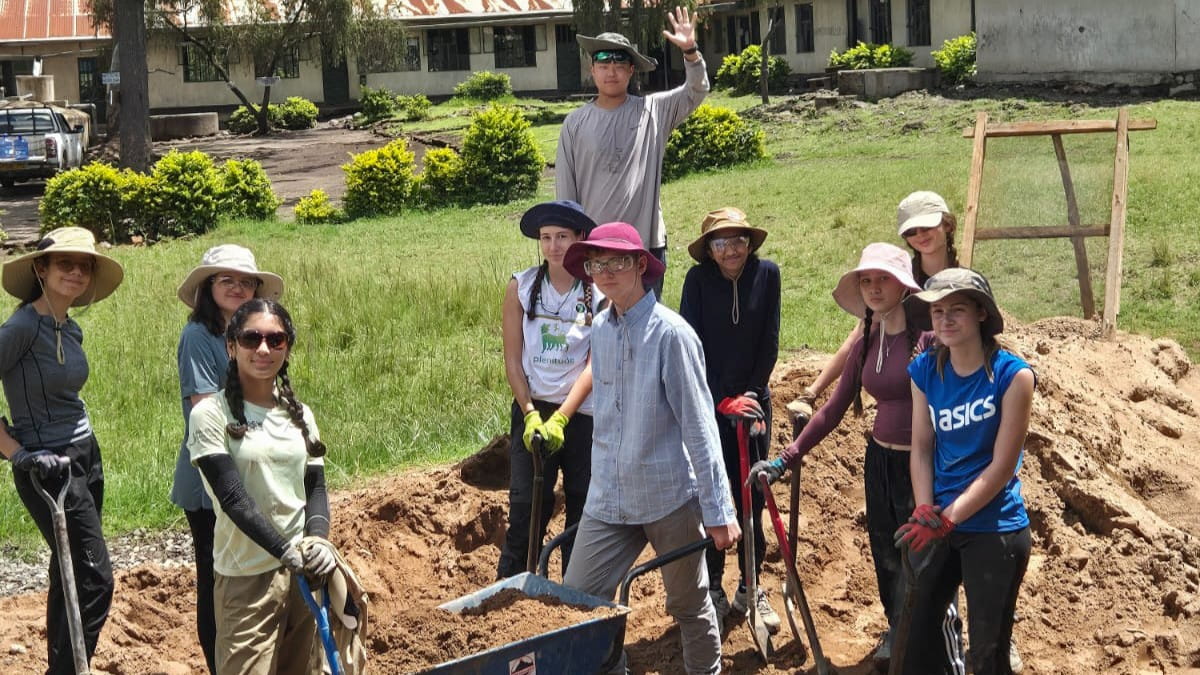
 Building Future Leaders with Purpose and Global Responsibility
Every learner has the power to shape a better tomorrow. Education is more than academics, it’s about preparing students to lead with confidence, compassion, and purpose in a fast-changing world. Discover how BIS Abu Dhabi empowers students through global partnerships, sustainability projects, and leadership opportunities that make a real impact locally and globally.
News image  Blog | Alumni Stories | Student Achievement | Choosing A School
 Blog | Alumni Stories | Student Achievement | Choosing A School
 Karolina’s Journey from BIS Abu Dhabi to Top European Film School
Every student has a curiosity or talent that makes them shine. For BIS Abu Dhabi graduate Karolina, her love for theatre grew into a clear sense of direction. Follow her journey from the school stage to one of Europe’s top film schools, and discover how our supportive environment and global collaborations help students turn passion into a future pathway.
.png?rev=1619813b30a347d9bc71977e2cfe09d2&hash=66B98CDC659BBF07EB36660B4381E1E7)