


We use cookies to improve your online experiences. To learn more and choose your cookies options, please refer to our cookie policy.
20 November, 2026
How does the IB Diploma Programme prepare students for university?

Choosing the right educational pathway for the final years of secondary school is about more than earning a qualification. Students also need to discover their interests, develop independent learning skills and build the confidence to succeed in higher education.
The International Baccalaureate Diploma Programme (IBDP) is widely recognised for preparing students for university through a combination of academic challenge, personal development and international perspectives. But what are the key benefits of IBDP, and how does the programme prepare students for university and beyond?
1. Exploring academic interests and university pathways
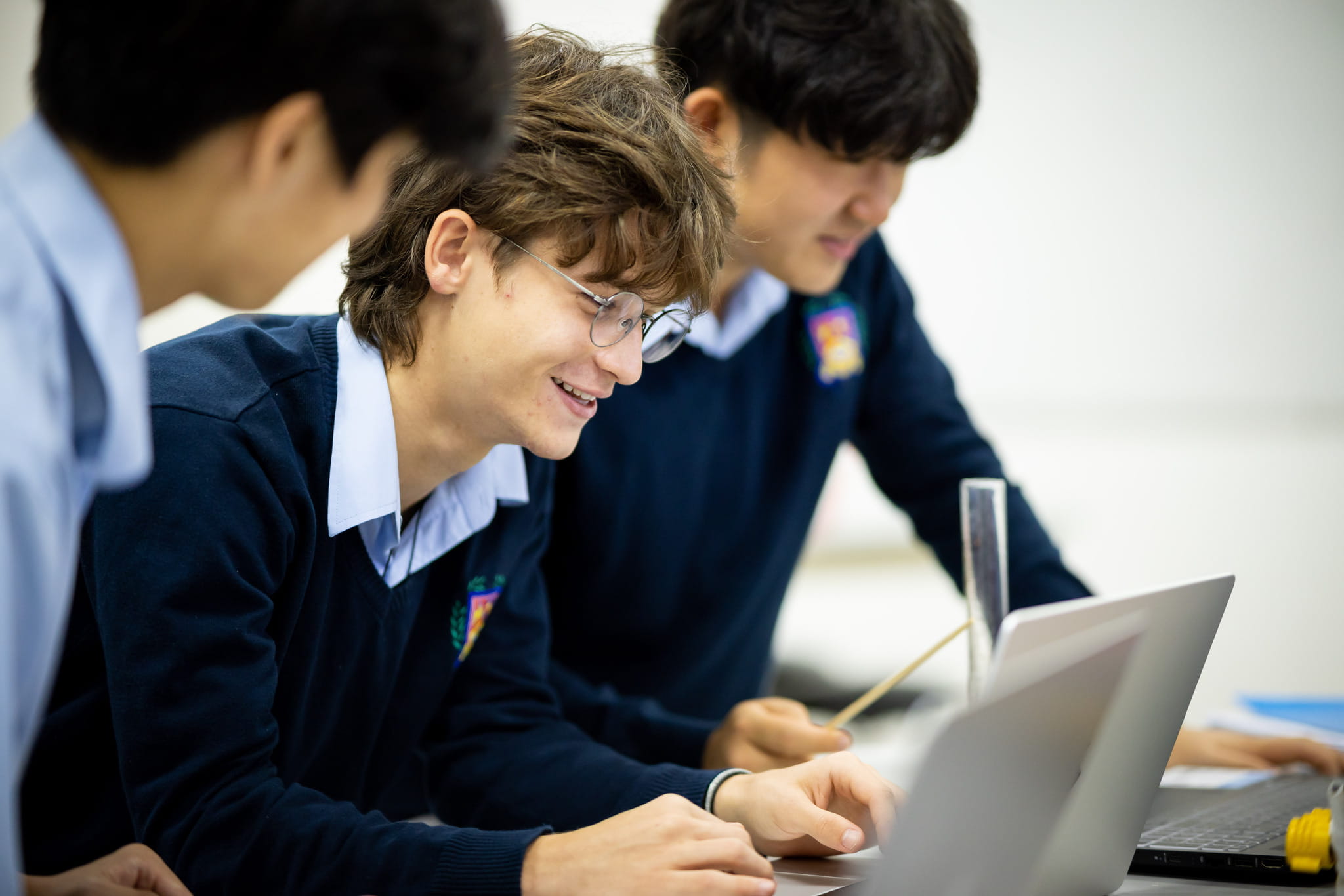
One of the key benefits of IBDP is its balance of subject breadth and depth. Students study six subjects across languages, sciences, mathematics, individuals and societies, and the arts. They can specialise in areas of interest through Higher Level subjects while maintaining a broad academic foundation. This gives students the opportunity to explore different disciplines before deciding what they want to study at university. It can help them recognise their strengths, discover new interests and make more informed choices about their future major.
"The beauty of our curriculum at BIS Hanoi is that it's both broad and deep, particularly in the IGCSE and IBDP years. Students build strong foundations in areas like mathematics, science and languages, while also having the opportunity to specialise in subjects they're passionate about. Because of that breadth, they can keep their options open and pivot as their interests and ambitions evolve over time.", Lee Falconer, Head of Secondary shared.
2. Developing academic and transferable skills
The IBDP is academically rigorous, but its value goes beyond subject knowledge. It helps students develop the skills and habits needed to manage the demands of university.
Through its three core components, the IBDP develops a range of skills that prepare students for university. Theory of Knowledge (TOK) encourages critical thinking by challenging students to question assumptions, evaluate evidence and consider different perspectives. Through the Extended Essay (EE), students undertake an independent research project of up to 4,000 words, strengthening their research, analysis and academic writing skills. Meanwhile, Creativity, Activity, Service (CAS) encourages students to explore creative interests, maintain physical wellbeing and contribute to their communities, developing compassion, resilience and a sense of responsibility.
Students also learn to manage internal assessments, coursework and overlapping deadlines across six subjects. Planning their workload and taking responsibility for their progress helps build time-management and self-management skills, developing students into independent learners.

"Looking back, I think the structure and the strictness about submitting deadlines on time, not having second chances, taking accountability and responsibility for your work and your work ethics really prepares me and reinforces my discipline", said Gia Khanh, BIS Hanoi Class of 2026.
A study by the University of Oxford's Centre for Educational Assessment, examining students in Australia, England and Norway, found that IB Diploma students demonstrated significantly higher critical-thinking skills than comparable non-IB students. The advantage also increased over the course of the programme.
Another research found that former DP students at the University of Oregon's Honors College were more likely to persist and complete university. Students also identified time management, critical thinking, problem-solving and research as skills that helped them succeed in their studies.
3. Building the IB learner profile for university and beyond
The IB Learner Profile is at the heart of an IB education. It encourages students to become inquirers, knowledgeable, thinkers, communicators, principled, open-minded, caring, risk-takers, balanced and reflective. These ten attributes help students develop qualities that are valuable in higher education and beyond.
Universities expect students to do more than perform well academically: they must be able to research independently, communicate ideas, collaborate with others, adapt to new challenges and engage with different perspectives.
The Learner Profile supports these qualities. For example, being an inquirer encourages curiosity and independent research; being open-minded helps students engage with diverse viewpoints; and being reflective helps them learn from challenges and take responsibility for their development.
Research involving 845 alumni from three leading Asia-Pacific universities found that DP graduates reported stronger capacities in a range of 21st-century skills than their non-DP peers. They also highlighted the programme's contribution to their ability to participate in discussions, collaborate in group work and communicate effectively.
How does BIS Hanoi prepare students for university?
The quality of the IBDP experience depends on more than the curriculum. Innovative teaching, personalised guidance and opportunities beyond the classroom all contribute to students' development.
At British International School Hanoi (BIS Hanoi), students learn from experienced teachers who bring international expertise and subject knowledge into the classroom. Learning is further enriched through Nord Anglia Education's collaborations with organisations including MIT, The Juilliard School and IMG Academy, giving students opportunities to explore STEAM, the performing arts and sports beyond their core academic subjects.
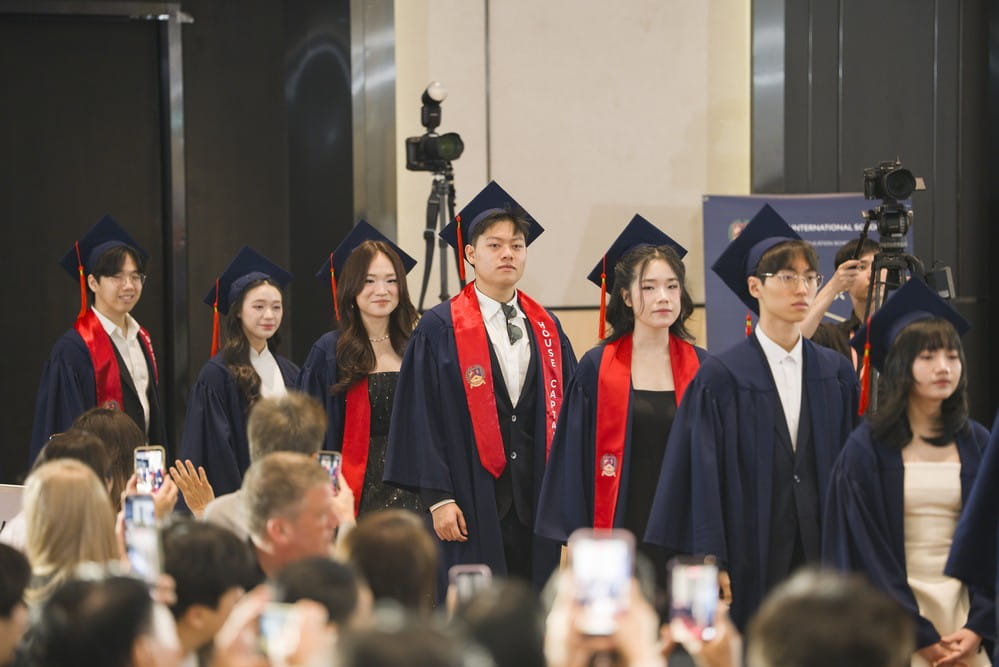
The school's academic results reflect its commitment to high-quality teaching and student achievement. In 2026, BIS Hanoi students achieved an average IBDP score of 35.15, compared with the global average of 30.88. This marked the ninth consecutive year that the school's average exceeded the global average. Around one in seven students achieved 40 points or more, while two students earned the maximum score of 45 points. The cohort also achieved a school-record average of 1.92 Core Points.
These achievements are matched by international university pathways. BIS Hanoi graduates have received offers from universities worldwide, including leading institutions such as Yale University, the University of Cambridge, UCL, KAIST and the National University of Singapore (NUS).
At BIS Hanoi, students are supported throughout this journey, developing the knowledge, skills and confidence to pursue their ambitions at universities around the world. To learn more about studying the IBDP at BIS Hanoi, visit our website or book a campus visit to meet our academic team and discover how we support students on their journey to university and beyond.
Related news
News image ![BIS Hanoi celebrates His Majesty The King's Birthday in Hanoi | British International School in Hanoi - BIS Hanoi Celebrates His Majesty The King Birthday in Hanoi]() News
 News
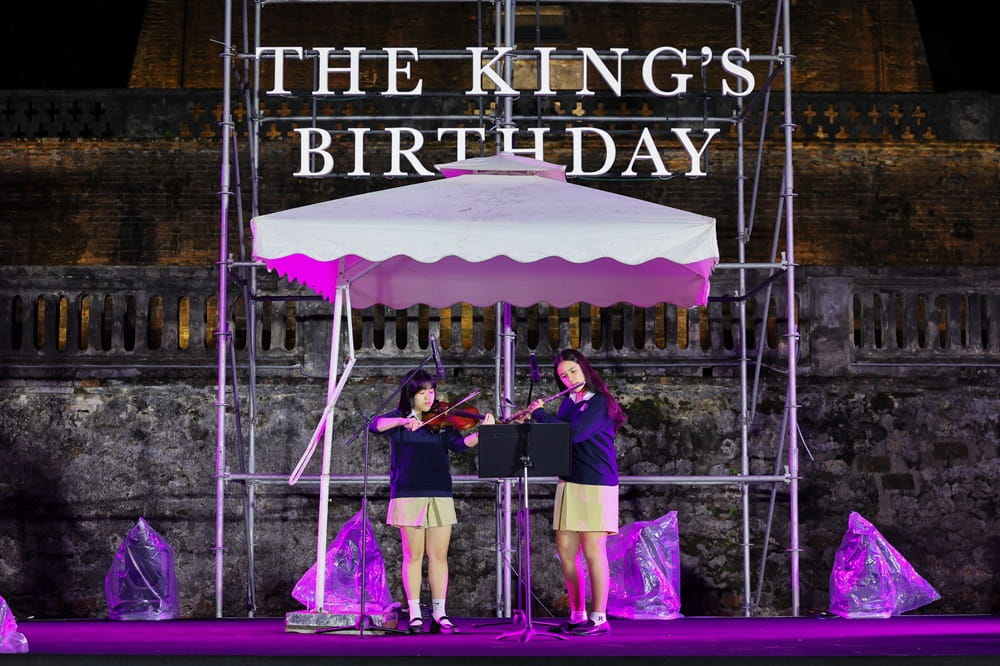
BIS Hanoi celebrates His Majesty The King's Birthday in Hanoi
BIS Hanoi was delighted to take part in the British Embassy's annual King's Birthday Party, held at the iconic Hanoi Flag Tower in celebration of the 78th birthday of His Majesty King Charles III.
News image ![BIS Hanoi mathematicians bring home gold and silver at UKMT Team Maths Challenge 2026 | British International School Hanoi - BIS Hanoi Mathematicians Bring Home Gold and Silver at UKMT Team Maths Challenge 2026]() News
 News
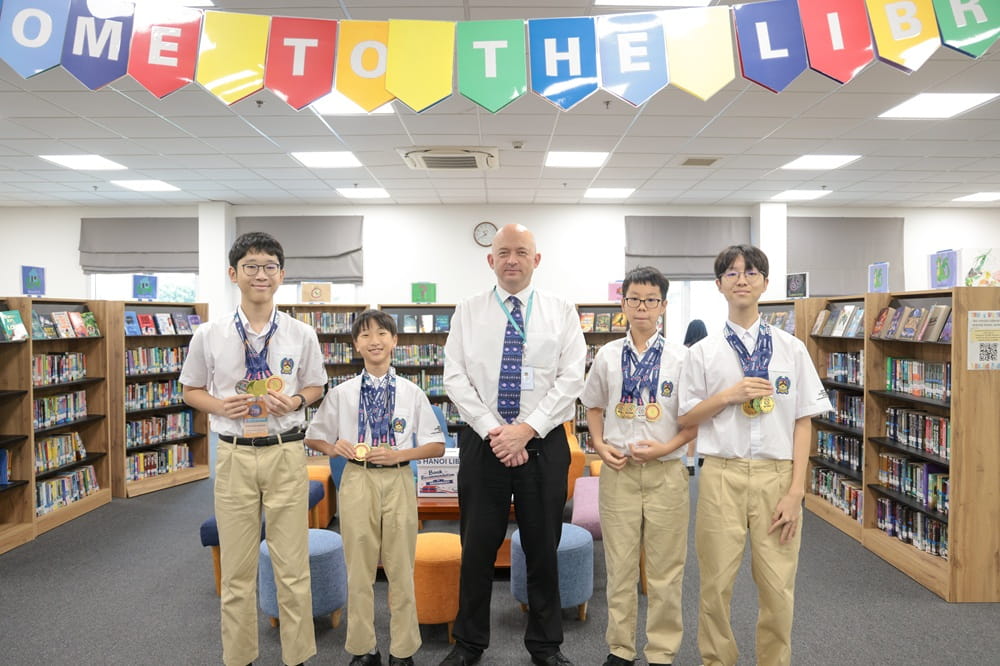
BIS Hanoi mathematicians bring home gold and silver at UKMT Team Maths Challenge 2026
BIS Hanoi is proud to celebrate the outstanding achievements of our students at the UKMT Team Maths Challenge (TMC) 2026, where they competed against some of the strongest mathematics teams from 13 countries across Asia.
News image ![BIS Hanoi student receives International Recognition in the John Locke Essay Competition 2026 | British International School in Hanoi - BIS Hanoi student receives International Recognition in the John Locke Essay Competition 2026]() News
 News
BIS Hanoi student receives International Recognition in the John Locke Essay Competition 2026
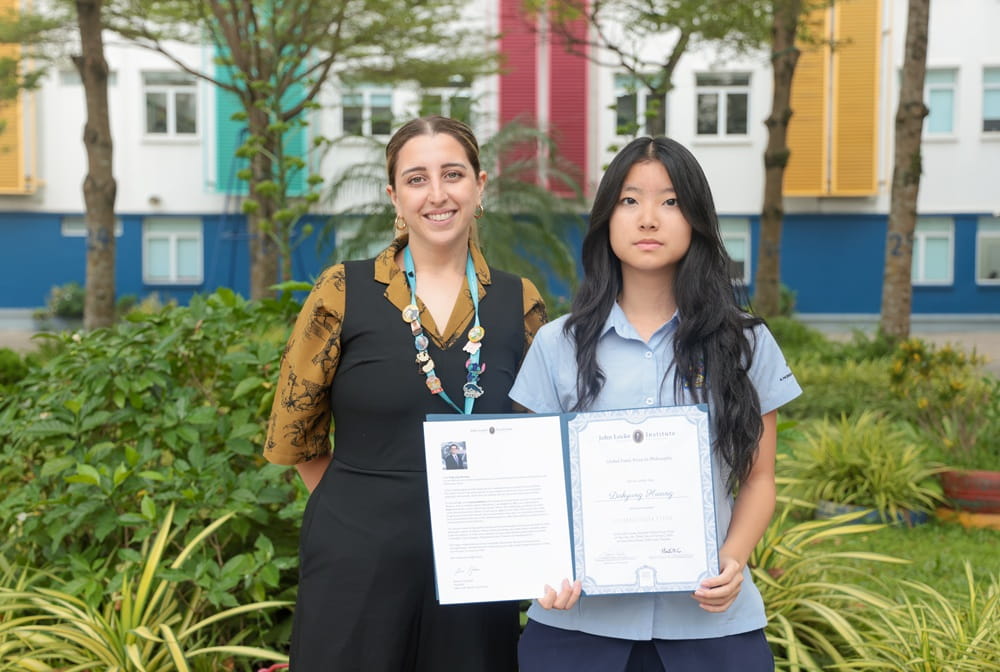
BIS Hanoi is proud to celebrate the achievement of Dakyung (Year 12), who has been awarded a Commendation in the Global Philosophy Essay Prize category of the John Locke Essay Competition 2026.
News image ![BIS Hanoi celebrates scholar’s evening 2026-2027 | British International School Hanoi - BIS Hanoi Celebrates Scholar Evening 2026 2027]() News | Student Work and Success
 News | Student Work and Success
BIS Hanoi celebrates Scholar’s Evening 2026-2027
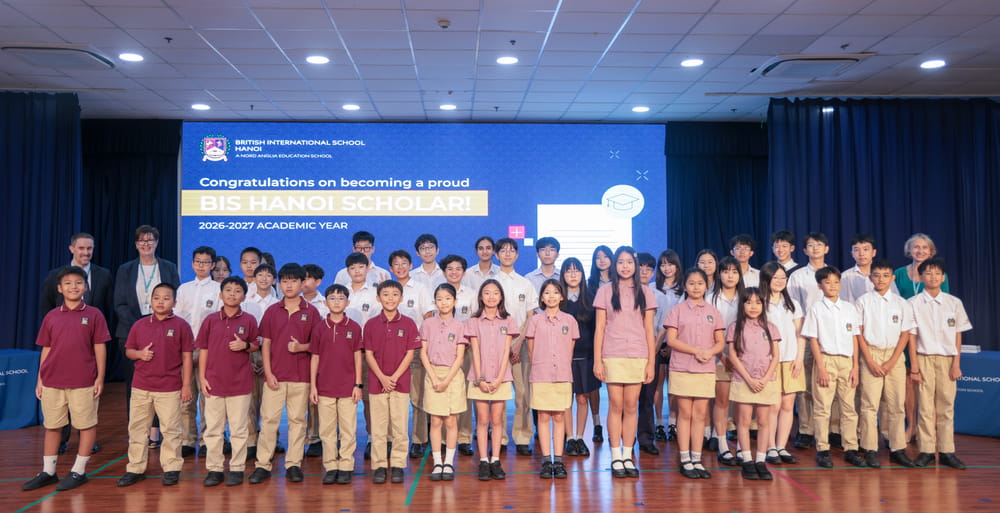
BIS Hanoi recently welcomed students, families and staff to Scholar’s Evening 2026-27, a special event dedicated to recognising the achievements of 48 outstanding scholarship recipients from across the Primary and Secondary schools.