


We use cookies to improve your online experiences. To learn more and choose your cookies options, please refer to our cookie policy.

November 12, 2026
Developing Strong Reading Skills and Confidence: How Families Can Help at Home
One of the most valuable ways to help your child become a confident reader is to encourage them to read a wide range of texts and genres. In the British curriculum, Phase 2 includes students in Years 4-6 (ages 8-11). During this stage, children move beyond learning to read and begin using reading to deepen their understanding, thinking, and learning across subjects.
Throughout Phase 2, children encounter increasingly complex vocabulary, ideas, and writing styles. By exploring different genres, they not only strengthen their reading and writing skills but also develop a broader understanding of the world around them.
At school, we use VIPERS to teach and assess reading comprehension. VIPERS provides children with the key comprehension skills needed to understand, analyze, and engage with texts.
VIPERS stands for:
- Vocabulary
- Inference
- Prediction
- Explanation
- Retrieval
- Summarize
These skills can be practiced at home through simple conversations before, during, and after reading.
When reading with your child, try asking a few VIPERS-style questions. For Vocabulary, ask them to identify unfamiliar words and use clues from the text to work out their meanings. For Inference, encourage them to think about how a character is feeling and what evidence supports their ideas. Prediction questions such as, "What do you think will happen next?" help children engage actively with the text. Explanation encourages children to justify their opinions and discuss an author's choices. Retrieval involves finding information directly from the text, while Summarize helps children identify the most important events and ideas. You could even challenge them to summarize a page, chapter, or article in a set number of words.
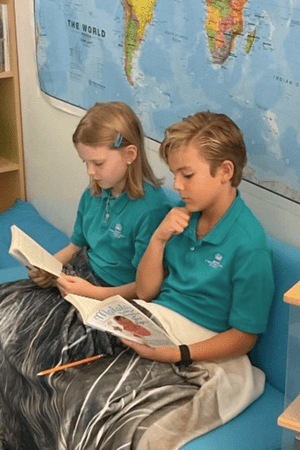
It is also important that children read a wide range of genres. Exposure to different types of texts develops vocabulary, broadens knowledge, and helps children discover what they enjoy reading most. Encourage your child to explore:
- Adventure stories
- Historical fiction
- Fantasy and science fiction
- Mystery and detective novels
- Poetry
- Graphic novels
- Biographies and autobiographies
- Newspapers and magazines
- Non-fiction texts linked to their interests
Reading widely helps children become more adaptable readers and can also have a positive impact on their writing. Through exposure to different styles, structures, and authorial techniques, children begin to develop a richer understanding of how effective writing works.
Consider setting a reading goal together. Giving children ownership of their reading journey can be highly motivating. Goals might include reading one book each month, trying a new genre every half-term, completing a series of books, or reading six different genres by the end of the school year. Some families enjoy creating a reading passport or challenge chart to track progress and celebrate achievements along the way.
While independent reading is important, reading together should not stop once children can read fluently. Listening to your child read aloud, sharing a chapter book, or discussing a story you have enjoyed can strengthen comprehension and build positive reading habits. Even ten to fifteen minutes of quality reading time each day can make a significant difference.
Children in Phase 2 often prefer to read independently, which is wonderful. However, it is equally important that they continue to hear fluent reading modelled by others. Listening to more experienced readers helps children develop their own expression, fluency, pace, and accuracy. One effective approach is for children to read their own reading-for-pleasure book independently while an adult or older sibling shares a more challenging text that is slightly above their current reading level. You could take turns reading pages, paragraphs, or chapters, or simply enjoy listening to the story together.
The goal is not simply to create strong readers, but to nurture children who enjoy reading. By discussing texts through VIPERS, encouraging a range of genres, setting meaningful reading goals, and making time to read together, you can help your child develop the skills, confidence, and curiosity that will support them throughout their education and beyond.
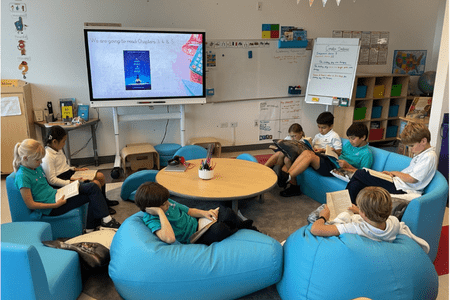
Most importantly, we want children to see reading not as a task to be completed, but as a source of enjoyment, knowledge, and inspiration that will continue to develop and grow throughout their lives.
Interested in learning more about how we support literacy development and nurture a love of learning at BISC Lincoln Park? From personalized reading support to our globally minded curriculum, discover how we help every child thrive. Submit an inquiry today to connect with our admissions team and learn more about life at our school.
Katie Miles
Year 5 Leader
Related news
News image ![Culture, Belonging, and Learning: Reflections from Our Parent Community - Reflections from Our Parent Community]() Blog | Featured | Global Education
 Blog | Featured | Global Education
Culture, Belonging, and Learning: Reflections from Our Parent Community
Culture, belonging, and inclusive learning are at the heart of BISC Lincoln Park, where diversity, representation, and community help every child thrive.
News image ![Year 3 Leader, Carla Williamson]() Blog | Featured | Global Education
 Blog | Featured | Global Education
The Importance of Self-Regulation in Children: A Foundation for Learning and Wellbeing
Discover how co-regulation, emotional awareness, and practical strategies support children in managing emotions and building resilience at BISC Lincoln Park.
News image ![Lowri Covello]() Blog | Featured
 Blog | Featured
Meet the BISC-LP Student Community Directors: How BISC-LP Supports Student Wellbeing, Safety and Belonging
Meet the Student Community Directors at British International School of Chicago, Lincoln Park and learn how they support student wellbeing, positive behavior, safeguarding, and belonging across our school community.
News image ![Our Restorative Approach at BISC-LP - Our Restorative Approach at BISC-LP]() Blog | Featured
 Blog | Featured
Building Character Through Connection: Our Restorative Approach at BISC-LP
Discover how BISC-LP's restorative approach to behavior helps students build character, strengthen relationships, and develop emotional intelligence through respect, connection, accountability, and restorative practices.


