


We use cookies to improve your online experiences. To learn more and choose your cookies options, please refer to our cookie policy.

November 19, 2026
Why Human Connection Matters for Student Wellbeing, Belonging, and Learning

In the wake of the Microsoft outage last week, my husband asked, "Is school operating today? Schools in Australia are closed." I found the question quite extraordinary, especially coming from someone who, like me, grew up long before the internet. Surely all credible organisations have backup systems and manual procedures in place (BISC does!). More than that, had we really forgotten how we operated before technology became such an integral part of our lives?
Moments like these give us pause for thought.
Technology has created endless opportunities to connect with people, ideas and organizations near and far. Email, Zoom, social media, online medical appointments and therapy have transformed the way we live and work. Artificial intelligence has added another layer, with chatbots that respond warmly to social niceties such as "please" and "good morning" while generating increasingly sophisticated answers to our questions.
Last year, an AI-powered toy was marketed as a way to reduce children's screen time by offering "a companion for every stage of childhood," telling jokes, sharing stories, providing trivia and even talking children through stressful situations.
At the same time, research consistently demonstrates the powerful relationship between connection, wellbeing and flourishing. When we seek out and engage in meaningful social interactions with friends, neighbors and colleagues, we feel less isolated and happier. This is hardly surprising. Communities provide a sense of belonging, built around shared interests, experiences, and values. At its heart, belonging is created through relationships.
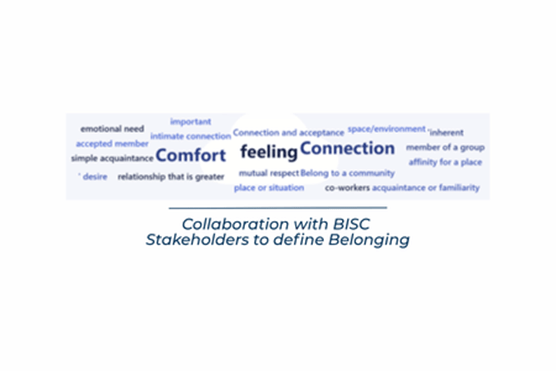
The question, then, is how technological connections compare with human connections and face-to-face conversations.
Researcher Patricia Kuhl explored this question through studies with nine-month-old infants learning Mandarin. Although the babies engaged enthusiastically with screen-based resources, they were unable to absorb the nuances of language, tone and non-verbal communication in the same way as those immersed in a live Mandarin-speaking environment. Kuhl described this as a "social gate" - the idea that learning is enhanced through direct human interaction.
Despite claims that AI can provide a positive alternative to screen time, growing evidence suggests that it cannot replace deep, meaningful human relationships. In her recent book, Dana Suskind builds on years of research showing how interaction with caring adults shapes a child's developing brain. Exposure to rich language is not simply about vocabulary acquisition; it is about learning how to understand, relate to and connect with other wonderfully imperfect human beings.
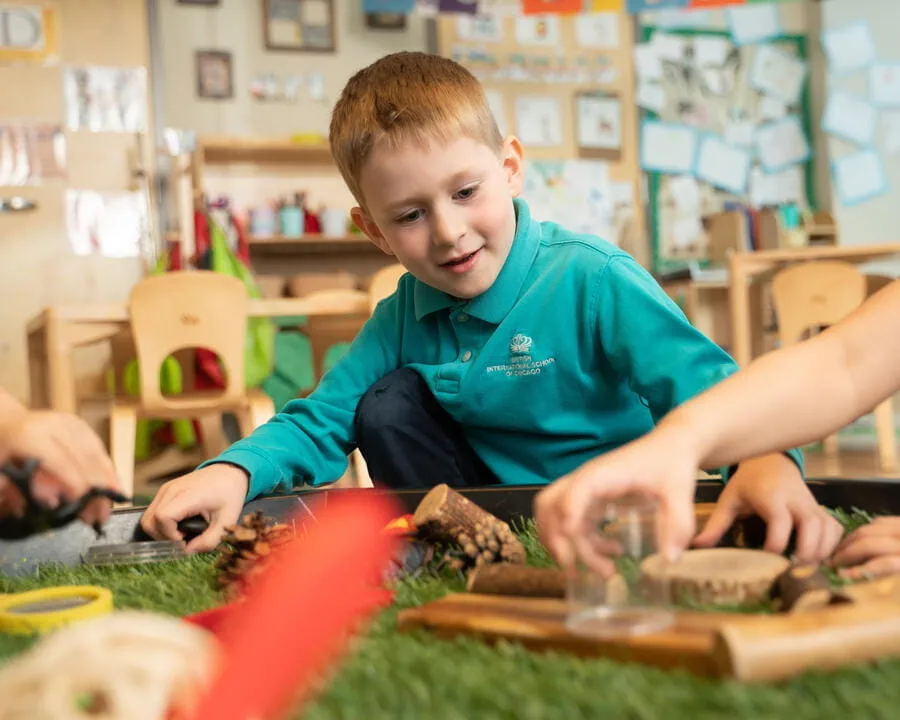
At BISC-LP, this research resonates deeply. We intentionally create opportunities for connection because we see every day how relationships contribute to wellbeing, belonging and learning. We do this by:
- Talking! Narrating for young children supports language development for building human interactions
- Tuning in through active listening, without judgment, and paying attention to all forms of communication and what may lie beneath certain behaviours.
- Empowering students to build relationships through collaborative learning, extracurricular activities and opportunities to work with different peer groups.
- Creating space for dialogue through Circle Time, PSHE and restorative dialogue when needed and modelling conversations
- Modelling values that support healthy relationships, recognizing, as Adam Grant suggests, that many of our core values are established during childhood.
- Normalising emotions and encouraging students to speak openly about their concerns, challenges and successes.
None of this can happen in isolation. It relies on a connected community in which families and school staff work together, share information and learn from one another.

As technology continues to evolve and offer alternatives to face-to-face interaction, Suskind encourages us to embrace innovation while holding firmly to some enduring principles. She captures these in the acronym HOPE:
H – Human connection is irreplaceable
O – Own your imperfections
P – Protect the early years and the learning process
E – Enhance, don't replace
In an age where technology can answer our questions, organize our schedules and even mimic conversation, the research remains remarkably consistent: human connection matters. Whether it is a conversation in the classroom, a restorative dialogue, a family discussion around the dinner table or a brief exchange with a stranger, these moments shape our wellbeing, our sense of belonging and our capacity to thrive.
Every member of our BISC-LP community has a role to play in creating these connections. The good news is that meaningful interactions do not require grand gestures. Often, they begin with something much simpler: listening closely, reaching out, and choosing to be just a little more social.
To learn more about how BISC Lincoln Park nurtures belonging, wellbeing, and learning, we invite you to schedule a visit and experience our community firsthand.
Judith Scholes
Director of Inclusion, Lincoln Park and South Loop Campuses
Additional Resources
Dana Suskind: Human Raised: Nurturing Connection, Curiosity, and Lifelong Learning in the Age of AI
Dana Suskind: Thirty Million Words – Building a Child’s Brain
Nicholas Elpey: A Little More Social: How Small Choices Create Big Connections
Adam Grant: Vibe - The Secrets of Strong Connections in a Lonely World
FAN Network: Online and in-person events on a range of topics: Past Events - FAN
Related news
News image ![Culture, Belonging, and Learning: Reflections from Our Parent Community - Reflections from Our Parent Community]() Blog | Featured | Global Education
 Blog | Featured | Global Education
Culture, Belonging, and Learning: Reflections from Our Parent Community
Culture, belonging, and inclusive learning are at the heart of BISC Lincoln Park, where diversity, representation, and community help every child thrive.
News image ![Year 3 Leader, Carla Williamson]() Blog | Featured | Global Education
 Blog | Featured | Global Education
The Importance of Self-Regulation in Children: A Foundation for Learning and Wellbeing
Discover how co-regulation, emotional awareness, and practical strategies support children in managing emotions and building resilience at BISC Lincoln Park.
News image ![How We Support Toddler Emotions and Positive Behavior in Pre Nursery - How We Support Toddler Emotions and Positive Behavior in Pre-Nursery]() Blog | Featured | Global Education
 Blog | Featured | Global Education
How We Support Toddler Emotions and Positive Behavior in Pre-Nursery
Read our latest blog to learn how our Pre‑Nursery program supports toddler behavior and emotional development through positive guidance, building self‑regulation and confidence from as early as 15 months.
News image ![Excelling Beyond Grades - Excelling Beyond Grades]() Blog | Global Education | Featured
 Blog | Global Education | Featured
Academic Excellence and Wellbeing: Excelling Beyond Grades at BISC Lincoln Park
Read our latest thought piece by Mr. John Biggs, Principal at BISC Lincoln Park, exploring how academic excellence and student wellbeing work together to prepare students for success beyond grades.


