Safeguarding is the foundation of children’s success. Explore how safety, wellbeing, strong relationships and family partnerships help children flourish beyond academic grades.

May 06, 2026
Where Children Flourish: How Safeguarding Helps Children Thrive

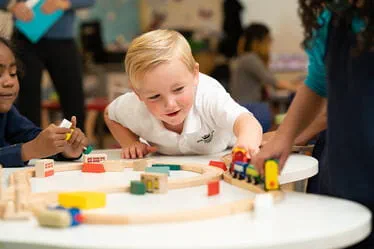
When families think about what makes a school truly successful, academic results are often part of the picture. But success goes far beyond grades alone. Confidence, curiosity, resilience, belonging and wellbeing all play a powerful role in helping children flourish—not only at school, but in life. At the heart of all of this sits safeguarding.
Safeguarding is the foundation that allows children to excel beyond grades. When children feel safe, valued and listened to, they are more willing to take risks in their learning, to build strong relationships and to grow into empathetic, confident young people. At our school, safeguarding is not a separate function or a set of policies; it is woven into daily school life, into our culture, and into the partnerships we build with families.
What do we mean by safeguarding?
Safeguarding is about protecting children from harm while actively promoting their wellbeing. It includes physical safety, but it also extends further—to emotional and mental health, positive relationships, digital citizenship, and helping children develop the self-awareness and confidence to seek help when they need it.
Our approach places the child firmly at the center. We focus on prevention, early support and care, recognizing that children thrive best when adults are attentive, approachable and consistent. Safeguarding is not about fear or suspicion; it is about professionalism, compassion and creating the conditions in which every child can grow in confidence and capability.
Safeguarding in everyday school life
Much of safeguarding happens quietly, consistently and positively throughout the school day. Staff are trained to notice small changes in behavior or mood that may signal a child needs extra support. Students are helped to identify trusted adults and are encouraged to speak up if something doesn’t feel right. Clear expectations around behavior, respect and boundaries contribute to a calm, predictable environment where children feel secure.
Strong systems support this work behind the scenes. Concerns are handled thoughtfully, recorded carefully and followed up appropriately. Recruitment checks, supervision, duty of care and ongoing professional learning all help maintain a safe environment. Above all, safeguarding is rooted in relationships. When children feel known, understood and respected, they are more likely to engage deeply with their learning, take healthy risks and develop a strong sense of self.
Why partnership with families matters
Children do not experience life in separate “school” and “home” worlds—each shapes the other. Safeguarding, like learning, works best when schools and families are closely connected.
Families are often the first to notice small changes in sleep, friendships, behavior or mood. Sharing these observations allows us to build a fuller picture and offer support early, strengthening a child’s wellbeing before concerns grow. These conversations can sometimes feel sensitive, but they are always grounded in care and a shared aim: helping children feel secure, supported and ready to thrive.
How families help create a safe, thriving community
Parents and carers play a vital role in supporting safeguarding and wellbeing. Families help strengthen this work by:
- Talking openly with children about how they feel, their friendships and online activity
- Reinforcing messages about respect, kindness, boundaries and safe behavior
- Sharing concerns early, even when unsure—small details can be important
- Supporting school expectations, including behavior and digital safety guidance
- Modelling calm, respectful communication
- Helping keep our site safe by signing in, wearing parent lanyards and following visitor procedures
When children see consistency between home and school, it builds trust, confidence and a strong sense of belonging.
Safeguarding is a shared commitment—and a powerful enabler of growth beyond grades. By working together and keeping communication open, we create a community where children feel safe, supported and empowered to flourish. If you ever have a question or concern, we encourage you to reach out. We are always happy to talk.
Click here to learn more about how at BISC South Loop we bring together academic excellence and student wellbeing—because when students feel confident, supported, and ready to learn, they achieve more.
Related news
News image ![BISC South Loop Named 1 Best Private K12 School in Illinois in Niches 2027 Rankings - BISC South Loop Named 1 Best Private K12 School in Illinois in Niches 2027 Rankings]() News
News
 News
News BISC South Loop Named #1 Best Private K-12 School in Illinois in Niche's 2027 Rankings
British International School of Chicago, South Loop is ranked #1 Best Private K-12 School in Illinois and the Chicago Area in Niche’s 2027 rankings.
News image ![IB in Action How Year 12 Students Are Leading the 2026 Fall Festival - IB in Action How Year 12 Students Are Leading the 2026 Fall Festival]() Blog
Blog
.png?h=499&iar=0&w=887&rev=f3ea2ecd12584cddb1349430fdc05c4b&hash=817F92C1D2A10F174568D7E5018B2996) Blog
Blog IB in Action: How Year 12 Students Are Leading the 2026 Fall Festival
Discover how Year 12 students are using IB learning to lead a festival with purpose and global impact.