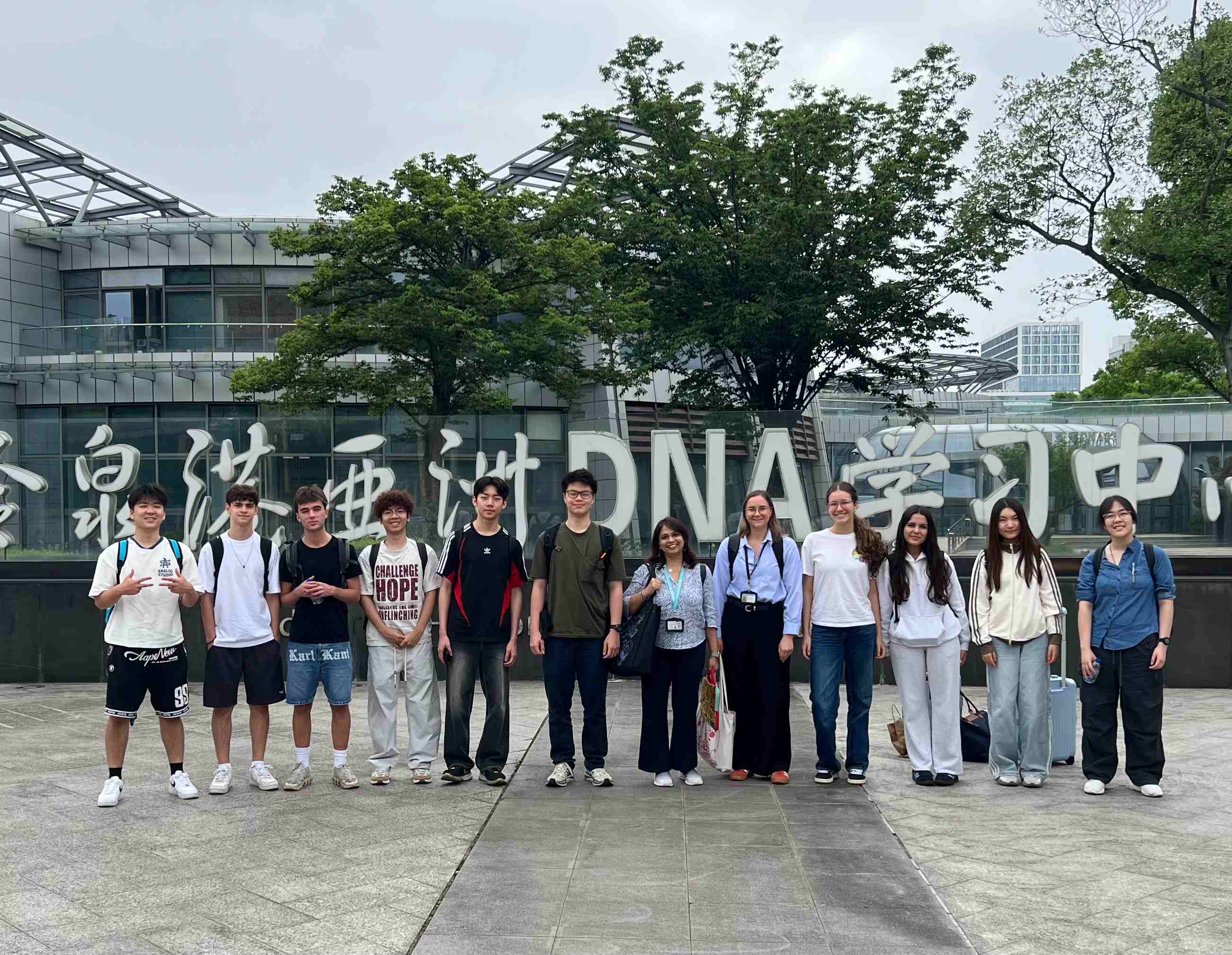
Our Year 12 Biology students recently travelled to the DNA Learning Centre in Suzhou for an exciting and enriching two-day experience in modern genetics and biotechnology. Affiliated with the world-renowned Cold Spring Harbor Laboratory, a leading biomedical research institution since 1890 and home to eight Nobel Prize winners, the centre provided students with a unique opportunity to experience advanced molecular biology techniques firsthand.
On the first day the students explored the fascinating world of CRISPR-Cas9, a revolutionary gene-editing technology with the potential to transform medicine and agriculture. Through discussions and case studies, they examined both the remarkable potential and ethical challenges of gene editing. The students debated real-world examples, including the treatment of a six-month-old child with a genetic liver disease and the controversial genetic modification of unborn twins to prevent HIV.
The students then stepped into the role of genetic engineers. Working in professional laboratory facilities, they modified bacterial plasmids using restriction and ligation enzymes before analysing their results through agarose gel electrophoresis. They learnt how to prepare gels, load DNA samples using micropipettes, and interpret DNA banding patterns - skills routinely used in research laboratories around the world.
On the second day, the students focused on Polymerase Chain Reaction (PCR), one of the most important techniques in modern genetics. Using DNA extracted from their own cheek cells, the students amplified sections of DNA to investigate whether they carried the PTC tasting gene, which determines an individual's ability to taste certain bitter compounds. Following PCR amplification, they used electrophoresis to separate DNA fragments and visualised the results using specialised staining techniques.
The highlight of the day came when the students tested PTC tasting strips themselves. Reactions ranged from surprise to amusement, particularly among those identified as “super tasters” who possessed two copies of the dominant gene. This personal connection to genetics sparked lively discussions about genetic testing, inheritance, and the ethical implications of using DNA information in healthcare and society.
For many students, the opportunity to connect classroom learning with authentic laboratory practice was particularly rewarding. Fiona reflected, “My favourite part of the trip was doing gel electrophoresis on our own DNA. It felt more engaging and authentic to carry out an experiment related to myself, and it was rewarding when my hypothesis was proven correct. The trip helped me fully understand the processes we learnt in class and gave me hands-on experience applying biology in a real-life context.”
Clement also valued the opportunity to extend his learning beyond the classroom. He shared, “The first-day lecture included content we had covered at school, which helped me grasp more advanced knowledge easily. My favourite moment was demonstrating my micropipette skills to classmates. This trip allowed me to combine theory with practice and improved my confidence in lab work.”
Throughout the trip, the students demonstrated curiosity, teamwork and enthusiasm whilst developing valuable practical laboratory skills and deeper scientific understanding. The experience provided an inspiring glimpse into the future of biotechnology and biomedical science, whilst encouraging students to think critically about the responsibilities that come with scientific advancement.
We are grateful for the opportunity to offer our students such a memorable and authentic scientific experience at one of Asia’s leading DNA research and education centre. The visit will undoubtedly have a lasting impact on their academic journey and future aspirations in science.