

.jpg?h=5464&iar=0&w=8192&rev=d25c2e8a10054f4eaa147d554bcdc656&hash=0513C3A7A8B0D63204022FDBF42240DC)



We use cookies to improve your online experiences. To learn more and choose your cookies options, please refer to our cookie policy.
05 March, 2026
Choosing an international school in Hanoi that grows with your child
.jpg?h=1365&iar=0&w=2048&rev=db25585f6a7040a3b9f7ab694a033cd6&hash=03036EA410A9BD2FAC7FAA9C403FF3F5)
When choosing an international school in Hanoi, parents often focus on whether their child will settle, make friends, and cope academically. Beneath those immediate concerns sits a deeper issue: long-term fit.
The real consideration is whether a school will continue to suit your child as they grow older, more independent, and more academically ambitious. Facilities and first impressions matter, but they do not tell you how a school will guide development over time.
.jpg?rev=e3ffdcc2ed164369be8d05ad372e1e9c&hash=6881455080ECFA225CACD0101306AA4C)
Malcolm Wood, Head of Primary, encourages parents to look beyond short-term comfort and consider direction.
“Do you value both English and Vietnamese competency? Do you want your children to have a positive attitude towards Vietnam and towards the wider world? Do you want them to develop a love of learning and learn to think for themselves and express their views?”
These are not surface questions. They are indicators of how a school thinks about growth, identity, and long-term development.
Looking at the children, not just the brochure
When choosing a school, Malcolm advises parents to observe what daily life actually looks like.
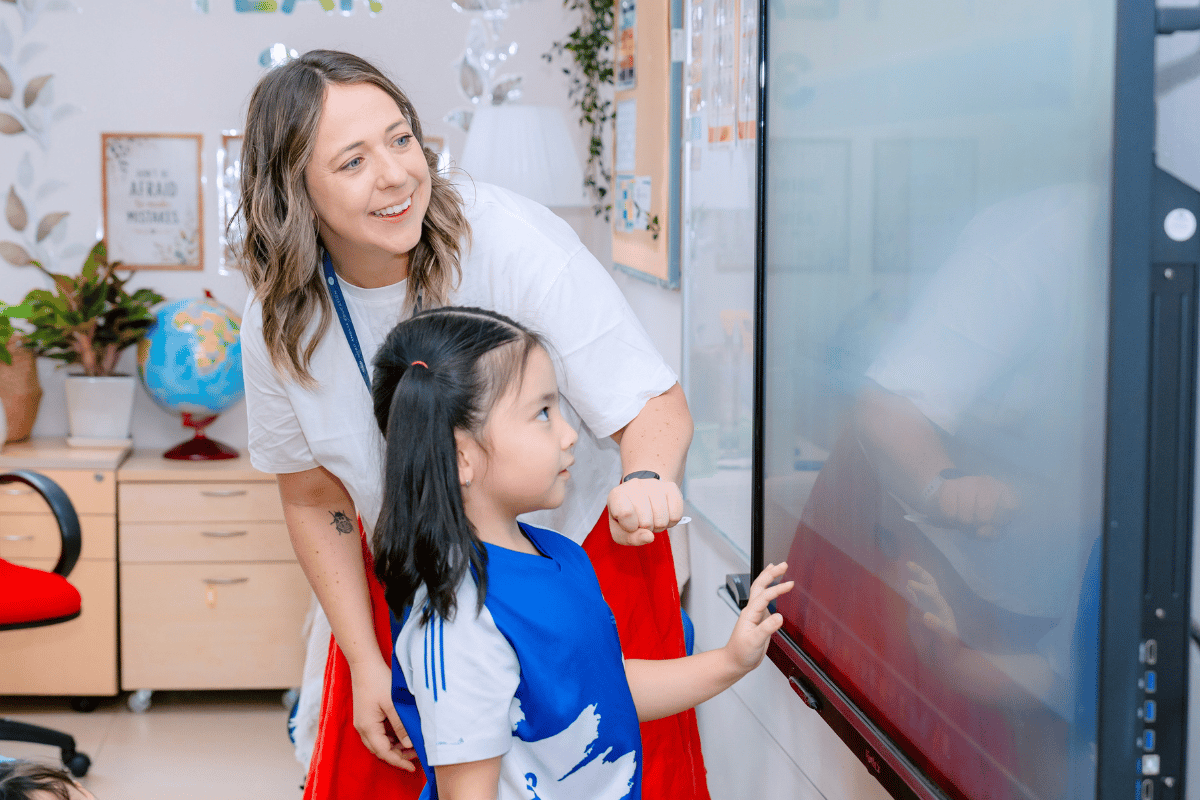
“Look at the children in a school. Do they seem to like school? Do they seem lively and engaged? How do they interact? Do they demonstrate good values?”
.jpg?rev=950f5fe9d81f4772b459358c5613ed9c&hash=7C88AC2D48E93E74EE273AC21CC0181A)
This simple lens often reveals whether a school’s culture supports growth over time. Engagement, confidence, and respectful interaction are not created overnight. They are the result of consistent expectations and teaching approaches that develop year after year.
For families comparing international schools in Vietnam, this consistency is often more important than surface features. A stable community and shared standards reduce uncertainty as children move through different stages.
How expectations evolve as children grow
A school that offers long-term fit does not teach the same way at every age. It adapts deliberately.
Malcolm explains that as children mature, they should become “more independently capable and confident.” Their awareness of others grows. They learn not only academic content but also how to organise themselves, work collaboratively, and take responsibility.
In early years and lower primary, routines are visible and carefully guided. Teachers model behaviours, establish structure, and build strong foundations in literacy and numeracy. As students move into upper primary, expectations increase. They are encouraged to plan their work, check their understanding, and ask thoughtful questions.
.jpg?rev=a33b8eeb26f247b59f2ffce37e9b6f62&hash=CBB630B26F422E0F0B5CB2DCF3A13681)
This gradual growth of responsibility and independence matters. It prepares students for secondary study, where academic rigour increases and subject depth becomes more significant.
A clear progression from guided learning to independent study reduces long-term decision risk. Parents can see how today’s classroom habits prepare students for tomorrow’s demands.
Balancing consistency and change
When choosing a school, parents often wonder what will change and what will stay the same.
Of course, academic challenges will increase, and assessment becomes more formal in later years. Students are prepared for recognised qualifications and structured pathways. At the same time, core values and expectations should remain consistent.
Malcolm notes that as children grow, social awareness becomes increasingly important. Friendships deepen. Individual interests become clearer. Students begin forming opinions and taking greater responsibility for their actions.
.jpg?rev=a7f8df3a28a4494a91910ee9eb6bc8d5&hash=38434015C937290321AAE04789B32009)
A school that understands these developmental shifts can support both academic progression and personal maturity without sudden changes in expectations.
When choosing an international school in Hanoi, focus on whether that is a structured academic and pastoral framework behind the scenes, where growth is anticipated and supported.
Reducing uncertainty through clarity
Parents cannot predict exactly who their child will become. What they can assess is whether a school has a clear philosophy for development across stages.
A strong school can explain how independence is built intentionally. It can show how progress is monitored consistently. It can describe how students are prepared for later qualifications through steady increases in responsibility and academic challenge.
.jpg?rev=b66922a8202f4ef89305dced0d6513dc&hash=F26D3FFBABF50EB18F0538AAD880A5F2)
At the British Vietnamese International School Hanoi, long-term progression is designed into the structure of the school. BVIS students build confidence early, deepen subject knowledge over time, and move towards greater independence as expectations rise. This deliberate development provides stability for families who are choosing a school not just for today, but for the years ahead.
If you are choosing an international school in Hanoi and thinking about long-term fit, our academic leaders welcome thoughtful conversations about how students grow through each stage of the school journey and how standards remain clear throughout.
Related news
News image ![Student Highlights & Success Stories (21/09 - 25/09/2026) | BVIS Hanoi - Weekly Updates 25-09-26]() News | Weekly School Updates
News | Weekly School Updates
 News | Weekly School Updates
 Student Highlights & Success Stories (21/09 - 25/09/2026)
Student Highlights & Success Stories updated from BVIS Hanoi's Senior Leadership Team (21/09 - 25/09/2026)
News image ![Student Highlights & Success Stories (14/09 - 18/09/2026) | BVIS Hanoi - Weekly Updates 18-09-26]() News | Weekly School Updates
News | Weekly School Updates
 News | Weekly School Updates
 Student Highlights & Success Stories (14/09 - 18/09/2026)
Student Highlights & Success Stories updated from BVIS Hanoi's Senior Leadership Team (14/09 - 18/09/2026)


