




We use cookies to improve your online experiences. To learn more and choose your cookies options, please refer to our cookie policy.
02 March, 2026
What teaching quality really looks like in a British international school
.jpg?h=5464&iar=0&w=8192&rev=d25c2e8a10054f4eaa147d554bcdc656&hash=0513C3A7A8B0D63204022FDBF42240DC)
When parents evaluate a school, they often ask a simple question: how do I know the teaching is truly working for my child? Classrooms can look impressive. Facilities can be modern. But teaching quality is not defined by appearances. It is defined by the daily interactions between teacher and student and how those moments steadily move learning forward.
At the British Vietnamese International School Hanoi (BVIS Hanoi), teaching quality is shaped by clear standards, careful recruitment, and daily classroom practice that is both structured and responsive.
Recruiting teachers who understand rigour and responsibility
Claire Slowther, Head of Secondary, explains that excellent teaching is rooted in careful preparation long before a lesson starts.
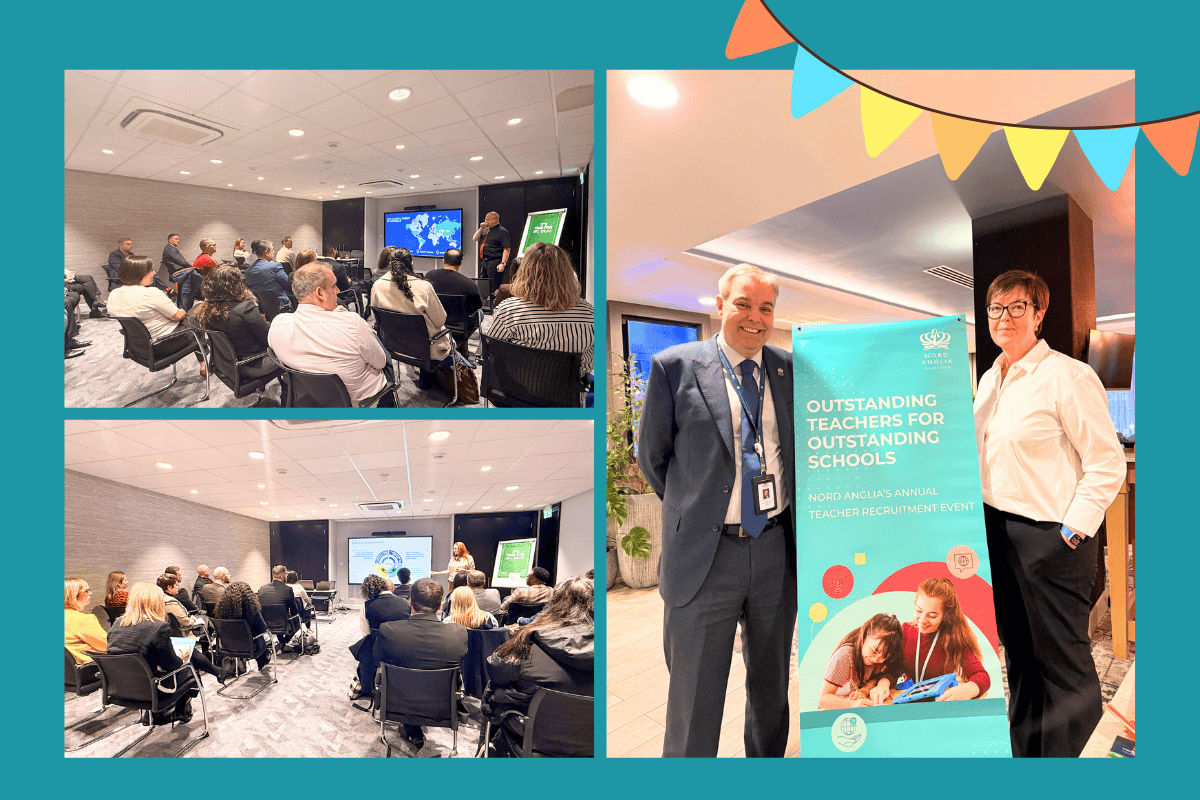
“Firstly, we ensure that we recruit the highest quality teachers. We look for teachers who are qualified to UK standards and who come with experience and expertise. It is important that they are passionate about their subject, care about children and have a proven track record of supporting students to attain highly at IGCSE and A Level.”
For parents exploring international school teaching in Vietnam, qualifications matter. Experience matters. But so does consistency. Claire adds that, beyond individual lessons, “Middle and Senior Leaders are regularly observing lessons and working with teachers to continually develop our practice.”
In practical terms, this means classrooms are not left to chance. Teachers plan carefully. Senior leaders visit lessons. Feedback is ongoing. Teaching standards are discussed openly and improved deliberately. This steady oversight supports strong teacher performance and ensures that expectations remain clear across year groups.
What effective teaching looks like day to day
Malcolm Wood, Head of Primary, highlights a different but equally important dimension of teaching quality.
“An openness to learning is something we nurture. By encouraging the learner to ask their own questions, we develop each child’s enthusiasm and passion for learning.”
Effective teaching is not only about delivering content. It is about how students engage with it. In primary classrooms, teachers encourage children to think aloud, respond to one another, and take part in two-way dialogue. “We approach the learner as an individual engaged in a two-way interactive process of personalised learning,” Malcolm explains. “Different children are frequently set different tasks, a reflection of the fact that each child is unique.”
This does not mean lowering expectations. It means adjusting approach so that all students can access challenging material. A visitor observing a lesson might see varied tasks, careful questioning, and students explaining their reasoning rather than simply writing answers.
These are observable qualities of a good teacher. They show teaching quality in action.
.jpg?rev=36c4024c136b47738854abaa213b3cdc&hash=401542C33D83188F0142503B59AB5E52)
Adjusting teaching when learning is not linear
Learning rarely follows a straight line. Claire is clear about this reality.
“Learning is not linear, all students will have times when they find topics or skills challenging. Our teachers really understand this and can identify when a student is finding something difficult. Teachers will draw upon a range of approaches and ways to make this more accessible to students.”
She gives practical examples. This might include explaining a concept through a demonstration, breaking down a complex topic into smaller steps, or using models and diagrams to clarify abstract ideas. The aim is not to move on quickly. It is to secure understanding.
.jpg?rev=b15ca298c202496ca21118420d857e18&hash=60B3D4C5E20ABA504028D7BAC2641FB9)
Malcolm echoes this focus on clarity and communication. “We identify and communicate each student’s next steps to both children and parents so that we can all pull in the right direction.” Parents are not left guessing about progress. They are given specific feedback about strengths and areas for development.
Over time, this steady adjustment builds confidence and resilience. Students learn that difficulty is part of growth, not a sign of failure.
Looking beyond surface impressions
For families comparing options among international schools in Hanoi, it is natural to look at facilities, marketing materials, and exam headlines. These elements are visible. Teaching quality is quieter. It is seen in the way teachers question students, adapt explanations, and follow up when something is not fully understood.
At the British Vietnamese International School Hanoi, this daily attention to teaching standards and teacher performance forms the foundation of academic progress. It is careful work. It is sustained work. And it is what ultimately shapes academic outcomes.
If you would like to understand how teaching quality is lived out in real classrooms, we welcome conversations with our academic leaders and opportunities to see learning in action.
.jpg?rev=bb7aeba1b2c041858d9a654c2ca0d204&hash=C2033E9AD09391D990B57FBED14C9C0F)
Related news
News image ![Student Highlights & Success Stories (21/09 - 25/09/2026) | BVIS Hanoi - Weekly Updates 25-09-26]() News | Weekly School Updates
News | Weekly School Updates
 News | Weekly School Updates
 Student Highlights & Success Stories (21/09 - 25/09/2026)
Student Highlights & Success Stories updated from BVIS Hanoi's Senior Leadership Team (21/09 - 25/09/2026)
News image ![Student Highlights & Success Stories (14/09 - 18/09/2026) | BVIS Hanoi - Weekly Updates 18-09-26]() News | Weekly School Updates
News | Weekly School Updates
 News | Weekly School Updates
 Student Highlights & Success Stories (14/09 - 18/09/2026)
Student Highlights & Success Stories updated from BVIS Hanoi's Senior Leadership Team (14/09 - 18/09/2026)


