

.jpg?h=5464&iar=0&w=8192&rev=d25c2e8a10054f4eaa147d554bcdc656&hash=0513C3A7A8B0D63204022FDBF42240DC)


We use cookies to improve your online experiences. To learn more and choose your cookies options, please refer to our cookie policy.
09 March, 2026
Understanding students’ learning needs and goals as they grow
.jpg?h=1536&iar=0&w=2048&rev=2cb99106f08f4410a4a2fa9c69afca6f&hash=44BBCC43B8F5108DE454254440183829)
One of the biggest worries parents carry, often quietly, is whether a school will still fit in two, five, or ten years’ time. A child changes. Confidence changes. Motivation changes. Academic demands increase. The question is not only whether a school feels right now, but whether it will keep making sense as your child grows.
Understanding students’ learning needs and goals is at the heart of reducing that long-term decision risk. At the British Vietnamese International School Hanoi (BVIS Hanoi), academic leaders describe this as a practical process, built through close observation, clear routines, and a gradual shift in independence as children move through school.
.jpg?rev=be86bfc60e9846b18fe66fdc731ff4a9&hash=594DF112FBE87A34878E1B94131DAAA1)
Early years start with safety, language, and routines
In the early years, learning needs of students are often less about subject content and more about readiness. Malcolm Wood, Head of Primary, explains that children learn through exploration, play, and experience. Activities are short, because young attention spans are short. Teachers and teaching assistants work closely with children, supporting emotions and behaviour, as well as early language and learning routines.
At this stage, understanding students’ learning needs means watching and listening. Malcolm describes spotting needs early by watching children play and talk, and by listening carefully to how parents describe what their child is like at home. Support is then put in place straight away through play and routines.
Parents often ask what personalised learning looks like in practice at this age. It is not a special programme. It is the daily work of noticing what helps a child settle, communicate, and start learning with confidence.
.jpg?rev=268218e23d1448f09db4b7a3e78d8a8d&hash=5919224048D364C3BA1FA9F5EC43FF3A)
Years 1 and 2 build core skills with more structure
As children move into Primary, in Years 1 and 2, learning styles of students still vary widely, but expectations become more structured. Malcolm explains that children learn by practising basic skills, with a strong emphasis on reading and writing in both English and Vietnamese, as well as maths. Teachers guide students closely before expecting them to try a new skill independently.
.jpg?rev=7b1ef464062f4a1b9f75594cf15adaec&hash=5EDF6A6255DFE097D3E441A8D2AA982A)
He also notes that routines remain important. Clear expectations, praise for the behaviours that support learning, and a structured classroom approach help children build confidence in core skills. In this phase, understanding students learning needs and goals often comes down to checking early progress carefully and closing gaps quickly.
Malcolm explains that BVIS Hanoi monitors progress in reading, writing, and maths. When gaps appear, students receive short, targeted support, often in small groups. Through this intentional monitoring and intervention, we aim to ensure children never fall behind quietly.
Years 3 and 4 develop independence and learning habits
In Years 3 and 4, the learning needs of students begin to shift again. Malcolm describes children becoming ready for longer lessons, with higher expectations for independent work. Adult support is still there, but it becomes less constant. Teachers focus more on learning skills such as planning, checking work, and asking for help when needed.
This is also where personalised learning often becomes visible to parents in a different way. It shows up not only in task design, but in how teachers help children think about learning. Malcolm describes teaching children to plan and check their own work, and encouraging them to become more independent.
If a child is not keeping up with the academic progress being made by the majority, it becomes clearer at this stage. Malcolm explains that teachers plan specific support where it is needed, while continuing to build readiness for the increased independence of upper primary.
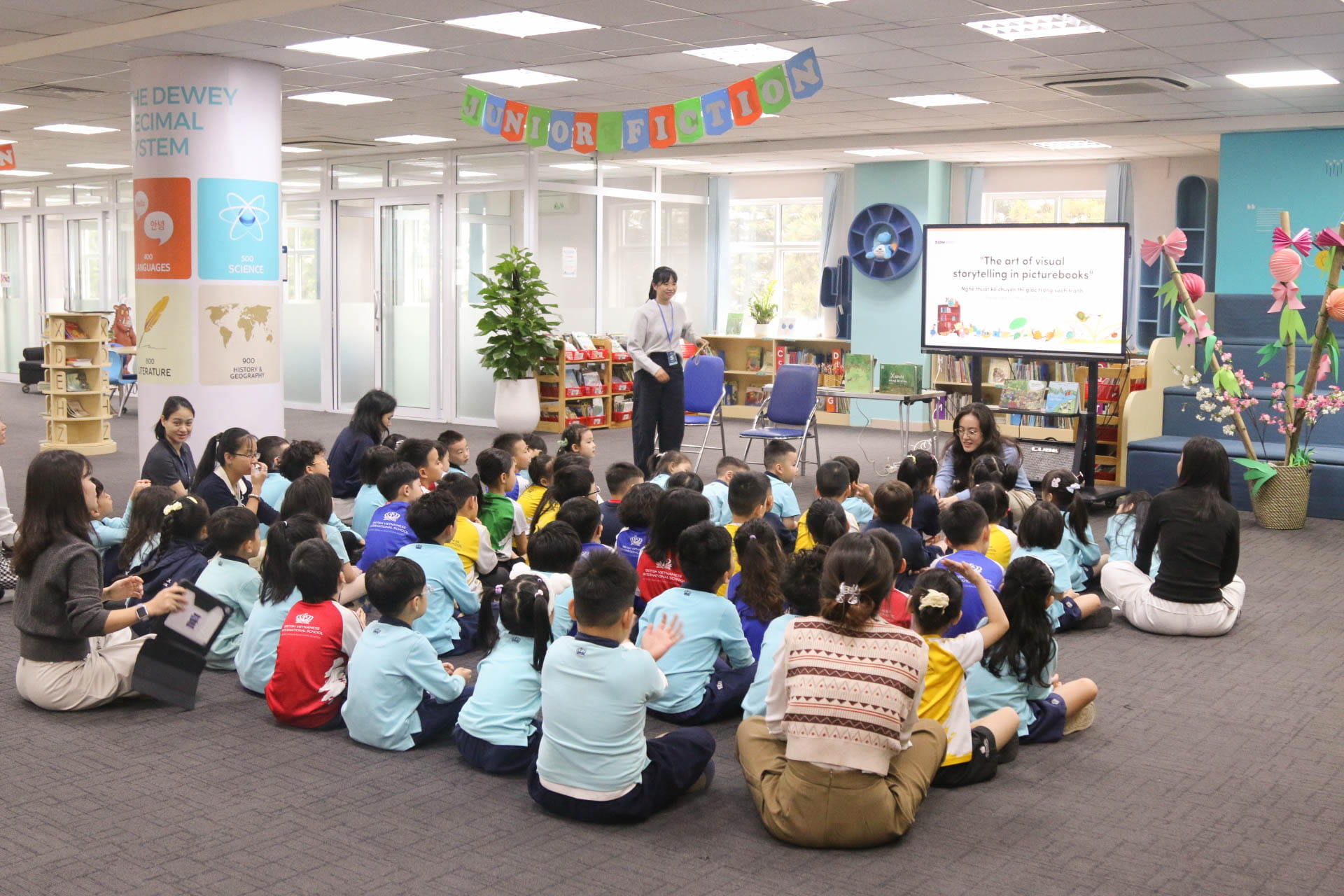
Years 5 and 6 strengthen readiness for Secondary
In Years 5 and 6, the learning needs of students shift again. Malcolm explains that children at this stage are ready to apply their skills more independently and think more deeply about their learning. Lessons include more discussion and problem-solving, and students are expected to explain their thinking and consider other perspectives.
Adult support remains important, but it becomes less step by step. Malcolm notes that teachers deliberately provide fewer prompts, encouraging students to organise their time, manage homework, and complete tasks independently. The focus is on building confidence, resilience, and readiness for the expectations of Secondary school.
.jpg?rev=de27cd6ff65349ff85cadbbbb335c15a&hash=84D9F94C0414AD124A83633B1C196445)
This stage also brings emotional change. Malcolm explains that children become more self aware, and friendships can become more complex. Clear academic and behavioural expectations, alongside pastoral guidance, help students navigate this period with maturity.
If a child needs additional support, it often relates to organisation, workload, or confidence rather than core skill gaps. Malcolm describes personalised support at this stage as preparing students not only academically, but emotionally and practically, for the transition to Secondary.
Secondary evolves from foundations to exam readiness
As students move into secondary, teaching approaches evolve to match both maturity and academic demands. Claire Slowther, Head of Secondary, describes Key Stage 3 (Years 7 – 9) as building a strong foundation across curricular areas, with learning activities designed to spark interest, enthusiasm, and engagement.
.jpg?rev=ae40b99fc4194e2eade8d43e4a4a11e8&hash=84365E3CC8E0BB45A4FA6F5F6CBBC638)
In Key Stage 4 (Years 10-11), the focus shifts towards Cambridge IGCSEs. Claire explains that teaching approaches initially focus on developing subject knowledge and skills, then progress towards preparing students to apply that learning to exam questions. She notes that teachers have a deep understanding of exam standards, which helps them prepare students for success.
By Key Stage 5 (Years 12 – 13), Claire describes students as “really advanced learners” studying three or four A Levels in depth. Lessons become more focused and mature, and class sizes are small. Students narrow their studies towards the subjects they enjoy and are good at, which Claire says maximises their chances of attaining top grades.
.jpg?rev=d28ca693bd224df589ea0fb3973405ce&hash=E5E7B5D90CAA57C2F7293E6BB75FD5AF)
Across these stages, the practical thread is that the school expects student learning needs to change. Teaching adapts accordingly, rather than treating learning as one fixed model.
What parents can expect to change over time
Parents do not need to predict their child’s future to make a good decision. But they do need confidence that a school will keep responding as their child develops.
In early years, that response looks like routines, language-rich learning, and close adult support. In primary, it looks like structured skill building, targeted help when gaps appear, and a steady move towards independence. In secondary, it looks like stronger subject specialism, clearer exam preparation, and deeper academic focus as students approach pathways.
If you are considering the British Vietnamese International School Hanoi, our academic leaders would love to share more about how we identify your child’s changing learning needs, and how our support and expectations evolve across each stage of their learning journey.
.jpg?rev=00024d4657a946e2bb851035f71e760b&hash=10A5378B0CF502EBCE6741A6D37DDE60)
Related news
News image ![Student Highlights & Success Stories (28/09 - 02/10/2026) | BVIS Hanoi - Weekly Updates 02-10-26]() News | Weekly School Updates
News | Weekly School Updates
 News | Weekly School Updates
 Student Highlights & Success Stories (28/09 - 02/10/2026)
Student Highlights & Success Stories updated from BVIS Hanoi's Senior Leadership Team (28/09 - 02/10/2026)
News image ![Student Highlights & Success Stories (21/09 - 25/09/2026) | BVIS Hanoi - Weekly Updates 25-09-26]() News | Weekly School Updates
News | Weekly School Updates
 News | Weekly School Updates
 Student Highlights & Success Stories (21/09 - 25/09/2026)
Student Highlights & Success Stories updated from BVIS Hanoi's Senior Leadership Team (21/09 - 25/09/2026)


