


We use cookies to improve your online experiences. To learn more and choose your cookies options, please refer to our cookie policy.
18 November, 2026
Guide to Choosing a Summer Camp in Switzerland
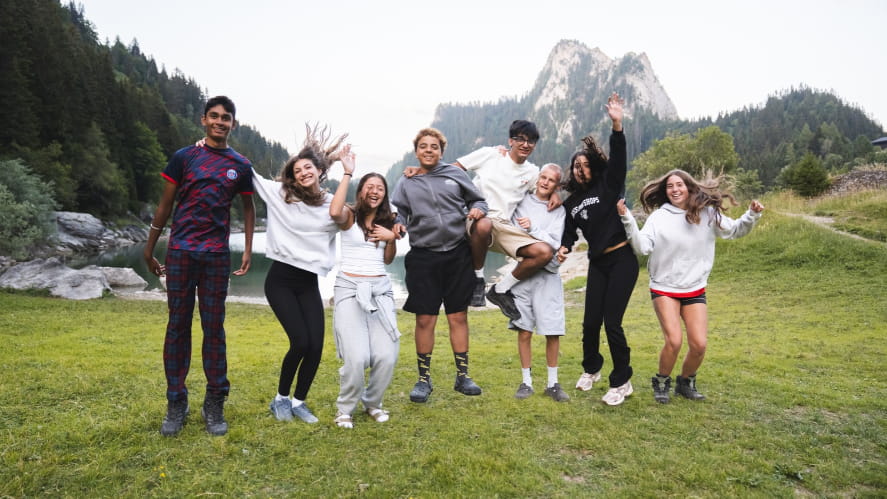
Choosing a summer camp for your child is an important decision. Beyond the activities on offer and the destination, parents are primarily looking for an environment where their child can thrive, grow in confidence, develop new skills, and build lasting friendships.
Switzerland is one of the preferred destinations for families seeking an international summer camp. Known for its outstanding natural surroundings, international outlook, and strong educational tradition, it offers young people a wide range of opportunities for discovery, learning, and personal growth. But with so many programmes available, how can you identify the one that truly meets your child’s needs and aspirations?
This guide explores the key factors to consider when choosing a summer camp in Switzerland, whether your child is preparing for their first experience away from home or returning for another summer abroad. Through practical advice and examples from Champittet Leadership Camp, located on the shores of Lake Geneva, it will help you understand the different options and prepare your child for a rewarding summer experience.
In This Guide
- How to Choose the Right International Summer Camp
- Why Switzerland Is the Ideal Destination for an International Summer Camp
- Two weeks in the Life of a summer leadership camper
- First Time Away From Home: Preparing for a Residential Summer Camp
- Leadership Camp vs. Traditional Language Camp
- Safety, Supervision and Wellbeing at a Residential Summer Camp
- Is Your Child Ready for a Residential Summer Camp Abroad?
- What Does Leadership Development Look Like for Teenagers?
- Frequently asked questions
How to Choose the Right Summer Camp for Your Child
Not all summer camps have the same objectives. Some focus on sports and outdoor adventures, while others emphasise language learning, cultural discovery, or the development of personal skills. Before comparing programmes, it is therefore essential to consider what your child hopes to gain from the experience.
Take time to discuss their interests, expectations, and any concerns they may have. Do they want to meet young people from other countries, become more independent, improve their English, or develop greater self-confidence? A programme that matches their personality and aspirations will help them engage more easily in activities and make the most of their stay.
Camp size is another important factor. While larger programmes may offer a broad range of activities, smaller camps often provide more personalised support and closer relationships between campers and staff. At Champittet Leadership Camp, participation is capped at 120 campers, helping maintain a close-knit atmosphere while welcoming young people from around the world.
Finally, it is worth considering the camp’s location and how activities are organised. A programme situated close to excursion destinations can reduce travel time and allow students to spend more time enjoying the experiences on offer. The aim is not to choose the camp with the longest activity list, but the one that offers the right balance for your child.
Further reading:How to Choose the Right International Summer Camp
Why Choose Switzerland for a Summer Camp?
The destination plays a significant role in shaping a camper’s overall experience. For families considering a summer camp abroad, Switzerland offers several advantages, including its reputation for safety, high-quality infrastructure, and international environment.
Cultural diversity is one of its greatest strengths. At an international camp, young people have the opportunity to share daily life with peers from different countries, discover new perspectives, and develop their communication skills. These experiences encourage open-mindedness, curiosity, and adaptability while helping campers build friendships that may last long after the summer has ended.
Switzerland also offers a distinctive combination of nature, culture, and education. With its lakes, mountains, and historic cities, students can discover a wide variety of environments and activities during a single stay. This diversity makes it possible to combine outdoor adventures, cultural excursions, and educational experiences.
Located on the shores of Lake Geneva, Champittet Leadership Camp benefits from this variety. Campers can enjoy watersports, mountain adventures, and cultural discoveries while taking part in leadership workshops. The Lausanne region also provides a stimulating educational environment, particularly through the presence of international institutions such as the International Olympic Committee (IOC) and EHL Hospitality Business School, with which the programme develops educational activities and experiences.
Further reading:Why Switzerland Is the Ideal Destination for an International Summer Camp
How to Know Whether Your Child Is Ready to Go Abroad
For many families, a residential summer camp represents a child’s first extended experience away from home. It is therefore natural to wonder whether the time is right to take this step.
There is no ideal age that suits every child. Some feel ready to go abroad at 10 or 11, while others prefer to wait a little longer. Maturity, personality, and the desire to discover a new environment are often more meaningful indicators than age alone.
Your child’s enthusiasm deserves particular attention. Are they curious about making new friends? Do they want to try activities that are different from their usual routine? Are they looking forward to experiencing life in another country? A certain amount of nervousness is normal, but it is important that they genuinely want to take part.
It is also essential to check that the programme is appropriate for their age and needs. A 10-year-old and a 16-year-old will not necessarily have the same expectations regarding activities, independence, or group life. At Champittet Leadership Camp, campers are grouped by age to ensure that activities, workshops, and excursions are suited to their stage of development.
Finally, your child does not need to be completely independent before leaving. A summer camp is precisely an opportunity to learn how to organise belongings, make small decisions, and adapt to unfamiliar situations. What matters most is their willingness to try new things, learn, and ask for help when needed.
Further reading:Is Your Child Ready for a Residential Summer Camp Abroad?
What Skills Can Young People Develop at a Leadership Camp?
Leadership is sometimes associated with managing a group or speaking confidently in front of an audience. Yet for teenagers, it involves a much broader set of skills, including communication, collaboration, creativity, empathy, resilience, and problem-solving.
These qualities play an important role in young people’s personal development. As technology and careers continue to evolve, the ability to work with others, adapt to new situations, and express ideas with confidence is becoming increasingly valuable. A leadership programme can provide teenagers with an environment in which to develop these abilities through real-world experiences.
Rather than relying mainly on theoretical learning, an experiential approach encourages campers to take on challenges, show initiative, and work together towards a shared goal. When they need to organise a project, divide responsibilities, or solve a problem as a team, they gradually discover their own strengths and learn to recognise those of others.
At Champittet Leadership Camp, this approach is reflected in collaborative projects and activities developed with partners such as EHL Hospitality Business School and the International Olympic Committee. Through practical challenges, experiences connected to the professional world, and inspiring encounters, campers discover different aspects of leadership.
It is important to remember that leadership is not reserved for outgoing teenagers. A quieter student can demonstrate leadership through listening, empathy, or organisational skills. A well-designed programme should allow each participant to develop their own leadership style rather than trying to shape everyone into the same model.
Further reading: What Does Leadership Development Look Like for Teenagers?
What Is Daily Life Like at a Residential Summer Camp?
The activity programme is only one part of the summer camp experience. Shared meals, friendships, group living, and moments of relaxation also contribute to campers’ personal development.
The first few days are generally dedicated to welcoming students and helping them settle in. For young people arriving from different countries who may not know anyone, team-building activities play an essential role. They help campers gradually form connections, become familiar with the camp’s routines, and feel confident enough to participate in the experiences on offer.
As the stay progresses, days often alternate between learning opportunities, team challenges, sports, and excursions. This variety allows participants to discover new interests while developing greater independence. The most meaningful experiences do not always take place in a formal learning environment: a hike, a team challenge, or a conversation with a new friend can also become valuable opportunities for growth.
At Champittet Leadership Camp, the two-week programme combines experiences developed with EHL Hospitality Business School, leadership challenges, outdoor adventures, and activities inspired by Olympic values. Campers also have the opportunity to enjoy an adventure in the Swiss Alps, including a hike and an overnight stay in a traditional mountain hut.
These experiences allow young people to put communication, perseverance, and teamwork into practice in a variety of situations. They also encourage the creation of shared memories and lasting relationships between campers.
Further reading:Two Weeks in the Life of a Summer Leadership Camper
How to Assess Safety, Supervision, and Student Wellbeing
Safety is naturally one of the main concerns for parents choosing a residential summer camp. Beyond the destination and activities, it is essential to understand how students are supported throughout the day and what measures are in place to protect their wellbeing.
A quality camp should be able to provide clear information about accommodation arrangements, student supervision, transportation, medical support, and emergency procedures. Parents should also ask about the composition of the staff team and how campers can access assistance whenever they need it.
The number of participants and the staff-to-camper ratio can also influence the quality of support. In a smaller community, staff generally have more opportunities to get to know each participant, understand individual needs, and help new campers settle in.
At Champittet Leadership Camp, participation is limited to 120 campers, and the programme places particular emphasis on attentive supervision and personalised support. This approach is designed to create an environment where young people can gradually become more independent while knowing that experienced adults are available to help.
Emotional wellbeing deserves just as much attention as physical safety. The first few days can bring uncertainty, particularly for children who have never spent an extended period away from their families. A warm welcome, clear routines, and approachable counsellors can make this transition easier. As campers form friendships and find their place within the group, they generally become more comfortable in their new surroundings.
Further reading: Safety, Supervision and Wellbeing at a Residential Summer Camp
Leadership Camp or Language Camp: How to Choose?
Language camps and leadership camps can both offer rewarding experiences, but their main objectives are different. The right choice depends primarily on your family’s priorities and the skills your child hopes to develop.
A language camp generally focuses on learning a particular language through lessons, exercises, and opportunities for everyday practice. This type of programme may be particularly suitable for students who want to improve their English, French, or another language, especially in preparation for future academic studies.
A leadership camp places greater emphasis on developing interpersonal and personal skills. Campers learn how to communicate, collaborate, take initiative, and solve problems through group projects and practical experiences. The objective is not necessarily to acquire additional academic knowledge, but to strengthen qualities that will be useful in many different situations.
However, these two approaches are not mutually exclusive. In an international environment, young people can naturally improve their language skills through daily interactions with their peers, even when language learning is not the programme’s primary objective.
At Champittet Leadership Camp, students develop leadership skills while using English in everyday exchanges with campers from different countries. Language becomes a way to communicate, collaborate, and build relationships rather than a subject taught through traditional classroom lessons.
When making your decision, it is therefore worth considering whether your child would benefit more from structured language learning or from a programme focused on confidence, independence, and personal growth.
Further reading: Leadership Camp vs. Traditional Language Camp
How to Prepare Your Child for Their First Experience Away From Home
Once you have chosen a camp, thoughtful preparation can help your child approach their departure with greater confidence. This process goes beyond packing belongings or organising travel arrangements. It also involves helping them manage their expectations and feel capable of adapting to a new environment.
Start by talking openly about the experience ahead. Ask your child what they are most looking forward to and whether anything is worrying them. Some young people may feel uncertain about sharing a room, meeting unfamiliar people, or following a new routine. Discussing these concerns helps normalise their feelings and address questions before departure.
You can also encourage your child to become gradually more independent by taking on small everyday responsibilities. Packing a bag, organising personal belongings, or managing parts of their daily routine are simple ways to help them feel more confident.
Homesickness is another topic worth discussing. Missing family from time to time is a normal response to an unfamiliar environment and does not necessarily mean that a child is having a negative experience. It is important to reassure your child while explaining that the camp’s staff will be available if they encounter difficulties.
Finally, consider how you will stay in touch during the programme. While receiving updates is naturally reassuring, very frequent contact can sometimes make it harder for children to settle in. It is advisable to ask about the camp’s communication arrangements and encourage your child to immerse themselves fully in the experience.
Further reading:First Time Away From Home: Preparing for a Residential Summer Camp
Champittet Leadership Camp: A Summer Experience on the Shores of Lake Geneva
Located in Lausanne, on the shores of Lake Geneva, Champittet Leadership Camp offers an international summer experience combining personal development, leadership workshops, outdoor adventures, and cultural discovery.
The programme welcomes a maximum of 120 campers to maintain a close-knit atmosphere and provide personalised support. As part of an international community, young people are encouraged to develop independence, self-confidence, and a broader understanding of the world while building friendships with peers from different backgrounds.
The educational approach is based on learning through experience. Through collaborative projects, team challenges, and activities developed with partners such as EHL Hospitality Business School and the International Olympic Committee, campers explore leadership from different perspectives.
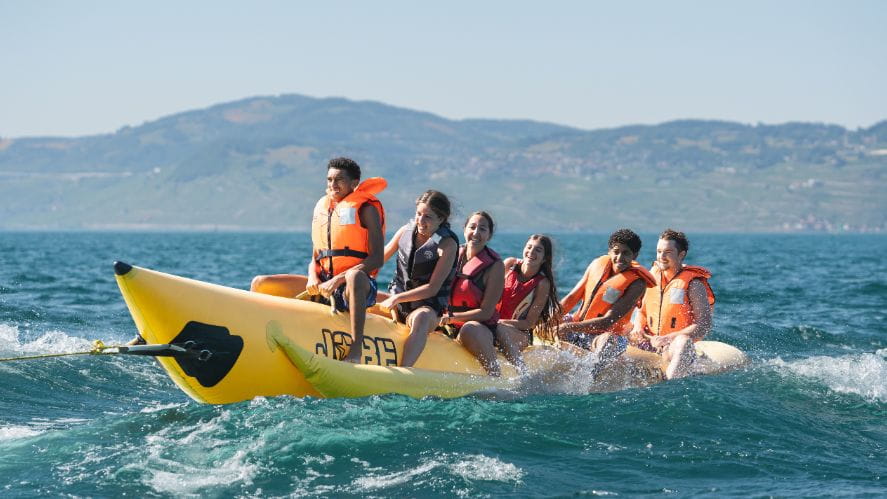
The experiences extend far beyond workshops. Watersports on Lake Geneva, adventures in the Swiss Alps, excursions, and shared moments of camp life allow young people to apply their newly developed skills and discover their abilities in a variety of settings.
The programme is suitable both for teenagers who naturally take initiative and for those who wish to become more confident and learn to express their ideas. The objective is to help each participant recognise their strengths, develop their potential, and enjoy an experience whose benefits extend well beyond the summer.
For families looking for a summer camp in Switzerland that combines leadership development, international friendships, and attentive supervision, Champittet Leadership Camp provides a stimulating and supportive environment where young people can learn, explore, and grow.
Discover Champittet Leadership Camp in Switzerland and explore our programme, dates and fees.
[Link to Champittet Leadership Camp landing page]
Frequently Asked Questions
How do I choose the best summer camp for my child?
The best summer camp is one that matches your child’s personality, interests, and goals. Parents should compare the programmes on offer, camp size, age groups, quality of supervision, and the environment in which students will spend their time.
For more guidance, read our articleHow to Choose the Right International Summer Camp.
What is the best age for a child to attend a summer camp abroad?
There is no single ideal age for every child. Some feel ready at 10 or 11, while others prefer to wait. Maturity, enthusiasm, and the quality of the support provided are important factors to consider.
Explore our article Is Your Child Ready for a Residential Summer Camp Abroad?to help assess your child’s readiness.
Why choose Switzerland for an international summer camp?
Switzerland is valued for its safety, international outlook, infrastructure, and diverse natural landscapes. Young people can combine cultural discovery, outdoor activities, and educational experiences in a stimulating environment.
Learn more in Why Switzerland Is the Ideal Destination for an International Summer Camp.
What skills can students develop at a leadership camp?
A leadership camp helps young people strengthen their confidence, communication, teamwork, creativity, resilience, and problem-solving skills. These abilities are generally developed through collaborative projects and hands-on experiences.
Read What Does Leadership Development Look Like for Teenagers? for more information.
How do summer camps support children experiencing homesickness?
Attentive supervision, a welcoming environment, and activities that encourage friendships can help children gradually adjust. It is also important that campers know whom to approach when they need reassurance or support.
Explore Safety, Supervision and Wellbeing at a Residential Summer Camp to learn more.
What is the difference between a leadership camp and a language camp?
A language camp focuses on structured language learning, while a leadership camp emphasises interpersonal skills, self-confidence, and teamwork. In an international setting, leadership camps may also provide many opportunities to practise a language naturally.
For a detailed comparison, read Leadership Camp vs. Traditional Language Camp.
How can I prepare my child for their first residential summer camp?
It is helpful to discuss their expectations, encourage small responsibilities before departure, and explain that some nervousness is normal. Learning about the camp’s supervision arrangements and communication procedures can also help families prepare with confidence.
Find practical advice inFirst Time Away From Home: Preparing for a Residential Summer Camp.
What happens during the two weeks at Champittet Leadership Camp?
The programme combines leadership workshops, collaborative projects, outdoor activities, excursions, and experiences developed with educational partners. Campers explore leadership through practical challenges, activities connected to sport and Olympic values, and adventures in the Swiss Alps.
For a closer look at the programme, read Two Weeks in the Life of a Summer Leadership Camper.
Related news
News image ![Is Your Child Ready for a Residential Summer Camp Abroad? - Ready for a Residential Summer Camp]() Blog | Our Blog
 Blog | Our Blog
Is Your Child Ready for a Residential Summer Camp Abroad?
For many families, a residential summer camp abroad is a child's first experience of living away from home. It can be an exciting step towards greater independence, but it is also natural to wonder whether your child is truly ready.
News image ![Safety, Supervision and Wellbeing at a Residential Summer Camp - Safety Supervision and Wellbeing at a Residential Summer Camp]() Blog | Our Blog
 Blog | Our Blog
Safety, Supervision and Wellbeing at a Residential Summer Camp
For many parents, choosing a residential summer camp is not just about the activities or destination.
News image ![Leadership Camp vs. Traditional Language Camp - Leadership Camp vs Traditional Language Camp]() Blog | Our Blog
 Blog | Our Blog
Leadership Camp vs. Language Camp
Choosing the right summer programme for your child often comes down to one question: what do you want them to gain from the experience?
News image ![How to Choose the right International Summer Camp - How to Choose the right International Summer Camp]() Blog | Our Blog
 Blog | Our Blog
How to Choose the right International Summer Camp
Choosing an international summer camp is an exciting decision, but with so many programmes available, it can quickly become overwhelming.