



We use cookies to improve your online experiences. To learn more and choose your cookies options, please refer to our cookie policy.
03 November, 2026
Leadership Camp vs. Language Camp
Choosing the right summer programme for your child often comes down to one question: what do you want them to gain from the experience?
For some families, the priority is language learning. For others, it is confidence, independence, leadership, and personal growth. Understanding the differences between these types of programmes can help you choose the experience that best matches your child's goals.
If you are still evaluating different options, our guide on How to Choose the Right International Summer Camp can help identify the factors that matter most for your family.
What Is a Language Summer Camp?
Language camps are primarily designed to help students improve their skills in a particular language, whether English, French, German, or another language.
A typical language camp combines classroom lessons with sports, excursions, and social activities. Students practise the language throughout the day, both during lessons and in everyday interactions with their peers.
Students often leave with improved vocabulary, greater confidence when speaking, and a stronger understanding of the culture associated with the language.
What Is a Leadership Camp?
A leadership camp focuses less on language acquisition and more on developing the human skills that help young people thrive in school, university, and future careers.
These skills include:
- Communication
- Teamwork
- Emotional intelligence
- Public speaking
- Creativity
- Adaptability
- Problem-solving
- Confidence
- Cross-cultural collaboration
Rather than learning through traditional lessons, students typically develop these abilities through projects, challenges, workshops, and real-world experiences.
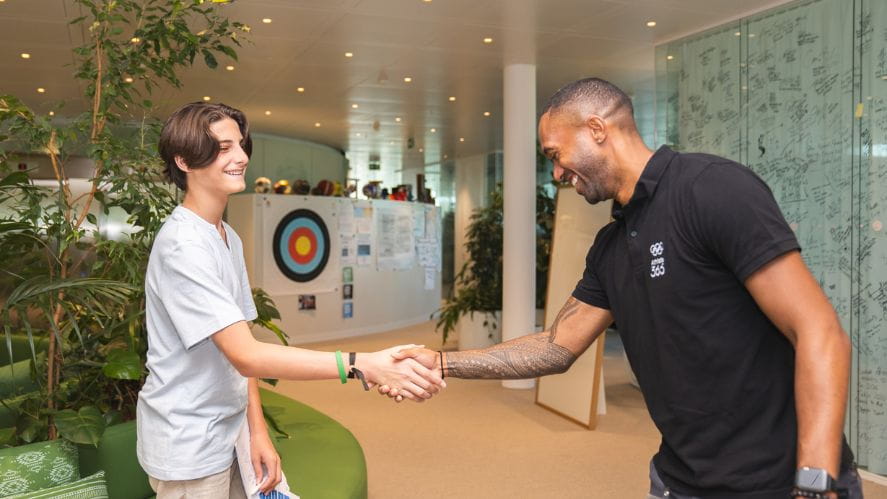
At Champittet Leadership Camp, for example, students work together on practical challenges, meet inspiring professionals and Olympian athletes, and participate in experiences that encourage them to step outside their comfort zone while learning how to collaborate effectively with others.
Curious about what this experience looks like in practice? Read Two Weeks in the Life of a Summer Leadership Camper.
The Future May Value Human Skills More Than Ever
For decades, academic knowledge and technical expertise have been the primary focus of education.
Today, however, artificial intelligence is changing the landscape. Many technical tasks are becoming automated, and information has never been easier to access.
As a result, skills that are uniquely human are becoming increasingly valuable.
The ability to communicate clearly, build relationships, understand emotions, resolve conflicts, and collaborate with diverse teams cannot easily be replaced by technology.
This is one reason why leadership programmes have gained popularity in recent years. They focus on helping young people develop skills that remain relevant regardless of how industries and careers evolve.
Discover more about these future-ready skills in our article What Does Leadership Development Look Like for Teenagers?
Learning Through Experience
One major difference between language camps and leadership camps is the way students learn.In a language camp, progress often comes through lessons, exercises, speaking practice, and immersion.
In a leadership camp, learning happens through experience.
At Champittet Leadership Camp, students visit EHL Hospitality Business School, where they explore real-life situations involving communication, teamwork, customer interactions, and problem-solving. They then apply these lessons through practical team challenges.
The objective is not to learn hospitality. It is to understand how to work effectively with people.
How do you communicate when opinions differ? How do you deal with unexpected challenges? How do you build trust within a team?
These are questions that young people will encounter throughout their lives, regardless of their future profession.
Leadership Is Not Just for Extroverts
Parents sometimes assume that leadership programmes are only suitable for outgoing teenagers.
In reality, leadership has very little to do with personality.
Some students lead by speaking confidently in front of a group. Others lead through empathy, listening, organisation, creativity, or the ability to bring people together.
A shy student can be a leader.
An introverted student can be a leader.
A good leadership programme helps young people recognise their strengths and find the leadership style that feels authentic to them.
Rather than trying to transform every camper into the same type of person, the goal is to help each individual discover their own voice.
Can a Programme Do Both?
Increasingly, families are looking for programmes that combine elements of both.
After all, language learning and leadership development are not mutually exclusive.
At Champittet Leadership Camp, many campers naturally improve their English simply through daily interactions with international classmates and staff. At the same time, they are developing confidence, communication skills, and cultural awareness through projects and activities.
Language becomes a tool for connection rather than the sole focus of the programme.
Which Camp Is Right for Your Child?
There is no universal answer.
For some students, improving a language is the priority. For others, developing confidence, leadership skills, and global awareness may be the most valuable outcome.
The most important question is not which type of camp is better, but which experience best aligns with your child's interests, goals, and stage of development.
For many families, a leadership camp offers a unique opportunity to develop the skills that will remain valuable long after specific academic knowledge or technologies evolve.
Discover Champittet Leadership Camp
At Champittet Leadership Camp, students develop confidence, communication, teamwork, and leadership skills through hands-on challenges, international friendships, outdoor adventures, and inspiring workshops with partners such as EHL and the International Olympic Committee. Rather than simply learning about leadership, campers experience it every day.
Ready to help your child develop the confidence and human skills needed to thrive in tomorrow's world? Discover Champittet Leadership Camp in Switzerland and explore our programme, dates and fees. (Link to camp landing page)
Related news
News image ![Guide to Choosing a Summer Camp in Switzerland - Guide to Choosing a Summer Camp in Switzerland]() Blog | Our Blog
 Blog | Our Blog
Guide to Choosing a Summer Camp in Switzerland
Practical Guide to Summer Camps in Switzerland: activities, supervision, safety, personal development, and key questions to ask before making your choice.
News image ![Is Your Child Ready for a Residential Summer Camp Abroad? - Ready for a Residential Summer Camp]() Blog | Our Blog
 Blog | Our Blog
Is Your Child Ready for a Residential Summer Camp Abroad?
For many families, a residential summer camp abroad is a child's first experience of living away from home. It can be an exciting step towards greater independence, but it is also natural to wonder whether your child is truly ready.
News image ![Safety, Supervision and Wellbeing at a Residential Summer Camp - Safety Supervision and Wellbeing at a Residential Summer Camp]() Blog | Our Blog
 Blog | Our Blog
Safety, Supervision and Wellbeing at a Residential Summer Camp
For many parents, choosing a residential summer camp is not just about the activities or destination.
News image ![Leadership Camp vs. Traditional Language Camp - Leadership Camp vs Traditional Language Camp]() Blog | Our Blog
Blog | Our Blog Leadership Camp vs. Language Camp
Choosing the right summer programme for your child often comes down to one question: what do you want them to gain from the experience?
News image ![How to Choose the right International Summer Camp - How to Choose the right International Summer Camp]() Blog | Our Blog
 Blog | Our Blog
How to Choose the right International Summer Camp
Choosing an international summer camp is an exciting decision, but with so many programmes available, it can quickly become overwhelming.