


We use cookies to improve your online experiences. To learn more and choose your cookies options, please refer to our cookie policy.
03 November, 2026
Is boarding school right for your child?
Choosing whether to send a child to boarding school is one of the most significant decisions a family makes. It is not right for every child, and it is not right at every stage. But for the children it suits, the experience can be genuinely transformative in ways that a day school, however good, simply cannot replicate.
This article covers the key questions to consider before making the decision to board. For a complete guide to every aspect of choosing a boarding school in Switzerland, our Parent's guide to choosing a boarding school in Switzerland is a useful starting point.
The decision deserves careful thought, honest conversation and a clear-eyed look at both the child and the family's circumstances.
A child who is curious about boarding, who has visited a school and been drawn to what they saw, is in a very different position from one who feels the decision is being made for them. Children who thrive in boarding almost always share certain qualities: genuine social curiosity, a degree of emotional resilience and some capacity for independence. None of these need to be fully formed before boarding starts. But the seed needs to be there.
Children who struggle most are typically those who are deeply home-dependent, who find new social environments very difficult or who feel the decision was made without them. Honest conversation about the reality of boarding, including the difficult parts, is more useful than reassurance.
Many families choose boarding not primarily because of the school itself but because of their own circumstances. International relocation, frequent travel for work, a move to a country where local schooling is not suitable: all of these are legitimate reasons to consider boarding. Boarding schools are experienced in supporting children whose family situations are complex.
The consistency boarding provides can be genuinely stabilising in these cases. A child whose home life involves a lot of disruption often finds the predictable structure of a boarding house reassuring. The relationship with house parents and a consistent peer group provides a continuity that is hard to replicate elsewhere.
Boarding schools vary enormously in size, culture and ethos. A child who thrives in a large, busy environment is different from one who needs a smaller setting where they are known well by the adults around them. School size is a meaningful variable. In a smaller boarding community, pastoral relationships tend to be closer and the social environment more tightly knit.
A community with capacity for 130 students, operating on a family-style model with dedicated boarding staff, is a very different experience from a school of several hundred boarders where students can go unnoticed.
Boarding involves separation, and separation is hard, particularly at first. Most boarding students experience some degree of homesickness in the early weeks. What matters is how both the school and the family handle it. A school with strong pastoral care monitors new students closely, communicates proactively with parents and acts early if a child is struggling. A family that trusts the process and maintains regular but not excessive contact gives their child the best chance of getting through the initial adjustment.
When visiting schools, the questions worth focusing on are pastoral as much as academic. Who are the house parents? How long have they been in post? What is the ratio of staff to students in the boarding house? How quickly does the school respond to parent concerns? Academic results are easy to find online. The quality of pastoral care is harder to assess from a distance and the campus visit is where you feel it.
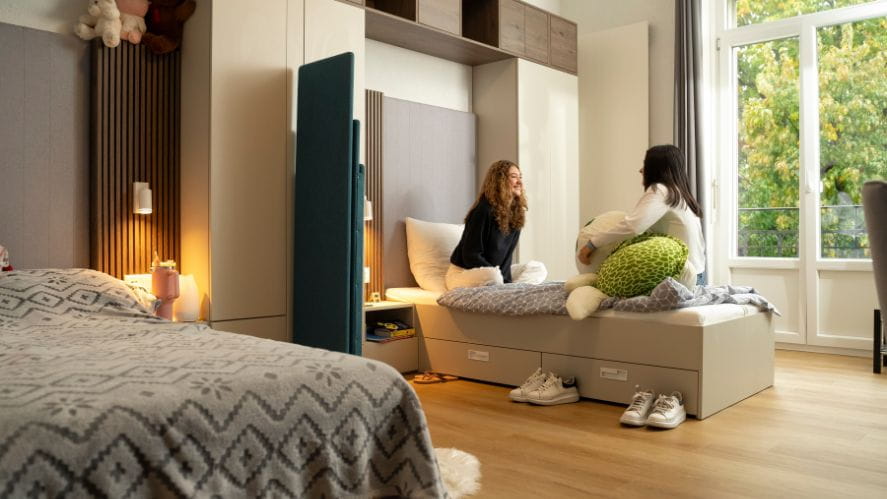
Boarding is available at Champittet from age ten. The community is deliberately small, so every student is known well by house parents and pastoral staff. The health and wellbeing team includes a school nurse and dedicated counsellor who work with boarders individually and communicate proactively with families throughout the term.
To find out more about whether boarding might suit your child, contact our admissions team for a conversation or book a visit to see the community in person.
Our Parent's guide to choosing a boarding school in Switzerland covers the full picture for families at the start of their research.
References
Schaverien, J. (2015). Boarding school syndrome: The psychological trauma of the "privileged" child. Routledge.
This article covers the key questions to consider before making the decision to board. For a complete guide to every aspect of choosing a boarding school in Switzerland, our Parent's guide to choosing a boarding school in Switzerland is a useful starting point.
The decision deserves careful thought, honest conversation and a clear-eyed look at both the child and the family's circumstances.
What does your child actually want?
A child who is curious about boarding, who has visited a school and been drawn to what they saw, is in a very different position from one who feels the decision is being made for them. Children who thrive in boarding almost always share certain qualities: genuine social curiosity, a degree of emotional resilience and some capacity for independence. None of these need to be fully formed before boarding starts. But the seed needs to be there.Children who struggle most are typically those who are deeply home-dependent, who find new social environments very difficult or who feel the decision was made without them. Honest conversation about the reality of boarding, including the difficult parts, is more useful than reassurance.
Is your family situation a factor?
Many families choose boarding not primarily because of the school itself but because of their own circumstances. International relocation, frequent travel for work, a move to a country where local schooling is not suitable: all of these are legitimate reasons to consider boarding. Boarding schools are experienced in supporting children whose family situations are complex.The consistency boarding provides can be genuinely stabilising in these cases. A child whose home life involves a lot of disruption often finds the predictable structure of a boarding house reassuring. The relationship with house parents and a consistent peer group provides a continuity that is hard to replicate elsewhere.
What kind of school environment suits your child?
Boarding schools vary enormously in size, culture and ethos. A child who thrives in a large, busy environment is different from one who needs a smaller setting where they are known well by the adults around them. School size is a meaningful variable. In a smaller boarding community, pastoral relationships tend to be closer and the social environment more tightly knit. A community with capacity for 130 students, operating on a family-style model with dedicated boarding staff, is a very different experience from a school of several hundred boarders where students can go unnoticed.
How will you manage the emotional side?
Boarding involves separation, and separation is hard, particularly at first. Most boarding students experience some degree of homesickness in the early weeks. What matters is how both the school and the family handle it. A school with strong pastoral care monitors new students closely, communicates proactively with parents and acts early if a child is struggling. A family that trusts the process and maintains regular but not excessive contact gives their child the best chance of getting through the initial adjustment.
What to look for in a boarding school
When visiting schools, the questions worth focusing on are pastoral as much as academic. Who are the house parents? How long have they been in post? What is the ratio of staff to students in the boarding house? How quickly does the school respond to parent concerns? Academic results are easy to find online. The quality of pastoral care is harder to assess from a distance and the campus visit is where you feel it.
At Collège Champittet
Boarding is available at Champittet from age ten. The community is deliberately small, so every student is known well by house parents and pastoral staff. The health and wellbeing team includes a school nurse and dedicated counsellor who work with boarders individually and communicate proactively with families throughout the term.“I feel like I am becoming more social, boarding teaches us how to respect each other and take good care of each other. It's important to know that the people with whom you share your daily life can become a second family to you.” Emilia, student
To find out more about whether boarding might suit your child, contact our admissions team for a conversation or book a visit to see the community in person.
Our Parent's guide to choosing a boarding school in Switzerland covers the full picture for families at the start of their research.
Frequently asked questions
What qualities do children need to thrive in boarding school?
Children who do best in boarding tend to be socially curious, reasonably resilient and capable of some independence. These qualities do not need to be fully formed before boarding starts, but the foundation needs to be there.How do boarding schools handle homesickness?
Experienced boarding schools monitor new students closely in the first weeks of term, maintain proactive communication with parents and intervene early when a child is struggling. Most children find homesickness eases significantly as friendships form and routines become familiar.References
Schaverien, J. (2015). Boarding school syndrome: The psychological trauma of the "privileged" child. Routledge.
Related news
News image ![How to Choose a Boarding School in Switzerland - Guide to choosing a boarding school in Switzerland]() Blog | Our Blog
 Blog | Our Blog
Guide to choosing a boarding school in Switzerland
A practical guide to boarding schools in Switzerland, covering student life, wellbeing, academic pathways, fees and questions to ask before choosing.
News image ![Why a day and boarding school offers the best of both worlds - Why a day and boarding school offers the best of both worlds]() Blog | Our Blog
 Blog | Our Blog
Why a day and boarding school offers the best of both worlds
Can't decide between day school and boarding? A school that offers both gives families maximum flexibility. Here is why the combined model works so well.