



We use cookies to improve your online experiences. To learn more and choose your cookies options, please refer to our cookie policy.
08 January, 2026
Equity in Action: What Placement Means at Dover Court
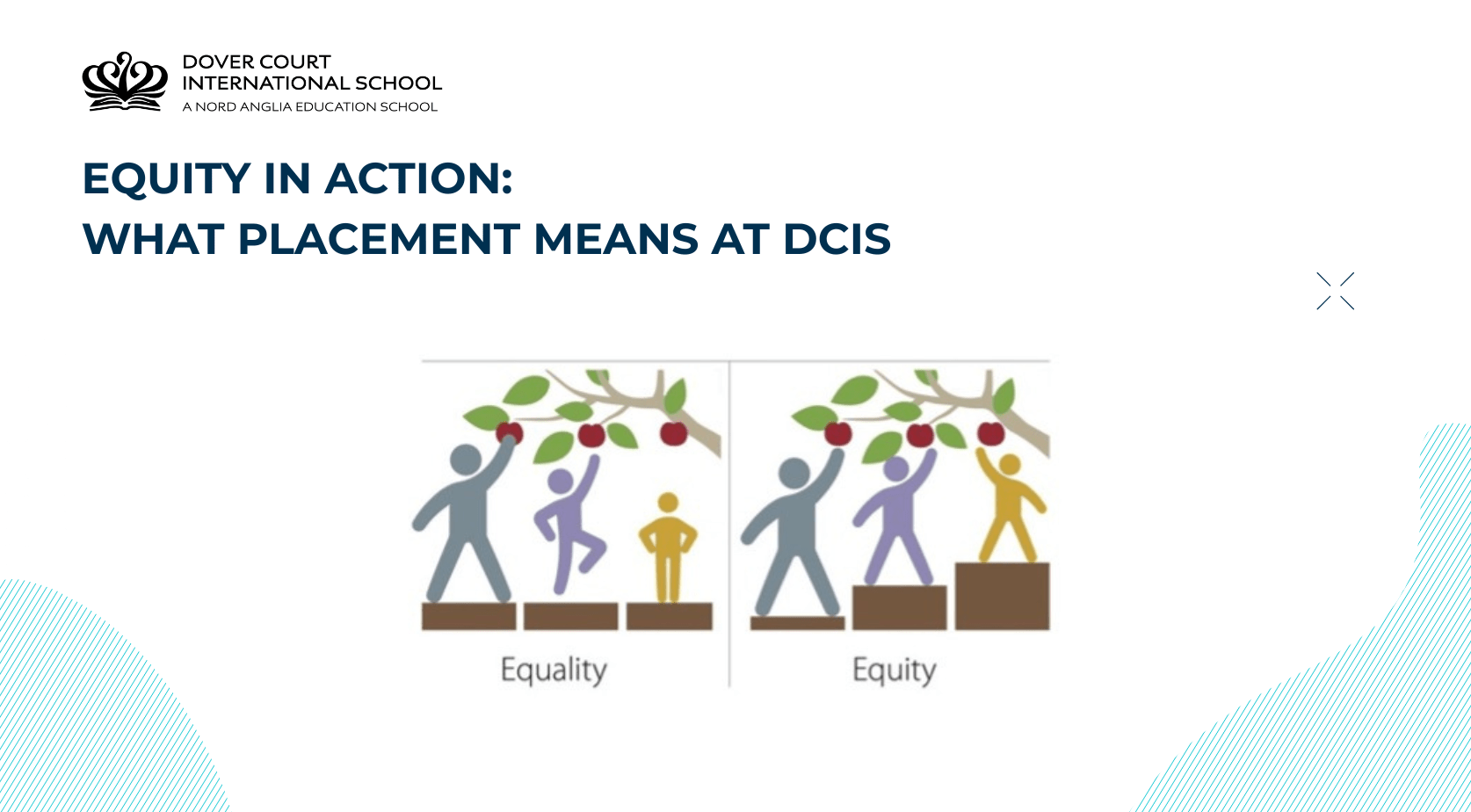
At Dover Court International School (DCIS), we often talk about placement in terms of Pathways, i.e. P1, P2, and P3. These reflect different levels of support and classroom environments.
We know that in broader society, there’s a deep-rooted belief that the goal is always to move toward the “mainstream”, that success means needing less support, being in a specific type of classroom, or learning alongside specific student profiles. This common belief is based on ableist assumptions that don’t always reflect how learning truly works nor accounts for everyone's inherent worth. We’d like to take a moment to clarify how we think about placement, and why it matters for inclusion.
Appropriate Support, Not Competition at DCIS
- Placement is based on the level of support required to thrive, not on neurotype, behaviour, or ability.
- Progress looks different for every learner, and all pathways are equally valuable learning environments.
Inclusion Means Belonging and Successful Access, Not Sameness
Every student deserves to feel safe, respected, and understood, which includes having peers and adults around them who celebrate their progress without comparing it to someone else’s. Sometimes families ask: “Isn’t the goal for a student to eventually be in P1?”. At DCIS, the goal is always the same: for our students to thrive. If that happens in P1, P2 or P3, then the placement is working. If needs shift, we work together to explore change through our integration process. Here are a few simple but meaningful ways you can support our school ethos:
Avoid Comparing
While it's natural to want to understand how your child is doing, comparing children is rarely helpful, especially when it is based on assumptions about other students whom you do not know well. Every learner has a different profile, different support areas, and a different path. Progress is not a race; it is not linear, and one student’s growth does not diminish another’s.
Instead of asking “Why is my child in this group and not with ___?”, try focusing on “What’s helping my child thrive right now?”, “What does progress look like for them?”, and “What strategies can we keep building on?”
Use Inclusive Language
The words we use shape how students see themselves, and how others see them. While words / comments may be well-meaning, sometimes, conversations can unintentionally use language that feels unsafe or exclusionary to other families and/or staff, especially when we’re advocating for our own children. We ask all parents to reflect on how we speak about learning profiles, placement, progress, and support, in face-to-face conversations, over chat groups, and social media.
- Avoid phrases like “They’re stuck in X pathway”, “They’re still not in mainstream”, or "My child is copying x behaviour"
- Try saying “My child is currently accessing X pathway, which provides the support they need for their learning", “they’re in a learning environment that meets their learning, sensory and communication needs”, "children communicate differently", and "different behaviours do not mean unsafe behaviours".
Presume Competence, i.e. capacity to learn
Presuming competence means believing that every student, regardless of pathway, communication style, or neurotype, is capable of developing new skills with the appropriate support in place. It does not mean assuming the students already know something or expecting all students to do the same thing in the same way, at the same time.
We approach this with the mindset of “I trust that my child, and every child, has the capacity to learn when given the right support. I may not always see their growth in the same way, but I believe it can happen.”
Questions and Answers
We know that conversations about pathway placement can be complex, especially when you’re thinking about your child's future. Below are some of the most common questions we hear, along with answers that reflect our school’s inclusive and neurodiversity affirming approach.
- My child is achieving all their goals; shouldn’t they move to another pathway?
Not necessarily. If your child is thriving and learning new skills, it often means the support in their current environment is working. The goal is not to “graduate” from support, and it is not a reward for doing well or to achieve a future goal expectation. It is to be in an environment that helps them succeed and feel safe. If needs change over time, we’ll explore this thoughtfully through our integration process.
- I want my child to do exams and/or go to university, they can’t do that from this pathway, right?
High, realistic expectations that are neuro-developmentally appropriate for each child exist in every placement at DCIS. Success does not depend, nor is it measured in a pathway with less support; it depends on how well we support our students to access learning in a way that is beneficial for them. We support a wide range of outcomes across all three pathways, including access to exams and further education. As students move through school, we can discuss what the options look like for them.
- Aren’t pathways separating students? Isn’t inclusion about keeping everyone together?
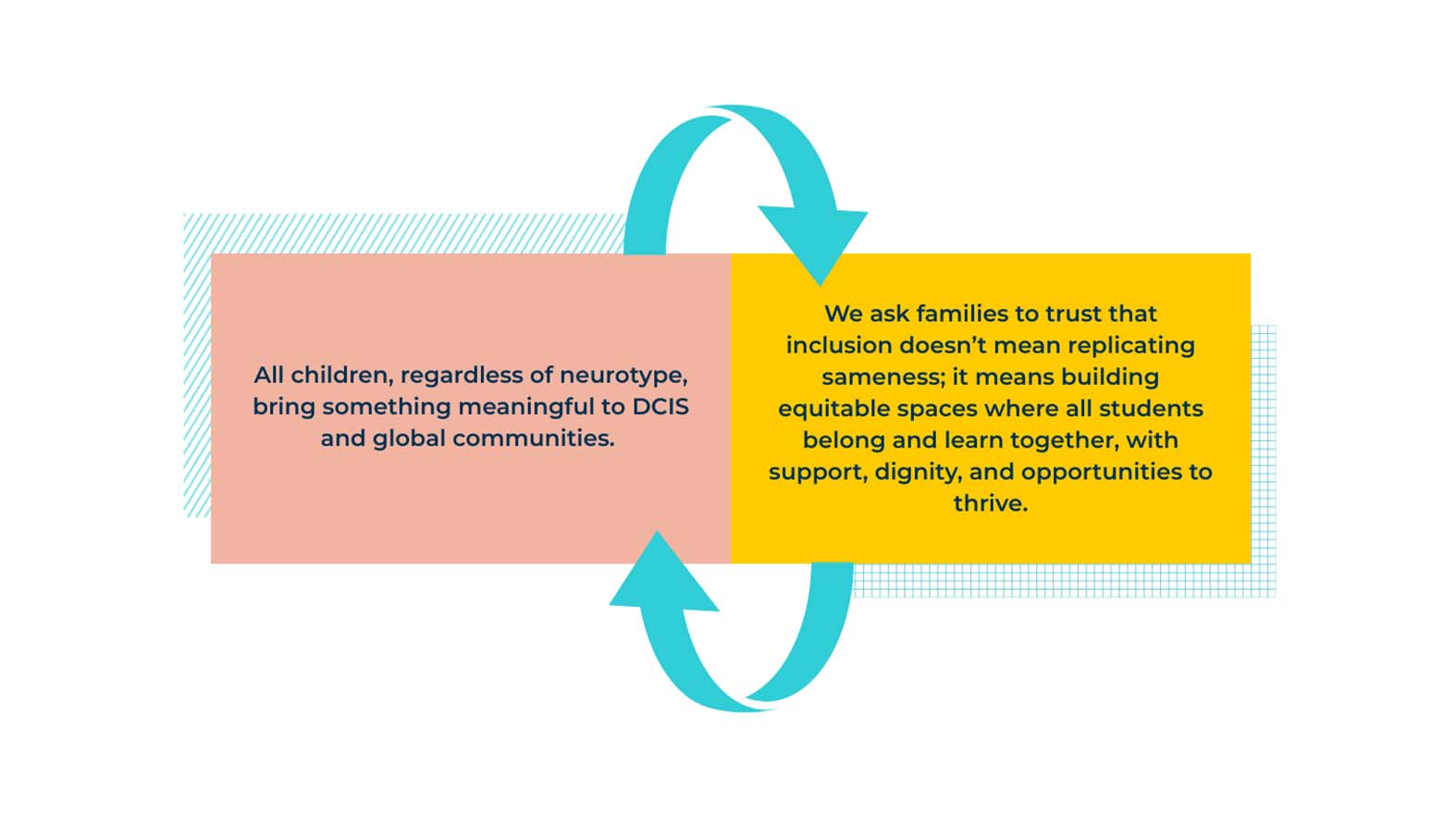
Inclusion isn’t about everyone being in the same room doing the same thing. That’s sameness, not equity. At DCIS, inclusion is reinforced through responsive support, which means ensuring all students are supported to access learning, relationships, and school life in ways that meet their needs. Pathways allow for that support to be tailored and responsive, and they are not closed systems. We create opportunities for participation across pathways through integrated specialist lessons, shared break / lunch times and community events, twinning opportunities between classes, and academic and social integration based on individual profiles.
- My child is more capable than the other children in their class. Shouldn’t they be somewhere else?
Sometimes a student seems “more capable” because they appear to manage expectations through masking. What looks like a difference in ability may actually be a difference in how students express themselves, process the environment, or manage social and sensory demands. Remember: you cannot holistically know your child’s peers; their profiles and their strengths are not always visible to you. At DCIS, placement is based on support needs, not neurotype and not perceived learning potential. This is true across all pathways, where each class includes a wide range of profiles. We ask families to keep discussions centred on their child, not on comparisons with peers. Students thrive when they feel safe, understood, and included.
- I want my child to be around neurotypical peers so they can learn from “good role models.” Isn’t that important?
This common line of thinking rests on the assumption that neurotypical students are inherently more desirable role models. All students, regardless of neurotype, benefit from diverse models of communication, empathy, curiosity, resilience, and kindness, and neurodivergent students are just as capable of being role models as their neurotypical peers. It’s important to remember that, at DCIS, there are neurodivergent peers across all pathways while thriving as their authentic selves. We do not expect neurodivergent students to conform to and/or copy their neurotypical peers, which can lead to masking that is linked to poorer emotional wellbeing and mental health outcomes. We build environments around what each child needs and not the neurotype of who they sit next to.
A Note to the Parent Community
Our words shape our community, and all our students are listening, so let's aim for safety and empathy. Watch out for a future newsletter where we'll discuss the concepts of neuro-affirmative language.
Related news
News image ![Neurodiversity - Neurodiversity]() Blog
Blog
 Blog
Blog Neurodiversity: A Paradigm Shift Towards Inclusion and Belonging
In our ongoing journey to create a supportive environment for every child, we’re pleased to share insights on neurodiversity and its significance within our learning community. This article serves as a valuable resource for all families, offering practical strategies and insights to promote inclusion throughout the entire school community.
News image ![How Dover Court Develops Leadership, Initiative and Human Skills - How Student Voice and Leadership Come to Life at Dover Court]() Blog | Art Drama and Music | Academic
Blog | Art Drama and Music | Academic
 Blog | Art Drama and Music | Academic
 How Student Voice and Leadership Come to Life at Dover Court
What happens when students are empowered to turn ideas into reality? Discover how Year 9 student Daksh developed leadership, communication and problem-solving skills through a student-led initiative, and how experiences like these help young people develop the human skills needed for the future.
News image ![Why Struggle and Joy Belong Together in Maths | Dover Court International School Singapore - Why Struggle and Joy Belong Together in Maths]() Blog | Academic | Parent Guides
Blog | Academic | Parent Guides
 Blog | Academic | Parent Guides
 Why Struggle and Joy Belong Together in Maths: Reflections from a Parent Workshop
How can we help children develop confidence and enjoyment in mathematics? Following a parent workshop at Dover Court International School, internationally recognised mathematics educator Dr Jennifer Chang Wathall explores the relationship between challenge, resilience and joyful learning.
News image ![Student Leadership at Dover Court International School Singapore | Meet Our 2026-27 Head and Deputy Head Students - Student Leadership at Dover Court Meet Our Head and Deputy Head Students for 2026-27]() News
News
 News
News Student Leadership at Dover Court: Meet Our Head and Deputy Head Students for 2026-27
Meet our Head and Deputy Head Students for 2026-27 and learn how leadership opportunities at Dover Court help students develop confidence, responsibility and a strong sense of community. From Primary School leadership opportunities to student-led initiatives and global experiences, leadership is nurtured at every stage of the Dover Court journey.


