

How Reflection Strengthens Learning in the Primary Years at Dover Court

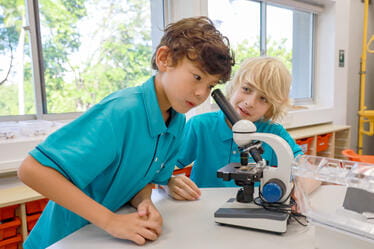
At Dover Court International School (DCIS), we believe that learning is most powerful when students understand how they learn, not just what they learn. Our reporting process in the Primary School is designed with this in mind, placing student voice, reflection, and metacognition at the heart of every child’s learning journey.
Our reporting cycle intentionally blends teacher insight with authentic student reflections. This approach not only celebrates achievement but also supports independence, confidence, and growth – qualities that matter just as much as academic progress.
Why Reflection Matters at DCIS
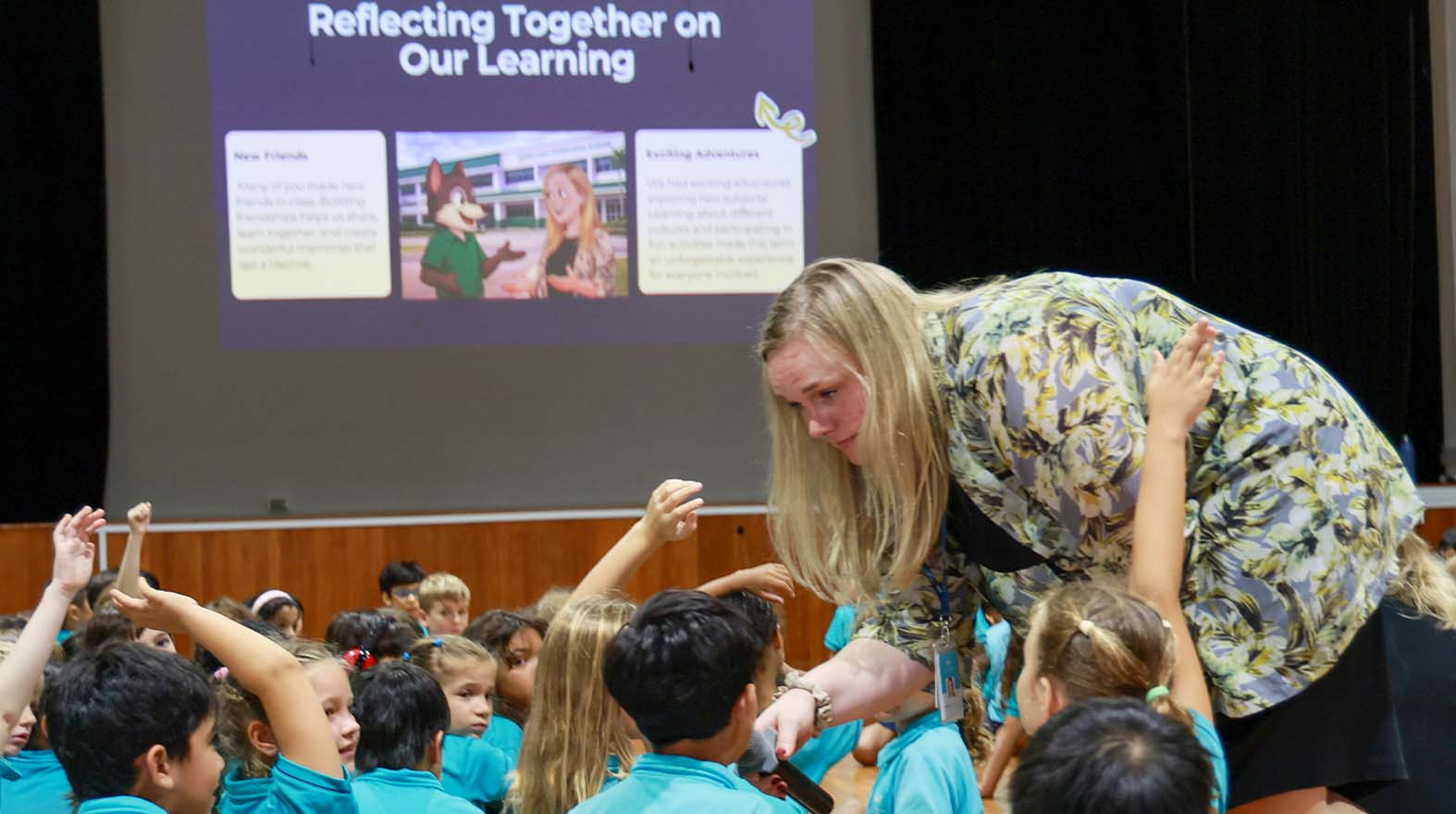
At DCIS, we recognise reflection as a vital element of both learning and reporting. Instead of being a task at the end of a unit, it is a skill – one that helps children make sense of their progress, recognise personal strengths, and set goals for the future.
Reflective practises at DCIS:
- Strengthen student agency – helping children make informed choices about their learning and take an active role in shaping their progress
- Build metacognitive skills (thinking about one’s thinking)
- Encourage ownership and pride in learning
- Help children connect learning experiences across subjects
These methods are strongly rooted in our concept‑based inquiry model, which encourages students to ask questions, make connections, and think critically, preparing them for a rapidly changing world.
What the Research Tells Us
International educational research consistently highlights the value of reflection:
The OECD Future of Education and Skills 2030 Framework emphasises reflection as a key driver of student agency and lifelong learning.
The World Economic Forum’s Future of Jobs Report identifies skills like analytical thinking, creativity, and flexibility as essential for future careers, all of which are strengthened through reflective practice.
Through Nord Anglia Education’s partnerships with Boston College and Project Zero at the Harvard Graduate School of Education, we continue to refine our metacognitive teaching strategies, helping students better understand their own thinking.
At DCIS, we actively apply this research in the classroom, ensuring our students are not just keeping pace with global expectations but confidently leading their own learning.

How We Embed Reflection Across the Primary School
Reflective Highlights on Seesaw
From Year 1 onwards, students curate “Highlights” folders on Seesaw. These digital portfolios capture moments of learning from across the curriculum:
- Years 2–6: English, Maths, IPC, PE, Music, Mandarin, Computing
- Year 1: English, Maths, IPC
Each reflection helps students articulate what they learned, what they are proud of, and where they want to grow next. Many reflections are also linked to Approaches to Learning (ATLs), supporting skills such as communication, research, thinking, and self‑management.
These insights give families a window into the classroom and allow for rich, child-led conversations at home.
Voices From Our Student Councillors
Our student councillors have also contributed their perspectives, sharing what reflection means to them and why it matters. Their insights help younger students understand that reflection is a normal and valuable part of learning.
Early Years: Learning Through Exploration
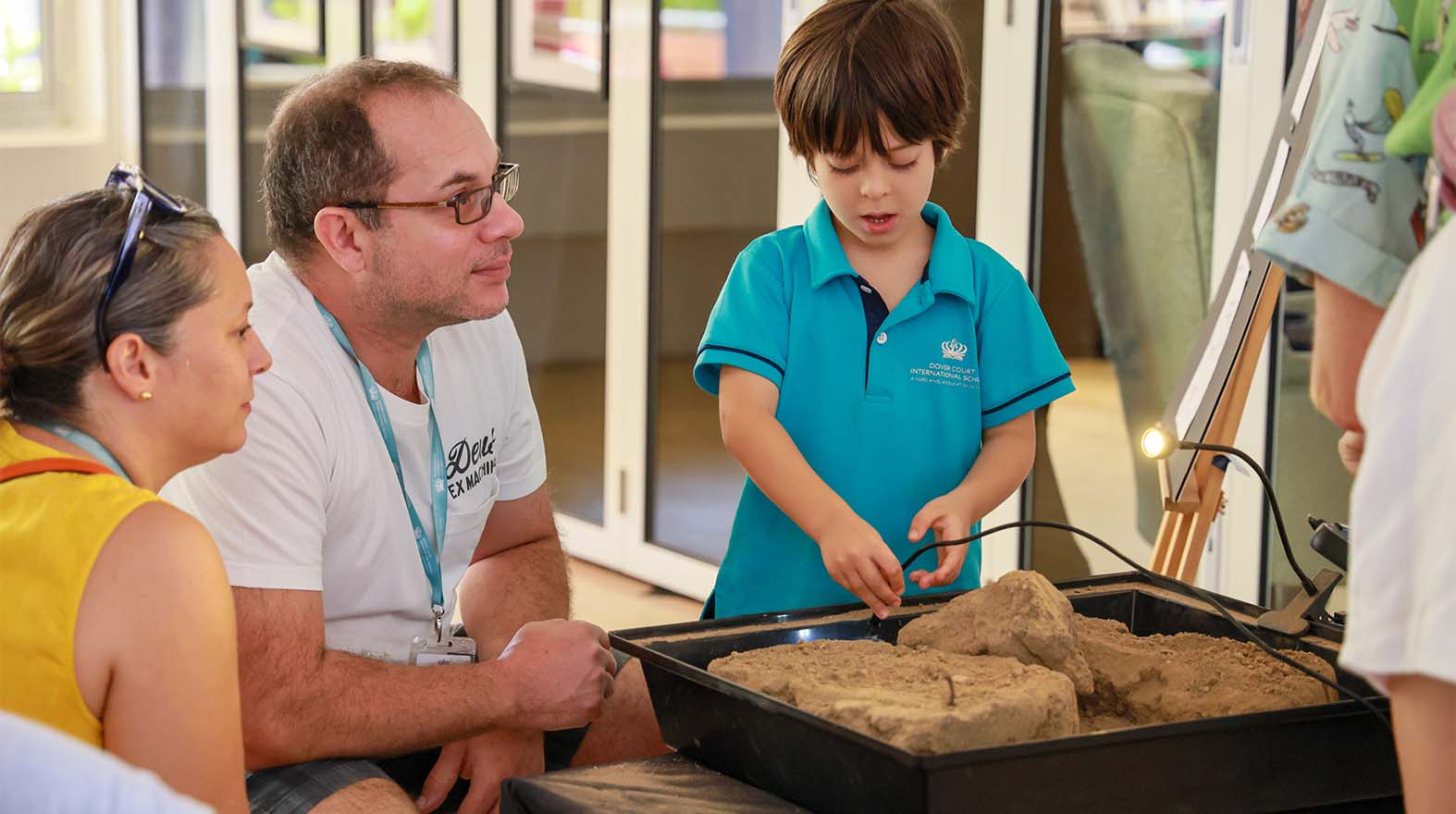
In Early Years classes, reflection is embedded naturally into play-based and Reggio-inspired learning. Families regularly see this through Seesaw updates and during events such as the EYFS Exhibition of Learning — where children proudly share their discoveries, questions, and creations.
What Parents Receive During the Reporting Cycle
Our Primary report package includes two key components:
1. Data Report (via Parent Portal)
- Attainment data in English, Maths, and specialist subjects • Effort gradings
- Class teacher’s comment summarising progress, achievements, next steps, and learning behaviours
2. Student Reflections (via Seesaw Highlights)
- Personal reflections across core and specialist subjects
- References to ATLs and conceptual understanding
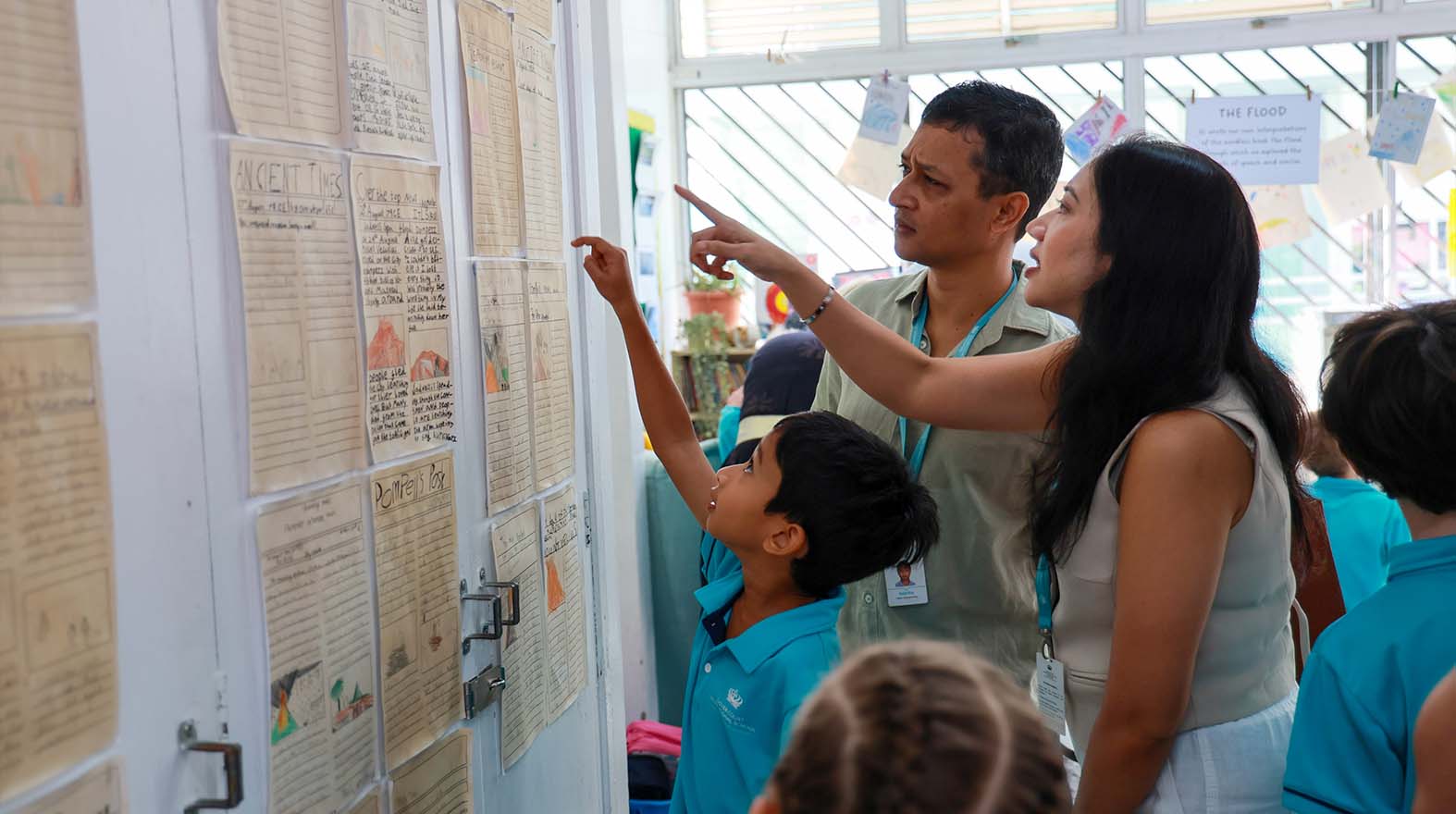
We encourage parents to explore these reflections together with their child, it’s a wonderful chance to celebrate growth and nurture meaningful conversations about learning.
Growing Lifelong Learners
At DCIS, our goal is for every child to grow as a curious, capable, and reflective learner. By placing reflection at the centre of our reporting process, and by using tools like Seesaw to make learning visible, we empower students to take purposeful steps toward their goals.
We are proud to work in partnership with families to help every child grow as a confident, reflective learner. We look forward to continuing to share the rich learning taking place across our Primary School with our DCIS families.
Related news
 Blog | Academic
  Blog | Academic
  Blog
Blog  Blog | Parent Guides | Early Years
  News | Academic


