Why back-to-school anxiety happens
Children's anxiety about returning to school is almost always about uncertainty. They do not know what the classroom will feel like. They do not know whether they will find a friend. They do not know whether the work will be manageable. In younger children especially, these fears rarely get expressed directly. Instead, they show up as clinginess, stomach aches, sleep disruption, or sudden reluctance around things that were previously fine.
Understanding the cause helps. These behaviours are not manipulation or weakness. They are normal responses to an uncertain situation, and they tend to resolve as soon as the child has experienced a few good days at school.
If you are still working through the practical side of September, our full Back to School in Madrid guide covers everything from term dates to checklists for new families.
What the research tells us
Research published by the Child Mind Institute finds that school-related anxiety is one of the most common childhood concerns, affecting children across all ages and backgrounds. Importantly, the research also shows that the quality of the school environment, specifically how safe, known, and connected a child feels, is one of the strongest factors in how quickly anxiety resolves.
That has a direct implication for how schools should approach the start of term, and how parents can help at home.
What actually helps
Acknowledge the feeling rather than dismissing it. "I know this feels nerve-wracking, and that makes sense" lands very differently from "You will be fine, stop worrying." Children who feel heard tend to calm down faster than those who feel their worry is being minimised.
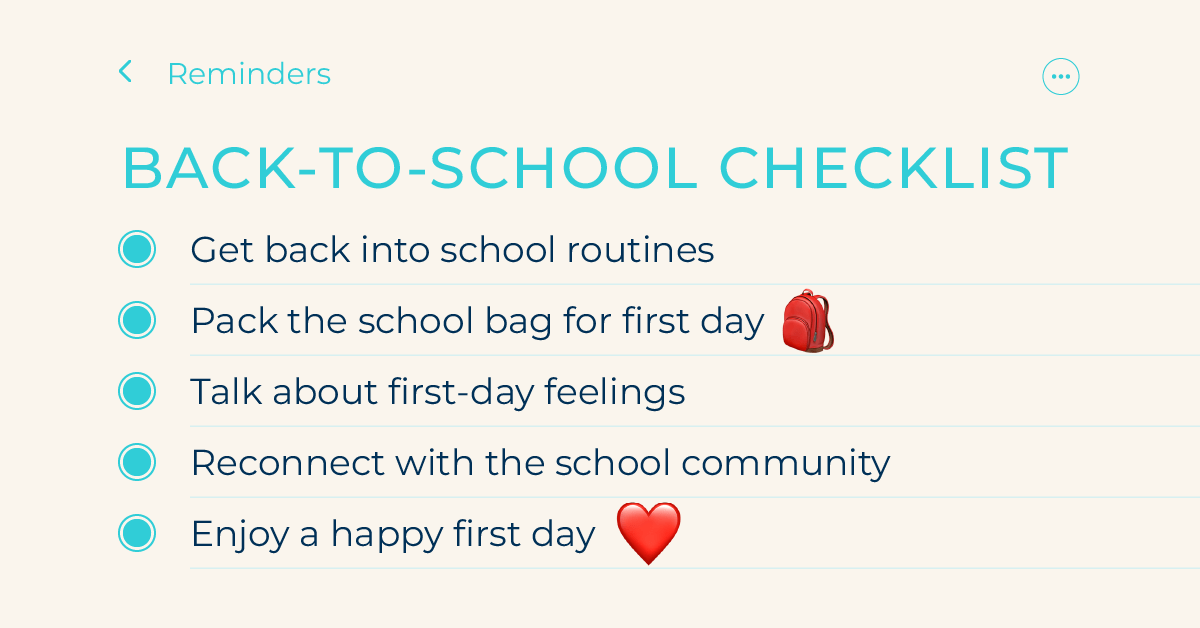
Keep the build-up low-key. The week before school starts is not the time for big conversations about expectations or performance. Keep things practical and light. Focus on logistics, uniform, getting the bag ready, and what lunch will look like.
Familiarity with the physical space takes away a key layer of uncertainty. At ICS Madrid, we hold a Welcome Event on 4 September, before the first day of school on 7 September. Seeing the classrooms, the outdoor areas, and the lunch hall in advance gives children a much clearer picture of what September will look like.
Talk about what will stay the same. For children new to Madrid and adjusting to many changes at once, anchoring them in things that remain constant helps. The same bedtime routine, the same weekend habits, the same family rituals all provide stability when everything else feels new.
Be honest about your own feelings. If you are feeling anxious about the new school year, your child will sense it. You do not need to pretend everything is perfect, but modelling calm confidence without dismissing their worry is one of the most effective things a parent can do.
When to be more concerned
Most back-to-school anxiety resolves within two to three weeks as children settle, make connections, and build familiarity with their new environment. If anxiety is severe, persistent beyond the first month, or significantly affecting sleep and appetite, speaking with the school's pastoral team or a child psychologist is a sensible step.
A good international school takes these concerns seriously and already monitors how new students settle in. Do not wait for a formal appointment if something feels wrong. Contact the school directly.
The role the school plays
Back-to-school nerves are not solely a parenting challenge. A well-run school should also take proactive steps to prepare for this sensitive time and ensure every child feels comfortable.
At ICS Madrid, our pastoral team works alongside teachers from the first day of term to identify children who need extra support during the settling-in period. New families also have access to our dedicated information hub at nordangliaeducation.com/ics-madrid/admissions/admissions-process, where practical questions about daily school life are answered before term begins. We pair new students with established peers, create structured opportunities for connection, and communicate proactively with parents rather than waiting to be asked.
That combination of parental preparation and school-side support is what turns a nervous first week into a confident first month.
If you would like to speak with our admissions team about starting at ICS Madrid, or simply want to visit the campus in La Moraleja before September, we would love to welcome you.
Frequently asked questions
How long does back-to-school anxiety normally last?
For most children, back-to-school anxiety settles within two to three weeks once they have built familiarity with the environment and formed early friendships. If it persists beyond four to six weeks, speaking with the school's pastoral team is recommended.
What should I do if my child refuses to go to school?
Stay calm and avoid making the refusal a major confrontation. Contact the school early so staff can support your child on arrival. For persistent refusal, the school's pastoral team or a child psychologist can help identify the underlying cause and put a plan in place.
How can I help my child make friends at a new school in Madrid?
Choose a school with a structured buddy or peer mentor programme. Encourage after-school activities and ECAs where friendships form naturally around shared interests. Avoid putting pressure on early friendship formation, as this often makes children more anxious rather than less.