




We use cookies to improve your online experiences. To learn more and choose your cookies options, please refer to our cookie policy.
14 April, 2026
Why A Digital Detox Matters
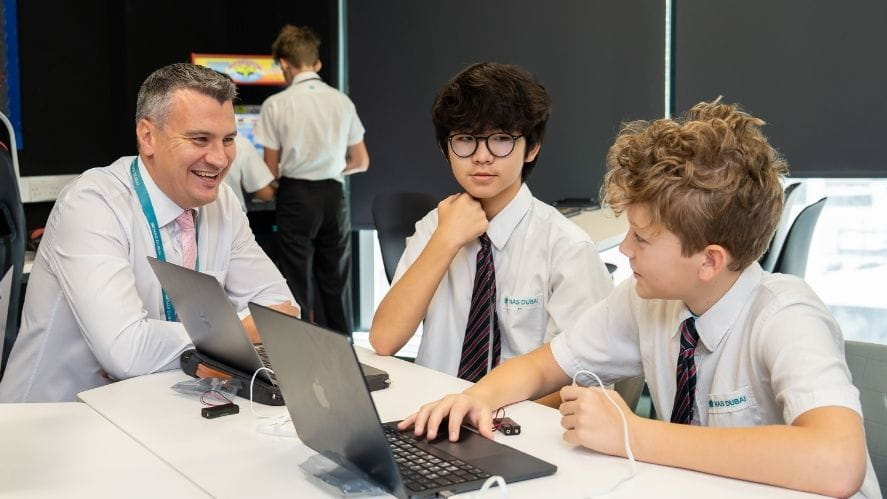
When Screens Stop Being a Choice
Screens are no longer something we use, but they are something we live alongside. From phones and tablets to laptops and smartboards, technology shapes how we work, learn, communicate and unwind. For many of us, our first interaction of the day is with a screen, and our last glance before sleep is the same familiar glow.
This isn’t a problem in itself. Technology has transformed the world for the better in countless ways. But it does invite an important pause: how often are we choosing to be on our screens, and how often are we simply defaulting to them?
At NAS Dubai, these questions recently shaped thoughtful discussions in our Secondary Moral Education lessons, where students explored the idea of a digital detox. What emerged were reflections that felt strikingly familiar, not just to teenagers, but to adults too.
When Screen Time Becomes Automatic
One of the most powerful realisations is just how automatic screen use has become.
Many of us reach for our phones without thinking. Screens have become the default response to boredom, stress, waiting, winding down and even rest. We tell ourselves we’ll stop “mindlessly scrolling” and instead watch television, but that is still a screen. Different device, same habit.
Screen time often continues without a clear beginning or end point. A call turns into checking emails. An email leads to a message. A message leads to “just a quick look” at social media. Suddenly, an hour has passed without us noticing.
The takeaway here is not that technology is harmful. It’s that habitual, unexamined use slowly takes ownership of our time and attention. Awareness is the first step towards reclaiming balance.
The Challenges: Why Stepping Away Is Harder Than We Think
Unplugging isn’t easy.
When your phone battery dies, there is often a moment of panic because so much of your life lives inside that small device. Navigation. Communication. Calendars. Work. Memories. Entertainment. Connection.
There is also the quiet pressure of FOMO — the fear of missing out. The message is unanswered. The news we haven’t seen. The show everyone is talking about. Even when we want to switch off, our fingers almost twitch to scroll.
It’s important to acknowledge these challenges honestly, because we can’t change what we don’t understand.
Excessive or mindless screen time can:
- Reduce meaningful face-to-face interaction
- Impact focus, attention span and sleep
- Blur the boundaries between learning, leisure and rest
- Limit opportunities for reflection and deep thinking
- Make it harder to be fully present
What stood out during our student discussions was how rarely many had paused to ask themselves a simple question: “How do I actually feel after spending long periods on a screen?”
Many of our students have grown up with technology. They don’t remember a world without it, and that’s okay. What matters is not removing technology but teaching balance, awareness and choice.
The Benefits: Why Screens Still Matter
It’s important to be clear: technology is not the enemy.
Screens bring undeniable value, particularly in education and modern life. They allow young people to explore the world beyond the classroom, connect globally and develop skills they will need in the future.
Screens enable:
- Access to information and diverse perspectives
- Collaboration across countries and cultures
- Digital literacy essential for modern careers
- Creative expression through design, coding and media
- Personalised and flexible learning experiences
At NAS Dubai, technology supports innovation, research and creativity across subjects. When used intentionally, digital tools enhance learning and open doors that simply wouldn’t exist otherwise.
Finding Balance
A digital detox does not mean rejecting technology or going “screen free forever”. It’s about intentional use.
Finding balance means:
- Using screens with purpose, not simply by habit
- Creating moments in the day that are consciously screen-free
- Recognising when technology supports wellbeing and when it drains it
- Developing the self-regulation skills to step away without discomfort
These are lifelong skills. As technology becomes even more integrated into daily life, the ability to pause, disconnect, and reset becomes increasingly valuable—not just for children but for adults too.
What We Do at NAS Dubai
Schools play a powerful role in shaping habits. At NAS Dubai, our approach is not about restrictions but about modelling healthy digital behaviour for students and staff alike.
Our approach includes:
- Purposeful technology use in lessons, where digital tools enhance learning rather than replace discussion, creativity or hands-on exploration
- Screen-free moments built into the school day, prioritising face-to-face interaction and reflection
- Outdoor learning and movement, encouraging students to reconnect with their surroundings
- Moral Education and wellbeing discussions that invite reflection on habits, values and balance
- Leading by example, with staff encouraged to model healthy digital boundaries
By embedding these practices into daily school life, students begin to see that stepping away from screens isn’t a punishment, but it’s a choice that supports wellbeing.
How to Start Your Own Digital Detox
A digital detox doesn’t need to be dramatic. It doesn’t require deleting apps or going offline completely. Small, thoughtful changes are often more sustainable.
You might start by:
- Introducing screen-free times, such as during meals or before bed
- Creating tech-free zones at home
- Replacing some screen time with walking, reading, drawing or simply talking
- Reflecting together as a family on how screen habits feel, not just how long they last
- Treating detoxing as a conversation, not a rule
Stepping Away to Reconnect
Technology will continue to shape the world our children are growing into. But the ability to step away, reflect and reconnect with others, with learning and with us, remains deeply human.
At NAS Dubai, we are committed to nurturing a balanced, thoughtful relationship with technology. By helping students build awareness, confidence and self-regulation, we prepare them not just for a digital future but for a healthy and fulfilling one.
Related news
News image ![Student jumping during hurdles on sports day]() Blog | School Events
Blog | School Events
 Blog | School Events
 Why school sports matter
Explore how NAS Dubai uses sport to nurture healthier, happier learners through movement, community, and balanced student development.
News image ![Two students embracing each other in a school setting.]() Blog | blog
Blog | blog
 Blog | blog
 How Strong School Community and Communication Drive Student Success
Discover how an international school in Dubai like NAS Dubai drives student wellbeing, academic excellence, and parent engagement through strong community and communication.


